Caribbean
Caribbean Escovitch & Saltfish Tradition
Also: Caribbean salt fish cuisine, escovitch fish tradition, Creole preserved fish culture
A pan-Caribbean culinary thread that transforms salt-preserved cod and pickled fish into the region's most beloved breakfast foods and festive centerpieces — born from the triangle trade and carried across four centuries of Creole invention.
The Caribbean escovitch and saltfish tradition is not a single national cuisine but a family of preparation styles — unified by salt-preserved fish as the central ingredient — that runs through Jamaica, Trinidad and Tobago, Barbados, Antigua, Guadeloupe, Martinique, Haiti, and beyond. Salt cod (bacalao) arrived as cheap, calorie-dense provisions for enslaved African workers in the 17th–18th centuries, part of the brutal Atlantic triangle trade: New England and Newfoundland dried cod shipped to Caribbean plantations; sugar, rum, and molasses shipped north. African cooks transformed this inferior ingredient through techniques drawn from West African fish preservation (escovitch is a direct descendant of escabeche via Sephardic Jewish preservation tradition, filtered through African spicing), creating dishes now central to national identity throughout the region. The tradition includes marinated fried fish (escovitch/escabeche), boiled salt cod stewed with vegetables (ackee and saltfish, buljol), and the distinctive whole dried flying fish of Barbados.
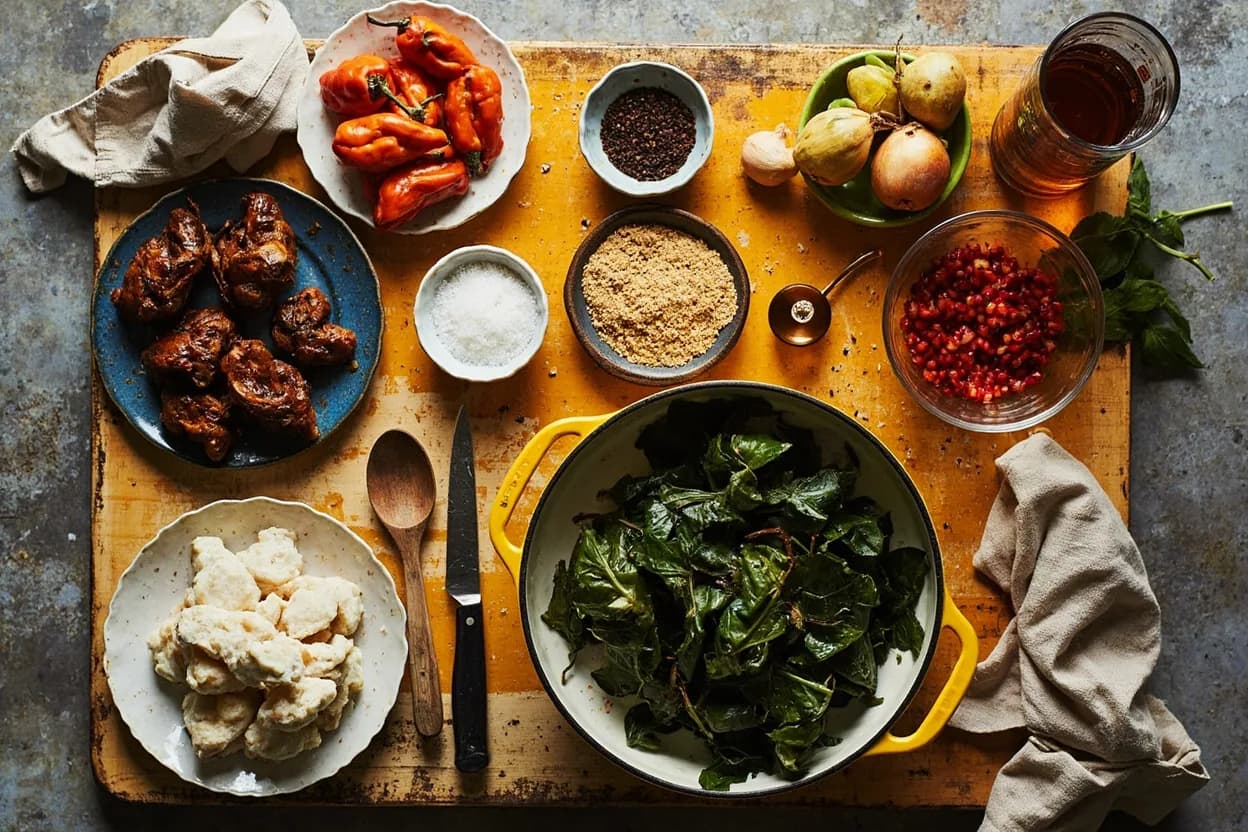
The flavour base
Scotch bonnet or habanero chili heat; allspice (pimento) as the aromatic anchor in the Jamaican branch; vinegar and pickled vegetables for the escovitch; salt cod's preserved brine is partially offset by multiple freshwater soaks before cooking; aromatics include thyme, scallion, and garlic throughout the region.
Pantry staples
Key ingredients
Signature techniques
Signature dishes
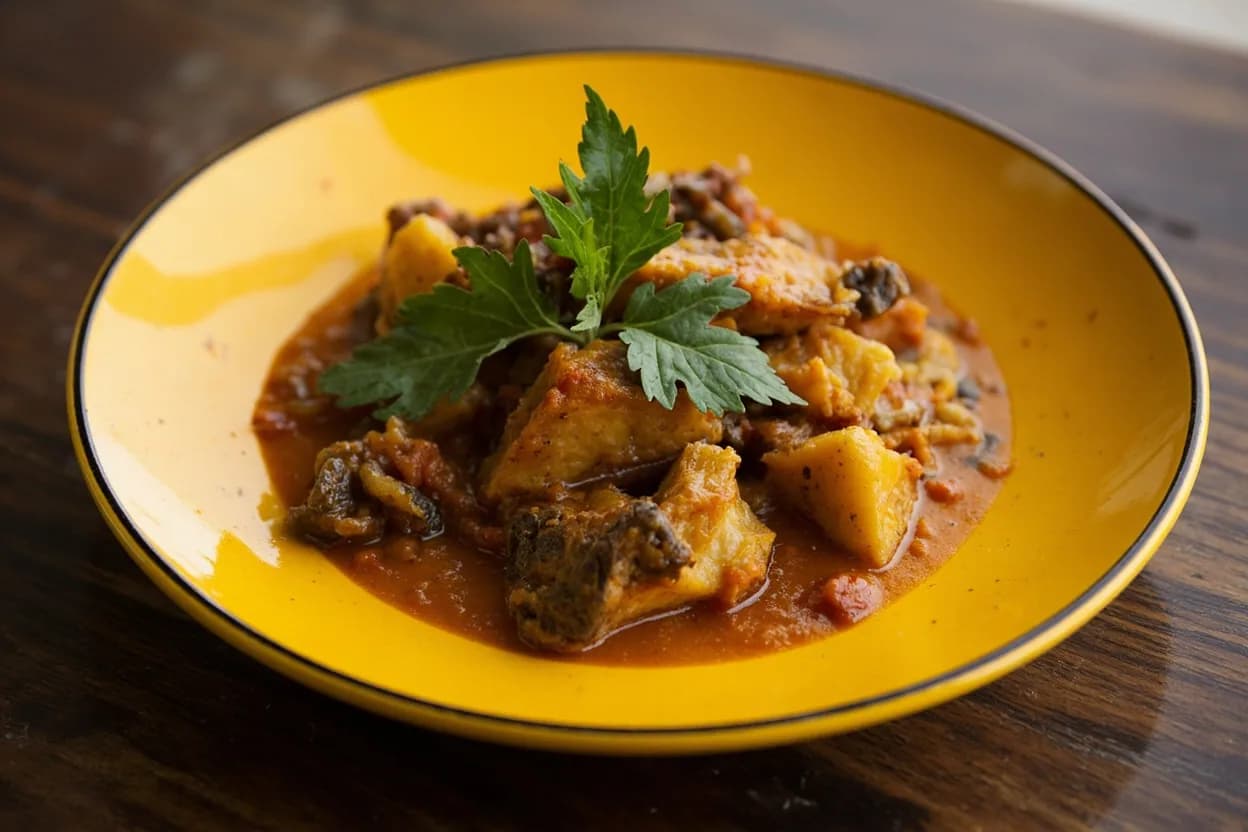
Caribbean Escovitch & Saltfish Tradition on the table

At the table
Salt fish preparations are overwhelmingly breakfast and brunch foods throughout the region — ackee and saltfish on a Saturday or Sunday morning is Jamaica's equivalent of a full English. Escovitch fish, however, migrates to lunch and festive tables. The Barbadian cou-cou and flying fish combination (cou-cou is a polenta-like cornmeal-and-okra porridge) is typically a midday meal. Street-food culture across the region features accras, bacalaítos, and other salt cod fritters as snacks and appetizers at any hour.
History & context
The story of salt fish in the Caribbean is the story of the Atlantic slave trade in miniature. After Spain, Portugal, and then France and England colonized the Caribbean from the 16th century, the need to feed enslaved Africans cheaply drove the mass importation of salt cod from Newfoundland, Nova Scotia, and New England — fish so thoroughly preserved it could survive tropical heat without refrigeration. Enslaved Africans received the lowest-grade 'West India cure' salt cod — broken pieces and tails — and transformed it through West African flavor principles (spice layering, palm and plant oils, fermentation awareness) and borrowed Iberian and Sephardic techniques. Escabeche — the Iberian and North African vinegar-marinated fish technique (itself derived from the Arabic sikbaj) — became escovitch through this cultural transmutation. After emancipation, salt fish remained a dietary staple by habit and economy, eventually acquiring the status of comfort food and national symbol. The Barbadian flying fish tradition differs: the endemic flying fish of the Barbados shelf is fresh, not salt-preserved, and reflects a distinct local fishery.
Regional variations
- Jamaica
Ackee and saltfish is the national dish; escovitch fish is specifically marinated after frying with whole allspice, scotch bonnet, and julienned carrots, onions, and cho cho in seasoned vinegar.
- Trinidad and Tobago
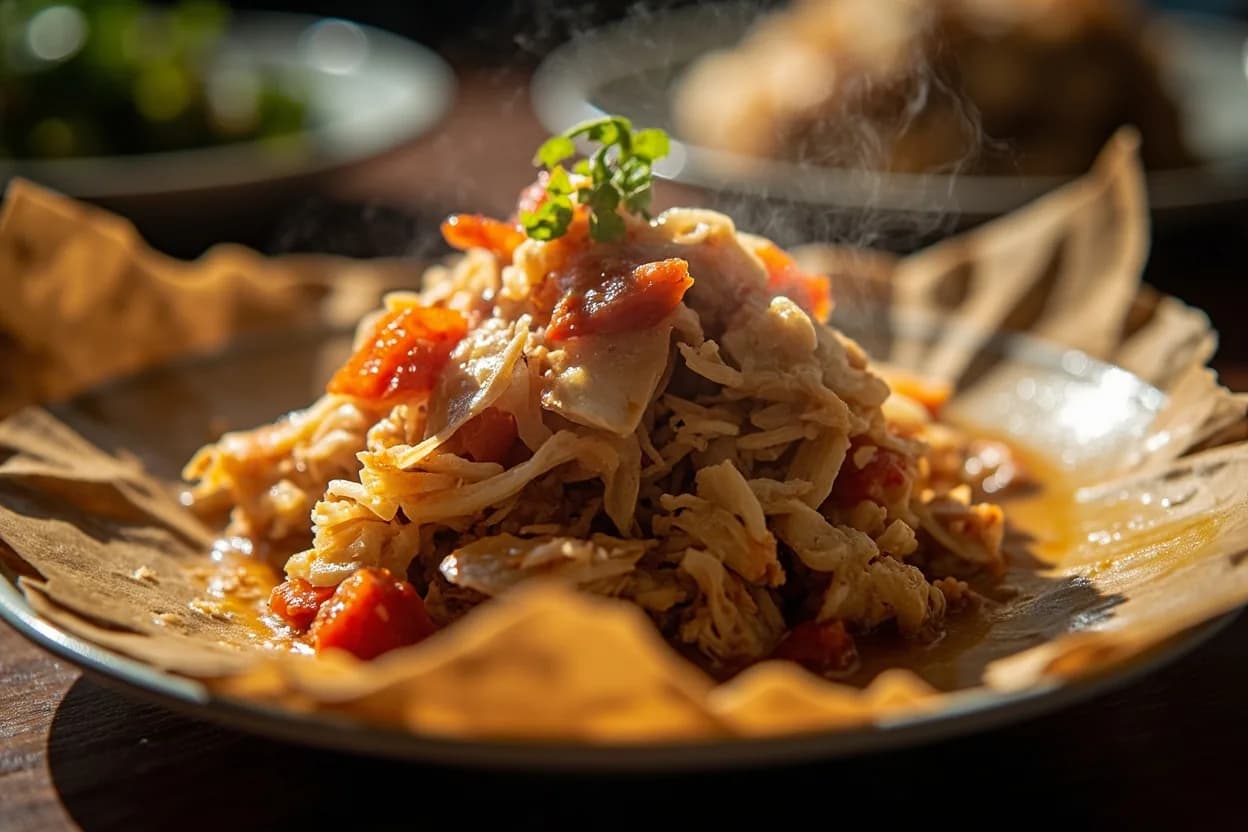
Buljol is a room-temperature shredded saltfish salad with tomatoes, onion, peppers, and oil — rarely cooked hot; often served with bake (a fried or baked bread) for breakfast.
- Barbados
Cou-cou (cornmeal-okra porridge) and flying fish (Todarodes sagittatus-like but the regional species Hirundichthys affinis) is the national dish; fresh, not salt-preserved.
- Guadeloupe & Martinique
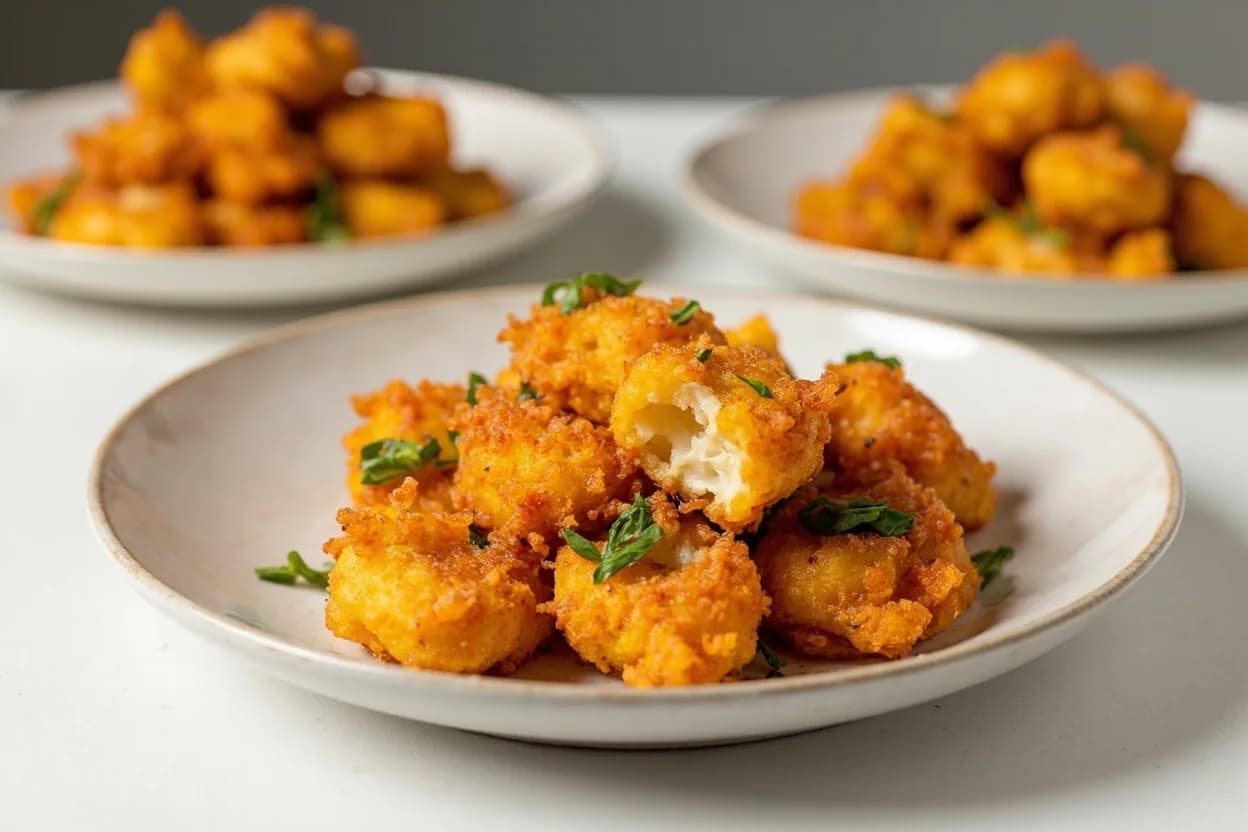
French Antilles influence: accras de morue (feather-light salt cod fritters with chili) are ubiquitous appetizers; colombo spice blend (Indo-Caribbean curry influence) sometimes applied to fish.
- Haiti
Salt fish (lamori) cooked in tomato sauce with onion and thyme; strong French and West African heritage; often served with rice and beans (riz et pois).
Related cuisines
- Iberian (Portuguese/Spanish)
Bacalhau/bacalao tradition is the direct antecedent; Iberian Jews and Sephardic networks spread escabeche techniques across the Atlantic.
- West African
Dried and smoked fish are equally central in Ghanaian, Nigerian, and Senegalese cuisines; the African cooks who made Caribbean salt fish traditions were working within a known framework.
- Newfoundland & Labrador
The production source of much Caribbean salt cod for 300 years; Newfoundlanders developed a parallel salt fish cuisine using the same grades they exported.
Canonical recipes
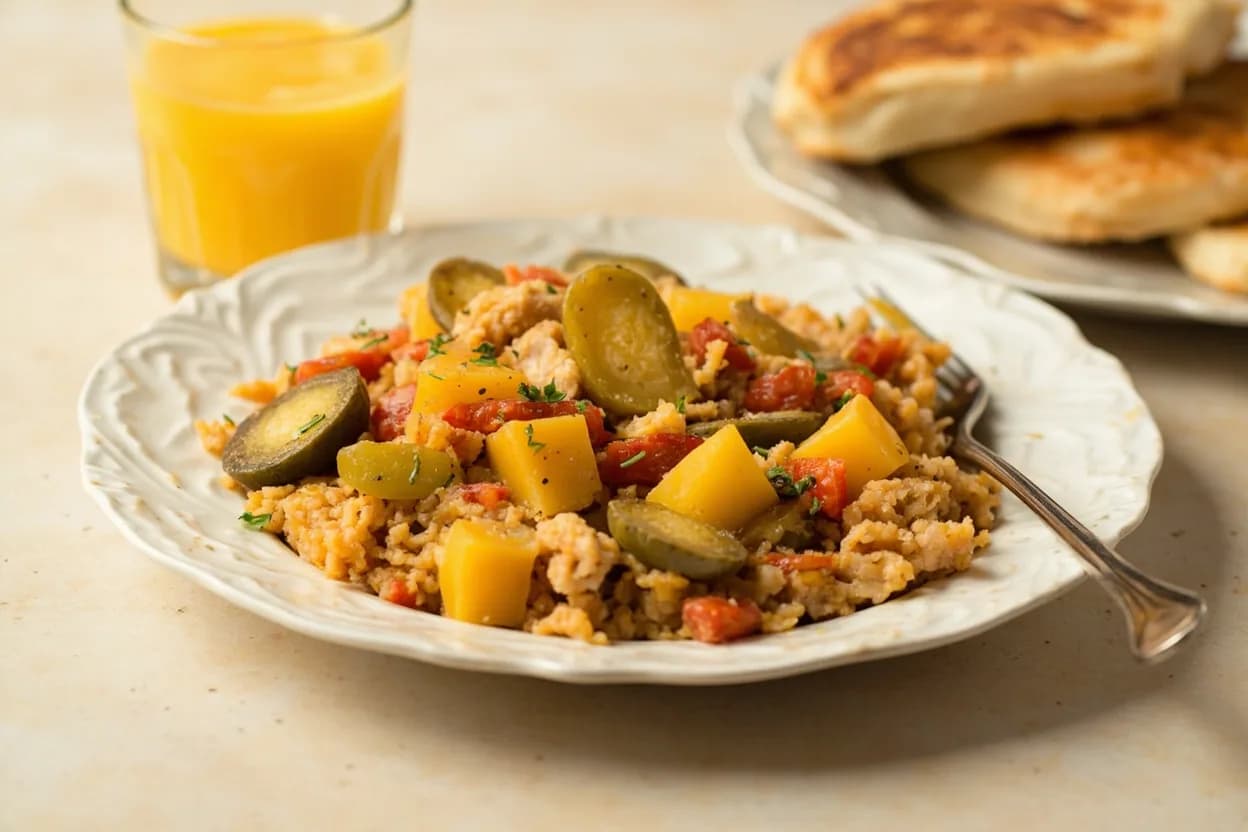
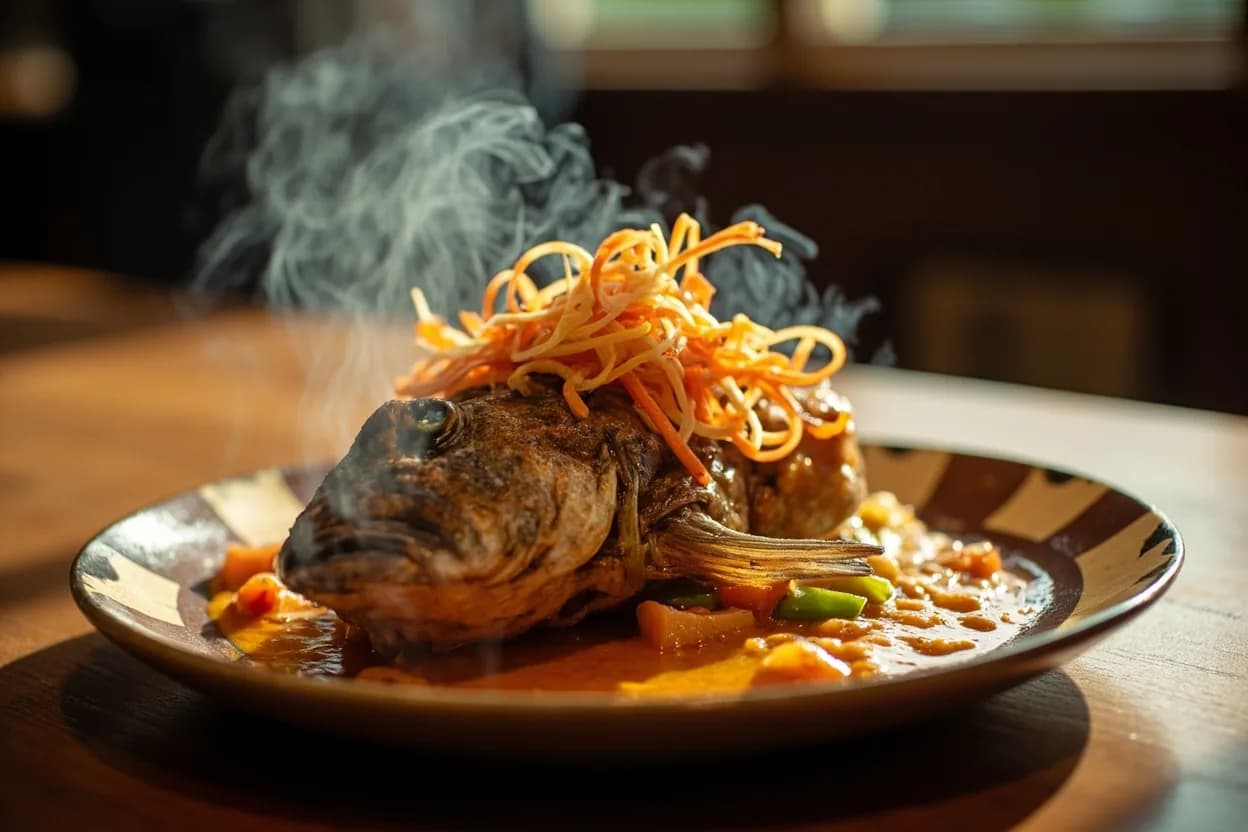
The dishes that define Caribbean Escovitch & Saltfish Tradition, documented in the Canon.
References
- 1.The Sugar Barons: Family, Corruption, Empire, and War in the West Indies — Matthew Parker (2011)
- 2.Eat, Drink, Think in Spanish: A Food Lover's English-Spanish / Spanish-English Dictionary — Simon and Schuster (2009)
- 3.Caribbean Food: Made Easy — Levi Roots (2009)
- 4.The Oxford Companion to Food — Alan Davidson (3rd ed., 2014)
- 5.Provisions: The Roots of Caribbean Cooking — Michelle Rousseau & Suzanne Rousseau (2018)
Confidence: high
Notes
Escovitch vs. escabeche: a chain of transmission
The technique of frying fish and then marinating it in acidulated liquid is ancient: Arabic sikbaj (vinegar-stew) traveled to Iberia as escabeche, was used by Spanish Jews as a kosher fish preservation method, crossed the Atlantic with Spanish and Portuguese colonizers, and was refashioned by African cooks in the Caribbean into escovitch — the Jamaican-English phonetic rendering. The same technique appears as escabèche in Martinique, ceviche-adjacent preparations in Peru, and carpe en escabèche in France, all branches of the same Mediterranean root.
Ackee: the forbidden fruit
The ackee fruit (Blighia sapida), which defines Jamaica's national dish, is West African in origin — brought to the Caribbean on slave ships, almost certainly as food or seeds, sometime before 1778 when Linnaeus's student Bligh (of Bounty fame) described it botanically. The fruit is toxic when unripe (hypoglycin A), safe only when the red aril naturally opens. For centuries it was banned from importation into the United States; it was only approved for import as canned ackee (pre-opened, safe) in 2000.