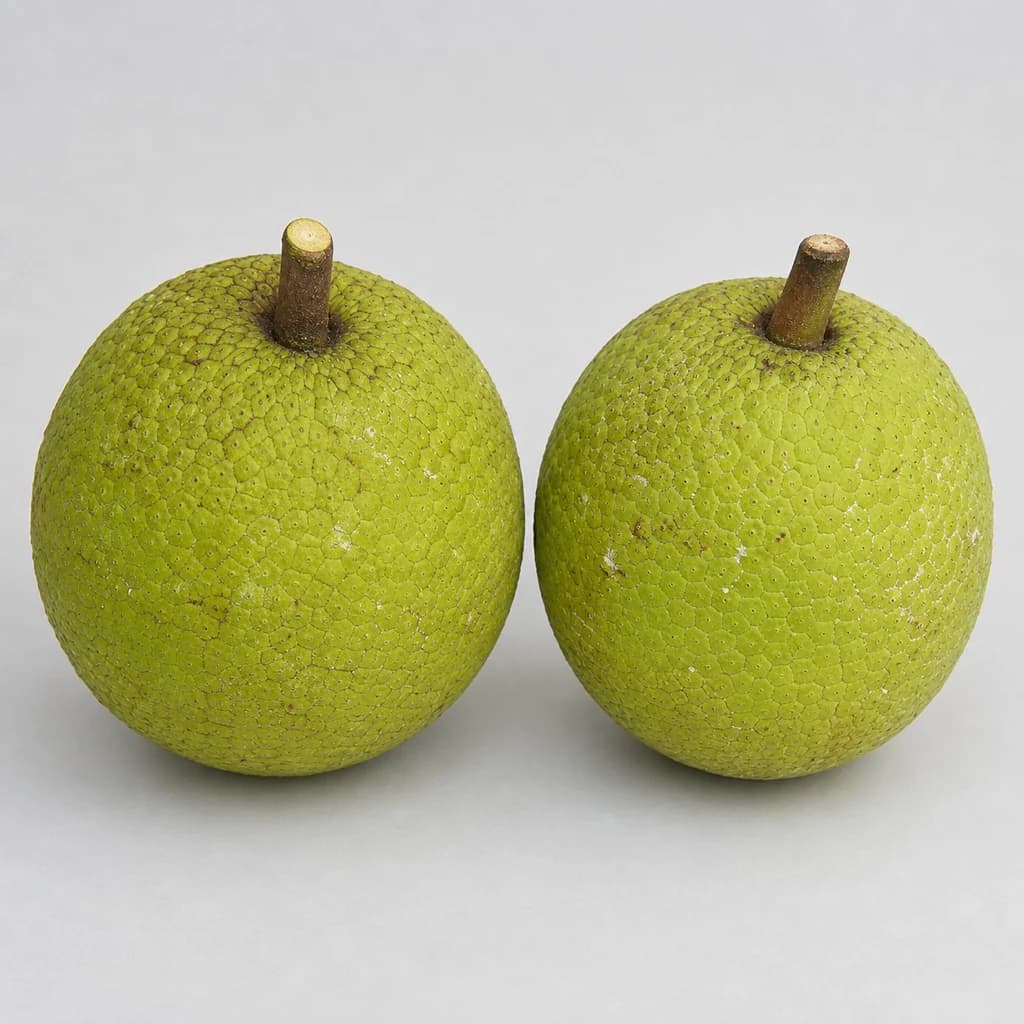
Natural form
Whole mature breadfruit: large, round, green-skinned with a bumpy patterned surface.
Shows the reader exactly what to look for when identifying an uncut breadfruit at market.
Produce
Breadfruit
Large starchy tropical fruit roasted, boiled or fried like a potato when green and firm.
Breadfruit is a large, round, green-skinned tropical fruit with starchy flesh that turns bread-like when cooked. Eaten when mature but still firm, it is roasted, boiled, fried into chips, or mashed across the Pacific, Caribbean and West Africa. Ripe and soft it becomes sweet and is used in desserts.
Breadfruit (Artocarpus altilis) is a large, starchy tropical fruit native to the South Pacific that has sustained island communities for centuries and remains a dietary staple throughout the Caribbean, Polynesia, and parts of South America. Resembling a large, bumpy green sphere or oblong shape that can weigh anywhere from 2 to 10 pounds, breadfruit has a thick rind enclosing creamy white to pale yellow flesh that becomes tender and slightly sweet when cooked. The flavor sits somewhere between a potato and sweet potato—mild and neutral, making it an exceptionally adaptable canvas for bold seasonings or simple butter. Captain William Bligh's infamous Bounty voyages (the first thwarted by mutiny in 1789, the second successful in 1793) introduced breadfruit to the West Indies, where it became firmly entrenched in local cuisine and has remained there ever since. One prolific tree can produce up to 200 fruits annually, making it a cornerstone of food security in tropical regions worldwide. The raw fruit weeps sticky white latex when cut—a sap that some Pacific cultures historically repurposed as adhesive or waterproofing agent but that has no culinary function. This latex must be managed during preparation, and crucially, breadfruit must always be cooked before eating; raw consumption causes digestive upset and can trigger allergic reactions in latex-sensitive individuals. The edible yield after peeling and coring runs approximately 70–80%, and once cut, the flesh oxidizes rapidly and should be cooked immediately or rubbed with citrus to prevent browning. Green, firm fruit suits savory preparations; slight yellowing signals ripeness appropriate for sweeter applications.
- Measured in
- piece
- Storage
- Pantry
Types & varieties
Most common variety in Caribbean and Pacific; creamy texture when cooked; does not produce seeds
Native to New Guinea; produces edible seeds that can be boiled or roasted like chestnuts; flesh is often smaller
Popular Hawaiian variety; compact tree, early producer; good flavor, relatively small fruit
Common Hawaiian variety; known for excellent texture when fried
Tahitian variety; traditionally one of the most cultivated types in French Polynesia
Hawaiian variety; name means 'pig' due to the fruit's size when mature
Some varieties develop a more yellowish interior; prized for sweeter, richer flavor when ripe
Selecting and Preparing Breadfruit
Choose fruit that feels heavy for its size with firm, unblemished green skin—slight yellowing at the tips indicates ripening but green fruit works perfectly for most savory preparations. When cutting, wear kitchen gloves if you have latex sensitivity; the sticky white sap can irritate skin. Cut the fruit into quarters or wedges first, then remove the inedible core from each piece. To manage the latex that bleeds from cut surfaces, rub the exposed flesh with oil or briefly submerge cut pieces in salted water before cooking. Once cut, breadfruit oxidizes quickly, developing grayish-brown discoloration—cook immediately or rub surfaces with lime or lemon juice to slow this process. The core and any seeds (in seeded varieties) must be removed before cooking; the seeds from Artocarpus camansi are edible and can be roasted or boiled like chestnuts if you encounter a seeded fruit.
- Select heavy, firm fruit with no soft spots or cracks
- Wear gloves when cutting if you have latex sensitivity
- Rub cut surfaces with oil or salted water to reduce stickiness
- Toss cut pieces with citrus juice to prevent oxidation
- Remove the central core before cooking—it's inedible
Common uses
Tips & pitfalls
- Select fruit that feels heavy for its size with firm, unblemished skin; slight yellowing at the tips indicates ripeness but green fruit is fine for most cooking methods
- Wear gloves when cutting raw breadfruit if you have sensitivity to latex—the sticky white sap can irritate skin
- Cut into quarters or wedges, then remove the core (which is inedible) before cooking
- To reduce the sticky latex: rub cut surfaces with oil or briefly submerge cut pieces in salted water before cooking
- Boil peeled chunks in well-salted water 20–30 minutes until fork-tender; add a squeeze of lime to brighten flavor
- For roasting: halve or quarter the fruit, place cut-side down on a baking sheet at 375°F (190°C) for 45–60 minutes
- For frying: parboil cubes first (10 minutes), then fry at 350°F (175°C) until golden—parboiling ensures even cooking throughout
- Do not eat raw breadfruit—it contains compounds that can cause digestive upset and may trigger allergic reactions in latex-sensitive individuals
- Serve immediately after cooking; breadfruit does not hold well as leftover and becomes rubbery
- To test doneness when roasting whole: insert a skewer—it should slide in with no resistance
- Leftover cooked breadfruit firms up in the refrigerator; reheat by frying or pan-searing for best texture
- If breadfruit tastes bitter when cooked, it may have been overripe or damaged; quality fruit should have a neutral, slightly sweet flavor
Nutrition
Energy
431 kJ · per 100 g
Where the calories come from
Protein
1.1g
2% DV
Carbs
27.1g
10% DV
Fat
0.2g
0% DV
Fiber
4.9g
18% DV
Sugars
11g
of which
Sodium
2mg
0% DV
Source · USDA FoodData Central · Breadfruit, raw
View on FDC →In the shops
Matched grocery products
No matched grocery products for Breadfruit yet.
Good to know
- Scientific Name
- Artocarpus altilis (seedless); Artocarpus camansi (seeded)
- Family
- Moraceae (same family as figs and jackfruit)
- Origin
- Native to the South Pacific (New Guinea, Philippines, Malay Peninsula); spread throughout Polynesia centuries ago
- Historical Note
- Captain William Bligh brought breadfruit to the Caribbean in 1793 aboard HMS Bounty to provide cheap food for enslaved people; the famous mutiny occurred during the second voyage after the first attempt failed
- Typical Weight
- 2–10 lbs (1–4.5 kg)
- Flavor Profile
- Mild, slightly sweet, starchy; neutral canvas that absorbs seasonings; often compared to potato, bread, or sweet potato combined
- Key Characteristic
- Raw fruit contains sticky latex; must be cooked before eating; raw consumption can cause digestive issues or allergic reactions in some people
- Storage (Whole, Unripe)
- Room temperature for 1–2 days; refrigerator for up to 1 week
- Storage (Cooked)
- Refrigerate in airtight container 3–5 days; freeze cooked pieces up to 3 months
Substitutes
- Potato — Most direct substitute; similar starchy texture and neutral flavor; cooking times are comparable, though breadfruit takes slightly longer to become truly tender
- Sweet Potato — Provides similar density and absorption of flavors; sweeter than breadfruit but works in most preparations
- Taro — Similar starchy tropical root with comparable cooking properties; slightly earthier flavor; also requires cooking before eating
- Yam — Comparable texture when cooked; denser and slightly sweeter; works well in fried applications
- Jackfruit (Young/Green) — Different texture (more fibrous) but similarly mild flavor that absorbs seasonings; use young green jackfruit for savory dishes
- Plantain (Green) — Similar starchiness and cooking behavior in fried preparations; sweeter taste; works well when boiled or fried
- Ube (Purple Yam) — Varies in color but similar starchy base; much sweeter and more aromatic; not ideal for savory dishes
Pairs with
Also called
Ulu · Fruta-pão
Appears in these dishes
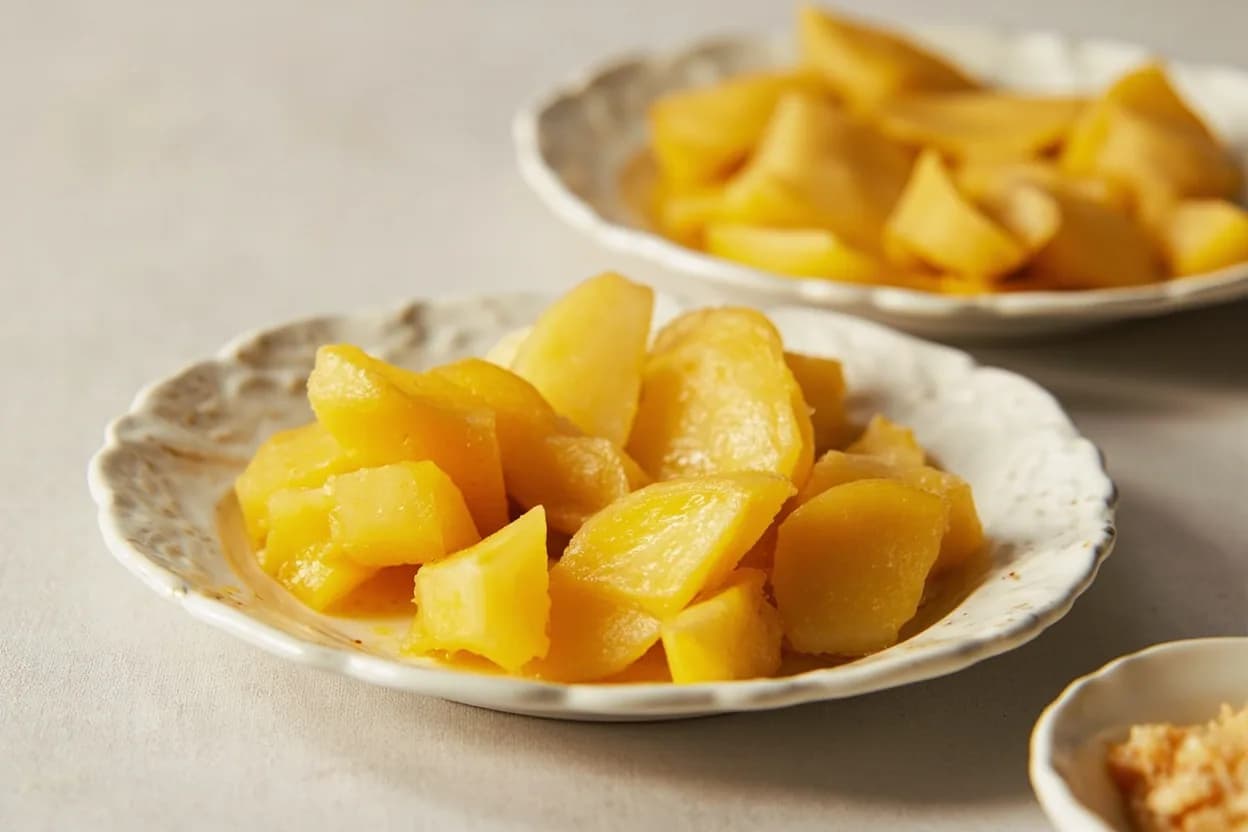
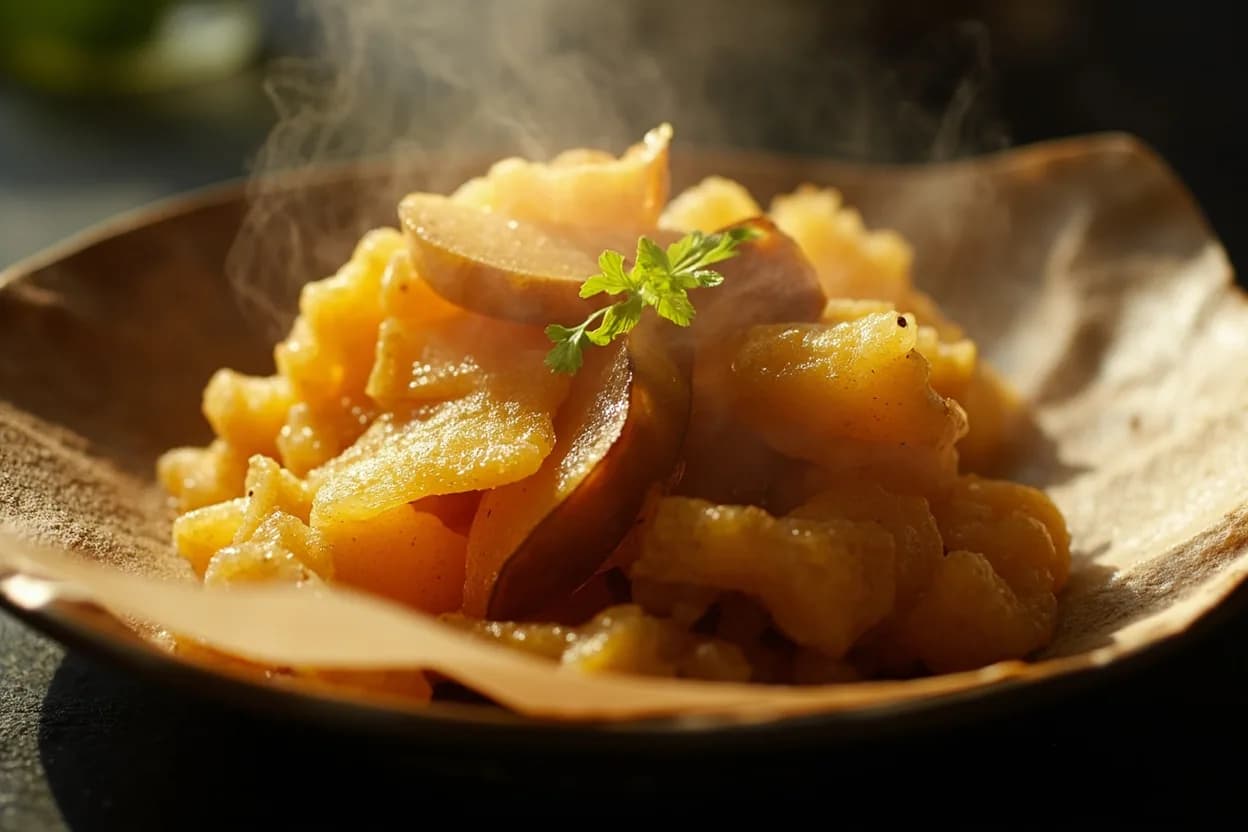
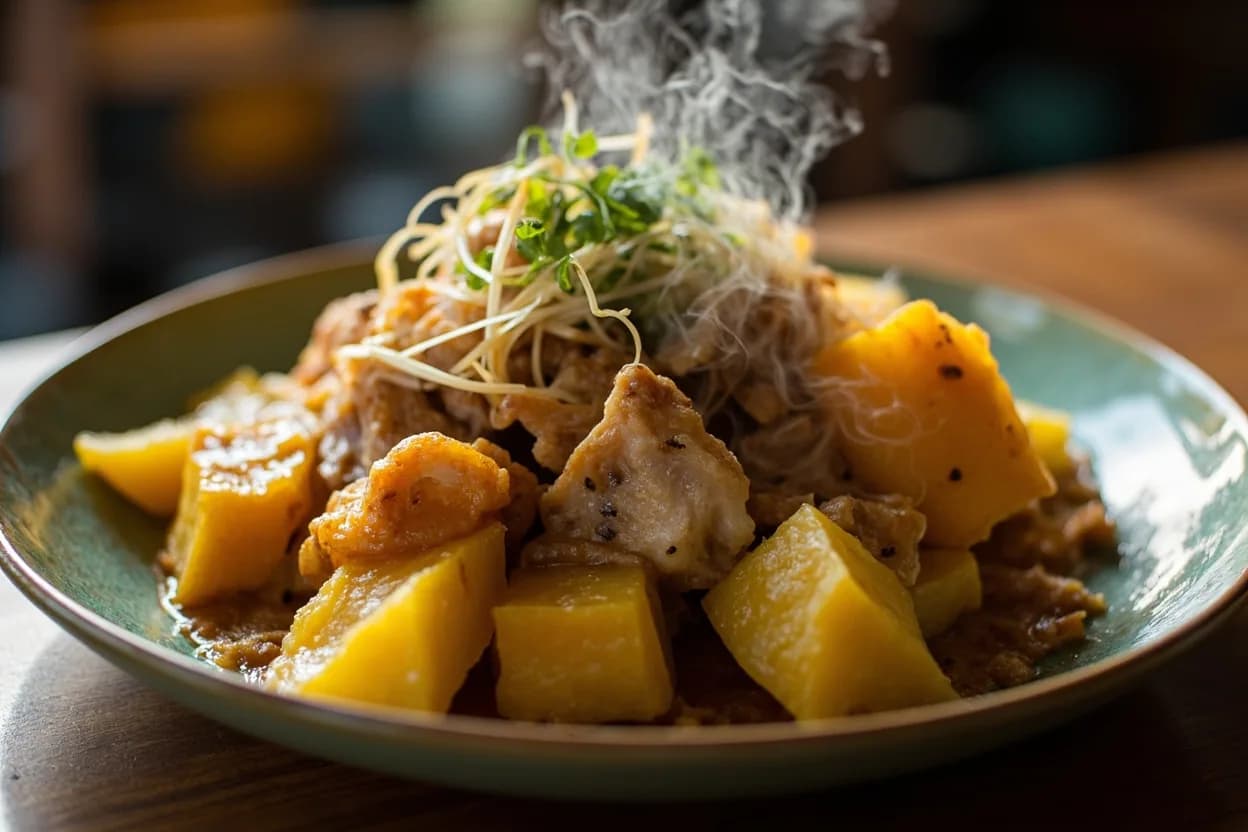
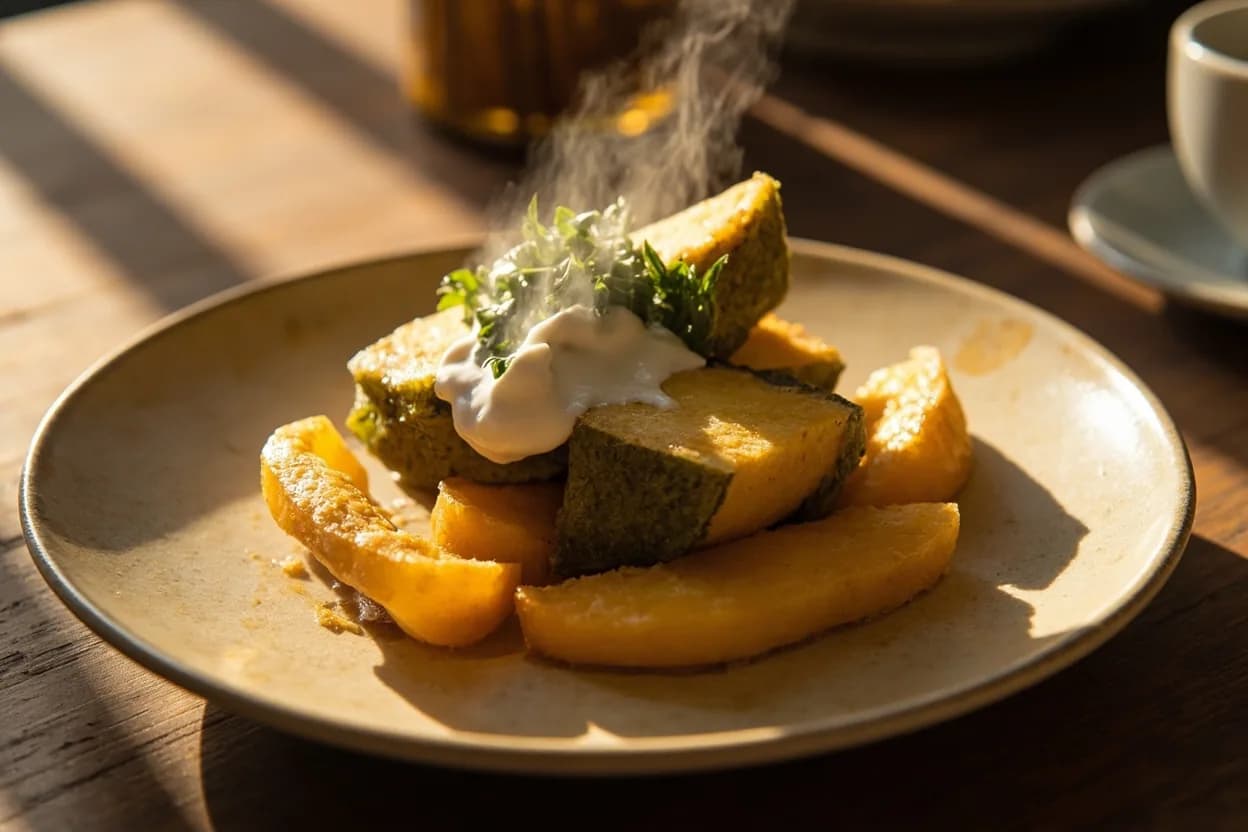
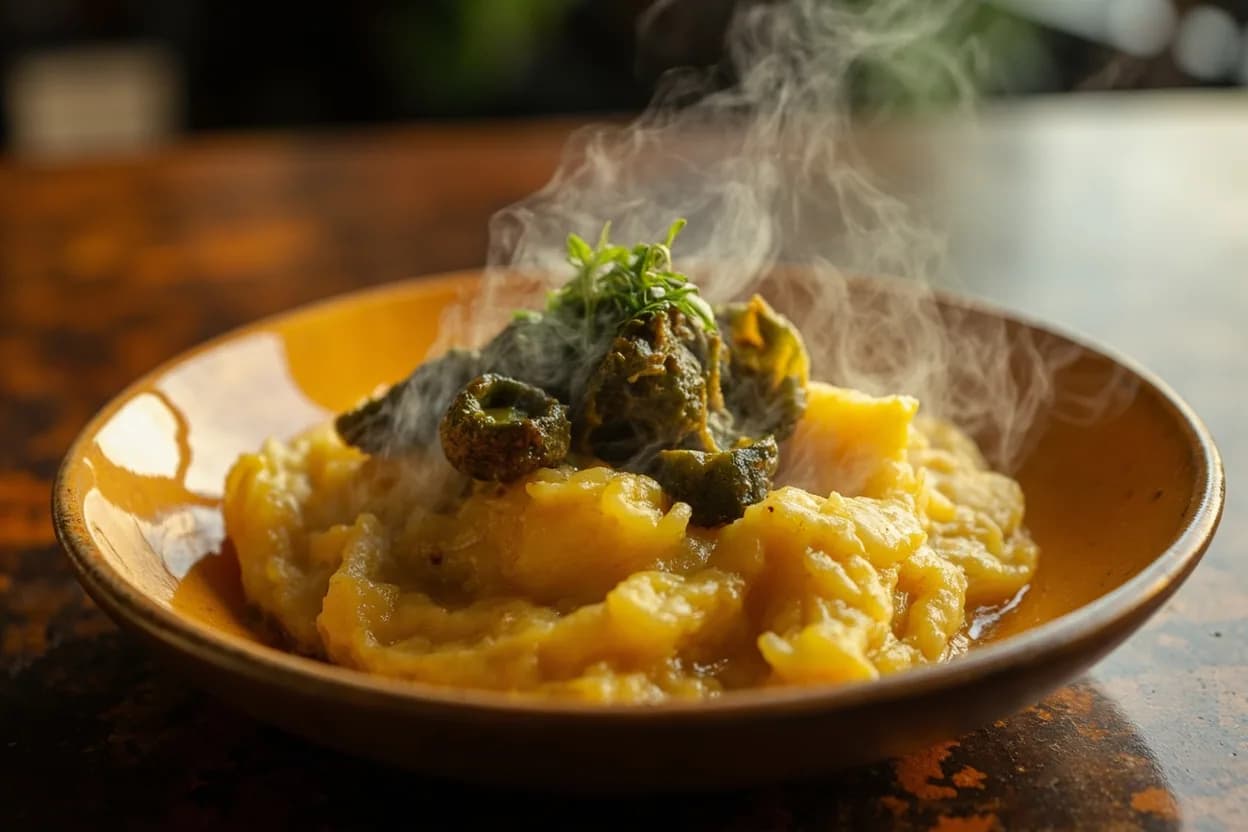
Related
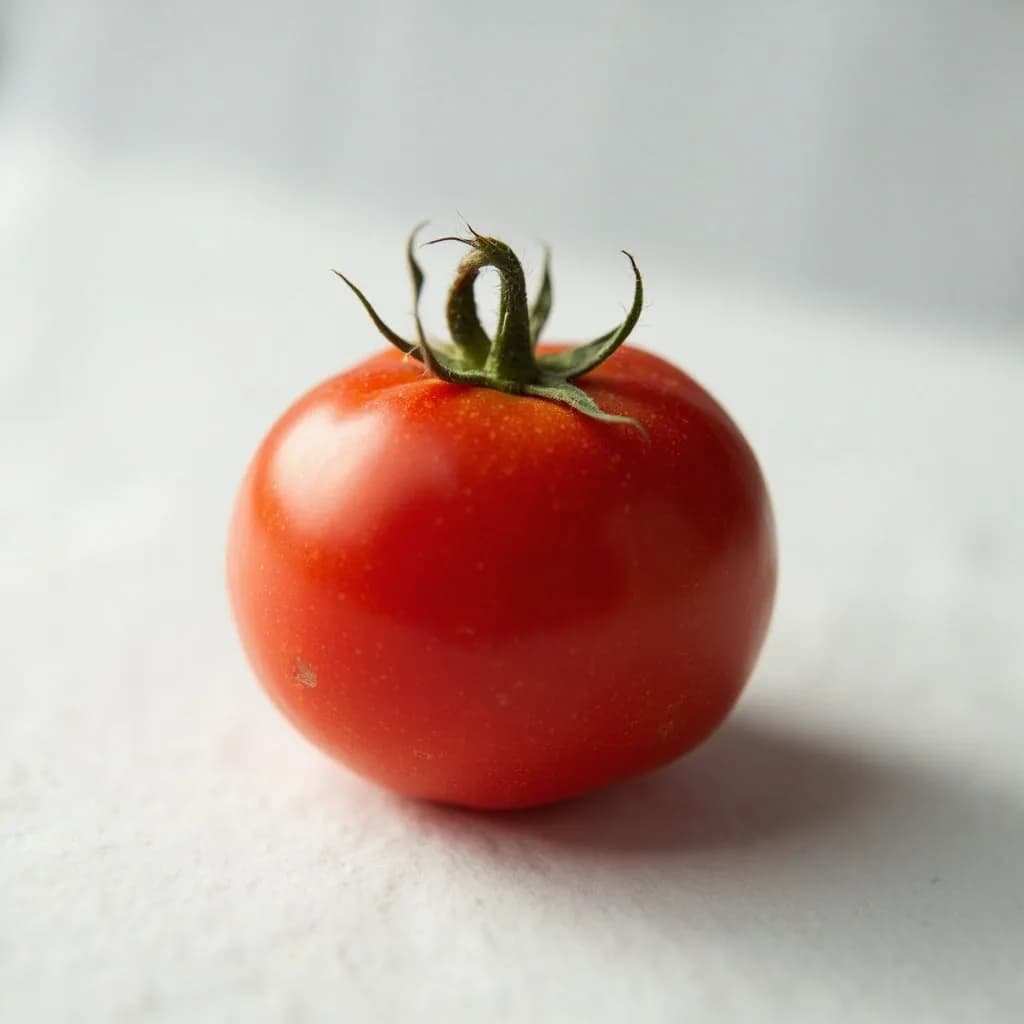
Tomato
Juicy, sun-sweet fruit for sauces, salads, and slow-cooked depth
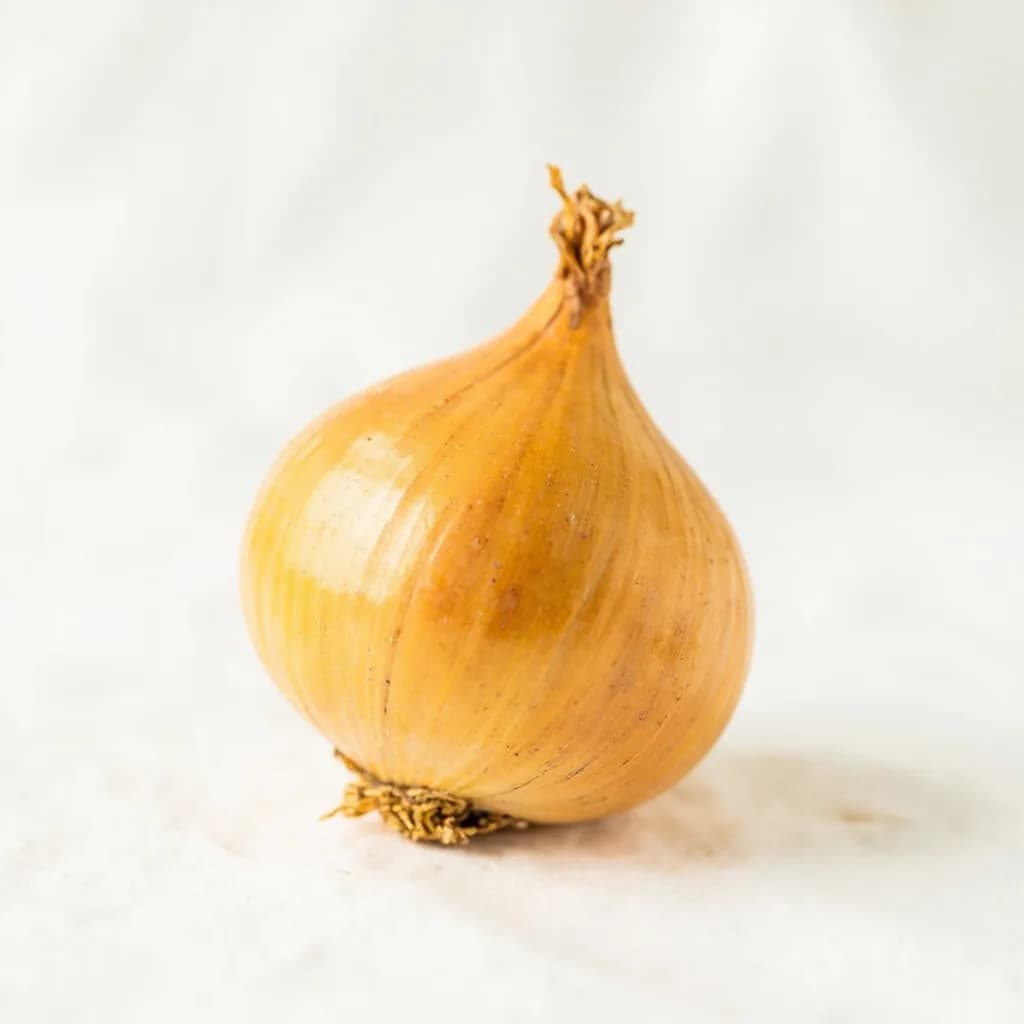
Yellow Onion
The aromatic backbone of soups, sofritos, and braises
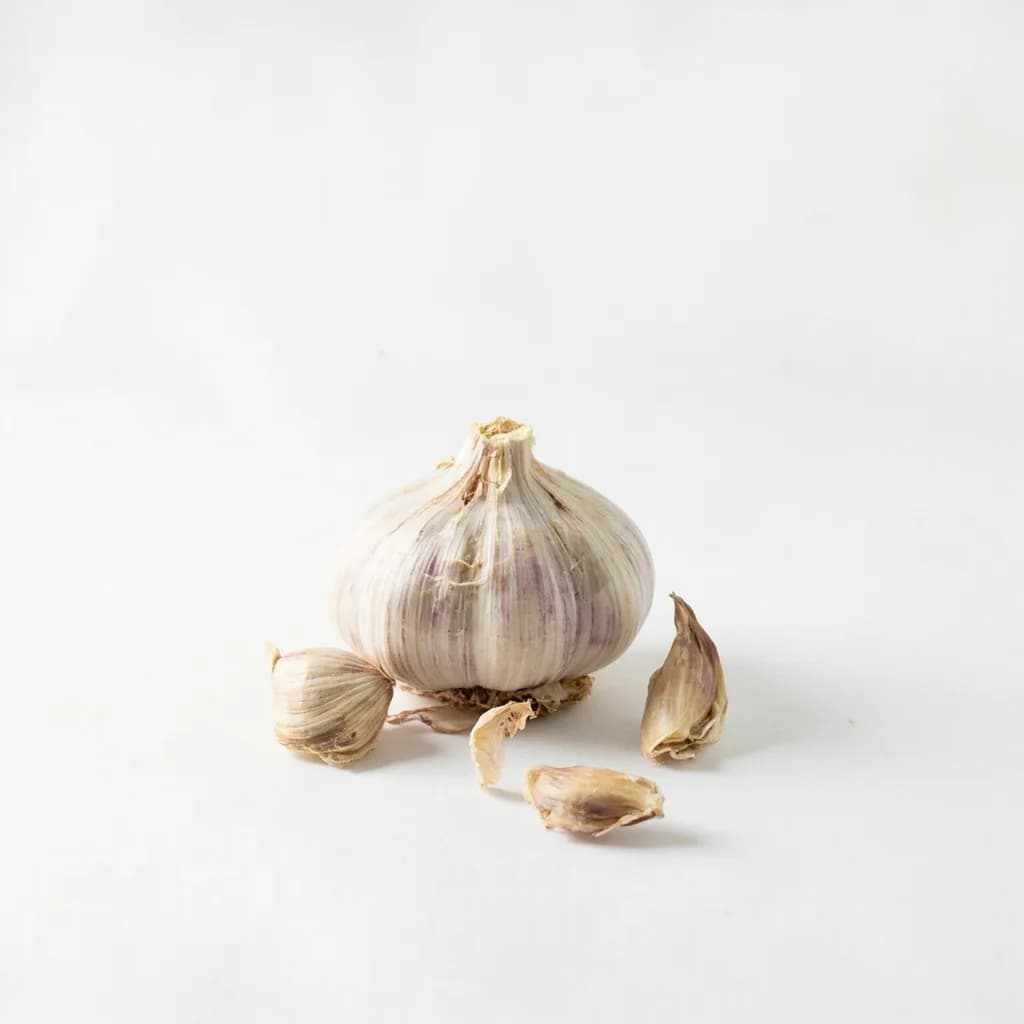
Garlic
Pungent cloves that perfume nearly every savory dish
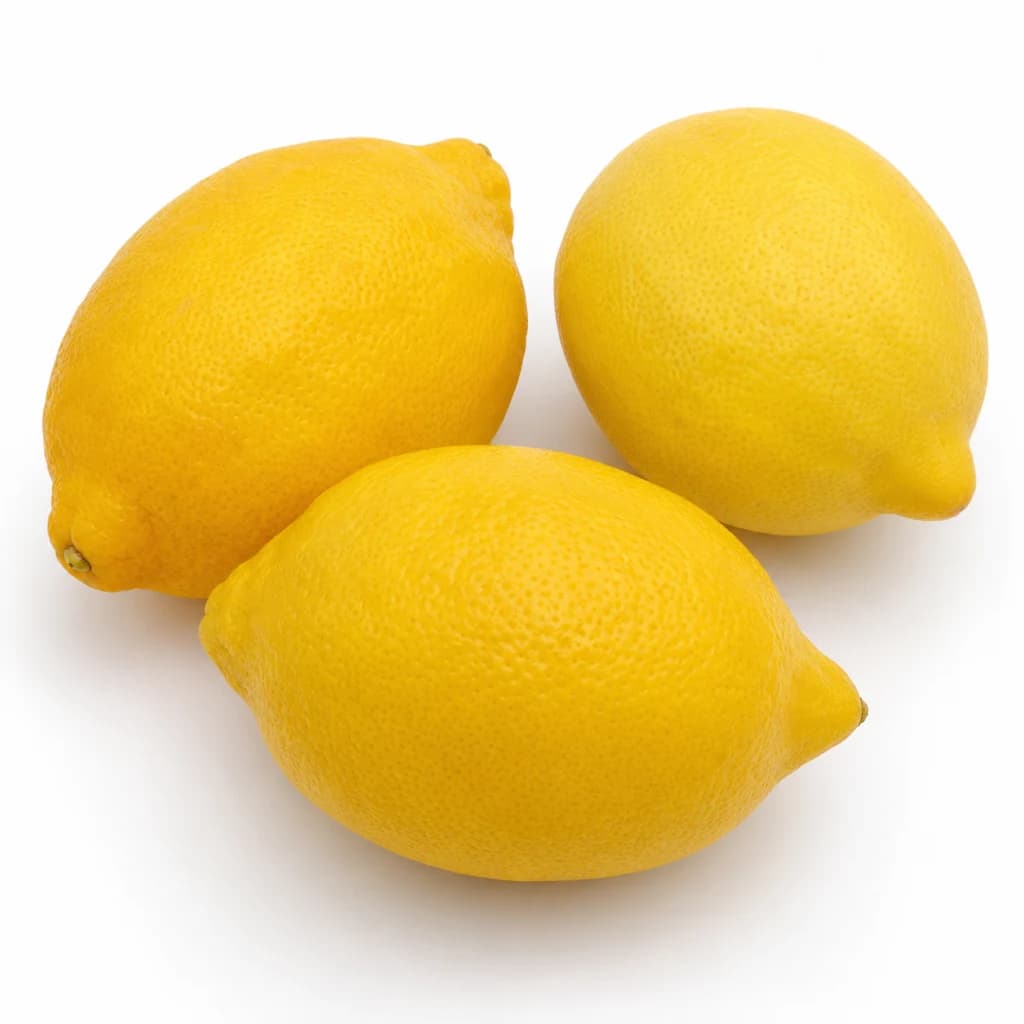
Lemon
Bright, acidic citrus that wakes up almost any dish
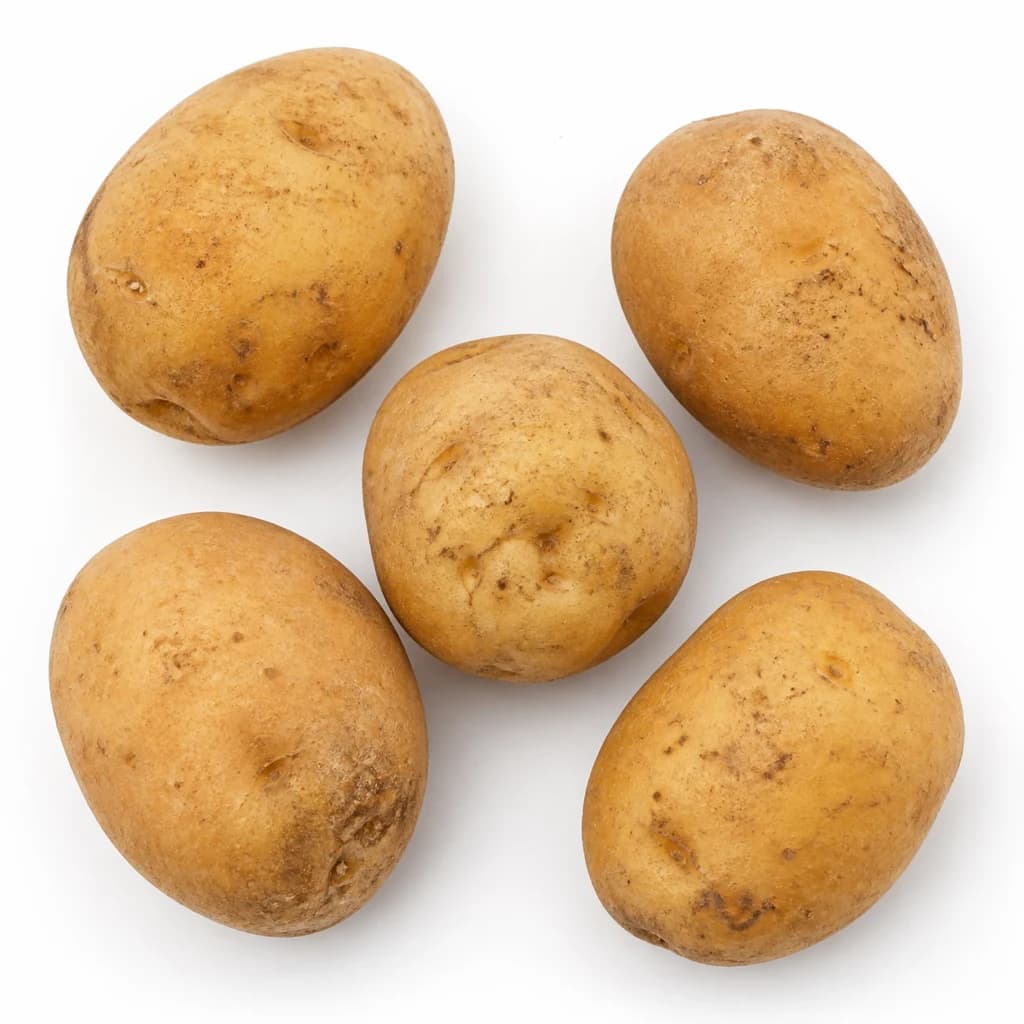
Potato
Humble, hearty staple — roast, mash, fry, or boil
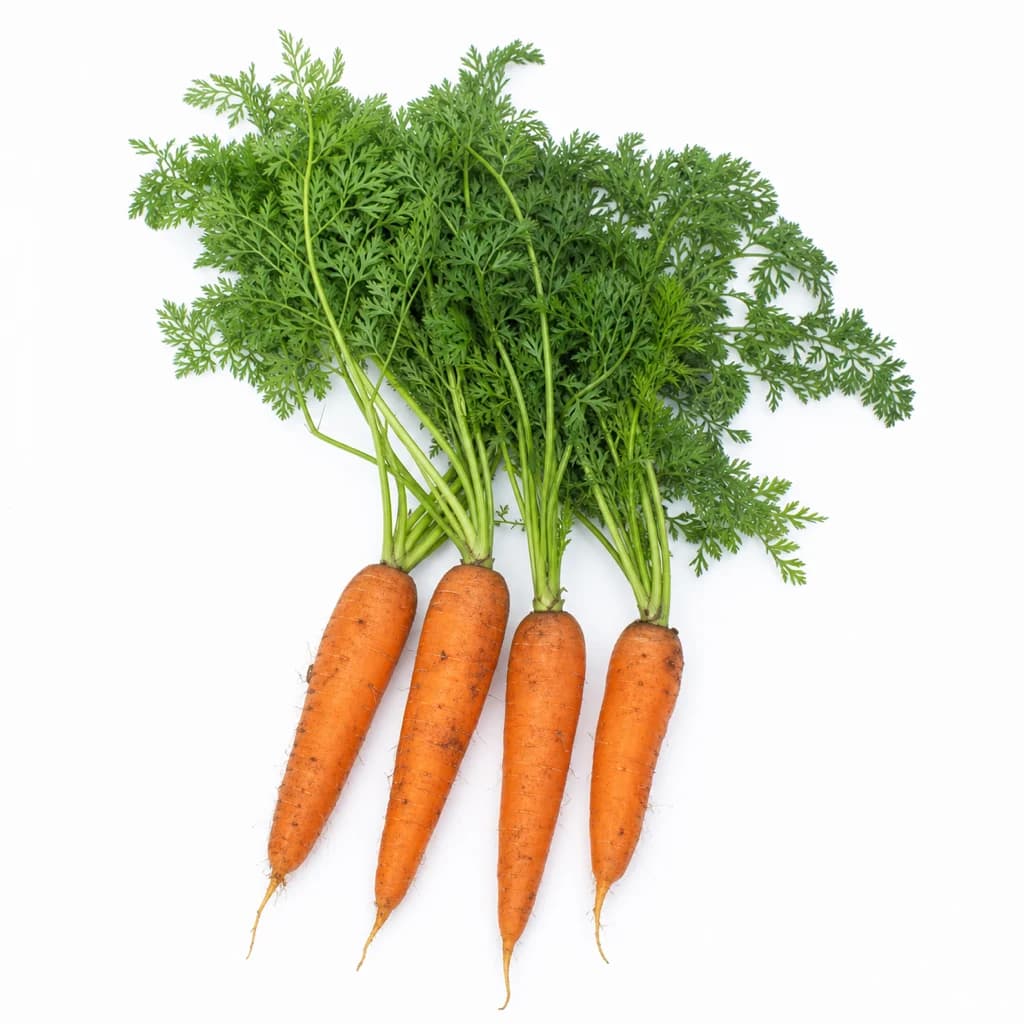
Carrot
Sweet, crunchy root — raw, roasted, or the base of a sofrito
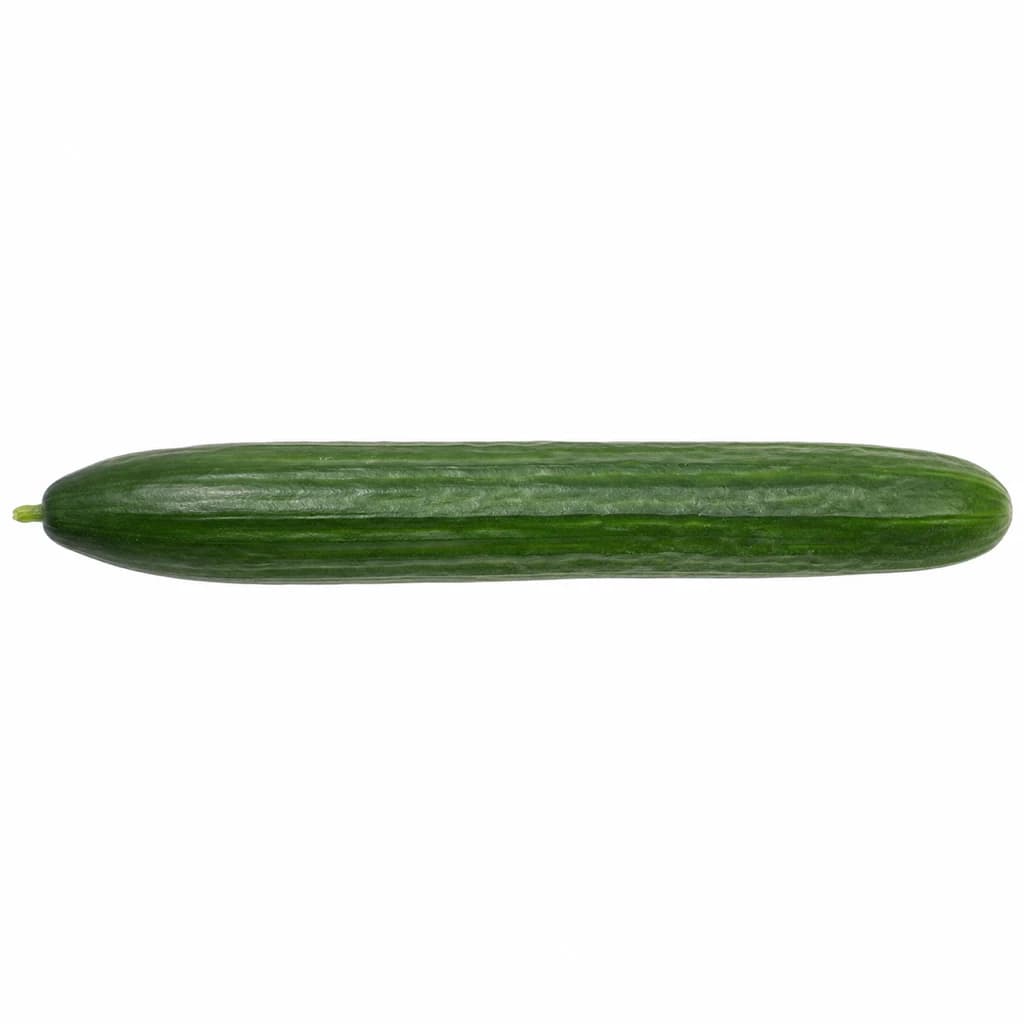
Cucumber
Cool, crisp, and watery — for salads, pickles, and tzatziki

Lettuce
Crisp leaves for salads, wraps, and a fresh crunch