Natural form
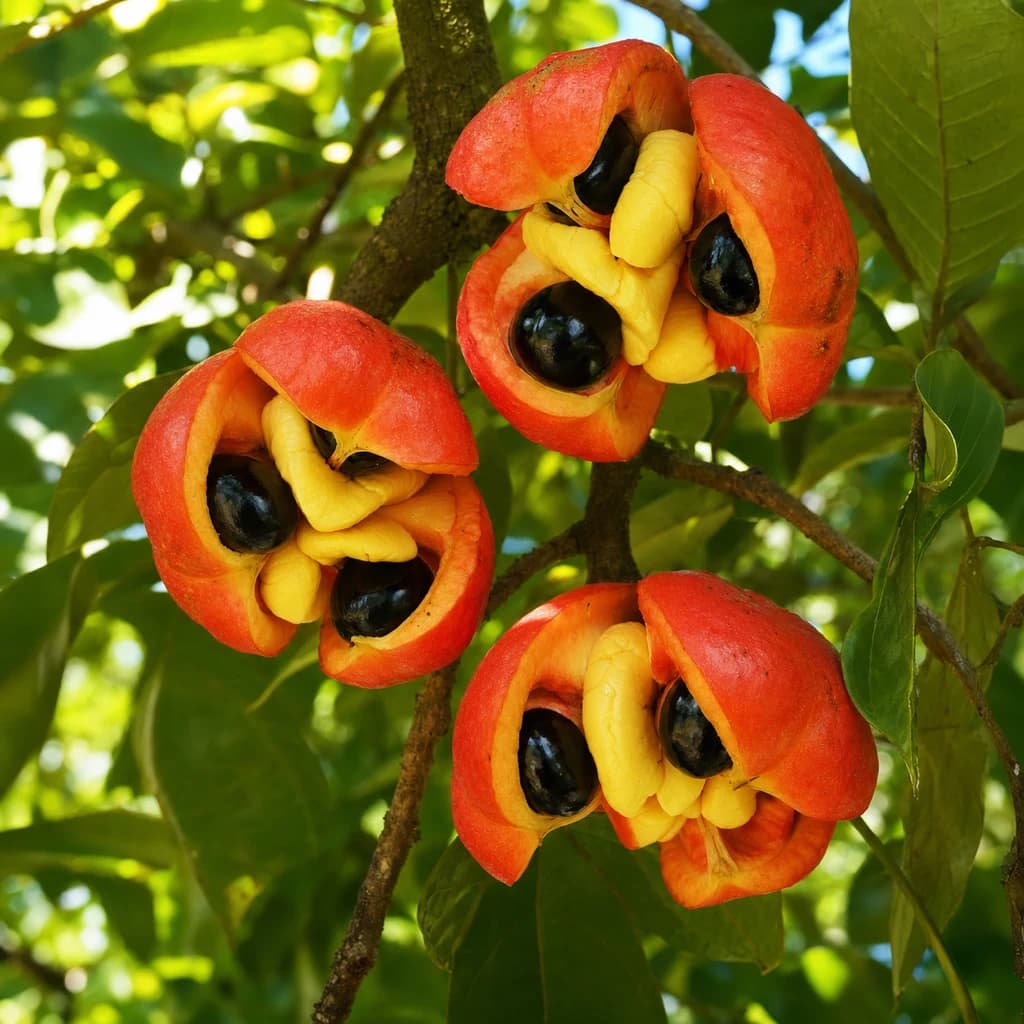
Ripe ackee pods split open naturally on the tree, revealing yellow arils and black seeds.
Shows the reader exactly how ackee looks at the source and why the open pod signals ripeness and safety.
Produce
Ackee
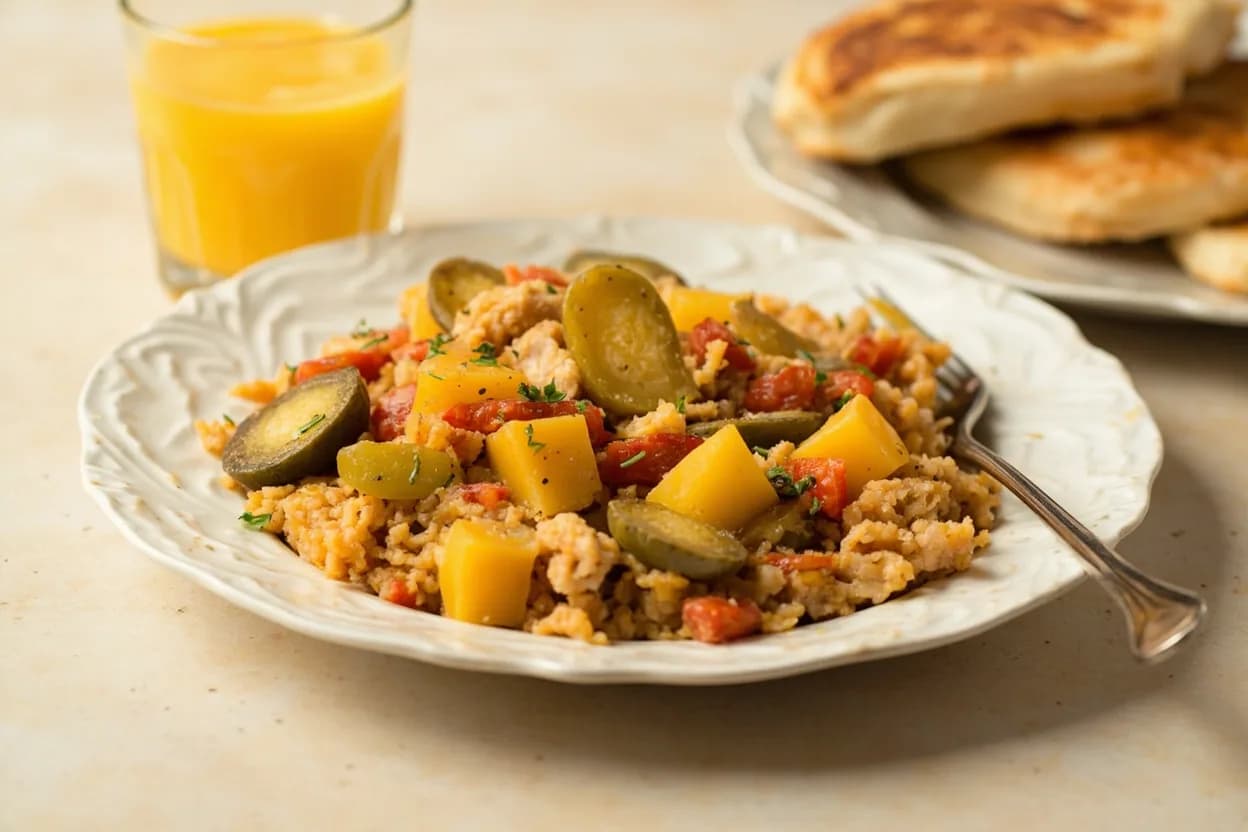
Soft, creamy Jamaican fruit cooked like scrambled eggs in ackee and saltfish.
Ackee is a pear-shaped fruit whose ripe yellow arils have a soft, buttery texture and mild, savory flavor. It is Jamaica's national fruit, most famously sautéed with salted cod in ackee and saltfish. Only the fully ripened, naturally opened fruit is safe to eat, as unripe ackee is toxic.
Ackee (Blighia sapida) is a West African fruit that became Jamaica's national treasure after its introduction in 1778 via Captain William Bligh. The entire fruit is toxic — only the bright yellow arilli, the fleshy lobes surrounding the seeds inside a fully ripened, naturally opened pod, are edible. This is not a cosmetic warning: unripe ackee contains hypoglycin A and B, compounds that cause severe hypoglycemia and the so-called "Jamaican vomiting sickness," which can lead to coma. Commercially canned ackee, however, is pre-cooked under strict safety controls and completely safe to use. The fruit has a mild, faintly nutty, subtly sweet flavor that deliberately takes direction from its seasonings, which is why it functions as a canvas for aromatics rather than a bold ingredient in its own right. Its texture, when cooked correctly, is buttery and custardy — remarkably similar to scrambled eggs, which is why it works so convincingly in breakfast preparations. Fresh ackee peaks in Jamaica from October to December, but canned ackee in brine is available year-round in specialty and international markets worldwide, making it practical for any cook regardless of geography.
- Measured in
- g
- Storage
- Fridge
Types & varieties
Most common variety; bright red exterior when ripe, revealing yellow arilli inside
Less common; yellow-orange exterior, slightly sweeter arilli
Predominant form outside the Caribbean; pre-cooked and toxin-free, widely available in international grocery stores
Understanding Ripeness: The Safety Foundation
The line between safe and dangerous ackee is absolute. A ripe ackee pod splits open naturally on the tree, exposing the yellow arilli — it does not need to be forced or pried open. The arilli inside should be creamy yellow with no pink veining and no attached seed fragments. Commercially canned ackee is always made from fruit that has reached this stage of natural ripeness, so it carries no toxin risk. Fresh ackee, whether foraged or purchased at market, must be inspected carefully: the pod should gape open fully, the arilli should be pale yellow and firm, and every trace of pink membrane must be removed before cooking. When in doubt, buy canned.
- Never consume closed, unopened pods — the toxin concentration is highest before natural opening
- If fresh ackee smells sharp or bitter rather than mild and nutty, discard it
- Canned ackee labeled 'ackee in brine' is the standard safe product; avoid any can that appears damaged or expired
Working with Canned Ackee
Canned ackee comes fully cooked, which changes how you handle it in the kitchen. Because it is already tender, the primary risk is overcooking, which turns the arilli to mush and ruins the dish's texture. Most preparations call for adding canned ackee in the last 3–5 minutes of cooking. Before adding it to the pan, drain the brine and gently press the arilli between layers of paper towel to remove excess moisture — this allows them to brown slightly and hold their shape rather than steaming in their own liquid. Canned ackee breaks apart easily, so handle it with a light hand when stirring.
- Drain and press canned ackee before cooking for better texture and browning
- Add canned ackee late in the cooking process, typically the last 3–5 minutes
- Do not boil vigorously after adding ackee; a gentle simmer or light sauté preserves the custardy texture
Common uses
Tips & pitfalls
- Never eat unripe (closed) ackee — the toxins can cause severe hypoglycemia, vomiting, and even coma
- If cooking fresh ackee, confirm the fruit has opened naturally on the tree; the outer shell must be fully split, exposing the yellow arilli
- Remove every trace of the bitter pink veining and any seed fragments from the arilli before cooking
- Canned ackee is already cooked; add it toward the end of cooking to avoid it falling apart
- Press canned ackee gently on paper towels before cooking to remove excess moisture, which helps achieve a better sauté
- Do not overcook — ackee disintegrates quickly; 3–5 minutes of gentle sautéing is usually sufficient
- Fresh ackee can be parboiled first (20–30 minutes) before sautéing as an additional safety step with home-prepared fruit
- Handle Scotch bonnets carefully; they can be split before cooking to control heat distribution rather than cutting them directly
- Ackee absorbs seasoning readily, so build a strong aromatic base of onion, tomato, and herbs before adding the fruit
Nutrition
Nutrition
No USDA FoodData Central match for Ackee yet. We surface a per-100 g profile once a generic whole-food entry is matched and verified.
In the shops
Matched grocery products
No matched grocery products for Ackee yet.
Good to know
- Scientific name
- Blighia sapida
- Origin
- West Africa (Gold Coast)
- Introduced to Caribbean
- 1778, via Captain William Bligh to Jamaica
- National fruit
- Jamaica
- Edible part
- Yellow arilli only (fleshy lobes surrounding the seeds)
- Toxicity risk
- Unripe fruit, seeds, and outer rind contain hypoglycin A & B; never consume unripe or closed pods
- Flavor
- Mild, nutty, faintly sweet; absorbs seasonings readily
- Texture when cooked
- Buttery, custardy, comparable to scrambled eggs
- Peak season (fresh, Jamaica)
- October–December
- Storage (fresh, opened)
- Refrigerate and use within 2–3 days
- Storage (canned, opened)
- Refrigerate up to 5 days
Substitutes
- Scrambled eggs — Similar soft, creamy texture and neutral flavor that takes seasoning well; use as a direct breakfast substitute
- Firm tofu (pressed and crumbled) — Comparable texture when crumbled and sautéed; best when seasoned with Caribbean spices and cooked until lightly golden
- Chickpeas (canned, drained) — Protein-rich alternative with a firmer bite; works well in saltfish-style preparations where structure matters
- Ube (purple yam) — Provides creaminess but distinctly different flavor; acceptable in non-traditional or fusion preparations
Pairs with
Also called
Akee · Jamaican Ackee
Appears in these dishes
Related
Tomato
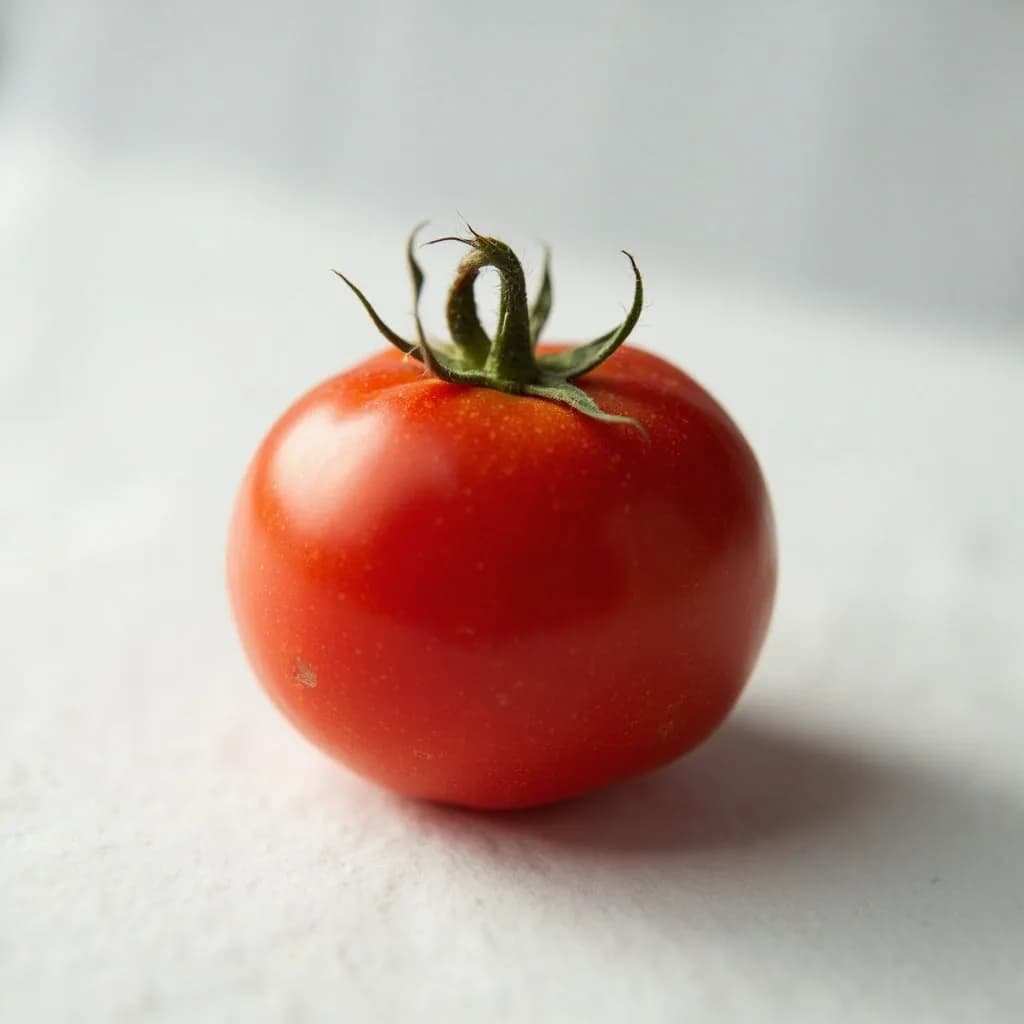
Juicy, sun-sweet fruit for sauces, salads, and slow-cooked depth
Yellow Onion
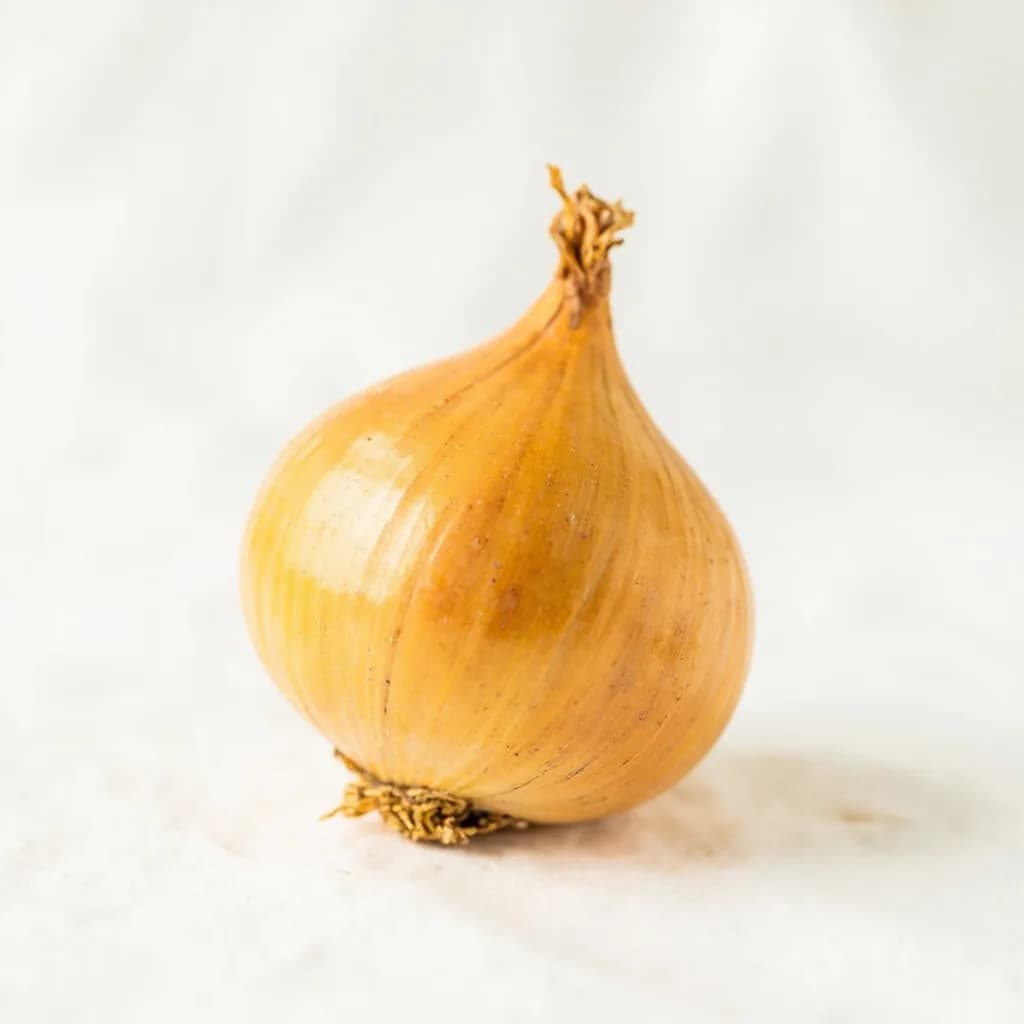
The aromatic backbone of soups, sofritos, and braises
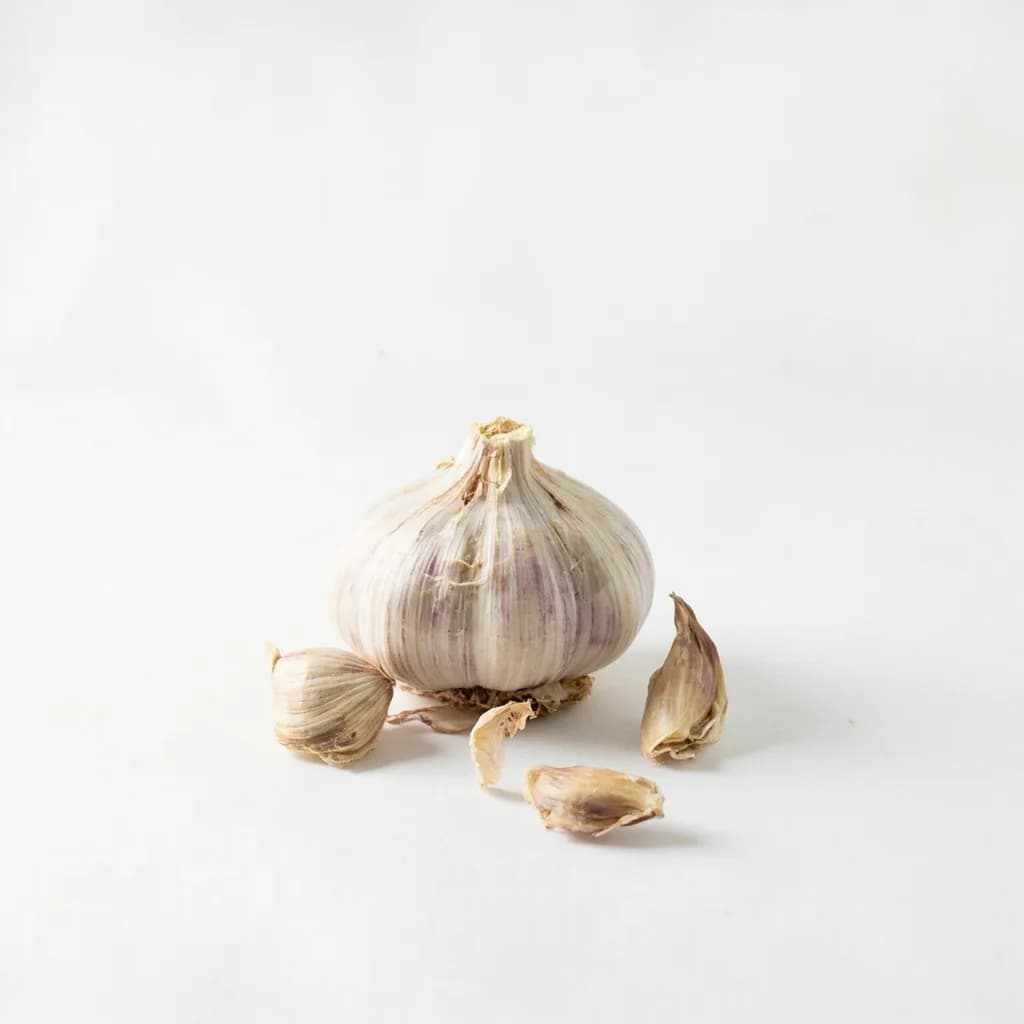
Garlic
Pungent cloves that perfume nearly every savory dish
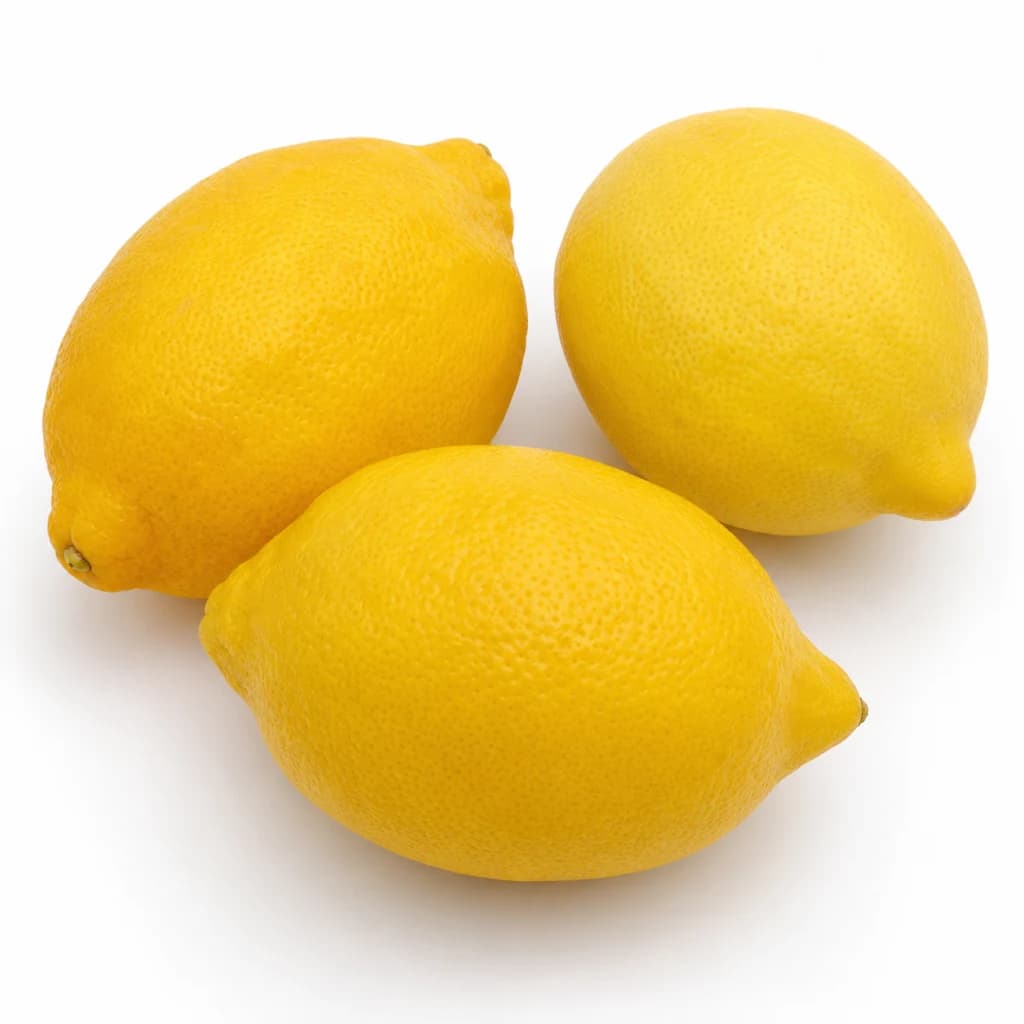
Lemon
Bright, acidic citrus that wakes up almost any dish
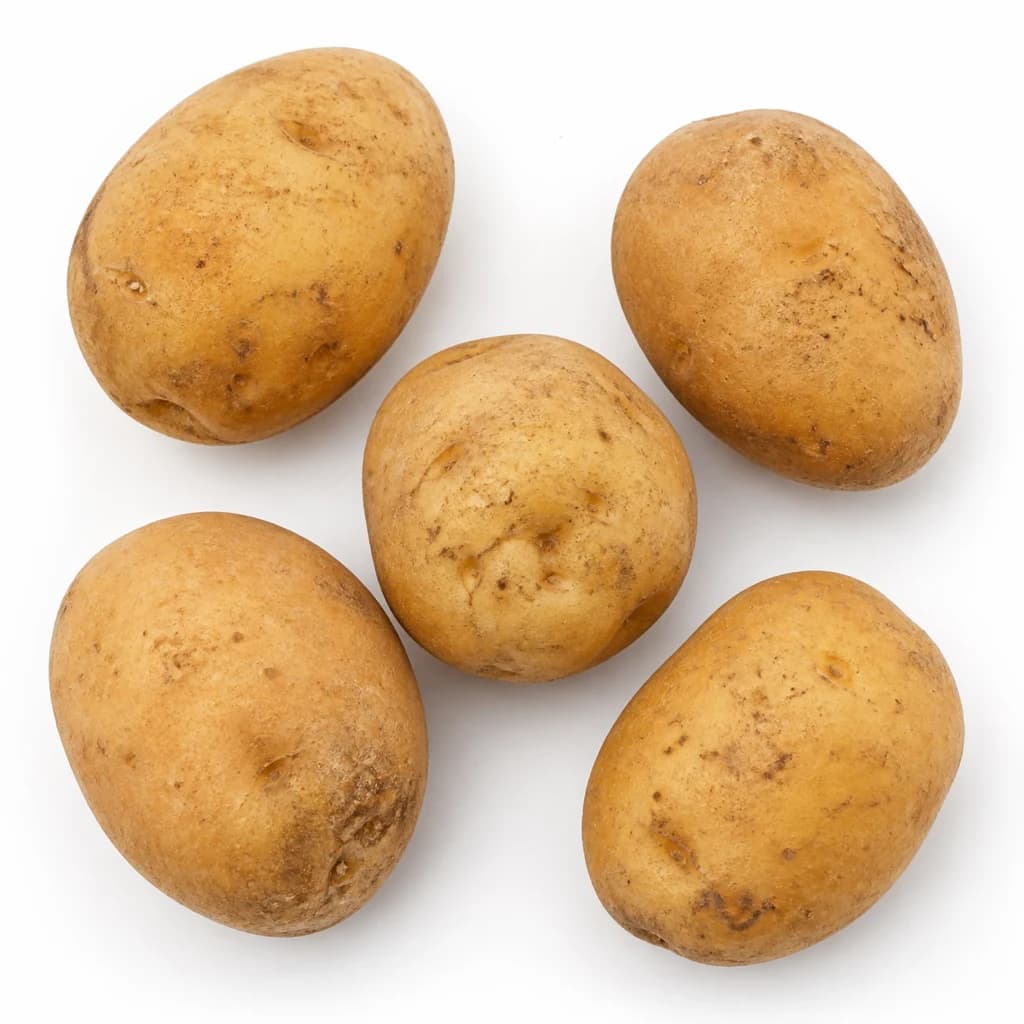
Potato
Humble, hearty staple — roast, mash, fry, or boil
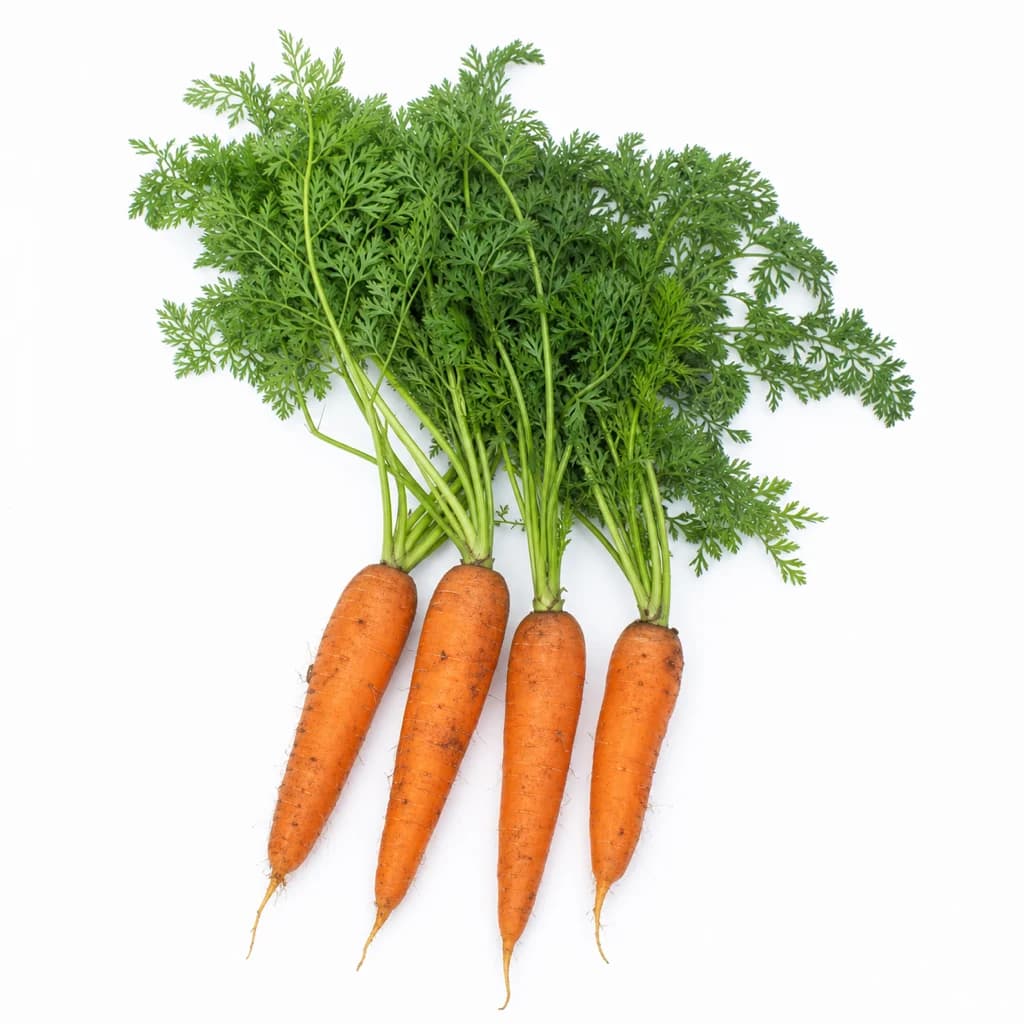
Carrot
Sweet, crunchy root — raw, roasted, or the base of a sofrito
Cucumber
Cool, crisp, and watery — for salads, pickles, and tzatziki

Lettuce
Crisp leaves for salads, wraps, and a fresh crunch