East Asia
Cantonese Roast Meat (Siu Mei)
Also: 燒味, Siu Mei, Chinese BBQ, Cantonese BBQ
A specialized Cantonese craft tradition in which master roasters transform pork, duck, and chicken into lacquered, caramelized monuments of technique — hung in shop windows, sold by the gram.
Siu mei (燒味) is the distinct Cantonese tradition of roasting and glazing whole animals or large cuts in specialized roasting ovens (掛爐), then hanging the finished product in the shop window for same-day sale by weight. It is a professional discipline separate from home cooking and restaurant cooking — siu mei shops (燒臘店) are run by trained roast-meat masters whose techniques for marinating, glazing, and roasting are closely guarded. The tradition encompasses char siu (叉燒, barbecued pork), siu yuk (燒肉, crispy-skin roast pork), roast duck (燒鴨), roast goose (燒鵝), soy sauce chicken (豉油雞), and occasionally roast pigeon. The combination of deep mahogany color, lacquered skin, and precisely calibrated sweet-savory flavor is one of Cantonese cooking's defining achievements.
The flavour base
The master marinade for char siu is built on five-spice powder, soy sauce, hoisin, fermented red bean curd (南乳), and sugar or honey; the surface glaze adds maltose for caramelization and shine. Siu yuk relies on a dry salt-and-spice rub beneath the skin, with the skin itself dried then flash-roasted at high heat for maximum blistering and crunch.
Pantry staples
Key ingredients
Signature techniques
Signature dishes
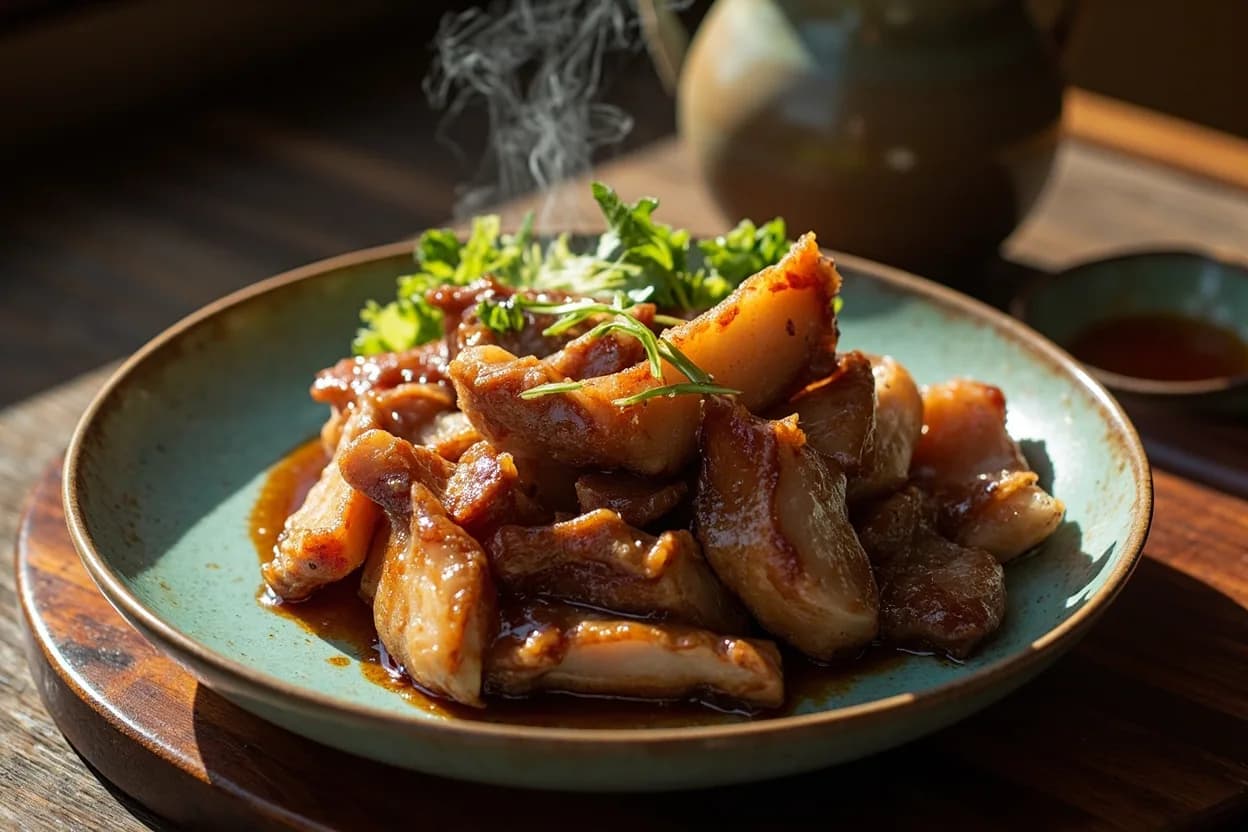
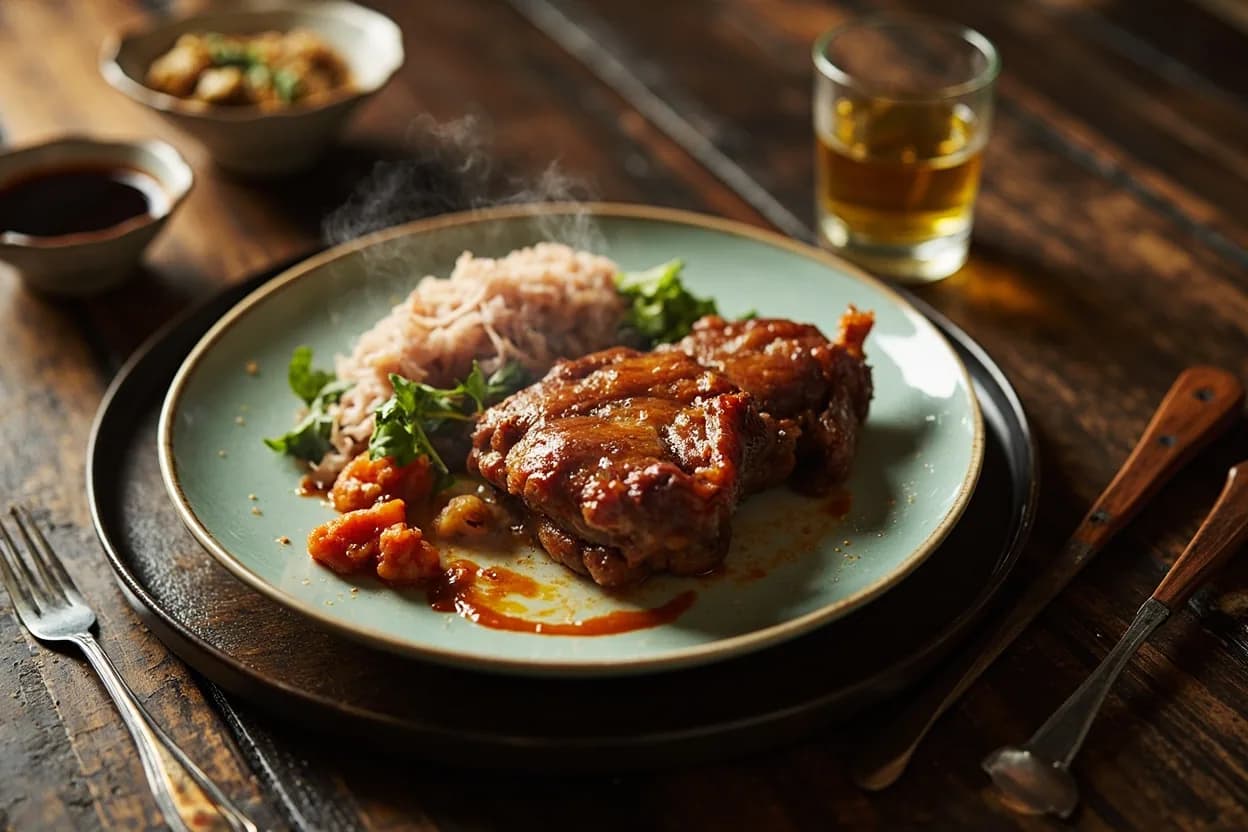
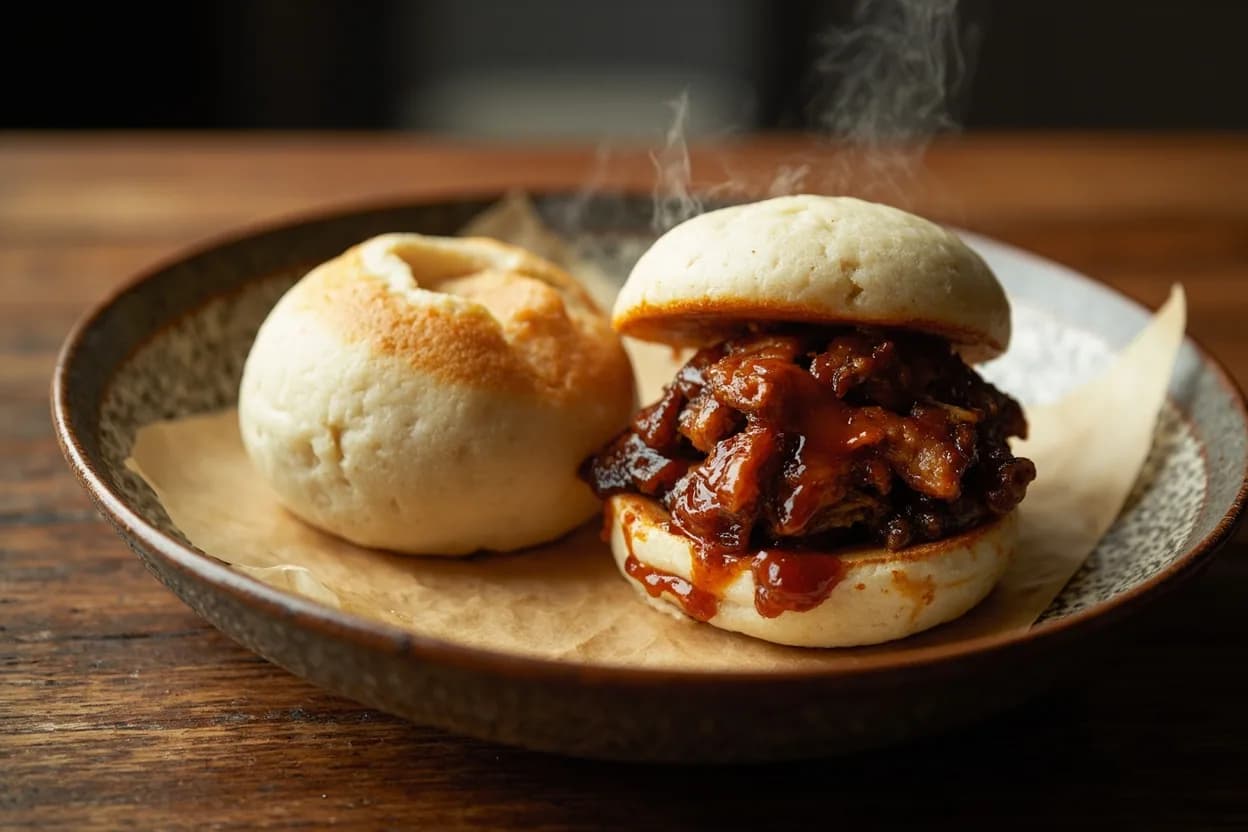
Cantonese Roast Meat (Siu Mei) on the table

At the table
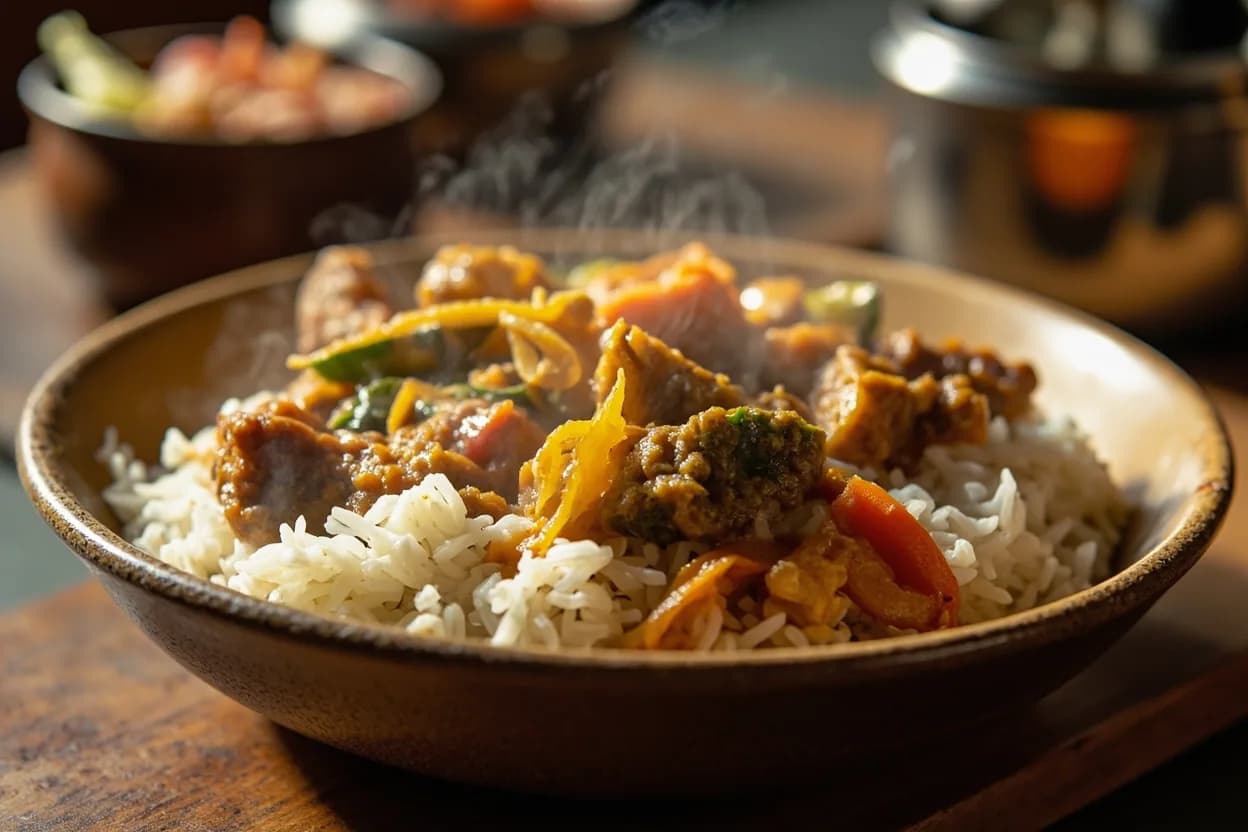
Siu mei is sold throughout the day from dedicated shops and eaten across all meal contexts. At lunch and dinner it is most commonly ordered as a rice plate — sliced meat laid over steamed white rice, drizzled with house sauce and a little of the rendered fat from the roasting. In the home context, a purchased portion of char siu or roast duck becomes the protein component of a simple family meal. Dim sum restaurants serve char siu as a filling in bao and cheung fun. High-end restaurants may feature whole roast goose as a prestige banquet item.
History & context
The tradition of roasting whole animals over fire in Cantonese cooking is ancient, with written records of roast pig at ceremonial feasts dating to the Han dynasty. The specific siu mei craft tradition — marinating, lacquering, and hanging finished meats for retail sale — crystallized in Guangzhou during the Qing dynasty. It spread throughout southern China and then globally as Cantonese emigrants established Chinatowns in North America, Southeast Asia, the UK, and Australia, each carrying the techniques and often the equipment with them. Yat Lok in Hong Kong is among the most celebrated practitioners; Lung King Heen at the Four Seasons has raised siu mei to Michelin-starred heights. Geese from Guangdong's Shijie breed — larger-breasted, fattier — are considered the finest for roast goose, and the best roast goose in the world is widely acknowledged to be at Yung Kee or Kam's Roast Goose in Hong Kong.
Regional variations
- Guangzhou (Canton)
The origin point; slightly less sweet char siu, emphasis on roast goose over duck, strong tradition of soy-braised cuts
- Hong Kong
More intensely sweet char siu glaze, roast goose a cultural obsession (particularly Shatin-style), and the highest concentration of Michelin-recognized siu mei practitioners
- Overseas Chinatown style
Often adapted to local pork breeds and available ingredients; char siu may be tinted with red food coloring where fermented bean curd is unavailable; overall slightly sweeter and saucier
Related cuisines
Siu mei is an autonomous sub-discipline within the broader Cantonese culinary tradition
Cha chaan tengs routinely serve char siu and roast duck rice plates as their core lunch offerings
- Guangdong (Teochew)
Teochew roast goose uses a different marinade profile — often more herbal and less sweet — and is a point of regional pride distinct from Cantonese siu mei
Canonical recipes
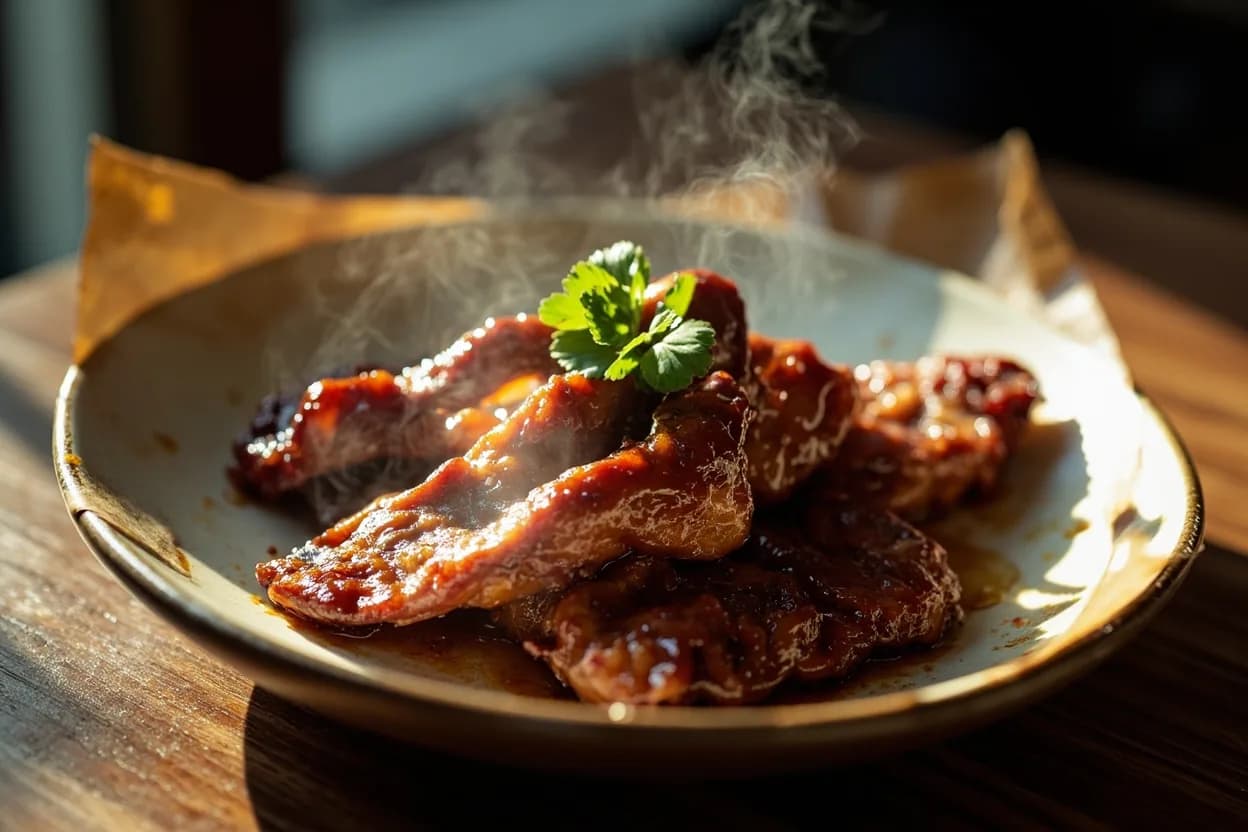
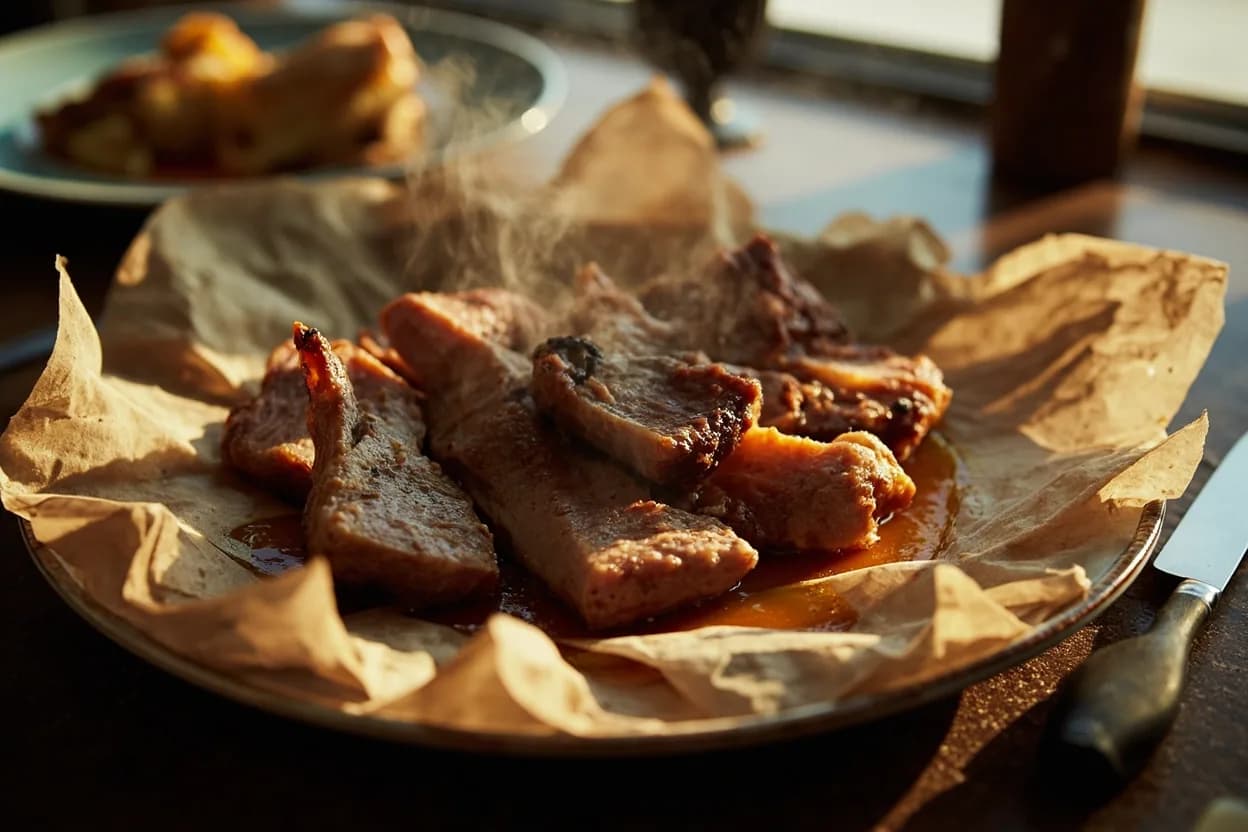
The dishes that define Cantonese Roast Meat (Siu Mei), documented in the Canon.
References
- 1.Land of Fish and Rice — Fuchsia Dunlop (W.W. Norton, 2016)
- 2.The Food of China — E.N. Anderson (Yale University Press, 1988)
- 3.Chinese Gastronomy — Hsiang Ju Lin & Tsuifeng Lin (Hastings House, 1969)
Confidence: high
Notes
The roasting oven
Traditional siu mei ovens are cylindrical, steel, hook-equipped structures heated by charcoal or gas from below. Meats hang from hooks suspended from a rack across the top, rotating in the convective heat. The design allows the fat to baste the meat as it renders and the smoke to circulate freely. Modern shops may use gas rotisserie ovens, but charcoal-fired shops are still considered to produce superior results.
Window display as quality signal
The glistening row of hanging roasted meats in a siu mei shop window is itself a form of quality communication — the color, sheen, and fat distribution of a char siu or the blistering of a siu yuk skin are visible indicators of freshness and technique that the experienced customer reads at a glance.