Sauces & Pastes
Dark Soy Sauce
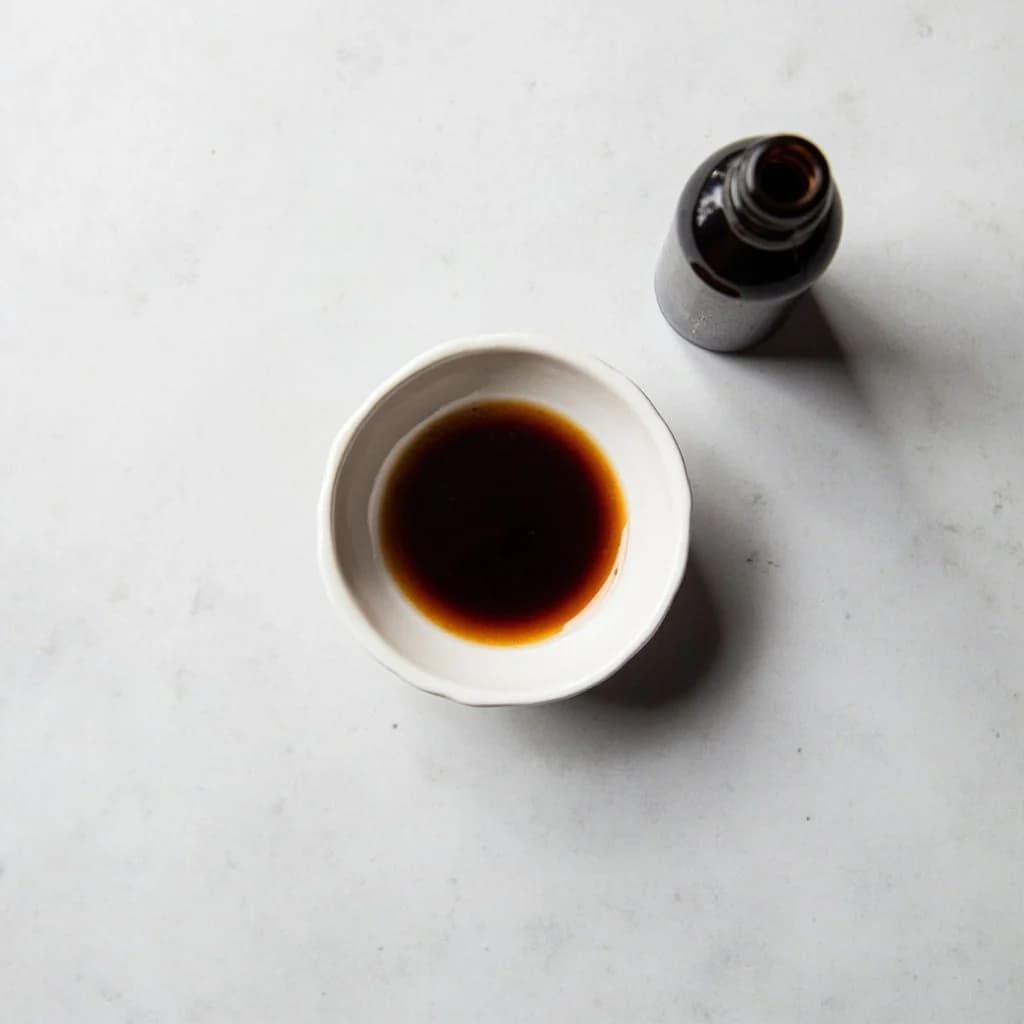
Aged, molasses-thickened soy sauce that is less salty but deeply colored; use sparingly in braises and noodles to lend mahogany color and rounded sweetness.
Dark soy sauce is the Cantonese answer to a specific problem: how to give a long-braised dish a deep mahogany sheen without overloading the pot with salt. It begins as naturally brewed light soy sauce that is aged further, then darkened and lightly sweetened with caramel, molasses, or sugar. The result is a sauce that is noticeably thicker, darker, and less salty than its lighter sibling, with a rounded, almost treacly sweetness and a roasted-soy aroma.
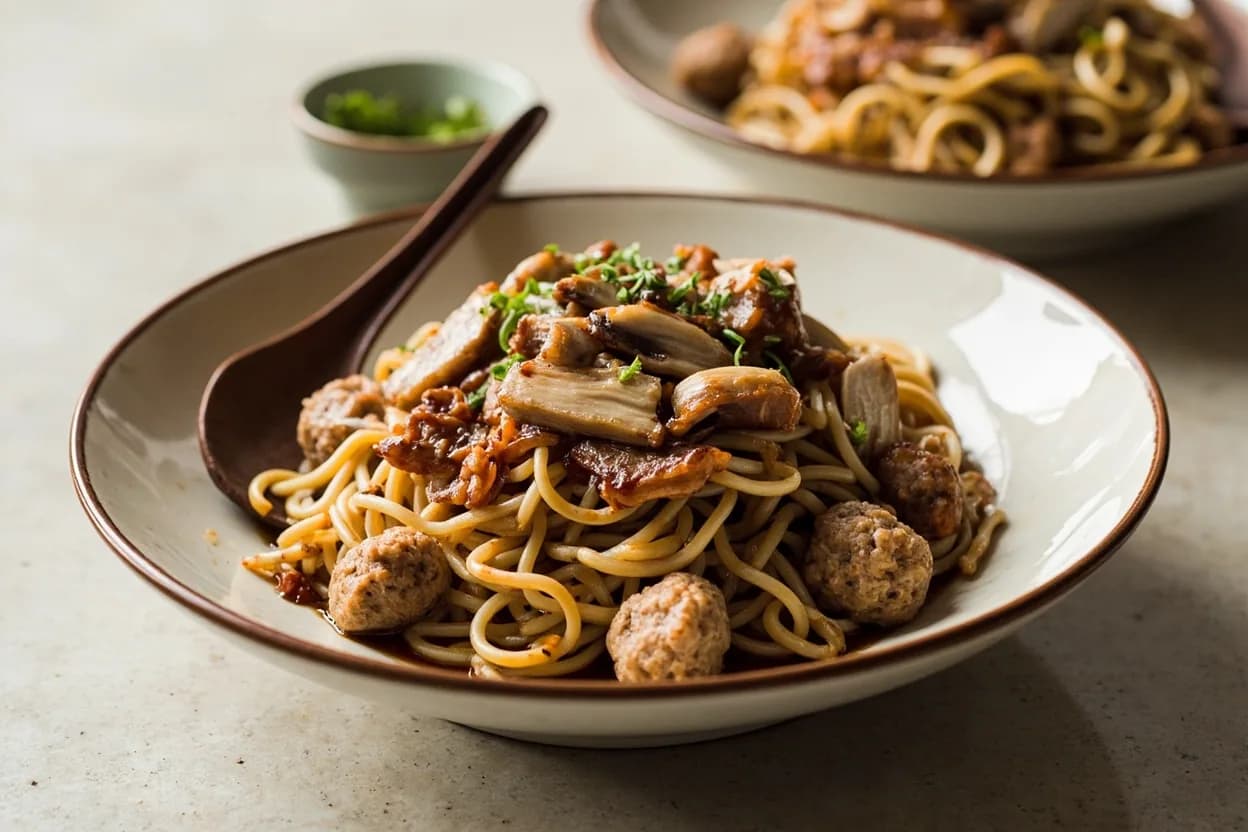
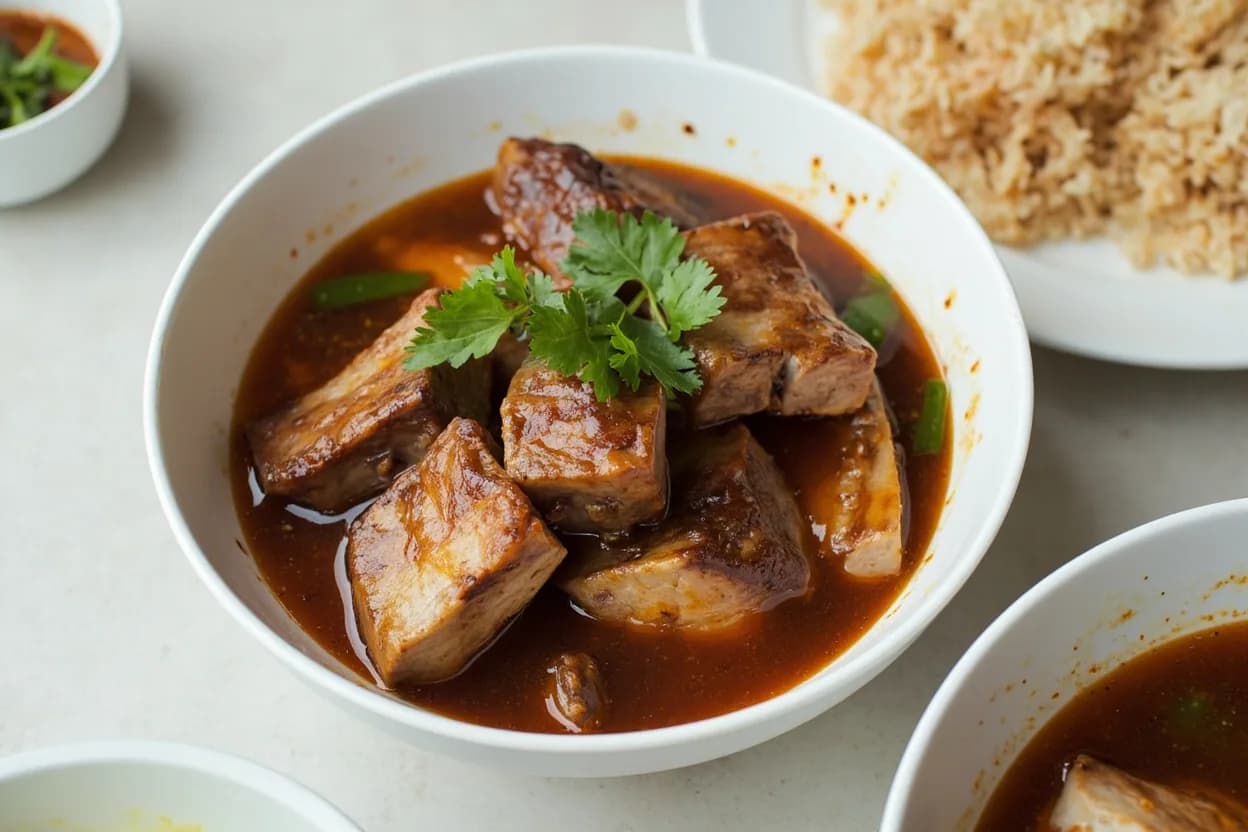
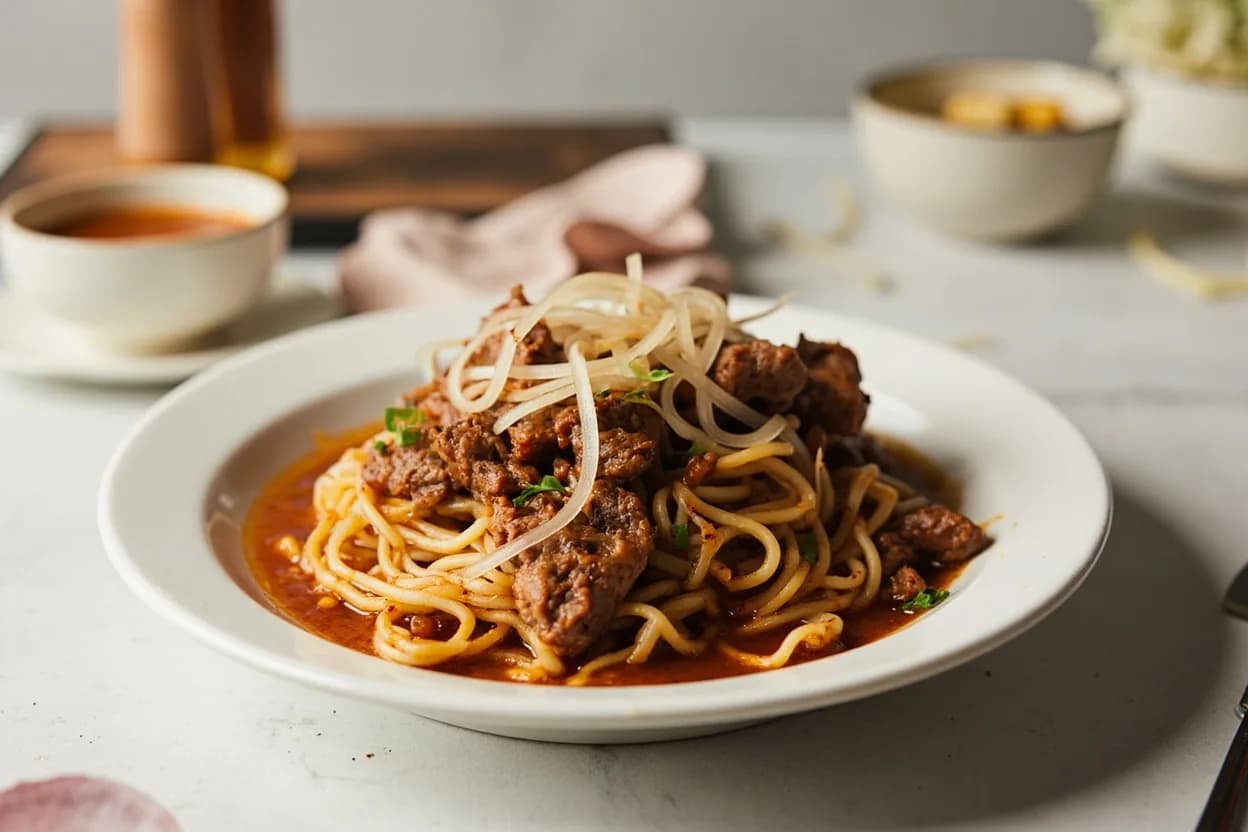
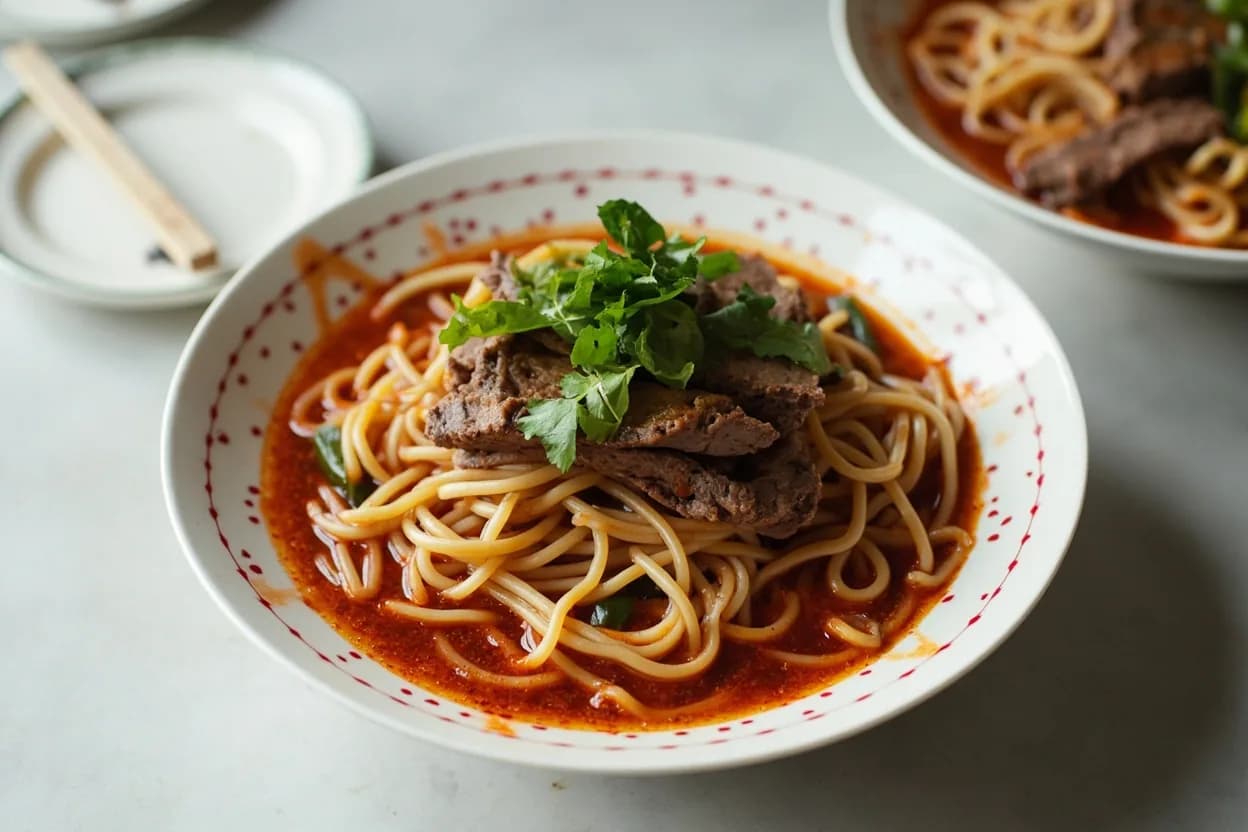
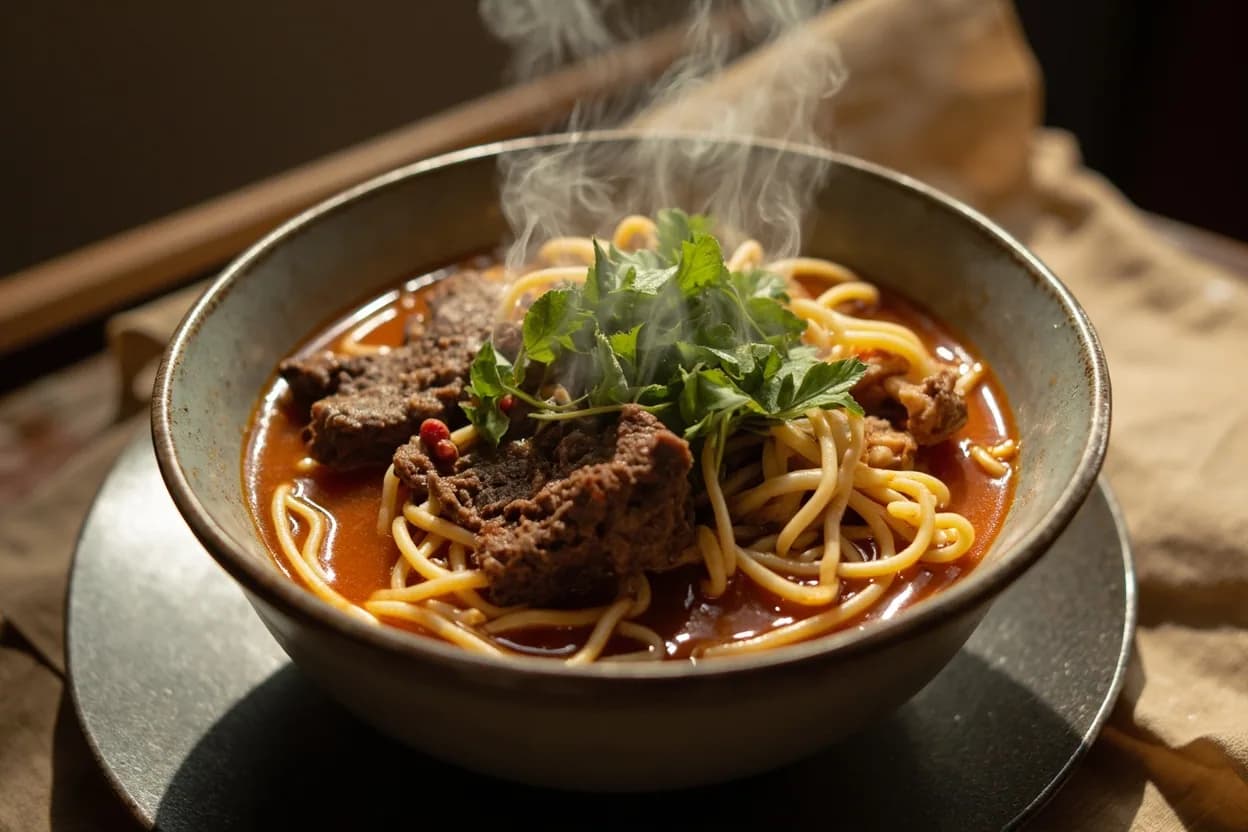
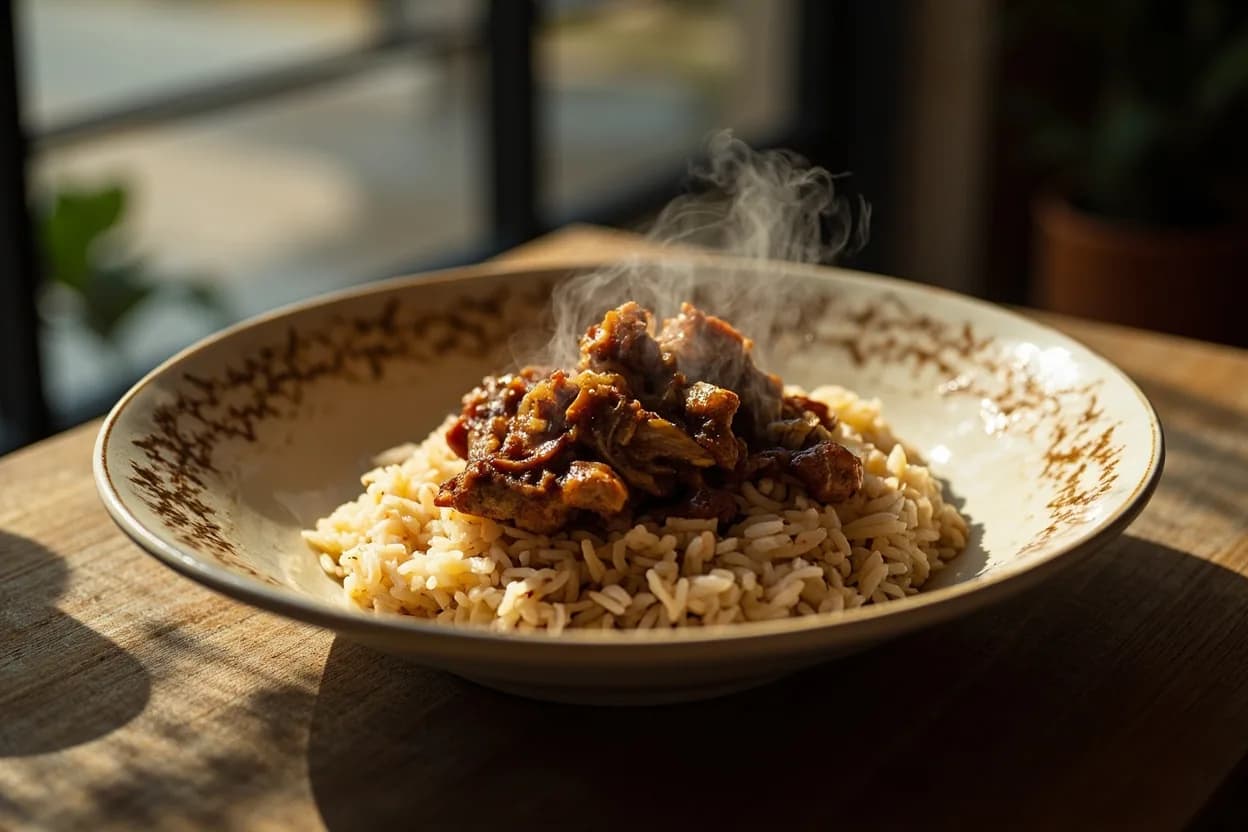
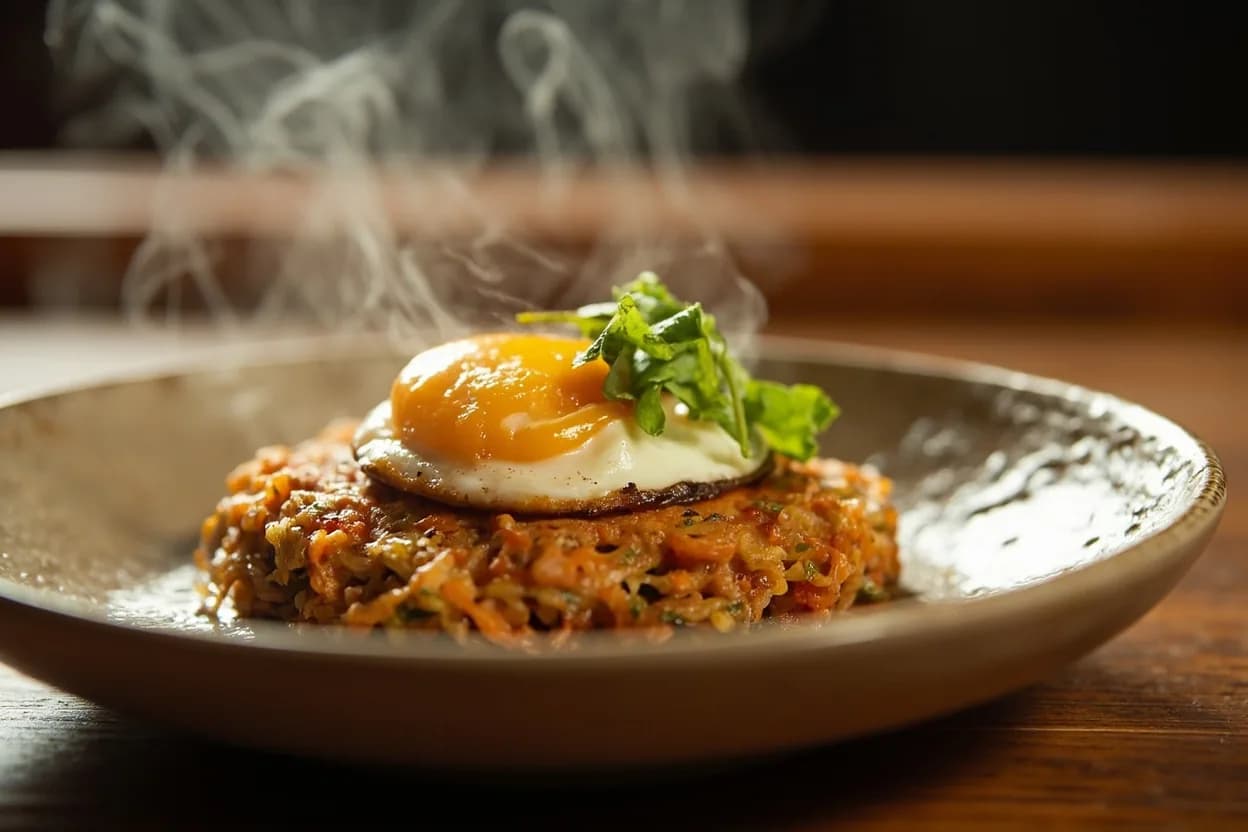
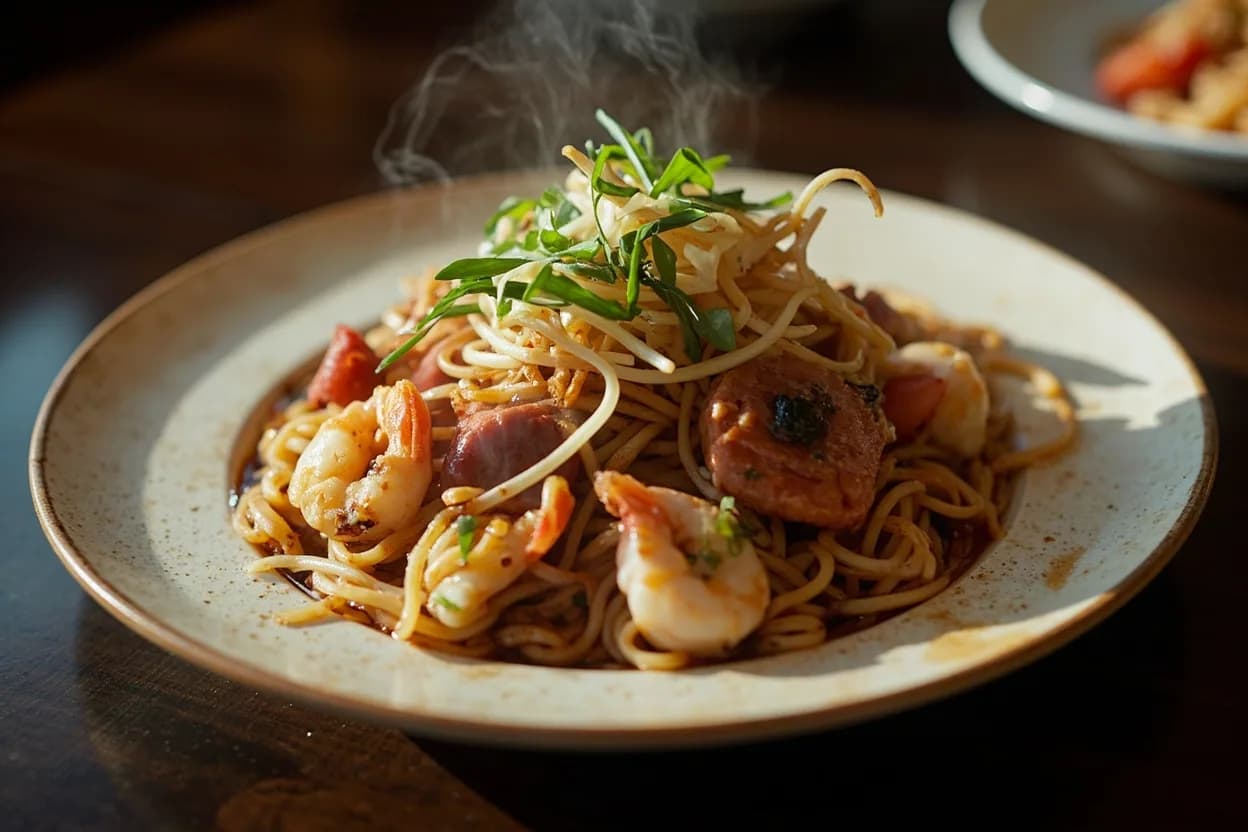
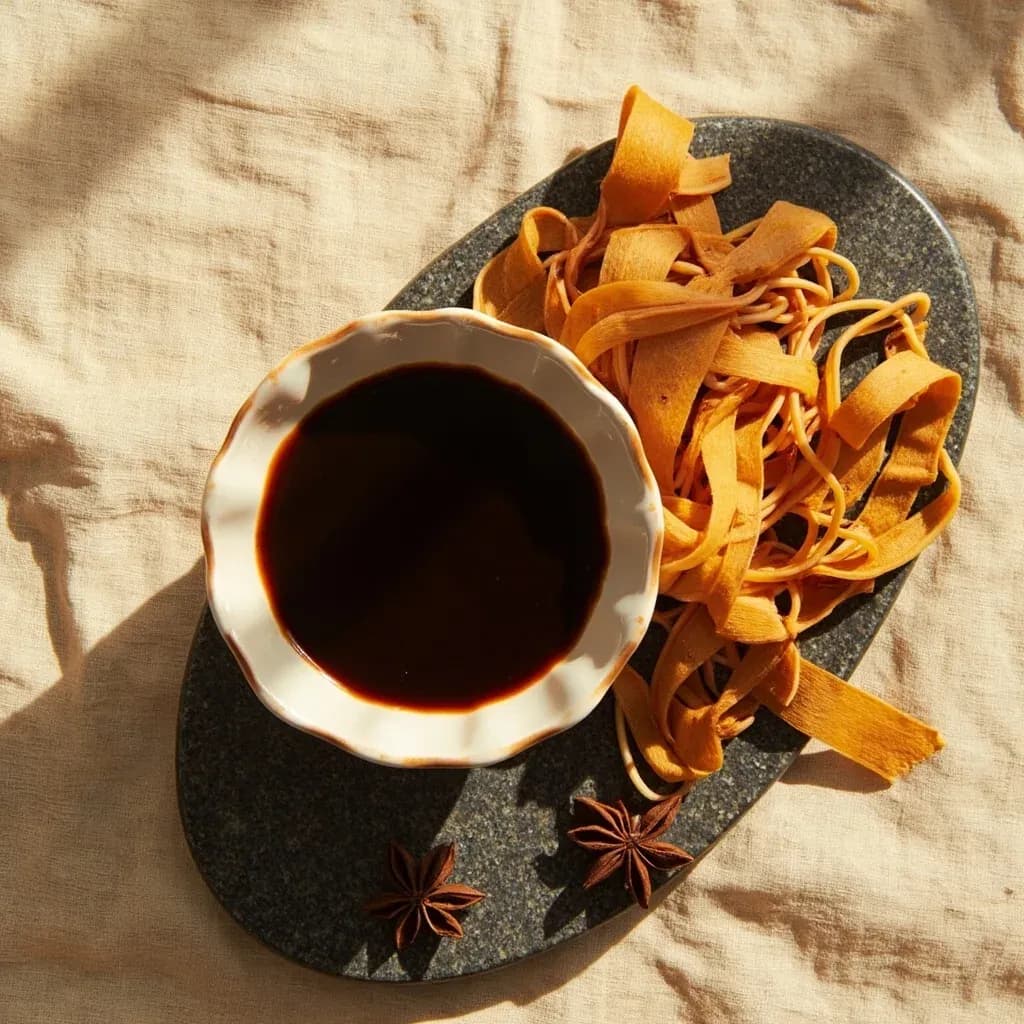
Treat dark soy as a finishing and coloring ingredient rather than a primary seasoning. Its main job is to tint noodles, rice, and braises a glossy reddish-brown, and to give roasted and lacquered meats their characteristic shine. Because the color comes partly from caramelized sugar, dark soy responds beautifully to gentle heat — but it scorches and turns acrid when reduced hard or seared over high flame, so most cooks stir it in during the last third of cooking.
The category extends well beyond Cantonese kitchens. Indonesian kecap manis and Thai sweet soy share the sweet-dark profile but are built on palm sugar, while Japanese koikuchi shoyu, though darker than Chinese light soy, lacks the sweet-thick character entirely. For a cook building a Cantonese pantry, dark soy is non-negotiable; for one working across East and Southeast Asia, it sits alongside several cousins with overlapping but distinct uses.
- Measured in
- ml
- Storage
- Pantry
Allergens
Find it in
Suits
Types & varieties
The standard Cantonese-style dark soy; caramel-colored, mildly sweet, used for color and gentle seasoning
Even thicker, sweeter, and darker, often with extra molasses or caramel; a finishing glaze for char siu and red-braised dishes
Indonesian/Malaysian sweet soy thickened with palm sugar; thicker and sweeter than Chinese dark soy, with a fruitier aroma
Built on palm or cane sugar; used in stir-fries, dipping sauces, and pad thai where a glossy sweetness is wanted
Japan's standard all-purpose soy; darker than Chinese light soy but thinner and saltier than Chinese dark soy — usable as a partial substitute in a pinch
Dark Soy vs. Light Soy
The two are not interchangeable. Light soy (生抽, sheng chou) is thinner, saltier, and more aggressively savory; it is the everyday seasoning soy of Chinese cooking. Dark soy (老抽, lao chou) is thicker, sweeter, and milder; it is the coloring soy. A typical Cantonese braise uses both: light soy for salinity and umami, dark soy in much smaller amounts for the mahogany glaze. If you reach for dark soy when a recipe calls for light, the dish will read flat and sweet. If you reach for light when a recipe calls for dark, the dish will look pale and taste thin. Most pantry mistakes with soy sauce come from confusing these two roles.
- Light soy seasons; dark soy colors and finishes.
- Most recipes call for 2 to 4 times more light soy than dark soy by volume.
- Dark soy's color comes from added caramel or molasses, not from longer brewing alone.
- A bottle labeled 'premium' or 'aged' dark soy usually means real caramel was used rather than synthetic caramel color, giving a glossier, more nuanced result.
Common uses
Tips & pitfalls
- Use dark soy late in cooking; adding it early and reducing it hard makes a dish bitter and muddy rather than glossy.
- A little goes a long way — start with half a teaspoon per dish and adjust by color, not by taste.
- Never substitute 1:1 for light soy; it lacks the assertive salinity, so combine it with light soy (or salt) and a sweetener to mimic its role.
- If a dish comes out too dark or bitter, brighten it with a splash of rice vinegar or a pinch of sugar rather than adding more soy of any kind.
- Choose a naturally brewed version (Pearl River Bridge, Lee Kum Kee Premium, Kimlan) over chemically produced dark soy for cleaner flavor and a glossier finish.
- Double black soy is a finishing glaze, not a braising liquid — it scorches easily over high heat.
- Combine it with Shaoxing wine, rock sugar, star anise, and ginger for an authentic Cantonese red-braise base.
- If the bottle has been open for more than a year, taste before using — oxidation dulls the color and turns the flavor flat.
Nutrition
Energy
778 kJ · per 100 g
Where the calories come from
Protein
4g
8% DV
Carbs
11.6g
4% DV
Fat
13.8g
18% DV
Fiber
0.3g
1% DV
Sugars
4g
of which
Sodium
373mg
16% DV
Source · USDA FoodData Central · approx. Sauce, homemade, white, thick
View on FDC →In the shops
Matched grocery products
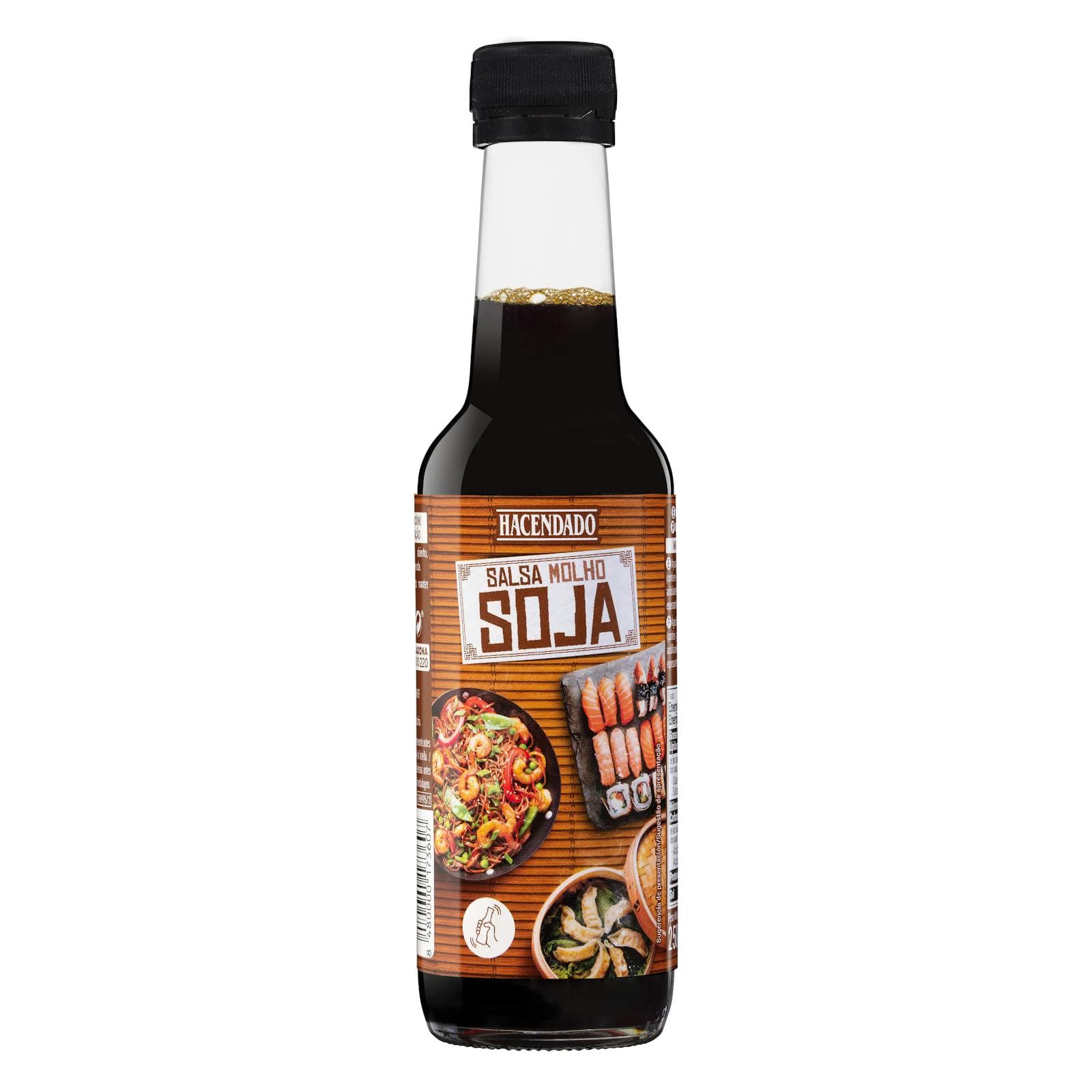 €1.20
€1.20Soy Sauce
Hacendado · 0.25 L · Mercadona
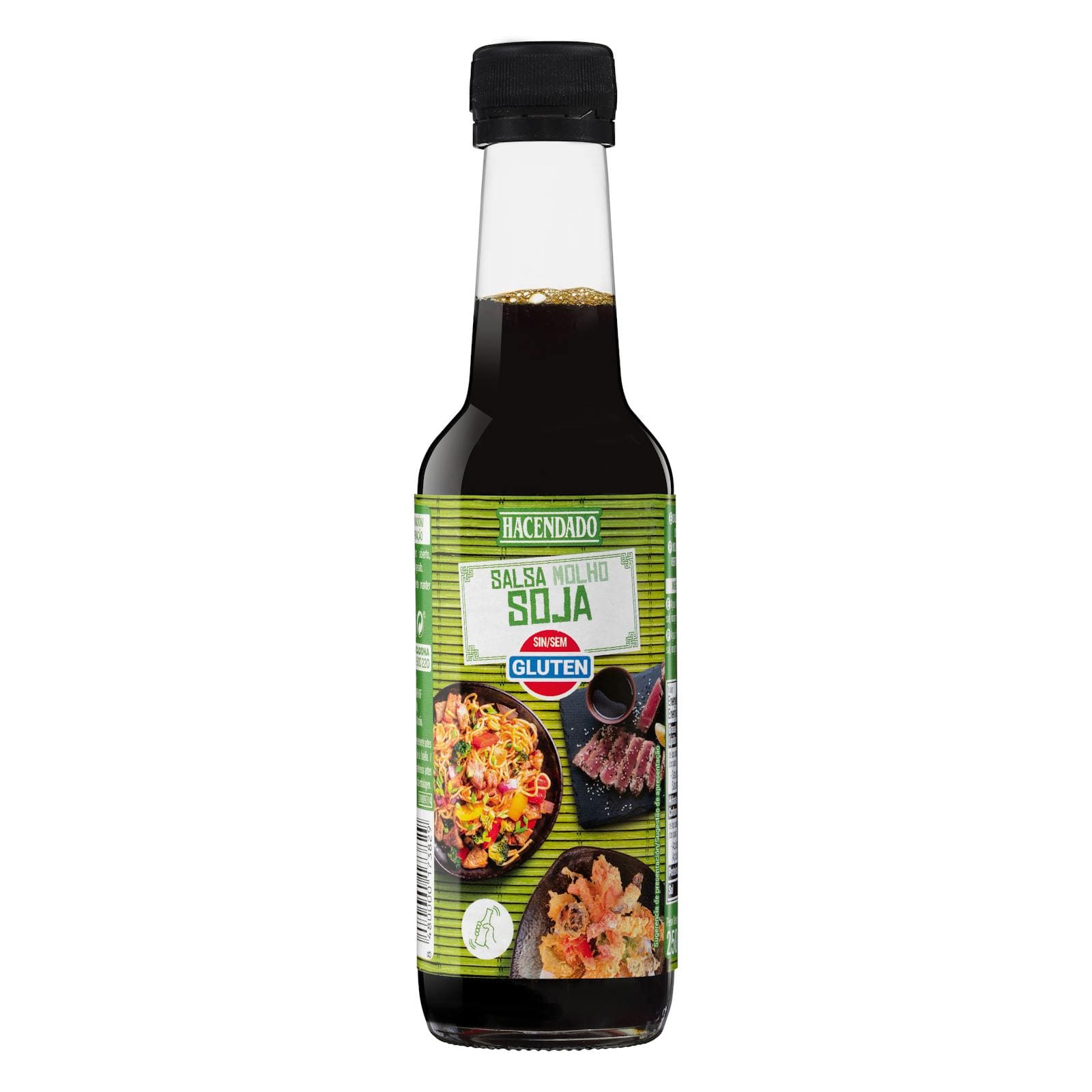 €2.50
€2.50Gluten-Free Soy Sauce
Hacendado · 0.25 L · Mercadona
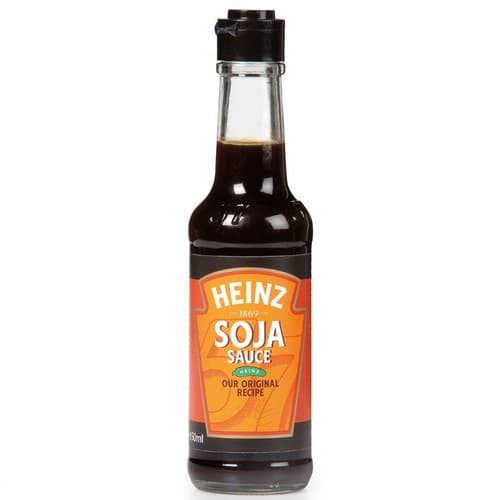 €2.99
€2.99HEINZ Soy Sauce
HEINZ · l · Bonpreu
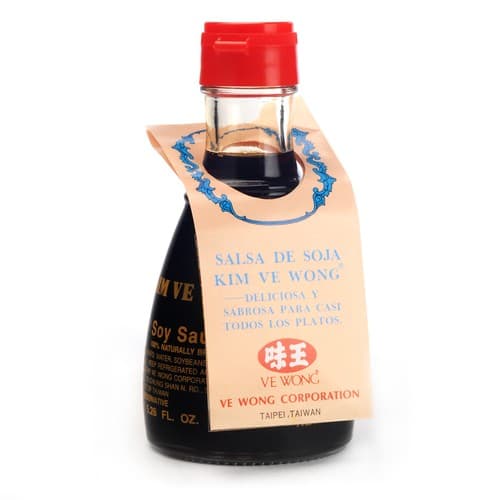 €2.79
€2.79VE WONG Soy Sauce
VE WONG · l · Bonpreu
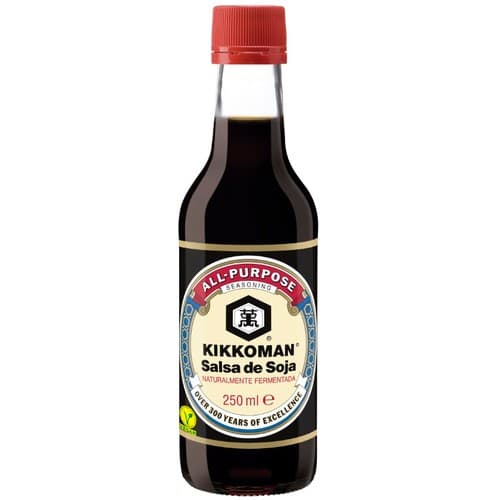 €4.89
€4.89Kikkoman Soy Sauce
KIKKOMAN · l · Bonpreu
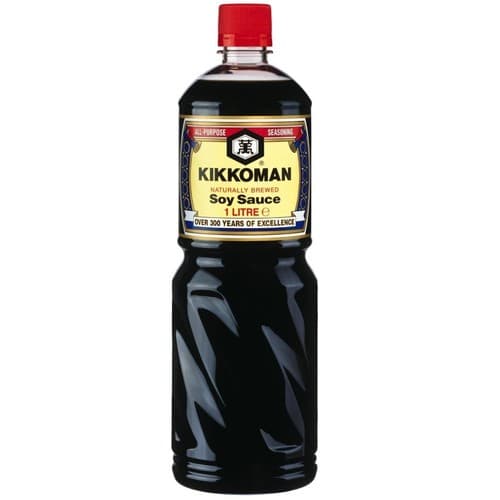 €10.99
Kikkoman Soy Sauce
KIKKOMAN · l · Bonpreu
Good to know
- Chinese name
- 老抽 (lǎo chōu); Cantonese lo chau
- Origin
- Southern China, particularly Cantonese (Guangdong) culinary tradition
- Process
- Naturally brewed light soy sauce is aged, then darkened and slightly sweetened with caramel and/or molasses
- Color
- Deep reddish-brown to near-black; opaque and glossy
- Saltiness
- Lower perceived saltiness than light soy because sweetness and color mask it
- Flavor profile
- Mildly salty, sweet, with notes of caramel and roasted soy; light umami
- Texture role
- Used mainly to tint and glaze rather than to season aggressively
- Gluten status
- Typically contains wheat (not gluten-free); tamari is the closest gluten-free alternative
Substitutes
- Light soy sauce + molasses (or dark brown sugar) — Mix about 1 tbsp light soy with 1 tsp molasses to approximate color and mild sweetness; adjust salt to taste
- Kecap manis — Use slightly less because it is sweeter and thicker; works well in Indonesian and Malaysian dishes, less precise in Cantonese cooking
- Tamari + molasses — Gluten-free alternative; tamari alone is too thin and salty, so blend with a little molasses for color
- Korean jin ganjang (진간장) — Thinner than Chinese dark soy and a touch saltier; reduce the amount and add a pinch of sugar for gloss
- Caramel color + pinch of salt — Emergency fix purely for visual tint in stocks and sauces, not a real flavor substitute
Pairs with
Also called
thick soy sauce · lao chou