Fermented Pastes & Sauces
Hoisin Sauce
Also: Chinese barbecue sauce, Peking sauce, bean sauce
A thick, mahogany Cantonese condiment that layers fermented soybean sweetness with garlic and five-spice into one of Chinese cooking's great all-purpose glazes.
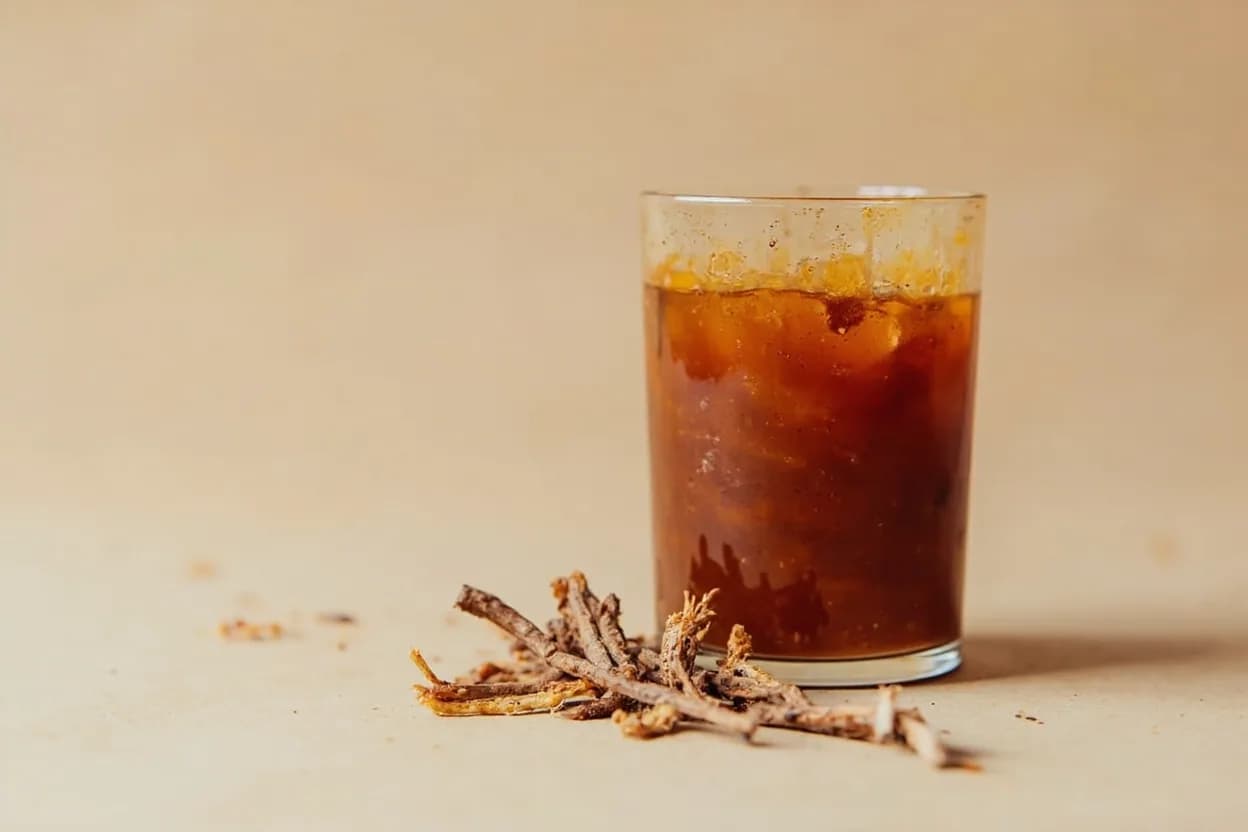
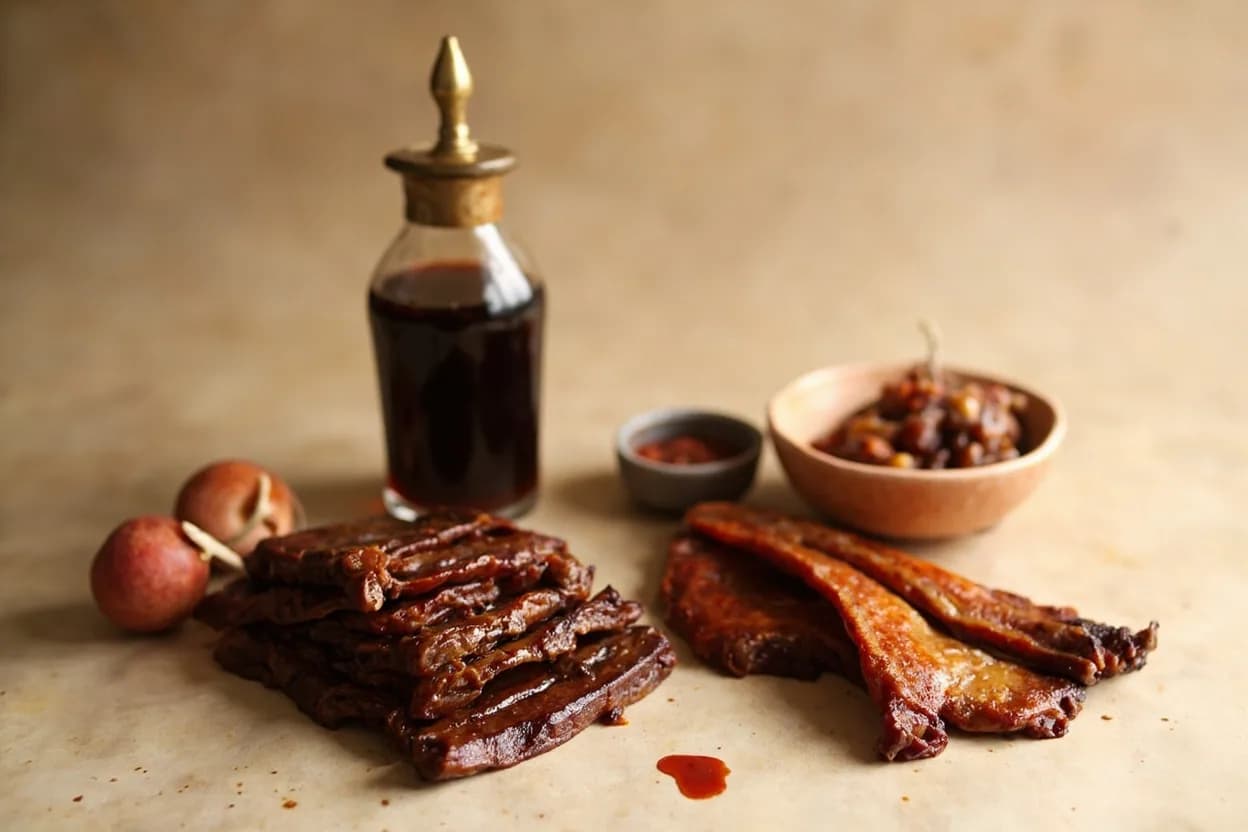
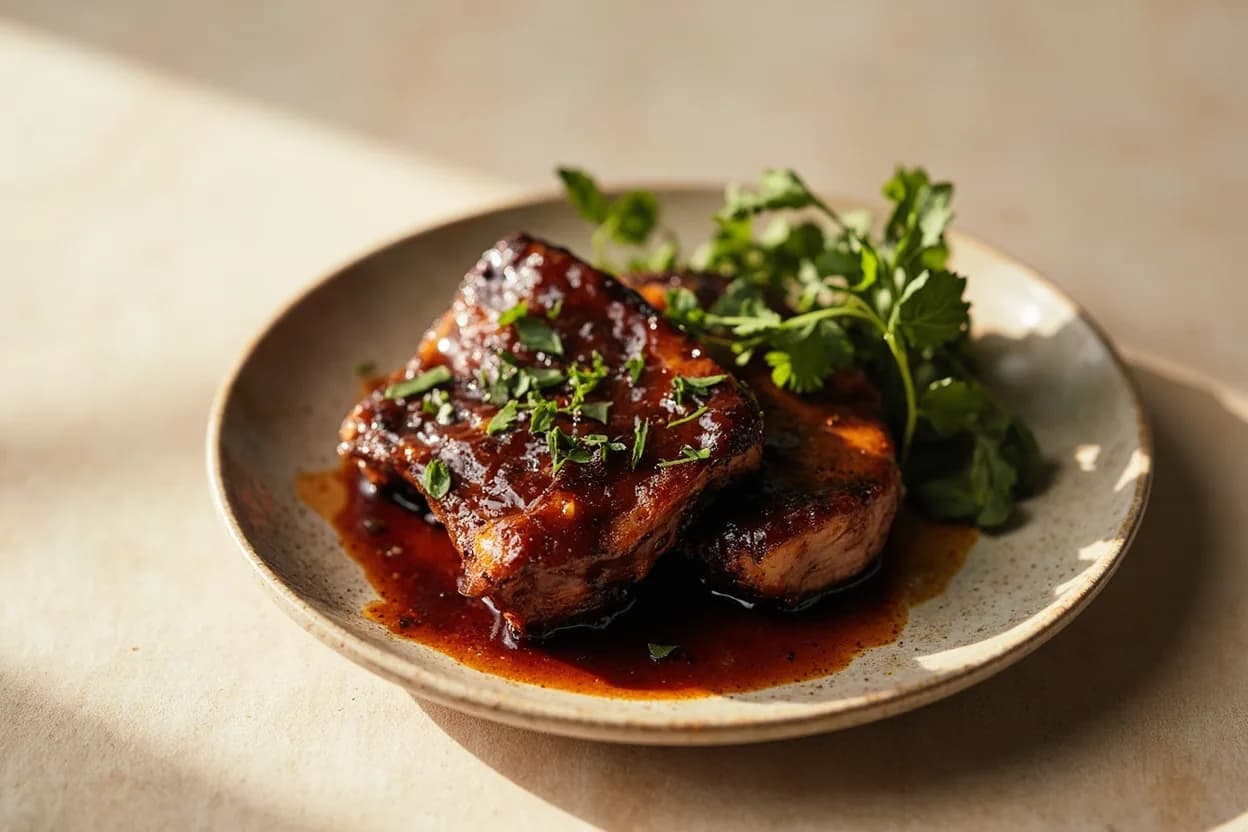
Hoisin sauce is a thick, dark-brown Chinese condiment made from fermented soybean paste, sugar, garlic, vinegar, and five-spice powder, sometimes augmented with chili and sesame. Its flavor is intensely sweet-salty-savory with a faintly funky fermented backbone, a gentle warmth from spice, and a deep caramel finish from the sugars. It originated in Cantonese cuisine and the name literally suggests 'seafood' (海鮮, hoi sin), though modern hoisin contains no seafood — it was historically brushed on cured meats and game to mimic that depth.
In photos
Flavour profile
Classic pairings
- Roast duckCantonese / Beijing
The canonical pairing: hoisin's sweetness cuts duck fat while its fermented depth echoes the bird's gaminess. Peking duck would be unrecognizable without it.
- Char siu porkCantonese
Mixed into the marinade with Chinese rice wine, hoisin provides the sticky caramelized crust and complex sweetness that defines char siu's lacquer.
- Moo shu porkNorthern Chinese
Spread on Mandarin pancakes, hoisin bridges the scrambled egg-and-pork filling with its sweet-savory glaze, acting as condiment and sauce simultaneously.
- Rice vermicelli / bánh hỏiVietnamese
Vietnamese spring roll assemblies use hoisin thinned with peanut butter and hot water as a dipping sauce — its sweetness softens the heat of accompanying chili.
- TofuChinese vegetarian
Firm tofu glazed with hoisin caramelizes beautifully at high heat, gaining mahogany color and umami depth without meat.
- Scallions / green onionsBeijing
Thin strips of raw scallion alongside hoisin and cucumber are the essential Peking duck condiment trio — pungency cutting sweetness.
- Chinese five-spiceCantonese
Since five-spice is already baked into hoisin, doubling it in a marinade amplifies the anise-clove signature without creating dissonance.
- Sesame oilCantonese
A finishing drizzle of toasted sesame oil links hoisin's fermented sweetness to roasty, nutty aromatics, a classic Cantonese finishing move.
Adventurous pairings
- Lamb ribs
Hoisin's five-spice and sweetness tame lamb's gaminess better than most Western rubs; slow-roast then finish under the broiler for lacquered ribs with an unexpected Chinese-BBQ register.
Blending white miso into a hoisin glaze adds a saltier, earthier Japanese umami layer that cuts some of hoisin's sweetness — ideal for eggplant or salmon.
- Dark chocolate (70%+)
A small spoon of hoisin stirred into a chocolate mole-style sauce deepens bitterness with fermented-soy umami, bridging East-West savory chocolate traditions.
- Tamarind paste
Tamarind's sour fruitiness extends hoisin's sweetness into a tangy direction — useful when building a Southeast-Asian-inflected barbecue sauce.
- Smoked paprika
The smoky, earthy dimension fills a gap in hoisin when no actual smoke is available, producing a convincing indoor BBQ glaze with minimal ingredients.
Tread carefully
- Delicate white fish (sole, flounder)avoid
Hoisin's intense sweetness and fermented funk overwhelm mild, flaky white fish — it should be reserved for robustly flavored proteins.
- Fresh citrus juice (as a primary pairing)avoid
Straight lemon or lime juice turns hoisin's caramel notes metallic and clashes with its five-spice spine — a small splash is fine, large amounts destabilize the flavor.
- Dairy creamavoid
The fermented soy and vinegar in hoisin can curdle dairy and the flavor combination reads as confused — Asian-fusion cooks generally keep them separate.
How to use it
- Glaze: brush onto proteins in the final 10–15 minutes of roasting or grilling to caramelize sugars without burning
- Thin with warm water or rice wine to make a dipping sauce; add peanut butter for a Vietnamese-style peanut-hoisin dip
- Marinate: combine with soy sauce, rice wine, garlic, and ginger for char siu-style overnight marination of pork shoulder
- Stir-fry sauce: add directly to a wok for a quick glaze on vegetables, beef, or eggplant over high heat
- Spread: use straight from the jar on Mandarin pancakes or lettuce cups as a condiment base
Appears in
Related flavours
A sibling Cantonese condiment — less sweet, more briny — often used alongside hoisin in stir-fry sauces
Soy provides salt and thinner umami; hoisin provides sweetness and body — the two are frequently combined in Chinese glazes
- Chinese five-spice
Already an internal ingredient of hoisin; amplifying it in a recipe deepens the sauce's signature spice profile
- Sesame paste (tahini / zhima jiang)
Roasted sesame adds a nutty counter to hoisin sweetness — similar to how peanut butter functions in dipping sauces
References
- 1.Fuchsia Dunlop — 'The Food of Sichuan' (W. W. Norton, 2019)
- 2.Eileen Yin-Fei Lo — 'The Dim Sum Book' (Crown Publishers, 1982)
- 3.Ken Hom — 'The Complete Chinese Cookbook' (BBC Books, 2011)
- 4.Grace Young — 'The Wisdom of the Chinese Kitchen' (Simon & Schuster, 1999)
Confidence: high
Notes
Not from seafood — but named for it
Despite the literal translation of '海鮮醬' (hoisin) being 'seafood sauce,' the condiment contains no seafood in its modern form. The name likely reflects its historical use as an accompaniment to seafood and cured meats rather than its composition. Some food historians argue the name instead referenced its role in creating flavors as rich and complex as prized seafood — a sign of quality in Cantonese culinary vocabulary.
Regional and brand variation
Hoisin varies considerably by brand. Koon Chun and Lee Kum Kee are the two most widely trusted commercial standards; Koon Chun tends toward a spicier, deeper fermented profile while Lee Kum Kee reads sweeter and more universally accessible. In professional kitchens, starting with Koon Chun and adjusting sweetness is the common approach.