Herbs
Hoja de Aguacate
Also: avocado leaf, avocado tree leaf, hojas de aguacate
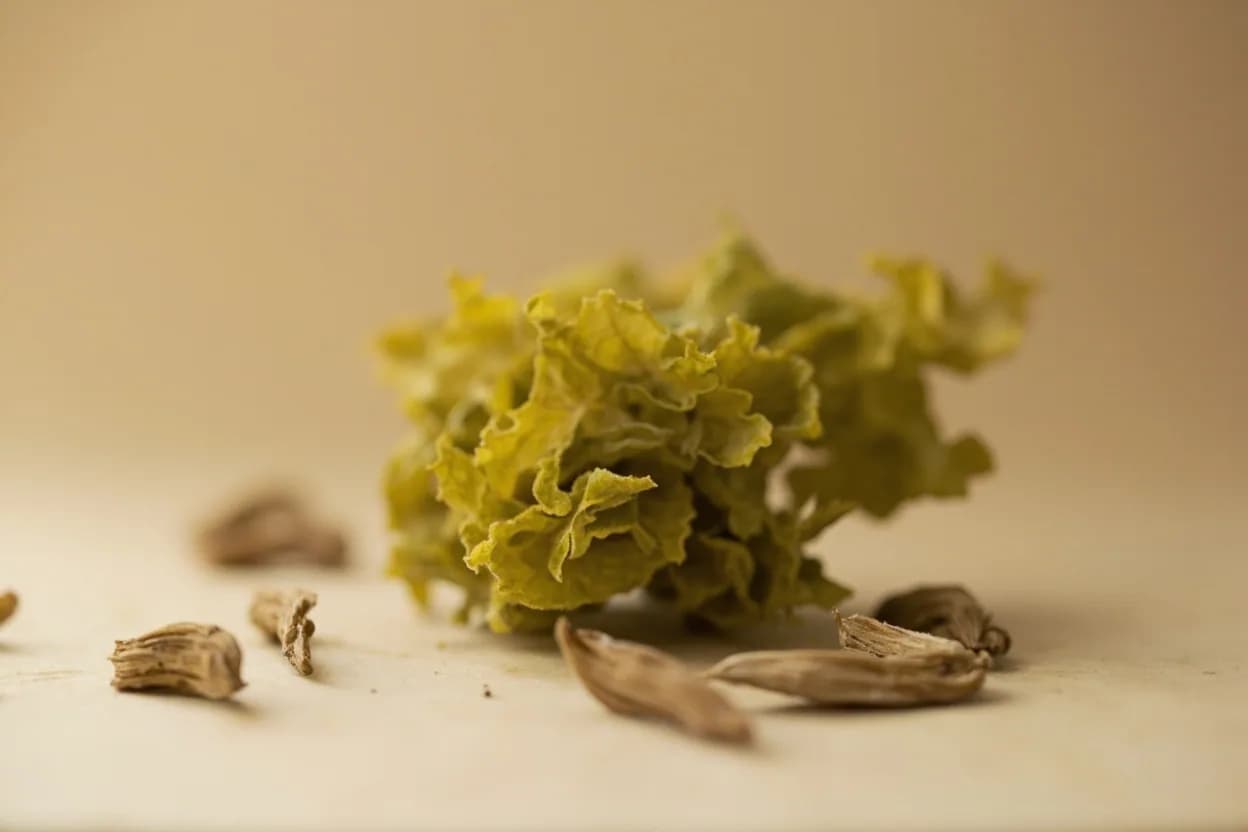
The dried leaf of the Mexican avocado tree, releasing a warm anise-herbal aroma that anchors Oaxacan black beans and slow-cooked meats.
Hoja de aguacate comes from Persea drymifolia, the Mexican avocado species, whose leaves are the only variety aromatic enough to use culinarily — Hass avocado leaves are scentless and should not be substituted. Dried over low heat, the leaves develop a distinctive anise-herbal character underpinned by estragole and anethole, with secondary notes of eucalyptus, mild licorice, and a faint tobacco depth. They are used almost exclusively in Oaxacan and Pueblan cooking, toasted directly on a comal before being added whole to simmering pots or ground into moles, lending a subtle but irreplaceable backbone.
In photos
Flavour profile
Classic pairings
- Black beans (frijoles negros)Oaxacan, Mexican
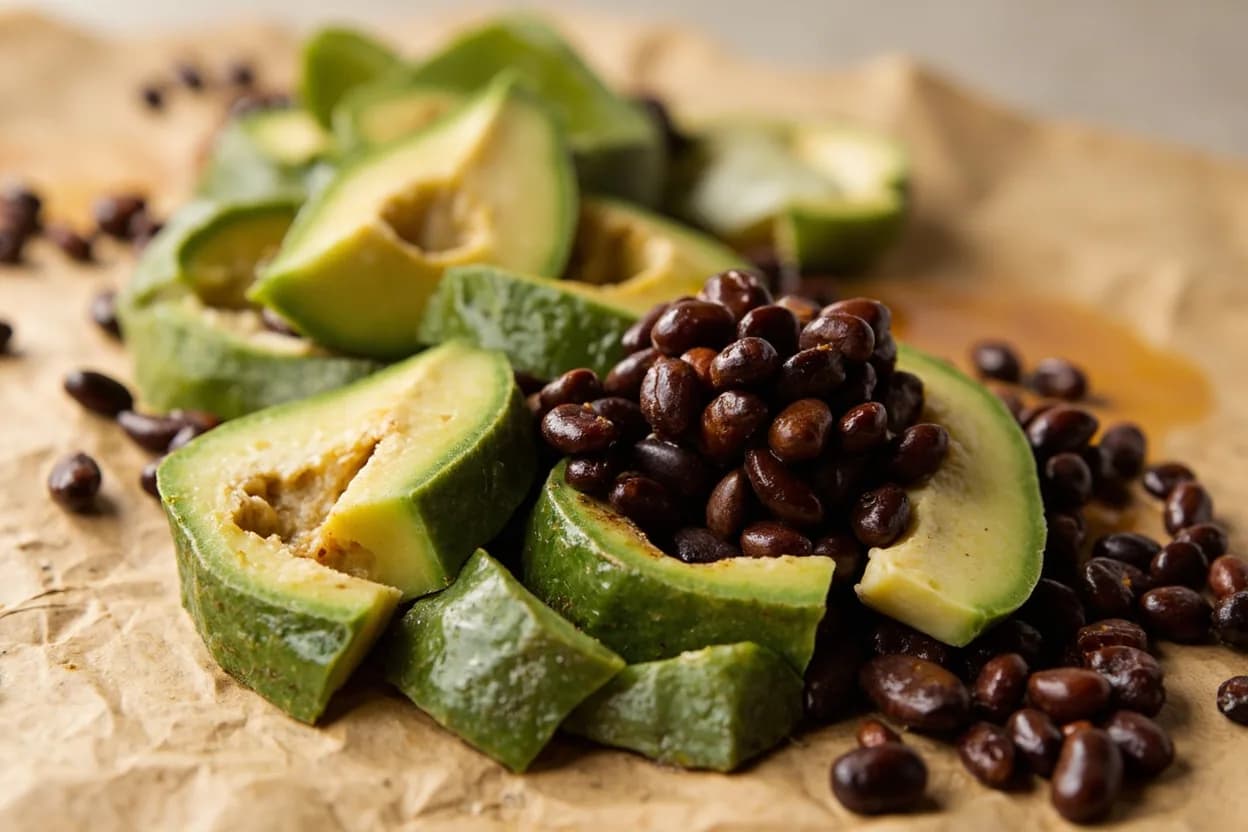
One or two toasted leaves simmered with dried black beans is the canonical Oaxacan preparation — the anise note cuts the earthiness and gives the pot broth a haunting complexity.
- Tasajo (cured beef)Oaxacan
Leaves are laid over charcoal grills under salted cured beef; the smoke-and-anise perfume infuses the meat during grilling and is essential to the dish's identity in Oaxacan markets.
- Tamales de rajasOaxacan, Pueblan
Ground dried leaves are folded into masa or placed inside tamale packets with poblano-cheese filling; they scent the steam and perfume the corn dough from within.
- Chorizo and longanizaOaxacan
Toasted leaves are crumbled into seasoned pork mixtures for Oaxacan-style sausage, counterbalancing chile and vinegar with a floral anise thread.
- Barbacoa de resMexican
Whole leaves line the pit or steamer tray beneath beef or lamb, releasing volatile compounds into the rising steam and lending the classic herbal undertone to pit-barbecued meats.
- Mole negroOaxacan
Charred leaves contribute a faint anise-bitter backbone to mole negro's layered sauce profile, integrating with burnt chile and chocolate notes.
Adventurous pairings
- Duck confit
Toast two leaves and infuse into the curing salt with orange zest and guajillo; the anise note mirrors tarragon's role in French duck preparations while keeping the dish firmly Mesoamerican in character.
- Dark chocolate ganache
Steep one toasted leaf in warm cream before making a ganache; the anise-herbal compound echoes chocolate's own floral esters, creating an unusual depth that reads as 'almost Mexican' without being obviously flavored.
- Smoked oysters
Layer leaves on wood chips when cold-smoking oysters — the eucalyptus-anise volatiles complement the oceanic iodine and smoked fat in a way fresh tarragon cannot replicate.
- Lentil dal
A toasted leaf simmered with earthy red lentils and cumin works where bay leaf and star anise might go; the herbal depth ties legume and spice bloom together without dominating.
Tread carefully
- Delicate white fish (sole, flounder)avoid
The resinous anise character overpowers lean, mild fish rather than complementing them; more assertive fatty fish like salmon or mackerel handle it better.
- Fresh herb saladsavoid
Dried hoja de aguacate is astringent and woody when uncooked; it must always be toasted and used in long-simmered or enclosed preparations where heat releases its volatiles gradually.
- Hass avocado leavesavoid
A common substitution error — Hass leaves contain no relevant aromatics. Only leaves from Persea drymifolia (the Mexican species) deliver the characteristic anise profile.
How to use it
- Toast whole on a dry comal over medium heat for 30–60 seconds per side until fragrant and slightly darkened — do not scorch
- Add whole to bean pots at the start of cooking; remove before serving
- Grind toasted leaves in a spice grinder and add to mole pastes or rubs
- Use as a lining in tamale steamers to perfume the steam
- Infuse into fat (lard, duck fat) over low heat to carry volatile compounds into a frying medium
Appears in
Related flavours
The other defining Oaxacan bean herb — pungent and petroleum-edged where hoja de aguacate is anise-soft; often used together in the same pot
Shares the anise-herbal profile at higher intensity; the two can substitute for each other in mole pastes though hierba santa is far more prominent
- Dried pasilla negro
Frequent co-ingredient in mole negro; the dried chile's chocolate-prune depth integrates with hoja de aguacate's anise to form the characteristic base
- Lard
The traditional fat medium in Oaxacan cooking that carries the leaf's volatile anise compounds most effectively
References
- 1.Oaxaca: Home Cooking from the Heart of Mexico — Bricia Lopez & Javier Cabral
- 2.Truly Mexican — Roberto Santibañez
- 3.Decolonize Your Diet — Luz Calvo & Catriona Rueda Esquibel
- 4.The Art of Mexican Cooking — Diana Kennedy
Confidence: high
Notes
Sourcing
Dried hoja de aguacate can be hard to find outside Mexico and Oaxacan communities in the United States. Look in Latin grocery stores specifically stocked for Oaxacan immigrants; the dried bags from Mexican brands are authentic. Fresh leaves from cultivated Mexican avocado trees in California are occasionally available and can be dried at home on a wire rack away from direct sun.
Toasting is non-negotiable
Raw dried leaves taste resinous and flat. A brief pass on a dry comal volatilizes the estragole, converts certain bitter compounds, and unlocks the characteristic warm anise scent that makes the ingredient essential rather than optional in Oaxacan black beans.