Southeast Asia
Northern Thai (Lanna)
Also: Lanna cuisine, Chiang Mai cuisine, Yuan cuisine
The ancient Lanna kingdom's cuisine of sticky rice, rich curries, and Shan-influenced flavors from the mountains of northern Thailand.
Northern Thai cuisine, rooted in the Lanna kingdom centered around Chiang Mai, is a distinct culinary tradition shaped by altitude, cooler climate, and centuries of trade with Burma, Laos, and the Shan states. It diverges sharply from central Thai cooking: coconut milk appears sparingly, sticky rice (khao niao) replaces jasmine rice as the staple, and flavors lean toward earthy, herbal, and mildly bitter rather than the sweet-sour-spicy balance of Bangkok cooking. The cuisine reflects a mountainous borderland identity — milder heat, more fermented and cured ingredients, and a legacy of Shan, Burmese, and Chinese Yunnanese influence.
The flavour base
A base of dried chilies, shallots, garlic, shrimp paste (kapi), and galangal forms the foundation of most curry pastes; fermented soybean (thua nao) and fresh dill are signature aromatics absent from other Thai regional traditions.
Pantry staples
Key ingredients
Signature techniques
Signature dishes
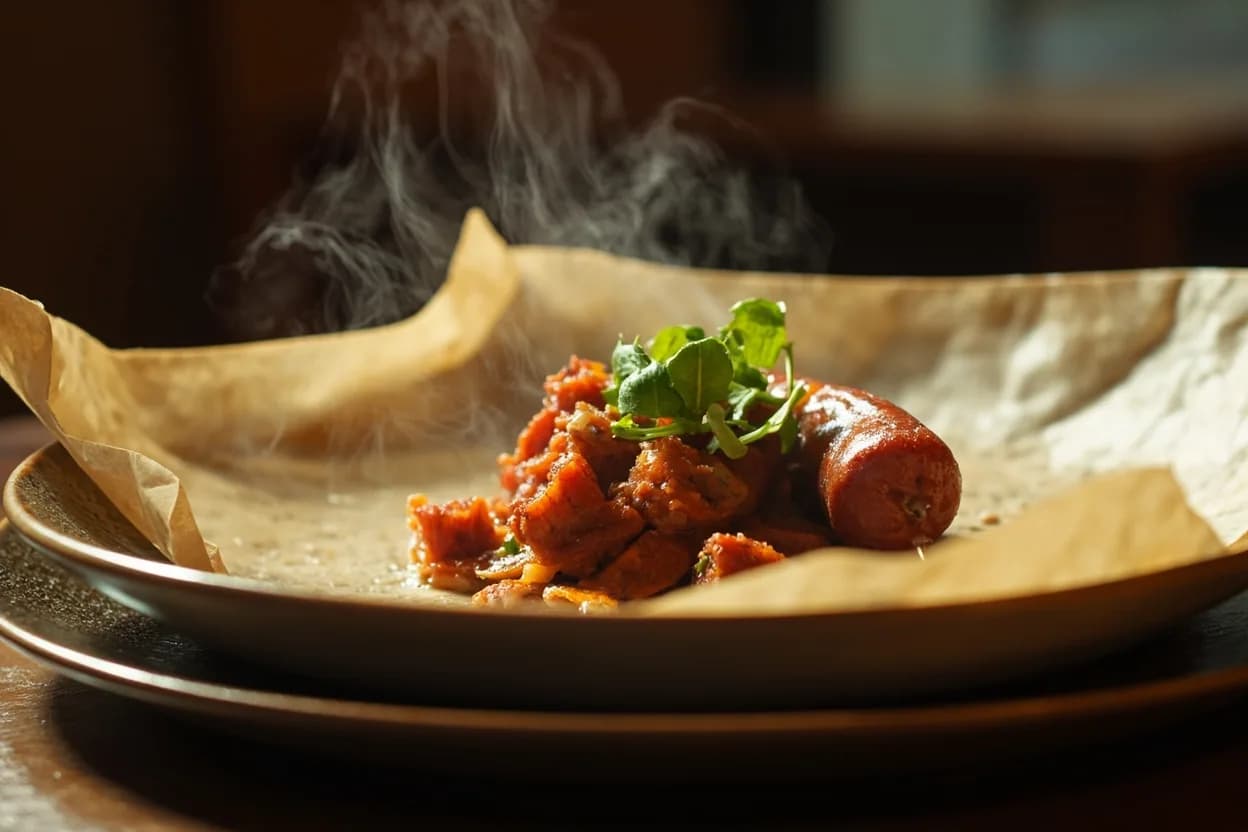
Northern Thai (Lanna) on the table
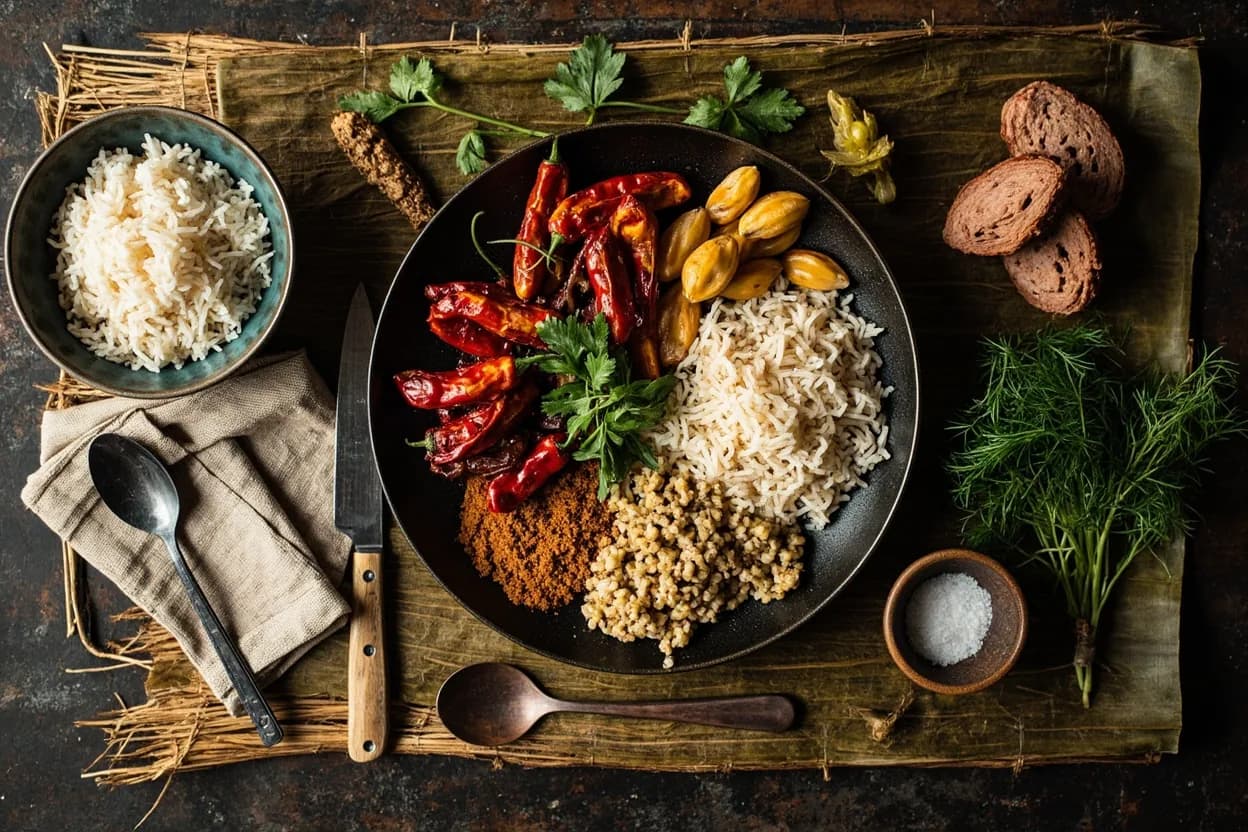
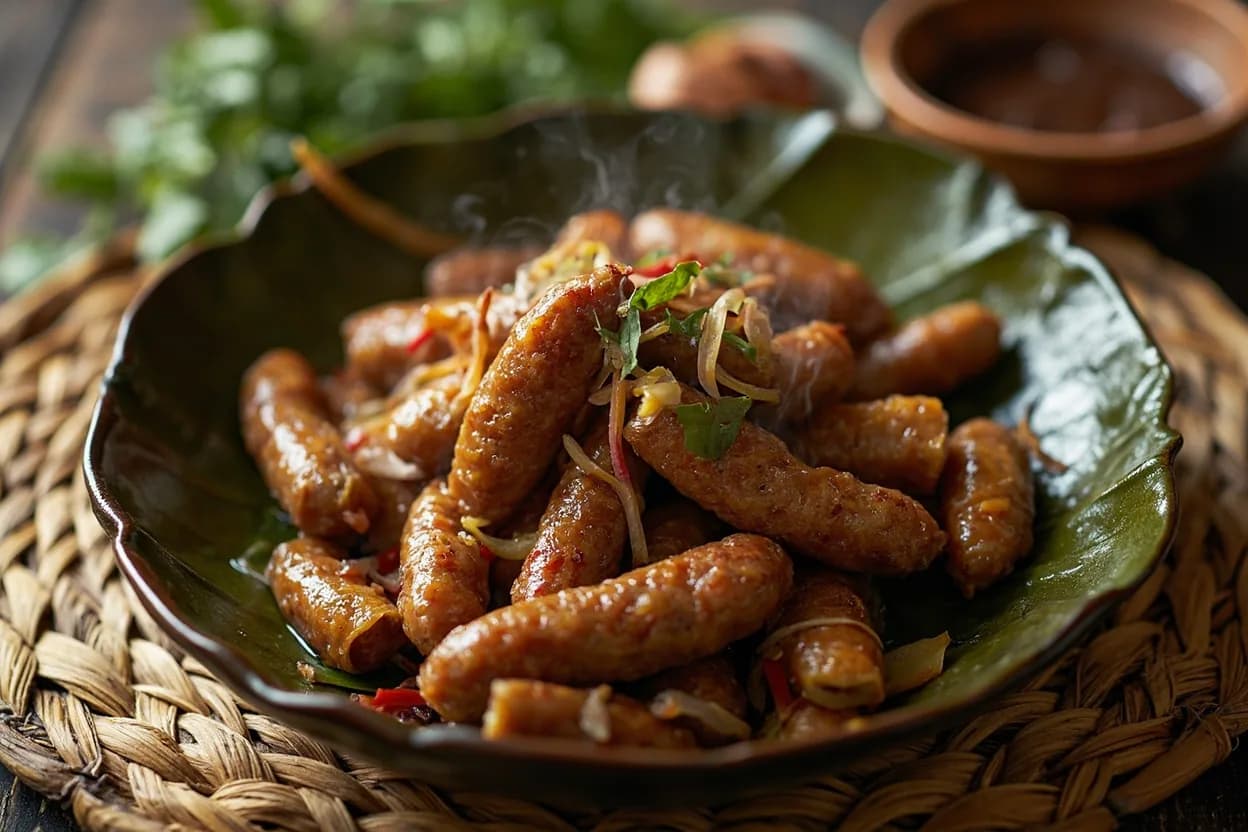
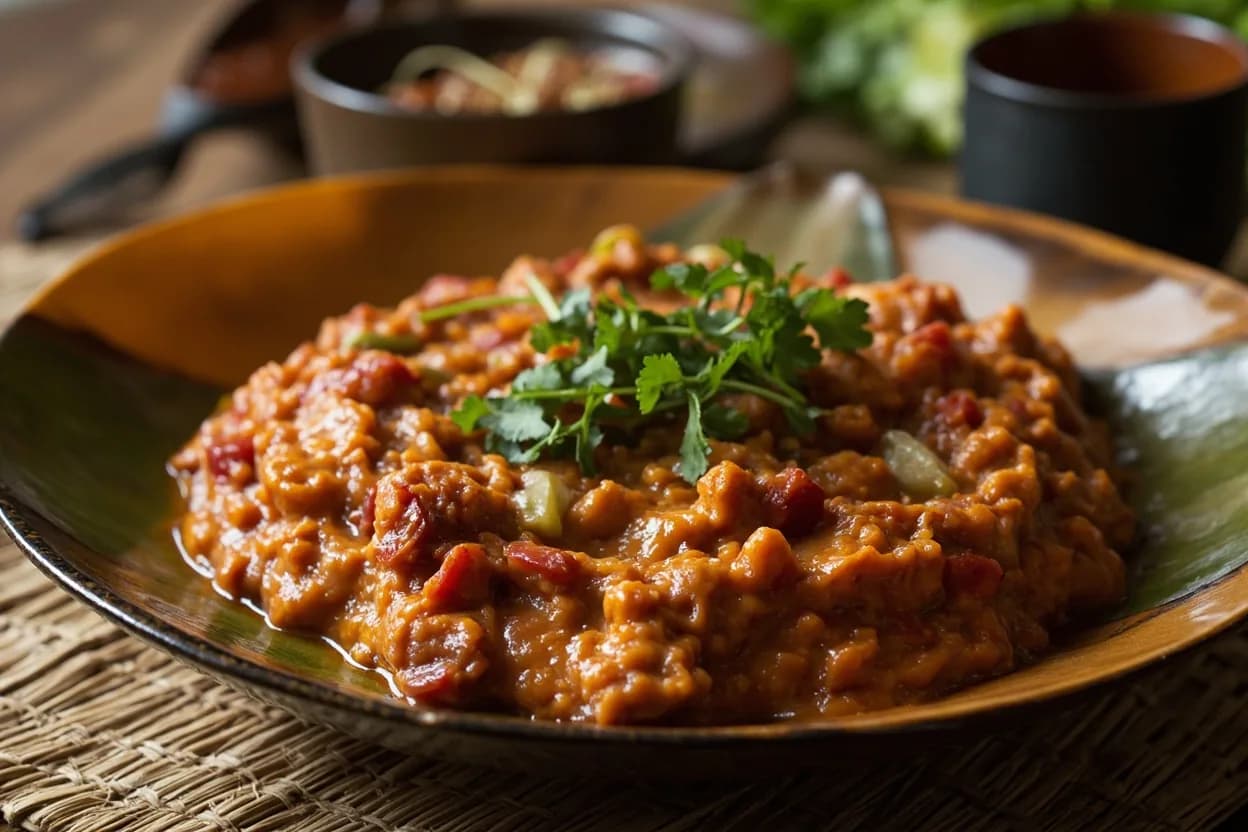
At the table
Meals center on a mound of sticky rice eaten with the hands, served alongside several shared dishes: a nam prik (chili dip) with raw vegetables, a curry or stew, a grilled or fried protein, and fresh herbs. The khantok dinner tradition presents multiple small dishes on a low lacquered tray for communal dining.
History & context
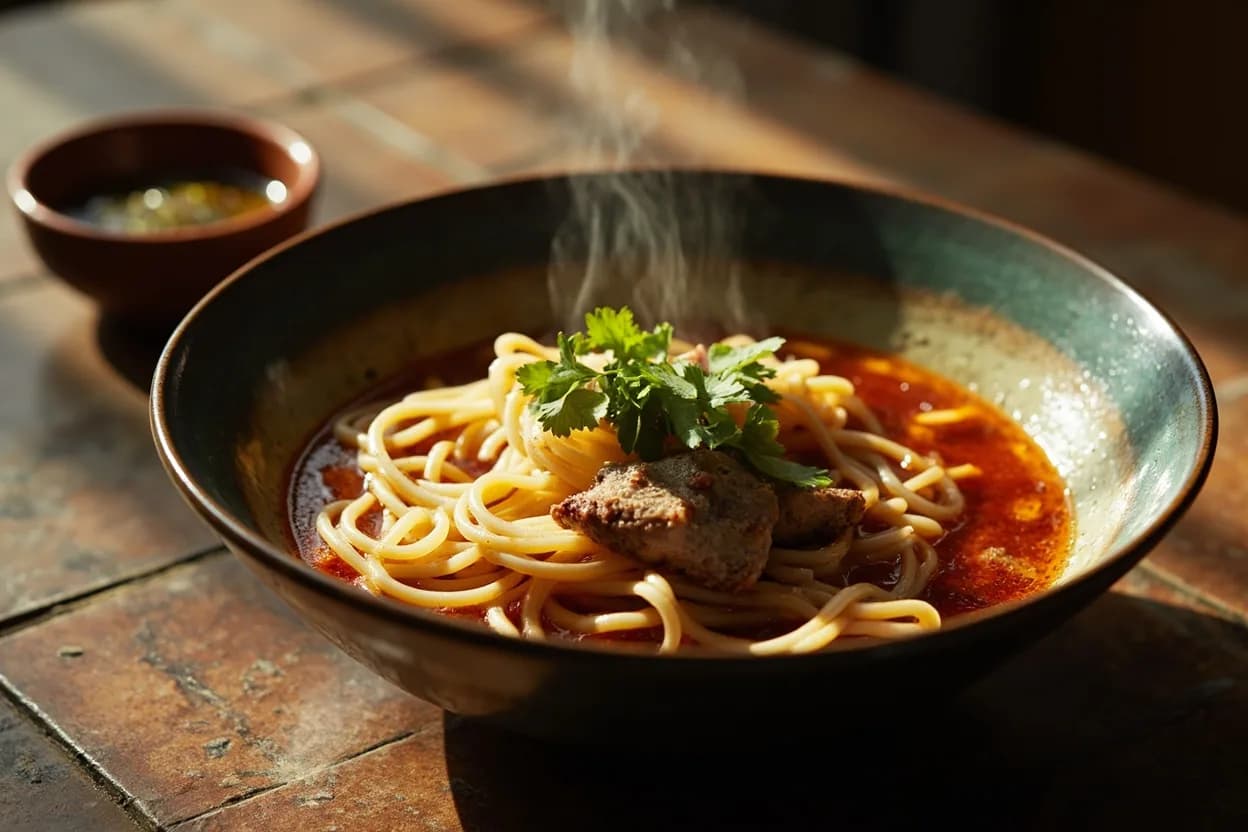
The Lanna kingdom, founded in 1296 CE and centered at Chiang Mai, maintained political independence from central Siam for centuries, developing a distinct language, script, architecture, and cuisine. Sustained trade with Burmese, Shan, and Yunnanese merchants introduced curry styles (gaeng hang lay arrived via Burma), spice combinations, and preserved proteins. When Lanna was absorbed into Siam in the 18th century and later fully integrated, its culinary identity remained intact due to geographic isolation. The 20th century tourism boom around Chiang Mai brought international attention to dishes like khao soi, which had roots in Chin Haw (Yunnanese Muslim) trading communities.
Regional variations
- Chiang Rai / Golden Triangle
Stronger Shan and Akha hill-tribe influence; use of jungle herbs like sawtooth coriander and wild ginger more pronounced
- Mae Hong Son
Heavily Shan-influenced; dishes like khao soi exist in a lighter, more Burmese form with less chili
- Chiang Mai city
Most culinarily developed; home of the khantok dinner tradition and refined sai ua production
Related cuisines
- Shan (Myanmar)
Direct ancestor of gaeng hang lay and the rice-noodle soup traditions of the north
- Yunnanese
Chin Haw traders introduced Muslim-inflected noodle dishes including early forms of khao soi
Shares the sticky-rice staple culture but diverges sharply in flavor profile and fermentation style
Canonical recipes
The dishes that define Northern Thai (Lanna), documented in the Canon.
References
- 1.Simple Thai Food — Leela Punyaratabandhu (Ten Speed Press, 2014)
- 2.Thai Food — David Thompson (Pavilion Books, 2002)
- 3.The Food of Northern Thailand — Austin Bush (Interlink, 2018)
Confidence: high
Notes
Coconut milk absence
Most authentic northern curries (gaeng hang lay, gaeng khua) use little or no coconut milk, a defining contrast with central and southern Thai cooking. This reflects both trade history and the Lanna preference for broth-based richness derived from pork fat and bone.
Thua nao
Fermented soybean disc (thua nao) is a uniquely northern ingredient — sun-dried, smoky, and intensely savory — used to season dips and curries in the way fish sauce dominates elsewhere. It signals Yunnanese influence and is rarely found outside the northern region.