Southeast Asia
Northeastern Thai (Isan)
Also: Isan cuisine, Esaan cuisine, Lao-Thai cuisine
The bold, fermented, fiery cooking of Thailand's Mekong plateau — sticky rice, larb, som tum, and the pungent funk of pla ra define a cuisine closer to Lao than to Bangkok.
Isan cuisine is the distinct cooking tradition of Thailand's vast northeastern plateau, home to over a third of the national population. Bordered by the Mekong River and deeply Lao in cultural heritage, it is Thailand's most audacious regional food: raw-meat preparations, aggressively sour and fermented flavors, extreme chili heat, and the irreplaceable funk of pla ra (fermented freshwater fish paste). Sticky rice is the non-negotiable staple, eaten at every meal with the hands. The cuisine emerged from a poor, drought-prone agricultural region and transforms simple, often preserved ingredients into dishes of extraordinary complexity and depth.
The flavour base
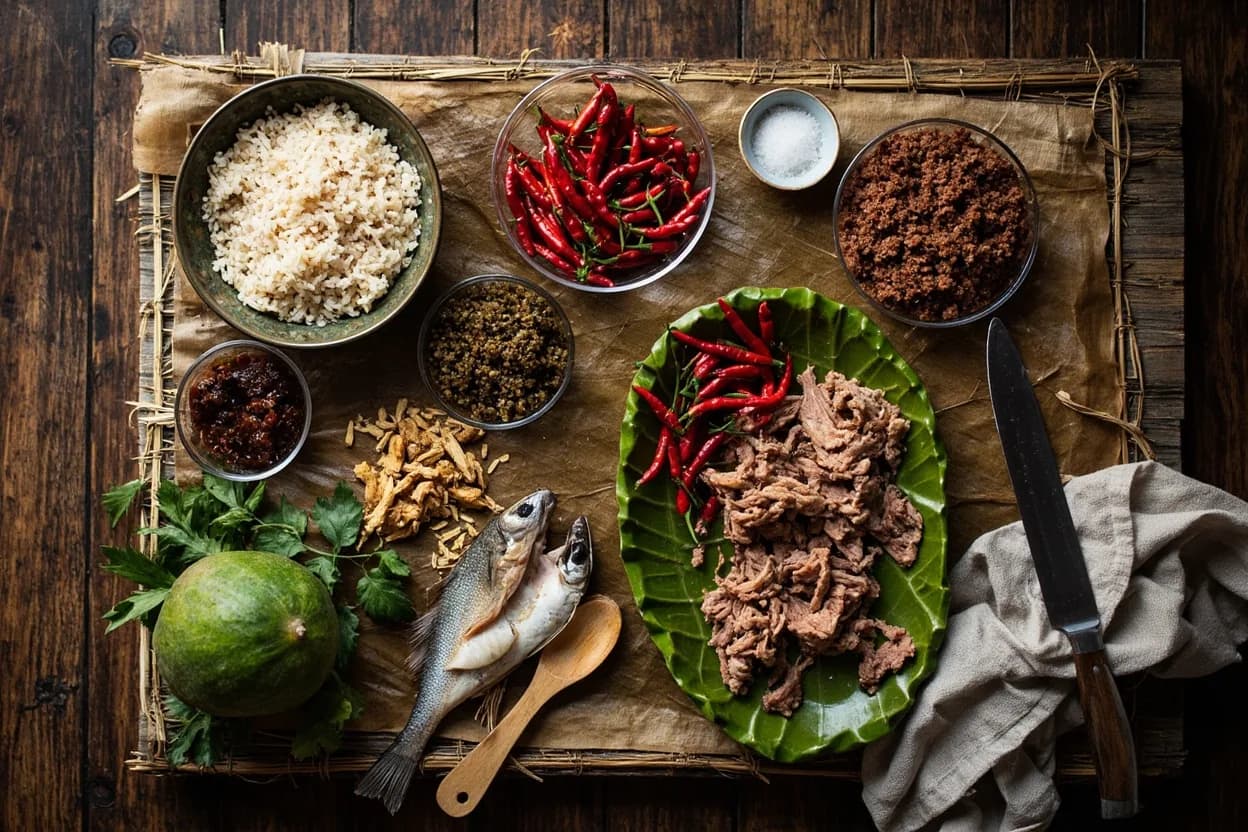
Pla ra (fermented freshwater fish paste) and nam pla (fish sauce) provide the saline, funky backbone; toasted rice powder (khao khua) adds texture and a nutty dimension; fresh lime juice supplies acid; and fresh bird's eye chilies bring piercing heat — these four elements recur across virtually every Isan dish.
Pantry staples
Key ingredients
Signature techniques
Signature dishes
Northeastern Thai (Isan) on the table

At the table
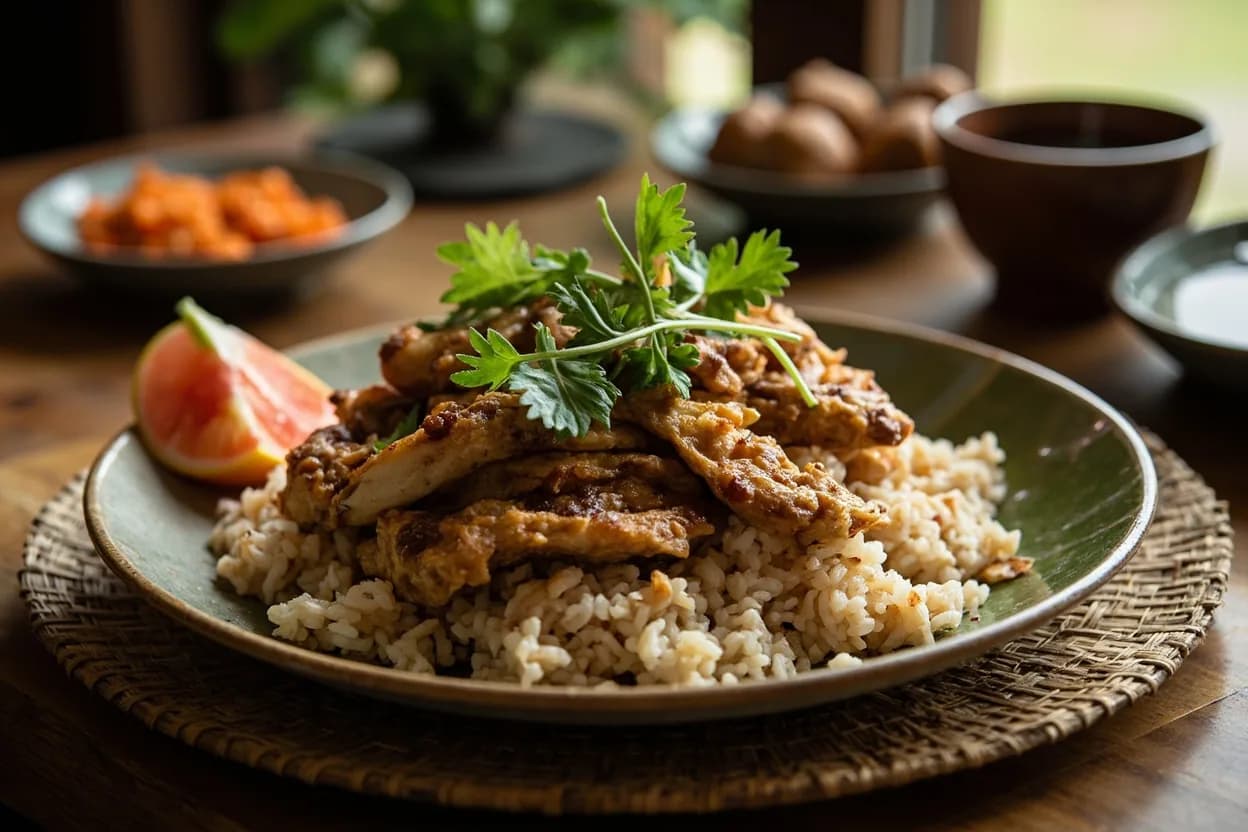
Every Isan meal is anchored by a woven basket (kratip) of sticky rice shared communally. Accompanying dishes are small and shareable — a som tum, a grilled protein, a soup or jaew dipping sauce. There is no fixed course structure; everything arrives together and diners eat at their own pace, pinching rice and dipping into multiple dishes simultaneously.
History & context
The Isan plateau was historically part of the Lao-dominated Lan Xang kingdom before being incorporated into Siam in the late 18th and 19th centuries. The majority of Isan residents speak Lao dialects and maintain Lao cultural practices, including their food. Colonial-era borders severed the region from Laos proper, but culinary ties remained — som tum and larb are equally claimed by Laos. Mid-20th century land pressure and poverty drove massive Isan migration to Bangkok, making Isan street food the dominant fast-casual cuisine of the capital. This migration ironically globalized Isan cooking; dishes once unknown outside the plateau are now Thailand's most exported food identity.
Regional variations
- Khon Kaen / central Isan
Considered the culinary heartland; most intense pla ra use and the reference standard for larb and som tum
- Nakhon Ratchasima (Korat)
Transitional zone with central Thai influence; flavors slightly milder, more palm sugar used
- Nakhon Phanom / Mekong border
Strongest Lao influence; dishes like mok (steamed in banana leaf) and or lam stew share direct Lao ancestry
Related cuisines
- Lao
Isan and Lao cuisine are effectively the same tradition divided by a political border; larb, som tum, and sticky rice culture are shared
Both prioritize sticky rice but diverge completely in flavor — Isan is funky and sour, Lanna is earthy and herbal
- Khmer
Southern Isan borders Cambodia; prahok (Khmer fermented fish) parallels pla ra and reflects cross-border exchange
Canonical recipes
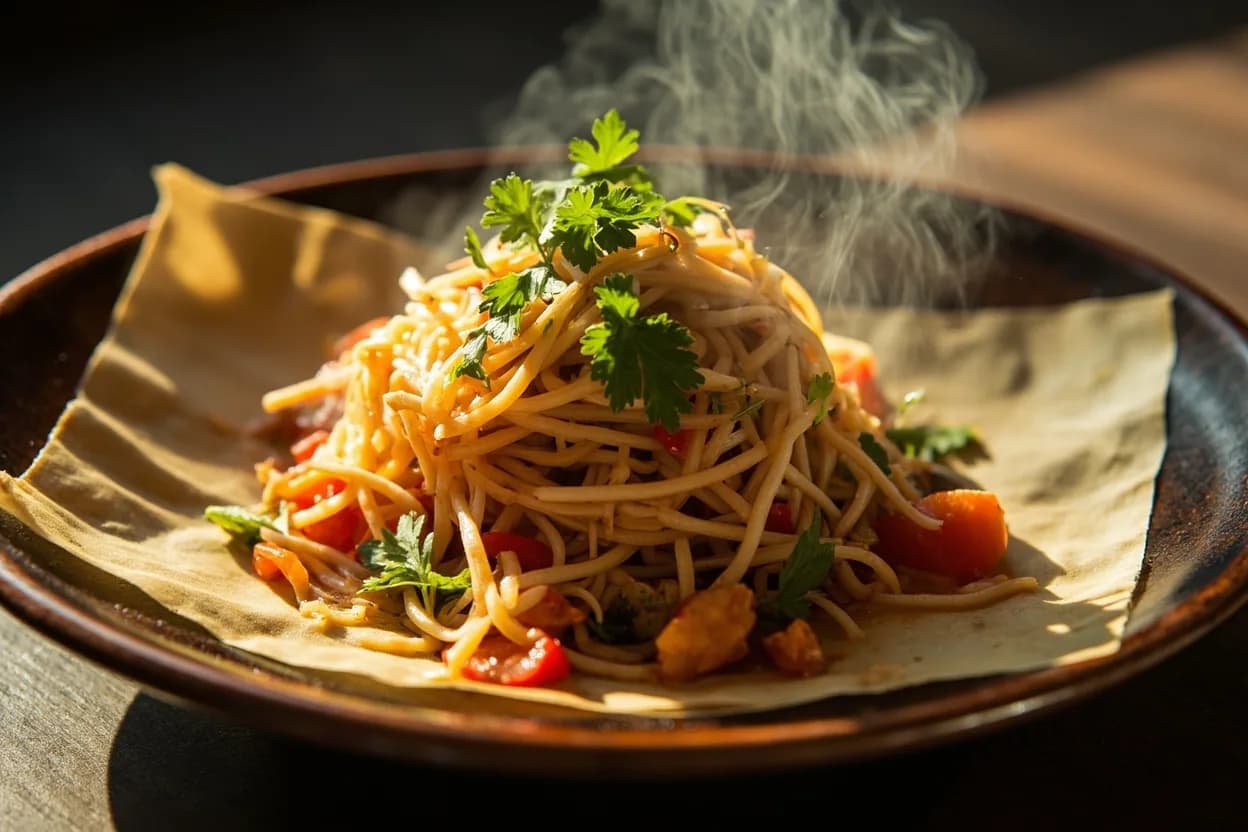
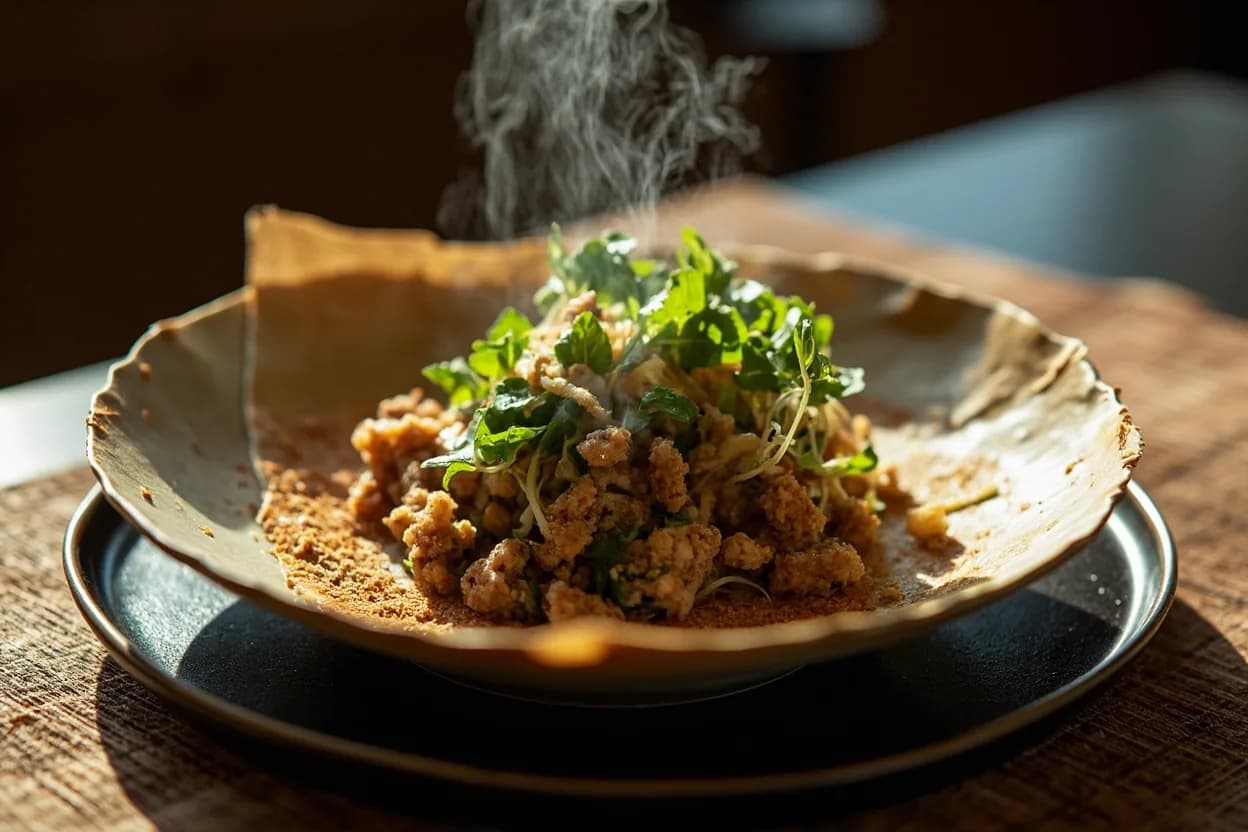
The dishes that define Northeastern Thai (Isan), documented in the Canon.
References
- 1.Isan: The Unexpected Culinary Country of Thailand — Austin Bush (Interlink, 2020)
- 2.Thai Food — David Thompson (Pavilion Books, 2002)
- 3.Bangkok: Recipes and Stories from the Heart of Thailand — Leela Punyaratabandhu (Ten Speed Press, 2017)
Confidence: high
Notes
Pla ra vs nam pla
The distinction between pla ra (chunky, unfiltered, intensely fermented freshwater fish paste) and nam pla (clear, refined fish sauce) is fundamental to Isan identity. Substituting nam pla for pla ra in som tum changes the dish entirely — the former provides funky, complex bitterness that the latter cannot replicate. Authentic Isan som tum made with pla ra is referred to as som tum pla ra or som tum lao, as distinct from the milder som tum Thai found in Bangkok.
Raw meat tradition
Traditional larb dip (larb dib) uses raw minced meat seasoned with toasted spice, bile, and fresh blood. While increasingly rare in commercial contexts due to health concerns, it remains culturally significant and is still prepared in rural Isan households.