Herbs
Lemongrass
A fibrous, citrusy stalk bruised or sliced thin to perfume Thai and Vietnamese curries, broths, and marinades; the tough outer layers steep then come out before serving.
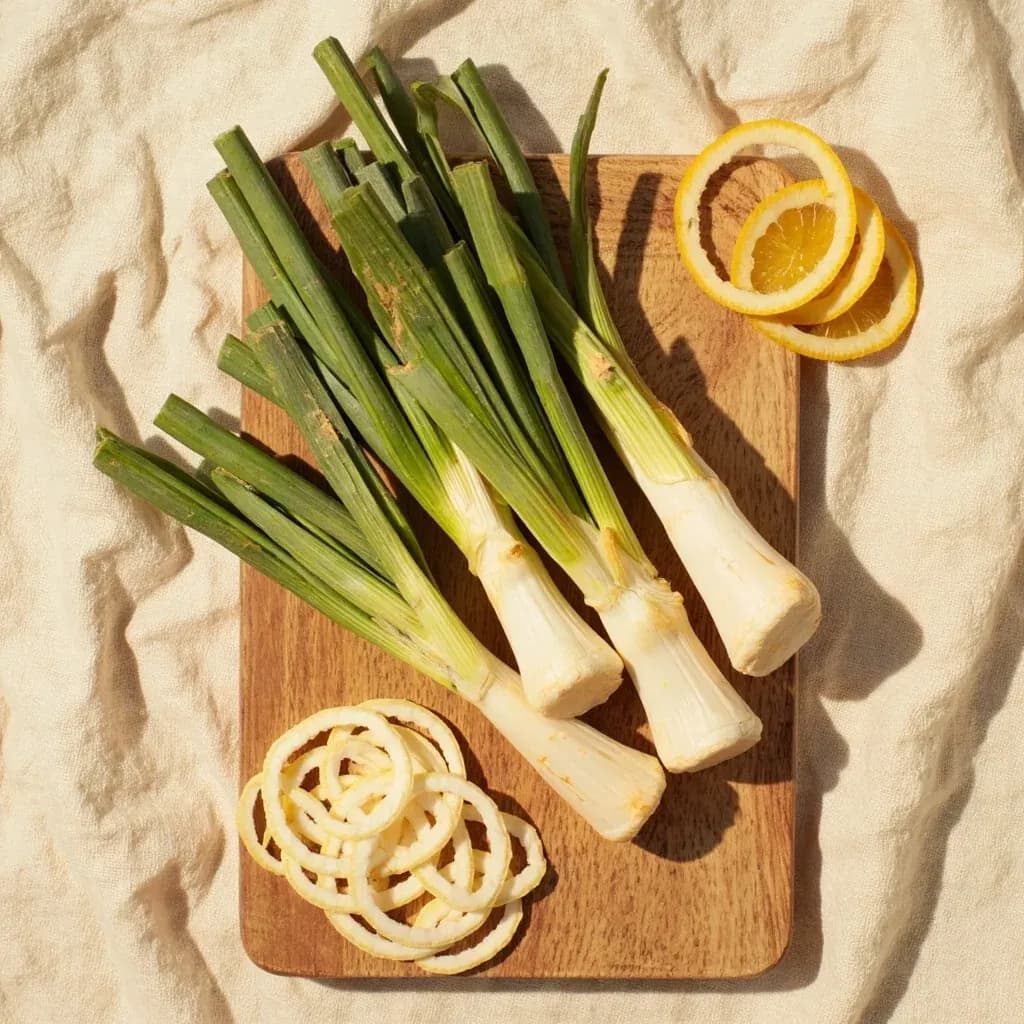
Lemongrass is a tropical grass cultivated for its aromatic stalks rather than its leaves or grain, and it behaves in the kitchen more like a spice than a vegetable or herb. The pale, plumped base — the lowest 10 to 15 cm — is the only portion tender enough to slice and eat; the taller green tops are too fibrous to chew but are not waste, since they steep cleanly into long-simmered stocks and broths. Most cooks never eat a piece of lemongrass whole: they bruise it, slice it thin, or mince it fine, extract the bright, floral-citrus flavor, then fish the fiber out before serving or warn diners to set it aside.
The flavor is built on citral, the same volatile compound behind lemon balm and lemon verbena, which gives lemongrass its clean lemon scent layered over a faintly green, almost ginger-like warmth. Because the aroma lives in the fibers, the stalk must be physically broken before it gives up much: dropped into a pot whole, it whispers; smashed under a knife or sliced into coins, it sings. Once bruised, it releases its oils slowly over gentle heat, which is why it sits happily in a 45-minute curry but turns soapy and perfume-like if blasted at a hard boil for hours.
In Southeast Asian cooking it almost always arrives paired with galangal, kaffir lime leaves, fish sauce, chili, and coconut milk — the supporting cast that turns its sharp citrus into something rounded and savory. Outside that context it can be steeped into syrups, muddled into drinks, or tucked into a poaching liquid for chicken or fish, bringing clean citrus without the acidity of actual lemon. It rarely takes the lead, but a few bruised stalks quietly elevate almost any savory pot they enter.
- Measured in
- piece
- Storage
- Fridge
Find it in
Suits
Types & varieties
The bulbous, pale-based culinary type sold worldwide; preferred for cooking because the tender lower stalk is thick and juicy.
Tall and leafy rather than bulbous; cultivated primarily in India and Bhutan for lemongrass oil, but interchangeable in recipes.
Sun-dried sliced stalks or pieces; woody, hay-like, and less floral than fresh — rehydrate in warm water before using.
Pre-ground fresh or frozen stalks, often with oil or salt; convenient, but loses top aroma within days of opening.
Buying, storing, and preparing
The single biggest variable in lemongrass is form. Fresh is the benchmark, but frozen whole stalks retain volatile oils remarkably well and are a reliable substitute any time of year; dried is the weakest, with a flatter, hay-like character that suits long braises more than quick broths. When buying fresh, look for stalks that feel heavy for their size, with a tight, pale, faintly glossy base. Loose, papery, or yellowed outer leaves signal age and lost aroma.
- Trim off the very root end and peel away the tough 1–2 outer leaves; the tight pale layers underneath are what you want.
- Bruise the stalk by laying it flat and smashing it once with the side of a heavy knife, or roll it firmly under your palm. This cracks the fibers so citral escapes; a whole, unbruised stalk contributes almost nothing.
- For clear broths and poaching liquids, slice the tender base diagonally into 5 mm (¼ in) coins so more surface meets the liquid. For stir-fries, finely mince only the pale inner core.
- Reserve the leafy tops and any tough outer layers in a zip-top bag in the freezer; a handful dropped into chicken or vegetable stock turns an otherwise plain pot into something that tastes like Thailand.
Common uses
Tips & pitfalls
- Always bruise, smash, or roll the stalk before adding it to liquid — a whole unbruised stalk gives up almost no flavor.
- For maximum flavor in clear broths, slice the tender lower stalk diagonally into 5 mm (¼ in) coins rather than leaving it whole.
- Reserve the leafy green tops for stocks and broths instead of discarding them; they carry plenty of aroma for long simmers.
- Keep heat gentle once lemongrass is in the pot — a hard rolling boil for hours pushes the flavor toward a soapy, perfume-like edge.
- In stir-fries, finely mince only the pale, tender inner core; the rest goes into the long-cook component of the dish.
- Remove whole bruised stalks before serving — they stay woody and unpleasant, even though their flavor is in the liquid.
- Add lemongrass later in the cook for dairy-heavy sauces and keep the pot covered, or the gentle aroma dulls and turns perfumed.
- If a recipe says 'lemongrass, chopped' it almost always means the bottom 10 cm only, sliced thin; the tops are too tough to bite into.
Nutrition
Energy
414 kJ · per 100 g
Where the calories come from
Protein
1.8g
4% DV
Carbs
25.3g
9% DV
Fat
0.5g
1% DV
Sodium
6mg
0% DV
Source · USDA FoodData Central · Lemon grass (citronella), raw
View on FDC →In the shops
Matched grocery products
No matched grocery products for Lemongrass yet.
Good to know
- Species
- Cymbopogon citratus (West Indian/Madagascar) is the bulbous culinary type; Cymbopogon flexuosus (East Indian/Cochin) is taller and leafier, mainly an oil crop but used the same way.
- Family
- Poaceae, the grass family.
- Aroma compound
- Citral (geranial and neral), shared with lemon balm and lemon verbena.
- Usable portion
- The pale lower 10–15 cm (4–6 in); upper leaves flavor broths but are too fibrous to eat.
- Yield
- Roughly 2–3 medium stalks flavor 4–6 servings of broth or curry.
- Forms sold
- Fresh stalks, frozen stalks, dried pieces, powder, and prepared paste in tubes or jars.
- Storage
- Fresh, wrapped in a damp towel in a loose bag in the fridge: 2–3 weeks. Frozen whole: 4–6 months.
- Nutrition (per 100 g fresh)
- About 99 kcal, very low fat, modest potassium, folate, and vitamin C.
Substitutes
- Lemon zest plus grated fresh ginger — The closest approximation of the citrus-plus-warmth profile — about 1 tsp zest and ½ tsp grated ginger per stalk.
- Kaffir lime leaves — Not one-to-one, but combined with ginger they recreate the Southeast Asian base; use 2–3 leaves per stalk.
- Lemon verbena leaves — A close floral-citrus match for teas, desserts, and light broths; about 1 tbsp chopped per stalk.
- Preserved lemon (rind only) — Works in braises and tagine-style dishes; less floral, more salty-sour, so pull back other acid and salt.
- Dried lemongrass — About 1 tbsp dried pieces soaked in warm water per fresh stalk; weaker and more hay-like, so increase to taste.
Pairs with
Also called
lemon grass · citronella · sereh · hierba limon
Appears in these dishes
Related

Basil
Sweet, fragrant leaves for pesto, pasta, and caprese

Parsley
Fresh, grassy herb for finishing nearly any savory dish

Cilantro
Bright, citrusy herb for salsas, curries, and tacos

Mint
Cool, fragrant herb for teas, salads, and desserts
Rosemary
Piney, resinous herb for roasts, breads, and potatoes

Thyme
Earthy, floral herb for braises, roasts, and stocks

Sage
Savory, velvety herb for butter sauces and stuffings

Oregano
Pungent, peppery herb for tomato sauces and grilling