Pork — Primal & Subprimal
Pancetta Tesa vs. Arrotolata
Also: flat pancetta, rolled pancetta, pancetta stesa, Italian cured belly, ventresca
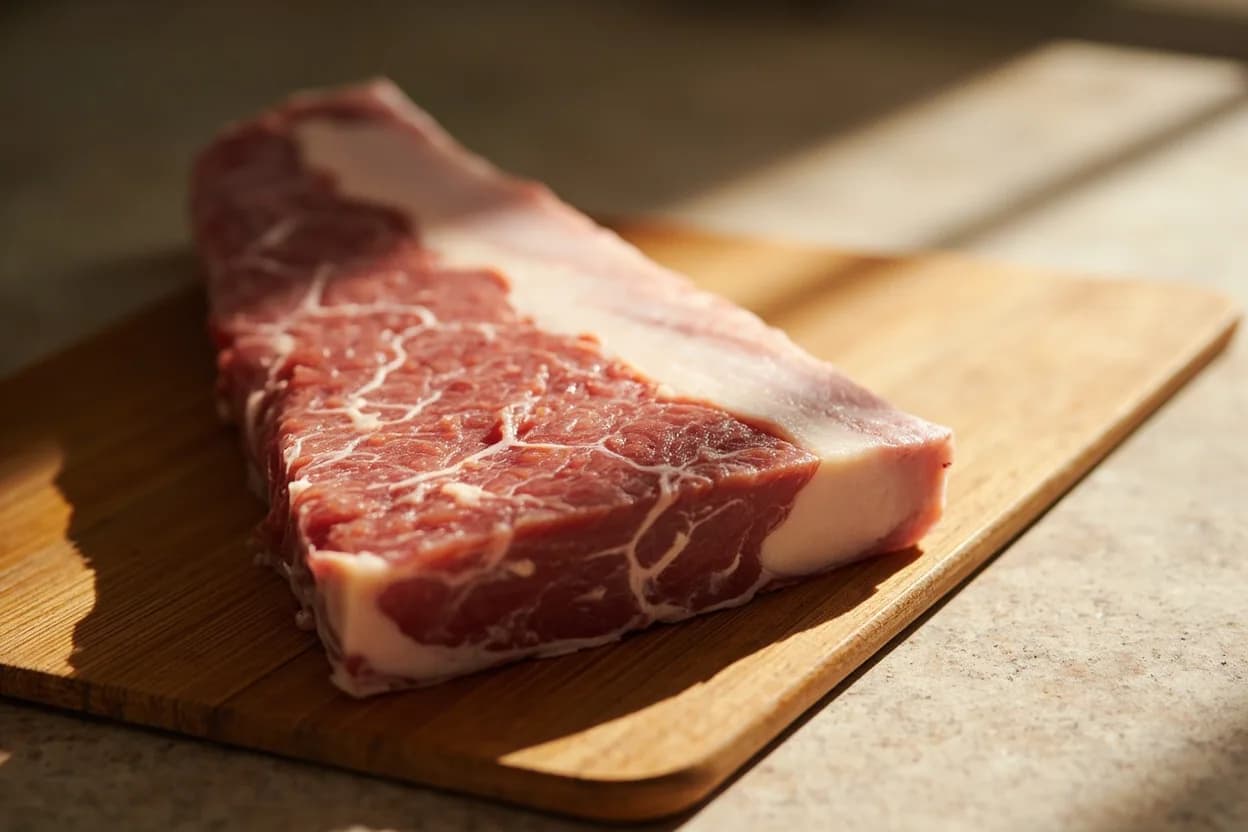
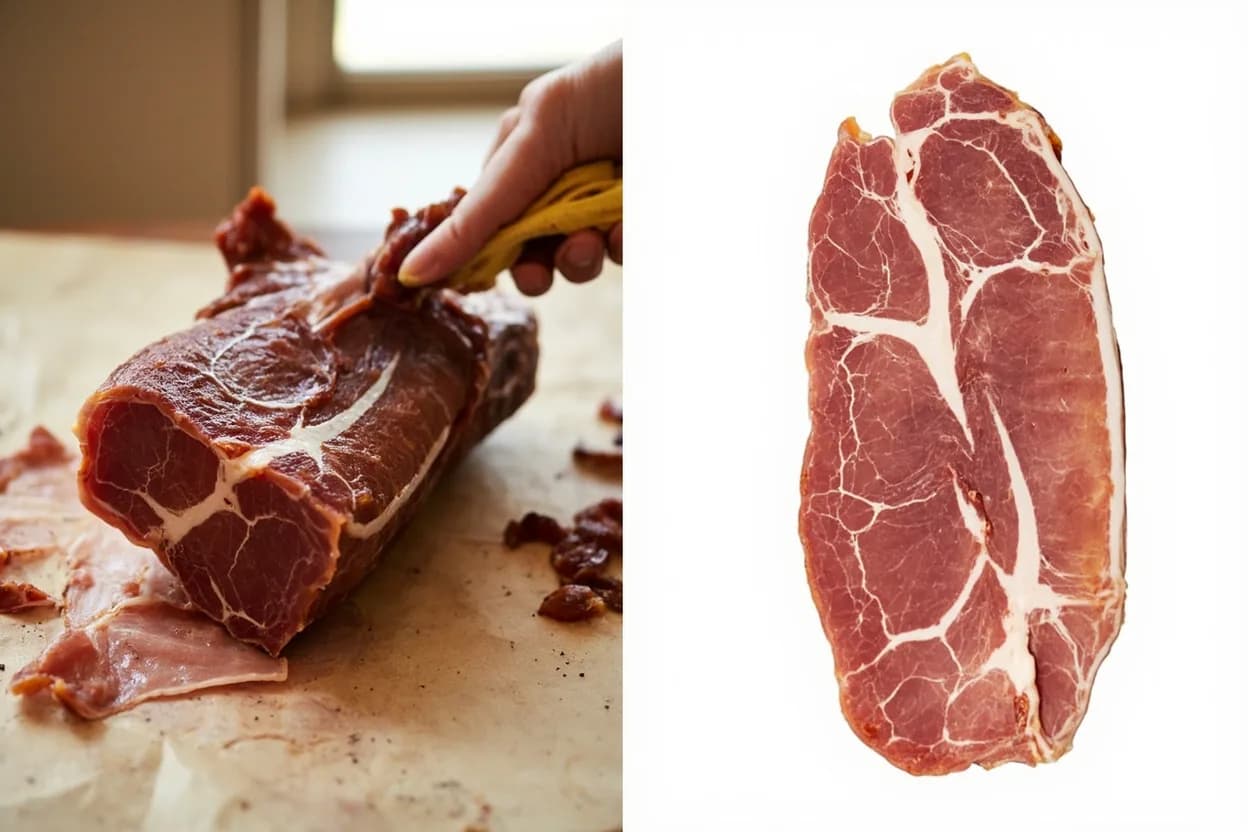
The same cured pork belly — one pressed flat (tesa), one rolled into a tight cylinder (arrotolata) — with different slicing applications and aesthetic identities.
Pancetta is Italy's answer to unsmoked cured pork belly, made from the same primal as American bacon but never smoked. The fundamental divide is in the final form: pancetta tesa (tesa = stretched or flat) is pressed flat into a rectangular slab, then hung to air-dry — sliced into lardons or julienned for cooking. Pancetta arrotolata (arrotolata = rolled) has the skin removed, the belly is rolled tightly along its length with spices layered inside, trussed into a cylinder, and air-dried — sliced into the characteristic pink-and-white pinwheel rounds for charcuterie boards. Both begin with the same pork belly and essentially the same cure; only the form changes.
In photos
Where it comes from
Pork belly (ventre/pancetta in Italian) — the ventral section of the pig carcass running from the base of the rib cage to the flank. The belly primal is the same anatomy as bacon: alternating layers of fat and lean (primarily the serratus ventralis and oblique abdominal muscles) with a thick fat cap.
Best for
How to cook it
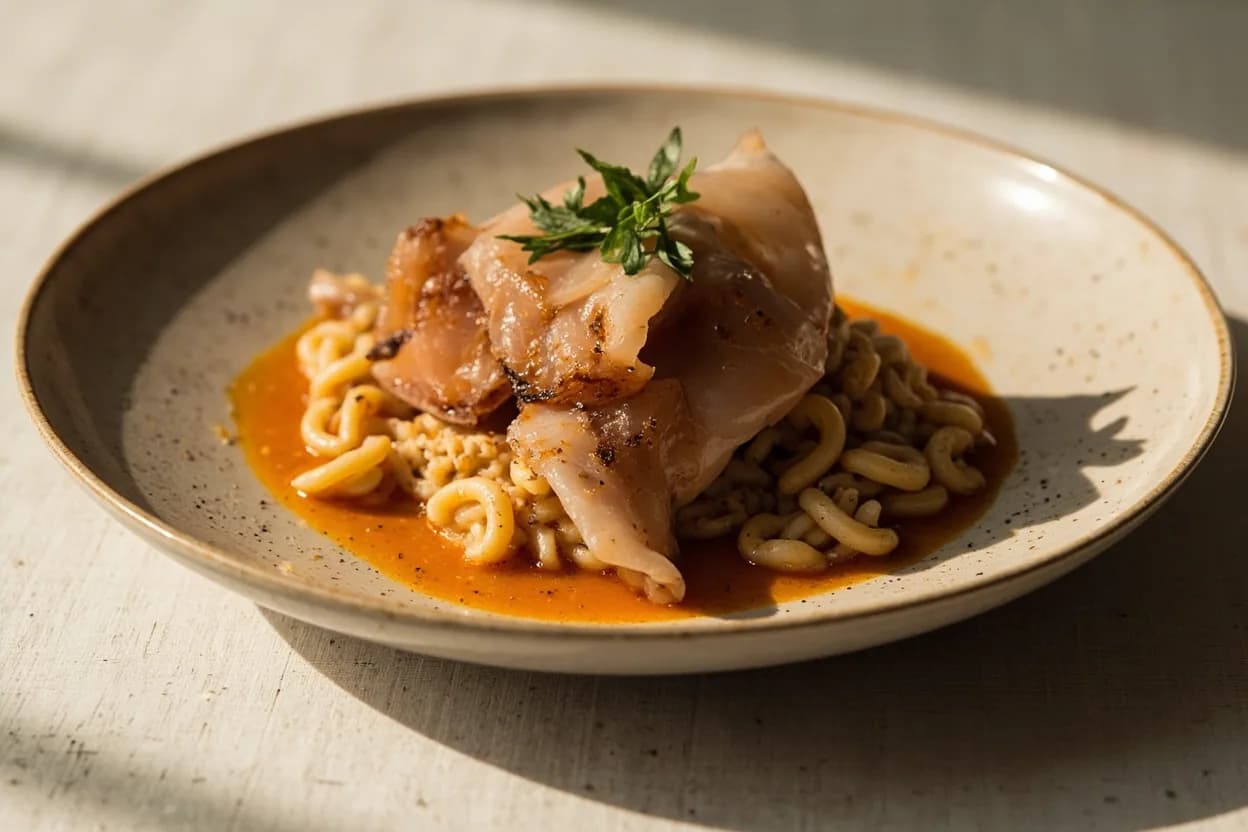
- 1For lardons (tesa): cut into 5–7 mm batons across the grain so lean and fat strata stay intact; render in a cold pan with no added fat
- 2For rendered base: start pancetta in cold pan, medium heat; render 5–8 minutes until fat is translucent and edges are golden — do not fully crisp unless texture is desired
- 3For wrapping (arrotolata slices): lay thin rounds flat, place filling at one side, roll tightly; secure with a toothpick if needed; roast or pan-sear at medium-high until exterior crisps
- 4In pasta e fagioli: add whole chunk of tesa to the bean braise, remove before serving or shred back in
- 5Arrotolata on a board: slice 1–2 mm thick on a meat slicer or with a very sharp slicing knife; serve at room temperature
Prep & butchery
- Tesa: remove skin after cure if desired for lardons; score the fat cap before curing to help salt penetrate
- Arrotolata skin removal: use a boning knife held nearly parallel to the skin, working in short strokes from one end to the other
- Arrotolata rolling: lay belly skin-side down, scatter spices on the flesh side, roll tightly starting from the narrower end, truss with butcher's twine every 2–3 cm
- Cure: apply dry cure (salt, sugar, pepper, aromatics) to all surfaces; refrigerate 7–14 days, turning daily
- Drying: hang in a cool (10–14 °C), well-ventilated space; optimal humidity 70–80%; 3–8 weeks depending on diameter
Substitutes
Richer, jowl-based — a superior substitute in Roman pasta sauces; not anatomically the same but culinarily interchangeable for rendered applications
- Unsmoked bacon
Closest structural substitute — same belly anatomy; omit smoke applications for authenticity
- Speck
Lightly smoked and cured; similar cure but adds smoke character and is from the leg, not belly
Pure fat — no lean; suitable only as a cooking medium, not a textural element
Related cuts
Cured jowl — the other cornerstone Italian salume; richer and more prized for pasta
- Lardo di Colonnata
Cured pure fatback — no lean, entirely different texture profile
- Speck Alto Adige
Northern Italian cured leg, lightly smoked — PGI status, distinct from belly-based pancetta
- Pork Belly (uncured)
The raw primal from which both pancetta forms are made
Appears in
References
- 1.Charcuterie: The Craft of Salting, Smoking, and Curing — Michael Ruhlman & Brian Polcyn
- 2.The Silver Spoon (Il Cucchiaio d'Argento)
- 3.Salumi: The Craft of Italian Dry Curing — Michael Ruhlman & Brian Polcyn
- 4.On Food and Cooking — Harold McGee
Confidence: high
Notes
Regional variation
Pancetta styles vary by Italian region. Calabrian pancetta (Pancetta di Calabria DOP) is flat-cured and coated in Calabrian chili powder, giving it a distinctive orange-red exterior. Piacentine pancetta (Coppa Piacentina DOP) is rolled and aged longer. Each reflects local spice traditions — cloves and cinnamon appear in the north, peperoncino in the south.
Tesa for cooking, arrotolata for the board
In professional kitchens, tesa is the utility cut — it's cheaper, slices into lardons with a knife, and renders beautifully. Arrotolata is the presentation cut: its elegant cross-sections make it worth the extra work on a charcuterie board. When a recipe calls simply for 'pancetta,' tesa is almost always intended.