Fermentation & Culturing Temperatures
Miso Fermentation Temperature Ranges
Also: miso aging temperature, miso sh熟成 temperature, koji miso temperature
Temperature is the master dial of miso flavor: cool aging at 10–20°C builds complexity over years; accelerated fermentation at 30–35°C yields a finished paste in weeks but sacrifices depth.
Miso fermentation temperature describes the ambient heat maintained during the weeks-to-years-long transformation of salted soybean and koji paste into miso. Two distinct regimes exist: traditional slow fermentation at ambient cool-room temperatures (10–20°C / 50–68°F), which may take 6 months to 3 years, and accelerated modern production at 30–35°C (86–95°F), which compresses fermentation to a few weeks. Temperature governs the speed and selectivity of enzymatic reactions, the activity of lactic acid bacteria and yeasts, and ultimately the balance of sweet, savory, and complex Maillard-driven flavors in the finished paste.
In photos
What happens
At 10–20°C enzymatic activity proceeds slowly and selectively. Proteases steadily hydrolyze soy proteins into peptides and free amino acids (glutamate, aspartate) that build umami. Amylases convert residual starch to sugars that feed lactic acid bacteria (Tetragenococcus halophilus) and wild yeasts, producing organic acids and aromatic esters. The slow timeline allows Maillard-adjacent browning reactions between amino acids and sugars to generate complex melanoidins — the source of aged miso's deep reddish-brown color and earthy complexity. At 30–35°C the same enzymatic cascade runs far faster, producing a sweeter, less complex paste with lighter color and fewer aromatic compounds. High salt concentration (typically 10–13% w/w) suppresses spoilage at both temperature regimes.
What to look for
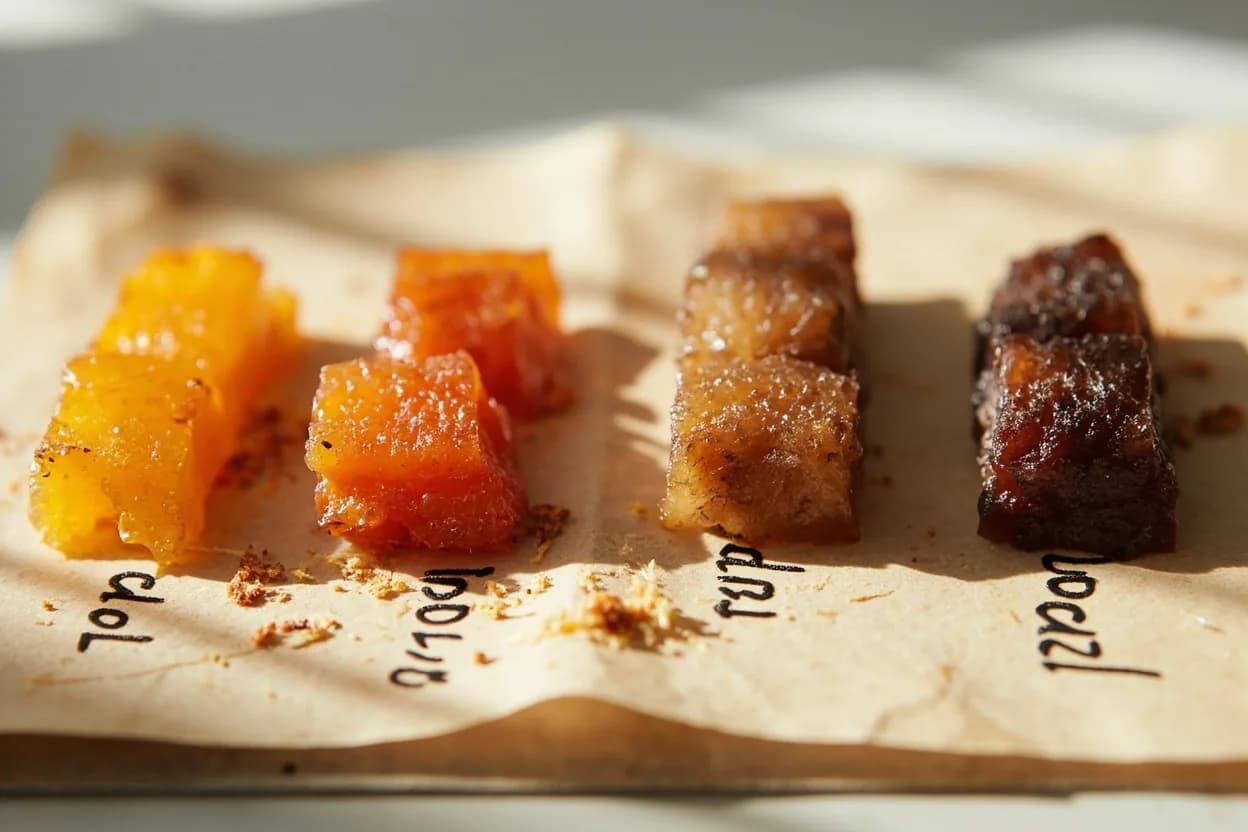
- Young miso (weeks): pale yellow-tan, sweet-salty, mild grain aroma
- Medium-aged miso (6–12 months): golden to amber, balanced umami and salt, deeper soy aroma
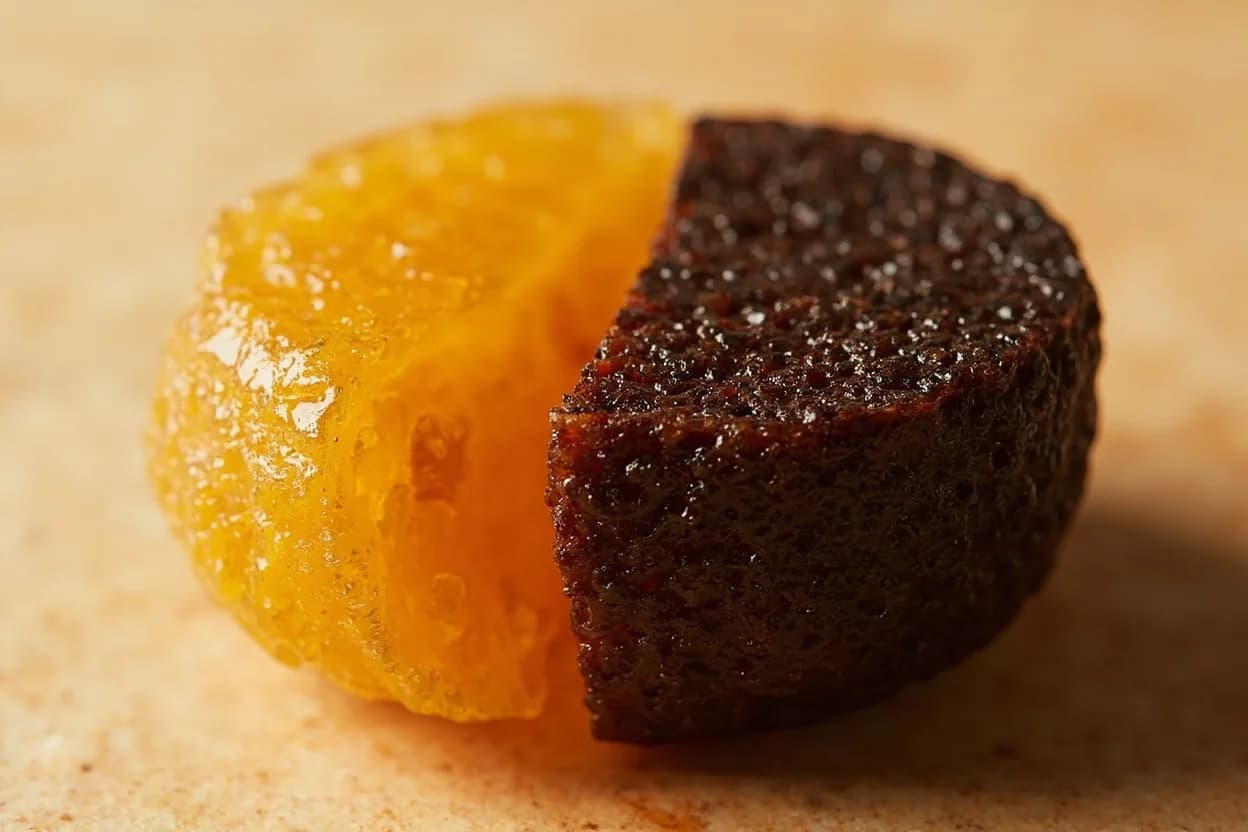
- Aged hatcho or mugi miso (2–3 years): dark reddish-brown to near-black, intensely savory, earthy, slight bitterness, complex caramel undertones
- Accelerated miso: lighter color, pronounced sweetness, thinner aromatic profile than slow-aged equivalent
- Properly fermented miso has a smooth, paste-like consistency without sour off-odors
How to check
- Monitor fermentation vessel with a probe or ambient thermometer; traditional ceramic crocks in a cool basement self-regulate via thermal mass
- Taste periodically — flavor complexity is the truest readiness indicator
- Color progression from cream → amber → deep brown tracks fermentation advancement
- Press the surface flat and watch for tamari (liquid soy) pooling; this indicates active enzymatic hydrolysis
The science behind it
Koji grown at 28–32°C is the enzymatic engine; its quality sets the ceiling for miso flavor
- Lactic acid bacteria
Tetragenococcus halophilus thrives under miso salinity; activity is temperature-dependent and contributes acidic complexity
Slow Maillard browning between amino acids and reducing sugars gives long-aged miso its color and roasted depth
- Salt concentration in fermentation
Typically 10–13% salt suppresses pathogens across both temperature regimes
Free glutamate generated by protease activity during miso fermentation is a primary umami source
Appears in
References
- 1.The Book of Miso — William Shurtleff & Akiko Aoyagi
- 2.The Noma Guide to Fermentation — René Redzepi & David Zilber
- 3.Koji Alchemy — Jeremy Umansky & Rich Shih
- 4.Miso Production: Principles and Practice — Japanese Standards Association
Confidence: high
Notes
Seasonal temperature cycling
Traditional Japanese producers exploit natural seasonal temperature swings — cool winters slow fermentation while hot summers accelerate it. A single seasonal cycle (winter start → summer peak → autumn maturation) is considered the minimum for well-rounded shiro or mugi miso. Two or three cycles produce the premium long-aged varieties.
Accelerated vs. traditional trade-offs
Commercially accelerated miso (30–35°C, weeks) yields consistent, mild pastes suitable for mass-market miso soup. The drawback is a narrower aromatic profile: fewer esters, less Maillard depth, and lower free amino acid concentration. For cooking applications requiring bold, complex flavor — braises, glazes, ramen tare — a traditionally fermented miso outperforms its fast counterpart.