Spices & Dried Aromatics
Ají Mirasol
Also: mirasol chili, ají mirasol seco, dried mirasol
The sun-dried form of ají amarillo — fruity and medium-hot with a golden raisin sweetness — forming the warm backbone of Peruvian stews, sauces, and rice dishes.
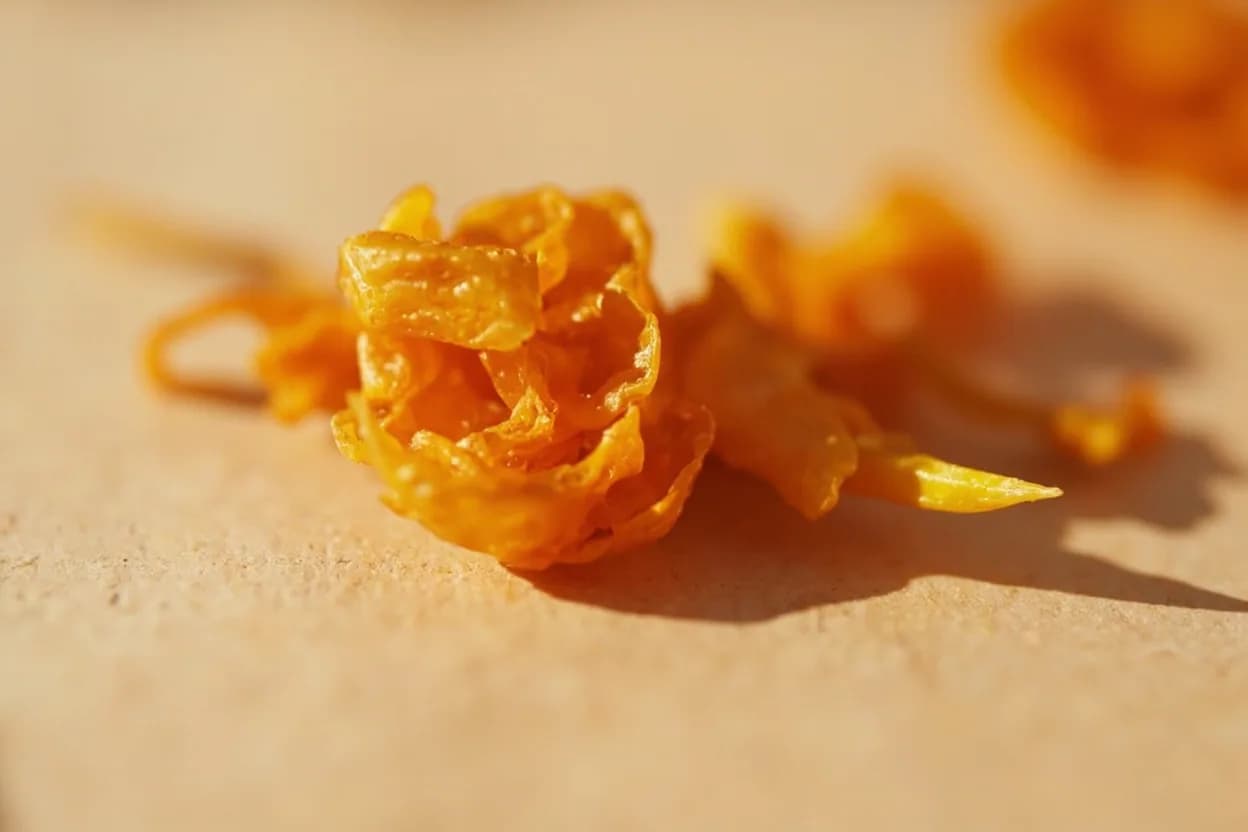
Ají mirasol is ají amarillo (Capsicum baccatum var. pendulum) that has been allowed to ripen further on the plant and then dried in the sun, its name meaning 'looks at the sun.' The drying process concentrates its characteristic tropical-fruity notes while mellowing some of the fresh chile's sharpness and introducing a golden raisin, honey, and mild smoky depth. It has moderate heat (8,000–14,000 Scoville), making it one of the gentler Peruvian dried chiles, and its versatility — in sauces, stews, rice, marinades, and braises — makes it a cornerstone of Peruvian and northern Andean cooking. It is most commonly rehydrated and blended into a smooth paste or charred on a comal and added to sauces.
In photos
Flavour profile
Classic pairings
- Duck (pato) — ají de gallina-style braisesPeruvian
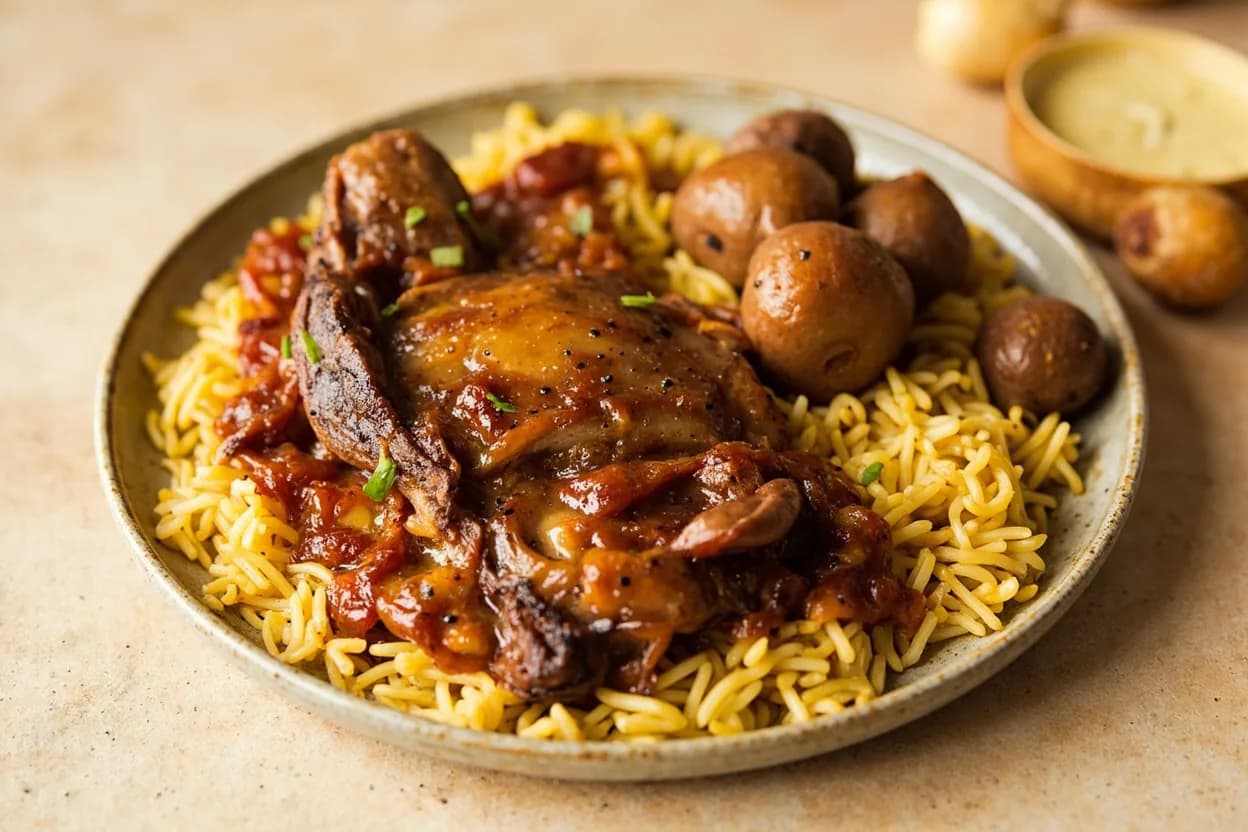
The fruity depth of mirasol integrates into cream-enriched poultry braises; it forms the base of ají de gallina alongside walnuts and white bread, staining the sauce golden and providing the dish's defining fruity heat.
- Rice (arroz con leche de tigre–style rice dishes)Peruvian, chifa
Ground or paste-blended mirasol adds golden color and a fruity mid-heat to arroz preparations including fried rice (arroz chaufa) in chifa cooking, where it bridges Peruvian and Chinese flavor registers.
- Potato (papa amarilla)Peruvian
The yellow potato's waxy, almost buttery flesh matches naturally with the fruity-warm chile — together they appear in numerous Peruvian casseroles and potato-based dishes where mirasol paste is the primary seasoning.
- Chicken (pollo a la brasa–style marinades)Peruvian
Mirasol paste, garlic, cumin, and vinegar form a classic Peruvian poultry marinade; the dried fruit notes caramelize during high-heat roasting, forming a lacquered, lightly spiced crust.
- Walnuts and bread (ají de gallina)Peruvian
The canonical combination: walnuts bring bitter richness, stale white bread provides body, and mirasol paste delivers color and fruity heat in Peru's most beloved creamed chicken dish.
- Shrimp (camarones)Peruvian, coastal
Mirasol's fruit sweetness and moderate heat amplify the natural sweetness of shrimp; rehydrated paste in a sofrito base brings depth without overwhelming the crustacean.
Adventurous pairings
- Butternut squash
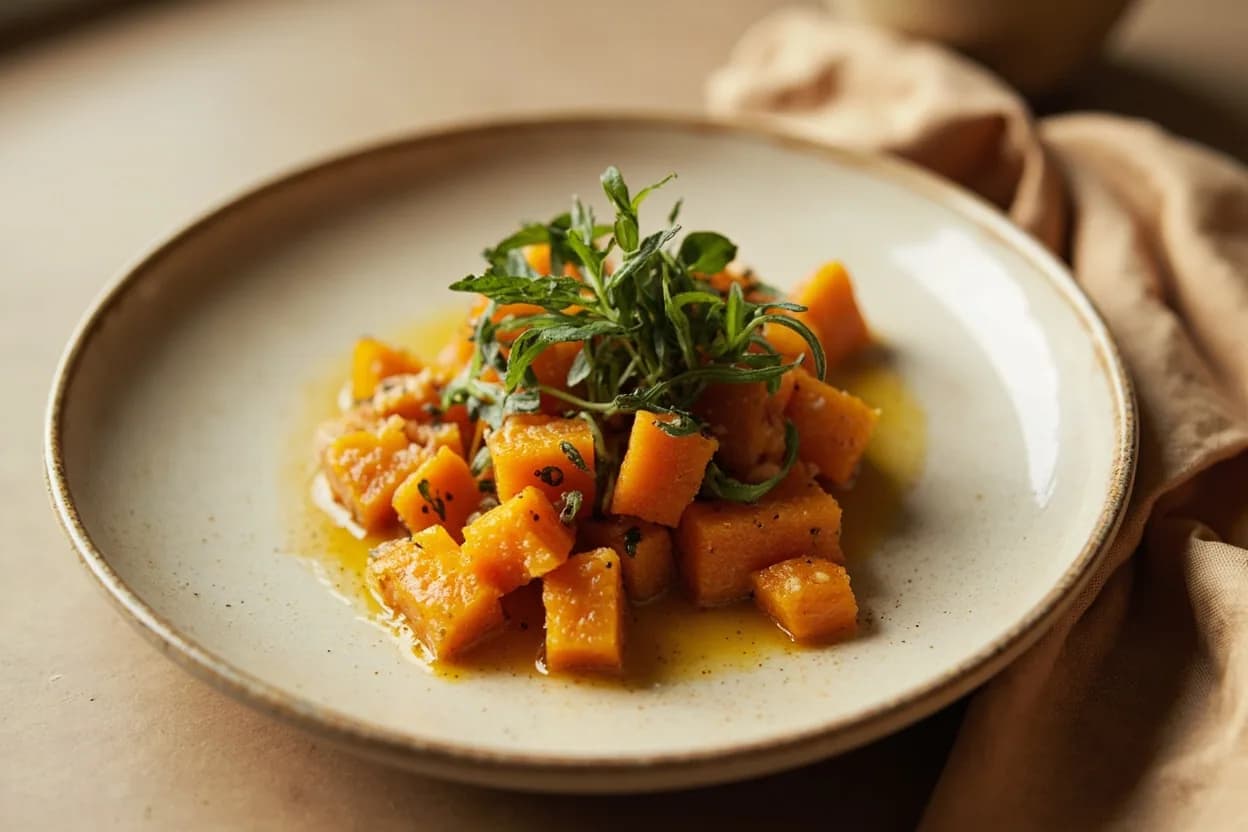
The sweet-starchy depth of roasted butternut meets mirasol's fruity heat on exactly the same tropical-sweet register — a mirasol butter glaze on roasted squash tastes like a Peruvian-inflected autumnal dish without being derivative.
- White miso
Combine rehydrated mirasol paste with shiro miso, lime, and sesame for a Nikkei-Peruvian glaze on salmon or cod; the umami of miso bridges the fruity chile and fish naturally.
- Goat's cheese
A mirasol honey drizzle — simmered paste with a touch of honey and vinegar — over fresh chèvre is an aperitivo pairing that works like a chili-fruit jam, the tang of the cheese anchoring the sweetness.
- Fresh corn (choclo)
Large-kernel Andean corn and mirasol share an earthy-sweet base note; elote-style preparations using mirasol paste instead of guajillo offer a distinctly Peruvian sweetness.
Tread carefully
- Dishes requiring deep smokinessavoid
Mirasol has minimal smoke character — it is sun-dried, not fire-dried. For smoky preparations (adobos, barbecue sauces), chipotle or dried pasilla negra delivers where mirasol cannot.
- Delicate broths needing clarityavoid
Blended mirasol paste clouds broths and consommés with its starch and pigment; it is a sauce and paste ingredient, not suitable for refined clear soups.
- Dishes built on clean green herbsavoid
Mirasol's warm fruity-raisin character competes with and muddies the clean green register of salsa verde, chimichurri, or herb-forward sauces.
How to use it
- Dry-toast on a comal or cast-iron skillet until fragrant (30 seconds per side), then rehydrate in hot water 20–30 minutes before blending
- Blend rehydrated flesh (seeds and veins optionally included for more heat) into a smooth paste — freeze in ice-cube trays for portioned use
- Fry paste in oil or lard as the first step of a sofrito base before adding aromatics
- Grind fully dried into a coarse powder for dry rubs on poultry or pork
- Combine rehydrated paste with evaporated milk and walnuts to build ají de gallina sauce
Appears in
Related flavours
- Ají amarillo (fresh)
The fresh form of the same pepper — brighter, more citrus-forward, less raisiny; the two are used in different applications but their flavor relationship is direct
The other major Peruvian dried chile — deeper burgundy-red, earthier and smokier; often combined with mirasol in stews for a spectrum of dried chile depth
The primary spice companion to mirasol paste in Peruvian sofrito — earthy and warm where the chile is fruity; together they form the backbone of most braises
Invariably combined with mirasol in blended pastes and fried sofritos; garlic's pungency focuses the chile's sweetness
References
- 1.Peru: The Cookbook — Gastón Acurio
- 2.The Gran Cocina Latina — Maricel Presilla
- 3.Peppers of the Americas — Maricel Presilla
- 4.Ceviche: Peruvian Kitchen — Martin Morales
Confidence: high
Notes
Mirasol vs. ají amarillo paste
Many Peruvian recipes outside Peru call simply for 'ají amarillo paste,' which is made from the fresh or frozen yellow pepper. Ají mirasol paste has a notably different, richer, slightly sweeter character from sun-drying. In home cooking inside Peru, both are used, but mirasol is specifically sought for slow-cooked dishes where its concentrated raisin sweetness is an asset rather than a shortcut for the fresh version.