Smoke & Fire
Apple Wood Smoke
Also: applewood smoke, apple smoke, apple wood
Gentle, orchard-sweet smoke that coaxes rather than commands — the subtlest hardwood in the BBQ canon.
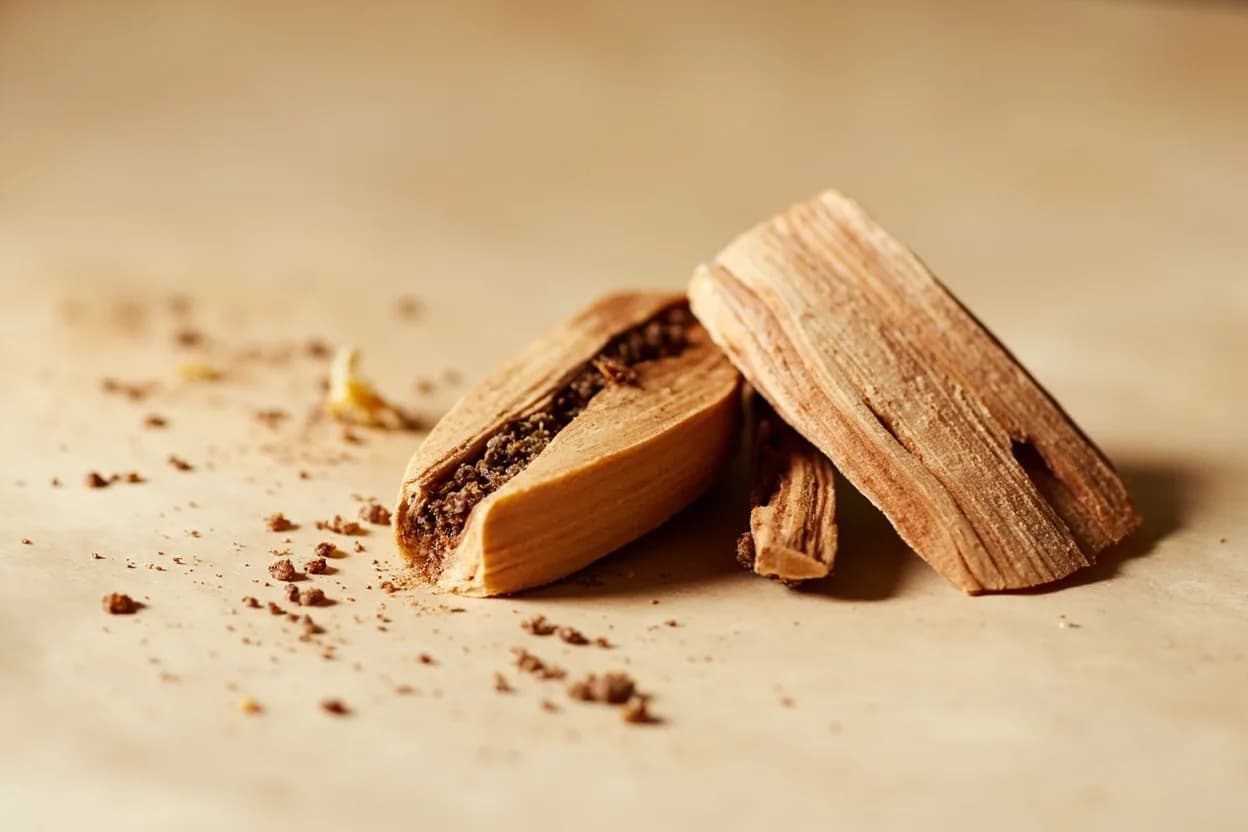
Applewood comes from orchard-pruned or felled apple trees (Malus domestica) and produces a mild, sweet, faintly fruity smoke that burns at moderate temperatures. Unlike hickory or mesquite, its flavor contribution is restrained and nuanced: a barely perceptible sweetness, a clean fruit-blossom note, and a light, honey-like smoke that enhances without dominating. It is the ideal wood for poultry, pork loin, delicate smoked fish, and cold-smoked dairy, where a stronger wood would overwhelm the ingredient's own flavor. Prolific in New England, the Pacific Northwest, and Germany's Black Forest, it has become a globally recognized choice for refined smoking.
In photos
Flavour profile
Classic pairings
- Pork ribs and pork loinAmerican BBQ
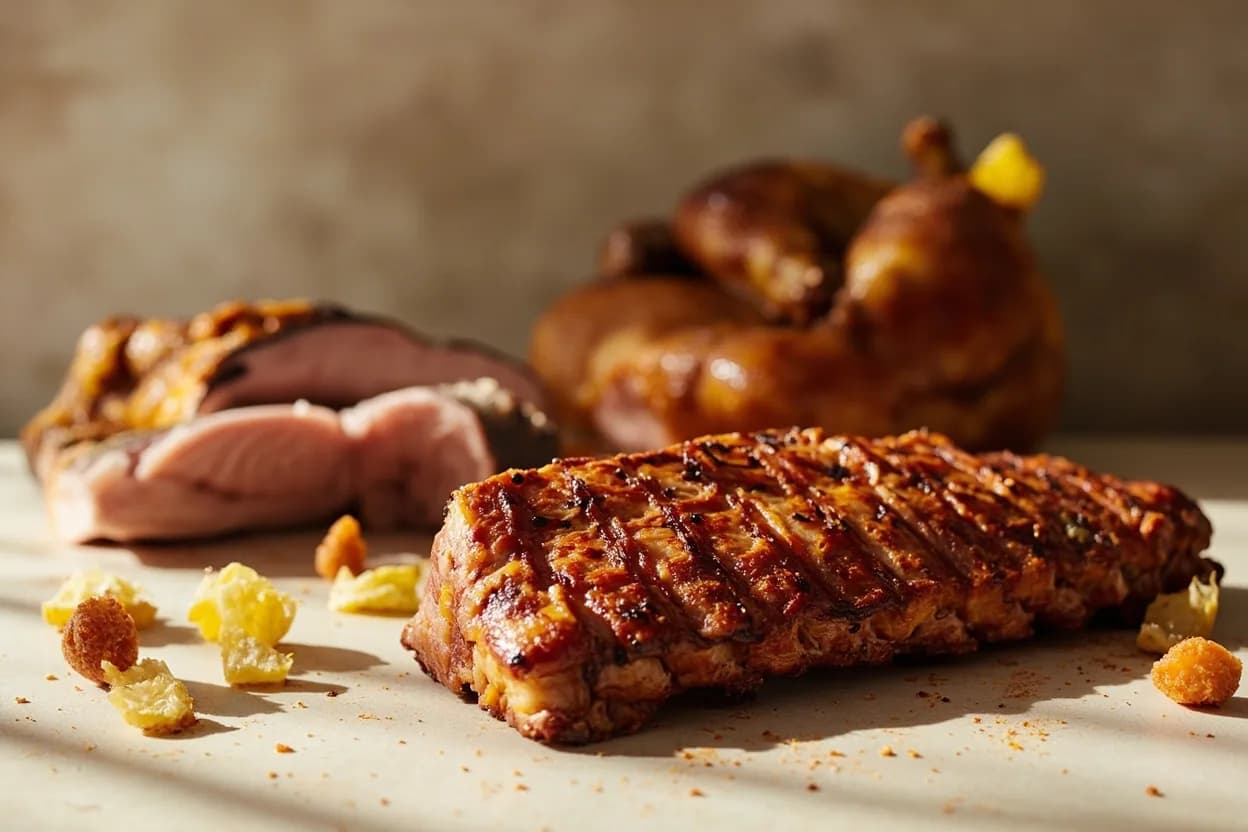
Applewood is the preferred fruitwood for pork in competition BBQ — its sweetness amplifies pork's natural sweetness without hickory's aggression.
- Whole roast chickenAmerican / European
Poultry's mild flavor allows applewood's subtlety to shine; the result is golden skin with an aromatic, barely-there fruitiness.
- Smoked salmonAmerican Pacific Northwest / Scandinavian
Applewood is a classic wood for Pacific and Atlantic salmon cold-smoking — it adds sweetness without the phenolic edge that would ruin delicate fish.
- Turkey breastAmerican
Competition and holiday smoking of turkey relies heavily on applewood — the wood's sweetness mimics the effect of a brown-sugar brine.
- Pork belly (for bacon)American / British
Artisanal bacon makers often combine applewood with maple or use it alone for a lighter, fruitier alternative to hickory-smoked bacon.
- Smoked brie or camembertFrench-American artisan
Cold-smoked for 30–60 minutes over applewood, soft-rind cheeses gain a gentle smokiness that deepens without masking the milky, mushroom character.
- Duck breastAmerican / European
A 90-minute applewood smoke before finishing in a hot pan renders the fat and leaves a delicate fruity smoke complement to duck's natural richness.
Adventurous pairings
- Smoked butter
Cold-smoking high-fat European-style butter over applewood for 2 hours creates a finishing ingredient that elevates roasted vegetables, seafood, and pastry.
- Smoked cream cheese
The mild smoke and the tang of fresh cream cheese fuse beautifully over applewood — a contemporary charcuterie-board staple with bagels or smoked salmon.
- Cauliflower steaks
Plant-based BBQ finds a natural wood partner in applewood — 45 minutes of smoke gives cauliflower a delicate campfire note without competing with its earthy sweetness.
- Smoked honey
Placing an open jar of wildflower honey in a cold smoker over applewood for 1–2 hours produces an artisan condiment with a floral-smoky complexity that elevates cheese boards and cocktails.
- Quail or squab
These rich, tiny game birds absorb applewood's subtle sweetness in under an hour of smoking, creating an elegant composed dish that reads as simultaneously wild and delicate.
Tread carefully
- Brisket (as the only wood)avoid
Applewood is too mild for a 12-hour brisket — it will produce virtually no smoke ring or meaningful penetration; oak or hickory is required.
- Lamb shoulder (long smoke)avoid
Lamb's gamey fat needs a stronger wood to counterpoint; applewood disappears against it. Cherry or oak balances better.
- Intense red-wine reductionsavoid
Finishing applewood-smoked meat with a heavy red-wine jus overwhelms the delicate smoke entirely — lighter fruit-forward sauces preserve the pairing.
How to use it
- Cold smoking (under 90°F / 32°C) for cheese, butter, salmon, and charcuterie
- Indirect hot smoking at 225–275°F (107–135°C) for poultry and pork loin
- Blending with stronger woods (1 part hickory to 3 parts apple) to add depth without sweetness loss
- Using small chunks or chips — the mild wood loses character if over-applied
- Plank smoking: soaked apple-wood planks impart steam-smoke to salmon and fish fillets on a grill
- Staggered smoke: apply applewood in the first hour only, then finish smoke-free to retain delicacy
Appears in
Related flavours
The closest flavor relative — also a fruitwood and similarly mild, but cherry adds a mahogany color and slightly deeper sweetness.
The boldest counterpart: what applewood is to delicacy, hickory is to intensity. Blending the two is a common BBQ competition strategy.
- Maple
Maple wood smoke shares applewood's sweetness and mild character; the two are often used interchangeably for poultry.
References
- 1.The Barbecue! Bible — Steven Raichlen
- 2.Meathead: The Science of Great Barbecue and Grilling — Meathead Goldwyn
- 3.Charcuterie: The Craft of Salting, Smoking, and Curing — Michael Ruhlman & Brian Polcyn
- 4.The River Cottage Smoking & Curing Handbook — Steven Lamb
Confidence: high
Notes
Competition BBQ's secret weapon
Many competition BBQ grand champions use applewood as a blending wood — adding it to a hickory or pecan base to round out harsh edges and contribute sweetness. The apple-hickory blend is so prevalent in competition circuits it has become a de facto standard.
Orchard provenance matters
Wild apple or heritage-variety apple trees produce denser wood with more aromatics than high-production orchard prunings. Cooks who have access to heritage-variety wood (Gravenstein, Cox, Bramley) often notice a more pronounced floral quality in the smoke.