Fats, Pastes & Condiments
Awaze
Also: awaze sauce, Ethiopian chili paste, berbere paste
Ethiopia's fiery, aromatic chili paste — the bold condiment that turns tibs and kitfo into something unforgettable.
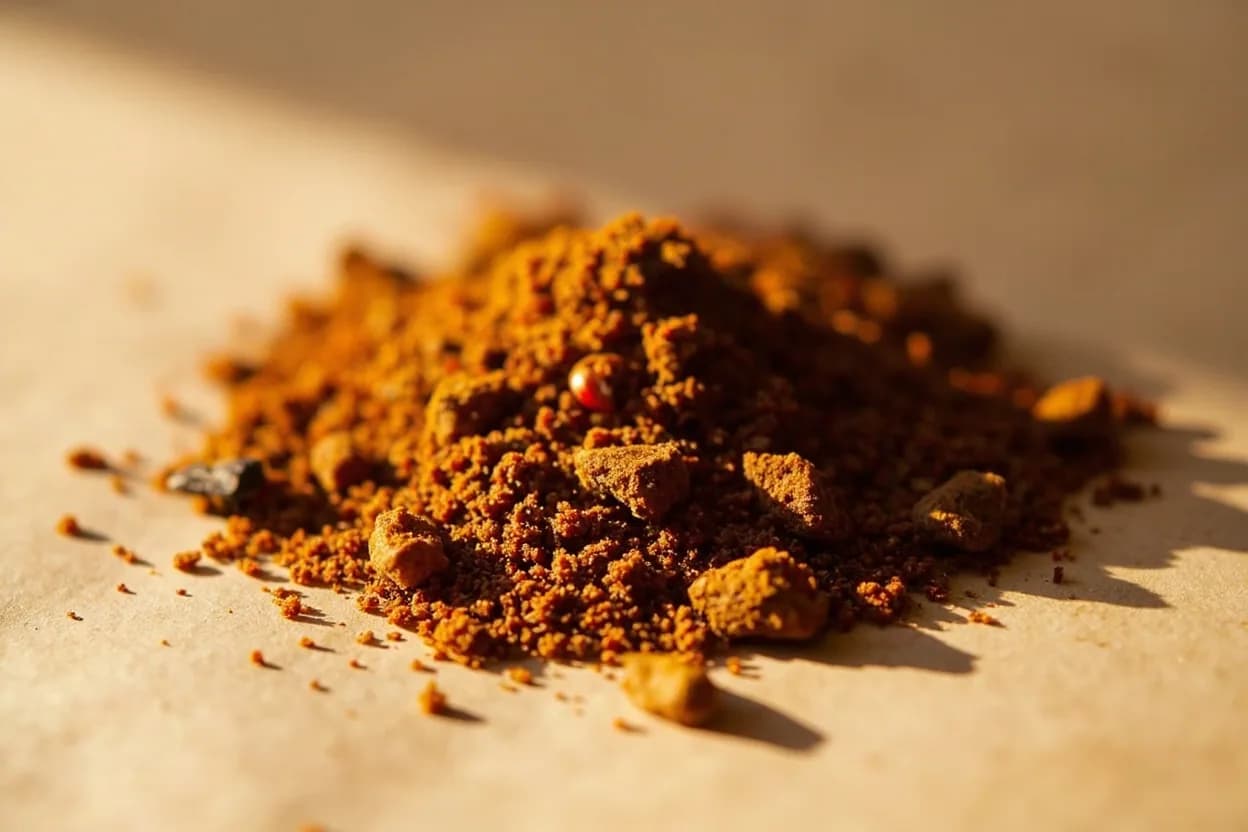
Awaze is an Ethiopian fermented chili paste made by combining berbere spice blend with tej (honey wine), tej berz (fermented grain liquid), or occasionally areke (distilled spirit), then aging the mixture until deeply complex. The result is thick, brick-red, and intensely flavored — simultaneously hot from chili and Ethiopian pepper, warm from korerima (Ethiopian cardamom) and rue, fermented-funky from the liquid base, and faintly sweet. It is distinct from dry berbere in that the fermentation mellows the sharp heat and builds umami depth. Served as a table condiment alongside tibs, spooned over raw kitfo, or used as a cooking paste.
In photos
Flavour profile
Classic pairings
- Kitfo (Ethiopian beef tartare)Ethiopian
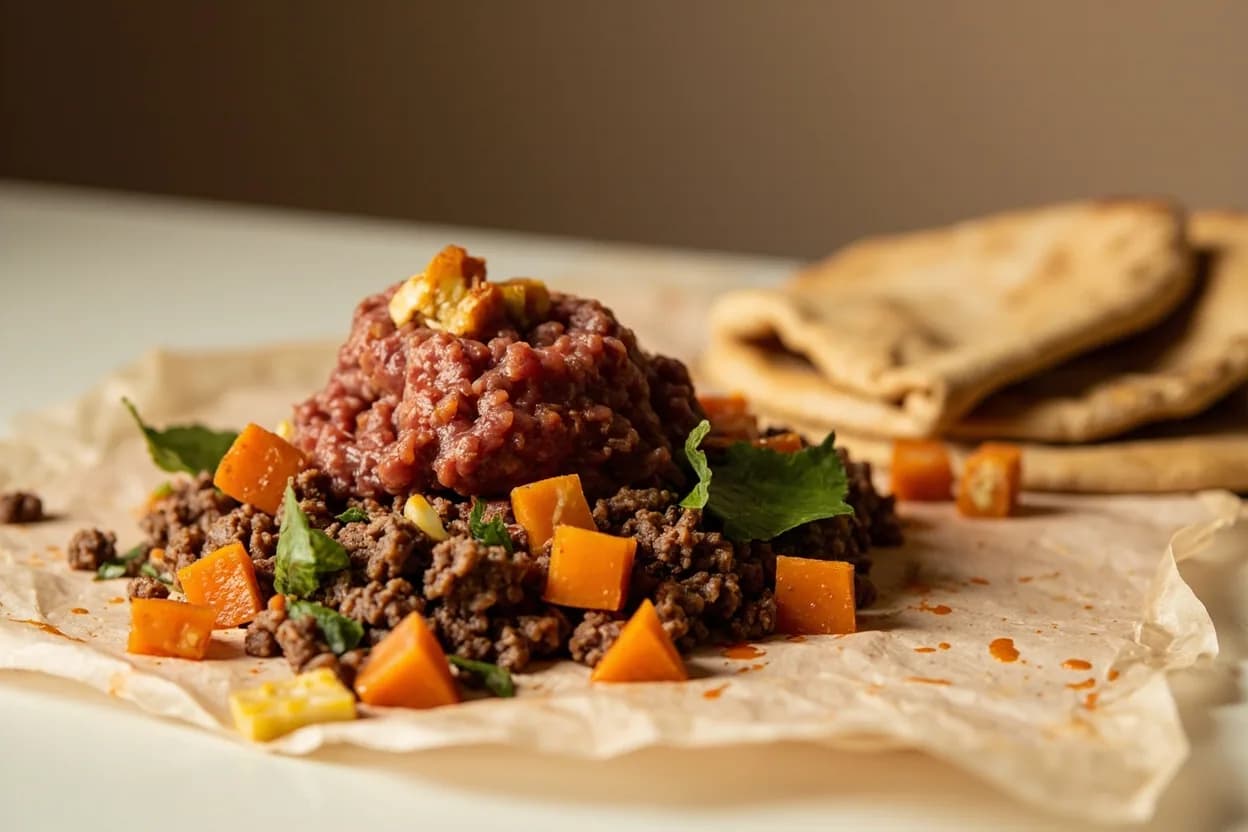
Awaze is the canonical condiment for kitfo — its fermented heat cuts the richness of the spiced raw beef and echoes the mitmita seasoning already in the dish.
- Tibs (sautéed meat)Ethiopian
Stirred into or served alongside tibs, awaze adds layered heat and fermented complexity that unifies lamb, beef, or goat with the onion and rosemary base.
- InjeraEthiopian
Injera's sour teff funk harmonizes with awaze's fermented character; the spongy texture absorbs the paste perfectly as a dipping vehicle.
- Lamb shoulderEthiopian
Awaze's deep chile warmth and fenugreek cut through lamb's fattiness and complement its gamey sweetness in both marinades and table service.
- Ayib (Ethiopian fresh cheese)Ethiopian
The mild, crumbly dairy cools awaze's heat on the plate and provides a creamy foil — a textbook spice-dairy balance.
- Honey (tej-style)Ethiopian
A dab of raw honey stirred into awaze mirrors its tej base, softening the fermented sharpness and amplifying floral notes.
Adventurous pairings
- Dark chocolate (70%+)
Chocolate's bitter cocoa and fermentation notes resonate with awaze's own fermented depth; together they make a compelling mole-adjacent flavor bridge.
- Roasted bone marrow
The unctuous fat of bone marrow needs assertive acid and heat — awaze delivers both while its spice complexity prevents the dish from tipping into one-dimensional richness.
- Miso-glazed eggplant
Two fermented condiments working together: miso's umami and awaze's chile heat build a savory depth on smoky, caramelized eggplant that bridges East African and East Asian traditions.
- Seared duck breast
Duck's pronounced fat and iron-rich flesh can absorb awaze's assertive heat; the berbere spices echo classic duck preparations with warm whole spices.
Tread carefully
- Delicate white fish (sole, plaice)avoid
Awaze's aggressive heat and fermented funk overwhelm subtle, sweet-fleshed fish; the chili destroys the flavor before it registers.
- Fresh cream or beurre blancavoid
The acidity and fermented sharpness of awaze cause cream sauces to break and taste sour rather than rich; the flavors fight rather than complement.
How to use it
- Serve at room temperature as a dipping condiment; never heat it until thin or the fermented complexity cooks off
- Blend into marinades for grilled meats — 1–2 tbsp per kg, massaged in overnight
- Stir into cooking oil at the finish of tibs to bloom the spices one final time
- Dilute with tej or dry red wine to make a basting liquid for whole roasted lamb
- Use as a swipe on flatbreads before topping, as you would harissa on North African breads
Appears in
Related flavours
Awaze's dry spice foundation — the same blend, before fermentation and liquid
- Tej (honey wine)
The liquid base that defines awaze's fermented character and sweetness
Ethiopia's hotter, cardamom-forward finishing powder; used alongside awaze on kitfo
North African fermented chili paste occupying the same culinary role — direct analogues
References
- 1.Exotic Ethiopian Cooking — Daniel Jote Mesfin
- 2.The Africa Cookbook — Jessica B. Harris
- 3.Teff Love: Adventures in Vegan Ethiopian Cooking — Kittee Berns
Confidence: high
Notes
Fermentation matters
Commercially available awaze is often a simplified paste without true fermentation. Authentic awaze requires at least 3–7 days of rest after combining berbere with tej or fermented grain liquid; shortcutting produces a hot but flat paste that lacks the rounded, umami-forward depth of the real thing.