Herbs
Huacatay (Black Mint)
Also: huacatay, black mint, Peruvian black mint, Mexican marigold mint, Tagetes minuta, wakatay, 南美万寿菊
Andean cooking's secret weapon: a pungent, anise-marigold herb that defines ají verde, enriches pachamanca, and has no true substitute outside South America.
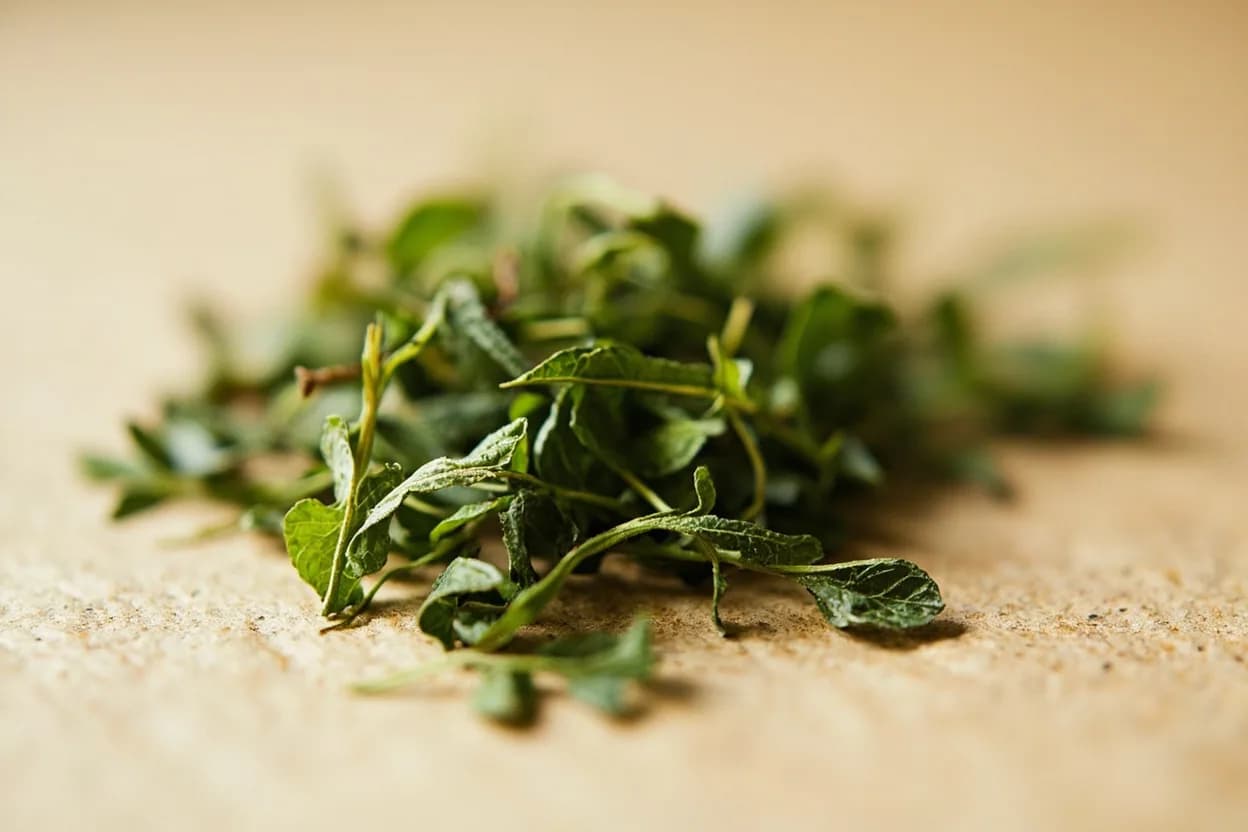
Huacatay (Tagetes minuta) is a species of marigold native to South America — related to the ornamental marigold but prized entirely for its aromatic leaves and stems. Its flavor is complex and assertive: anise and mint top notes ride over a deep, resinous marigold-flower bitterness, with a faint note of lime peel and something approaching tarragon. Unlike French tarragon or spearmint, huacatay has a slightly fermented, almost sulfurous depth when raw that cooks out on heat, leaving a haunting savory-herbal character. It is the defining flavor of ají verde (Peru's ubiquitous green hot sauce), ocopa (creamy Arequipa dipping sauce), and pachamanca (underground earth oven feast). Outside Peru and Bolivia, it is sold frozen or as paste; fresh leaves are rarely seen outside South America.
In photos
Flavour profile
Classic pairings
- Ají amarillo (yellow chili)Peruvian
The defining duo of Peruvian green cooking: huacatay's anise-marigold tempers ají amarillo's fruity heat and brightens its tropical sweetness. Together they make ají verde.
- Potatoes (papa amarilla, purple potato)Peruvian
Andean potatoes — starchy, earthy, sometimes waxy — are the canonical vehicle for huacatay sauces; ocopa sauce is essentially huacatay over boiled papa criolla.
- Lamb and guinea pig (cuy) in pachamancaAndean / Peruvian
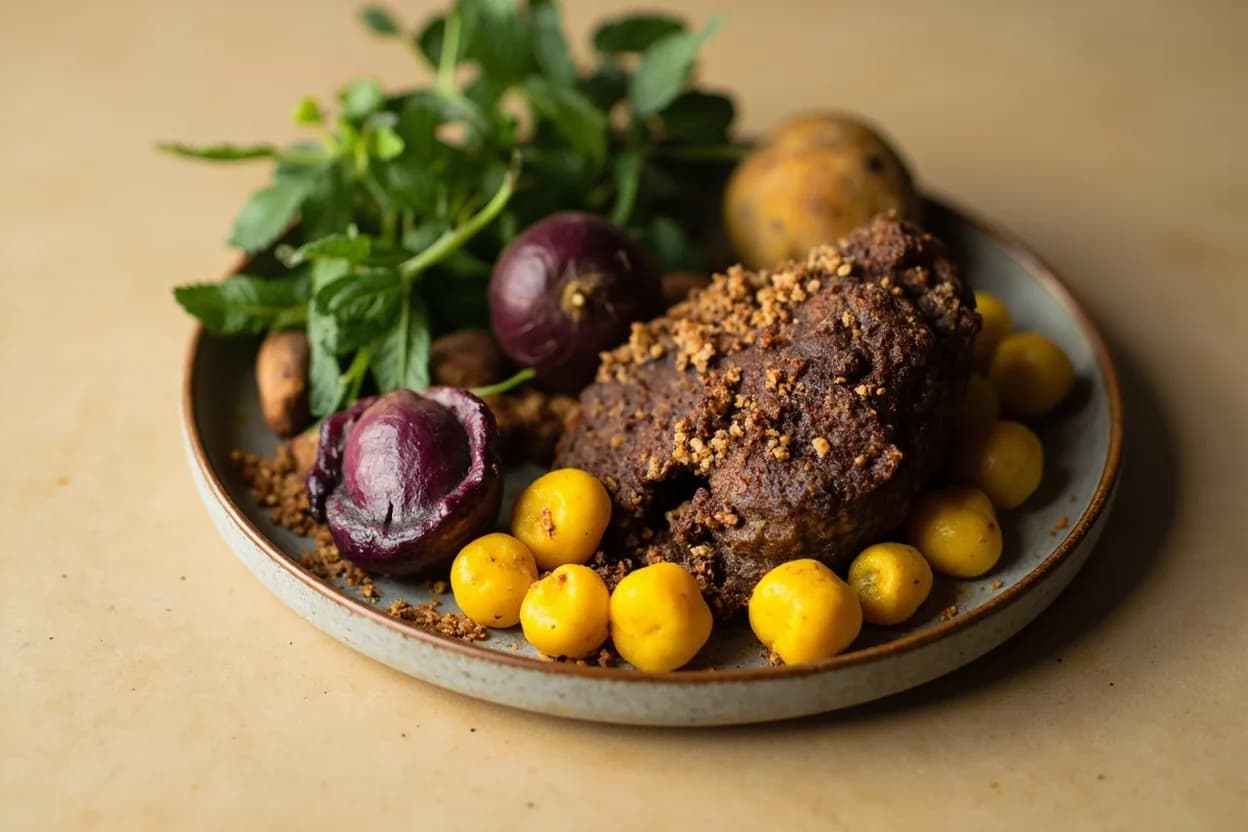
In the Andean earth oven technique, huacatay-rubbed meats cook alongside hot stones; the herb's volatile oils slow-release into the meat over 2–3 hours, leaving a deep savory perfume.
- Cheese (queso fresco, cotija)Peruvian
Ocopa sauce traditionally includes ground huacatay, ají amarillo, queso fresco, and evaporated milk; the mild salty fresh cheese grounds the herb's intensity.
- Roasted corn (choclo)Peruvian
Charred Andean corn rubbed with huacatay butter (herb blended with butter and salt) is a market-stall classic in Cusco and Arequipa.
- Chicken (pollo a la brasa marinade)Peruvian
Huacatay is a key component of the paste rubbed on Peruvian rotisserie chicken alongside soy, cumin, and garlic; it provides herbal depth beneath the charred skin.
Adventurous pairings
- Lamb chops or rack of lamb
A huacatay-heavy chimichurri (herb paste with red wine vinegar, olive oil, garlic, ají amarillo) rivals Argentine chimichurri on lamb — the marigold bitterness cuts the fat exceptionally well.
- Mussels or clams
Steam shellfish in a broth of huacatay paste, white wine, and garlic; the herb's anise-mint note echoes fennel's role in classic moules marinière but with Andean depth.
- Avocado
Huacatay guacamole — add a tablespoon of paste to guacamole — replaces cilantro with something more complex and aromatic; the marigold bitterness contrasts avocado fat compellingly.
- Dark chocolate ganache
A huacatay-infused chocolate truffle (steep paste in hot cream, strain, make ganache) yields a haunting anise-marigold note beneath chocolate bitterness — used by avant-garde Peruvian pastry chefs.
Tread carefully
- Delicate white fish (sole, flounder, sea bass crudo)avoid
Huacatay's pungency overwhelms subtle fish; even a small amount makes the fish taste medicinal and metallic. Reserve for robust proteins.
- Subtle cream-based saucesavoid
The herb's resinous depth destabilizes and dominates light cream preparations; in ocopa, the cheese and evaporated milk are deliberately robust enough to absorb the intensity.
- Raw application in large quantityavoid
Raw huacatay has an abrasive, sulfurous edge; always blend into a paste with oil, acid, or other aromatics (or cook briefly) to integrate and mellow the flavor.
How to use it
- Blend with oil, ají amarillo, lime juice, and salt to make ají verde or ocopa base paste
- Rub directly onto poultry or lamb as a dry paste marinade (with garlic, cumin, salt) and rest overnight
- Steep frozen paste in warm butter or neutral oil for 10 minutes, strain for a finishing oil
- Add to braises in the last 20 minutes — earlier and the flavor turns bitter; too late and it stays raw
- Combine with queso fresco and evaporated milk in a blender for the classic ocopa sauce
- A pinch of dried huacatay (ground) functions like a Peruvian herbes de Provence in dry rubs
Appears in
Related flavours
Inseparable pairing in Peruvian green sauces; the chili's fruity heat and huacatay's anise-marigold define ají verde together
- Cilantro
Frequent co-herb in Peruvian cooking; cilantro's citrusy brightness complements huacatay's deeper, more resinous character — they appear together in seco de cordero
- French tarragon
The closest Western approximation of huacatay's anise-herb flavor, though tarragon lacks the marigold bitterness and deeper resinous character
The earthy-smoky spice appears in virtually every Peruvian preparation that uses huacatay; the two aromatics form the backbone of Andean savory seasoning
References
- 1.The Art of Peruvian Cuisine — Tony Custer (Ediciones El Comercio, 2003)
- 2.Peru: The Cookbook — Gastón Acurio (Phaidon, 2015)
- 3.The Latin Road Home — José Garces (Lake Isle Press, 2012)
- 4.Tasting Peru — Mónica Huerta & Gustavo Rodríguez (editorial Peru, 2021)
Confidence: high
Notes
Sourcing outside Peru
Fresh huacatay is essentially impossible to find outside South America. The ingredient is typically sold outside its home region in two forms: frozen whole leaves and stems (found in Latin American grocery stores, especially those serving Andean communities), and paste in jars (Inca's Food and other brands). The paste is surprisingly good and widely used by Peruvian restaurants outside Peru. Dried huacatay loses most of its floral character and should be treated as a last resort.
Ecological note
Tagetes minuta is classified as an invasive species in several countries including South Africa, Australia, and New Zealand, where it has naturalized and spread aggressively. In its South American homeland it is a controlled-cultivation herb. Gardeners outside Peru should check local invasive species lists before growing it.
Pachamanca ritual
In the Andean pachamanca tradition, huacatay is not merely a flavoring but a sacred herb. Bunches of huacatay, along with muña (Andean mint), are layered over heated volcanic stones in the earthen pit alongside meats, potatoes, and corn, creating aromatic steam that infuses the food over 2–3 hours. The herb's role is ceremonial as well as culinary in this UNESCO-recognized tradition.