Fermented Pastes & Sauces
Ogiri (Fermented Castor Seed Paste)
Also: ogiri-igbo, ogiri-okpei, ugba wrapper, iru aya
West Africa's most pungent fermented seed paste — a small addition that floods a pot with deep umami funk.
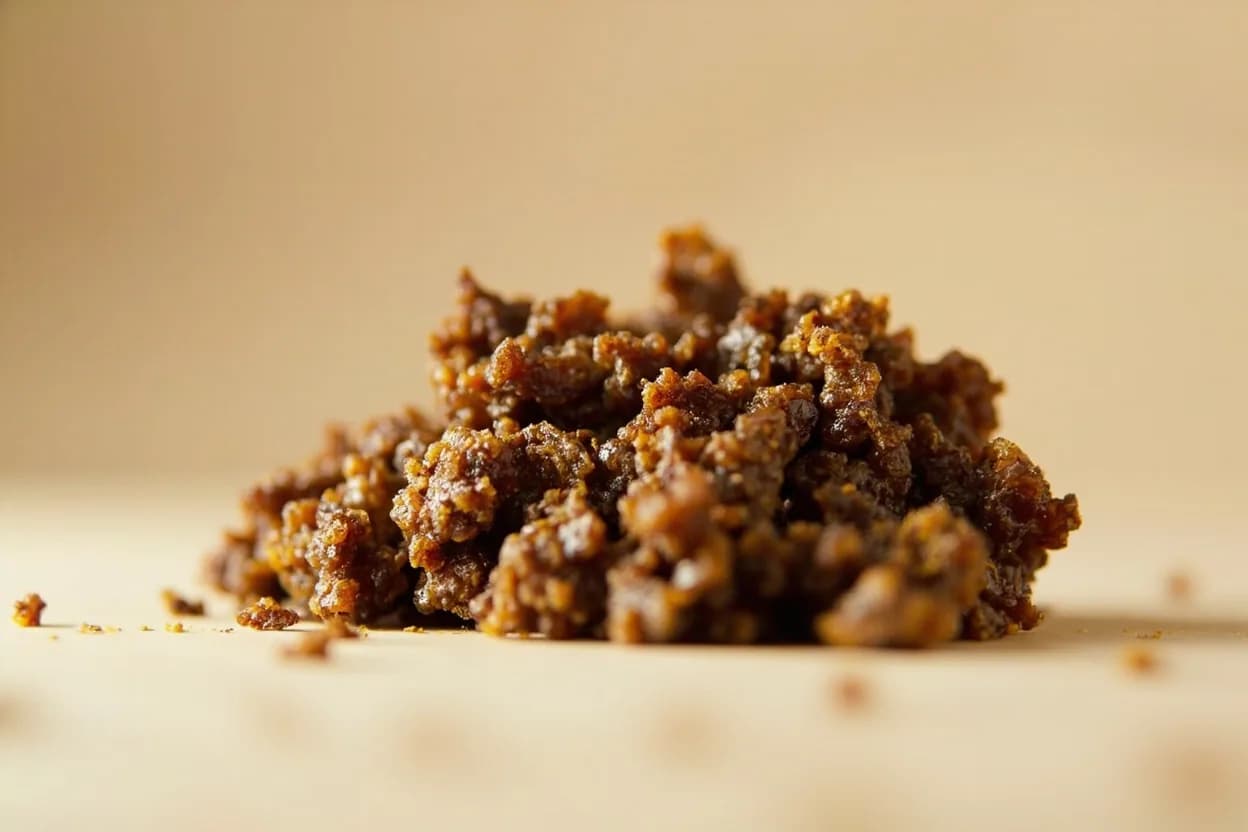
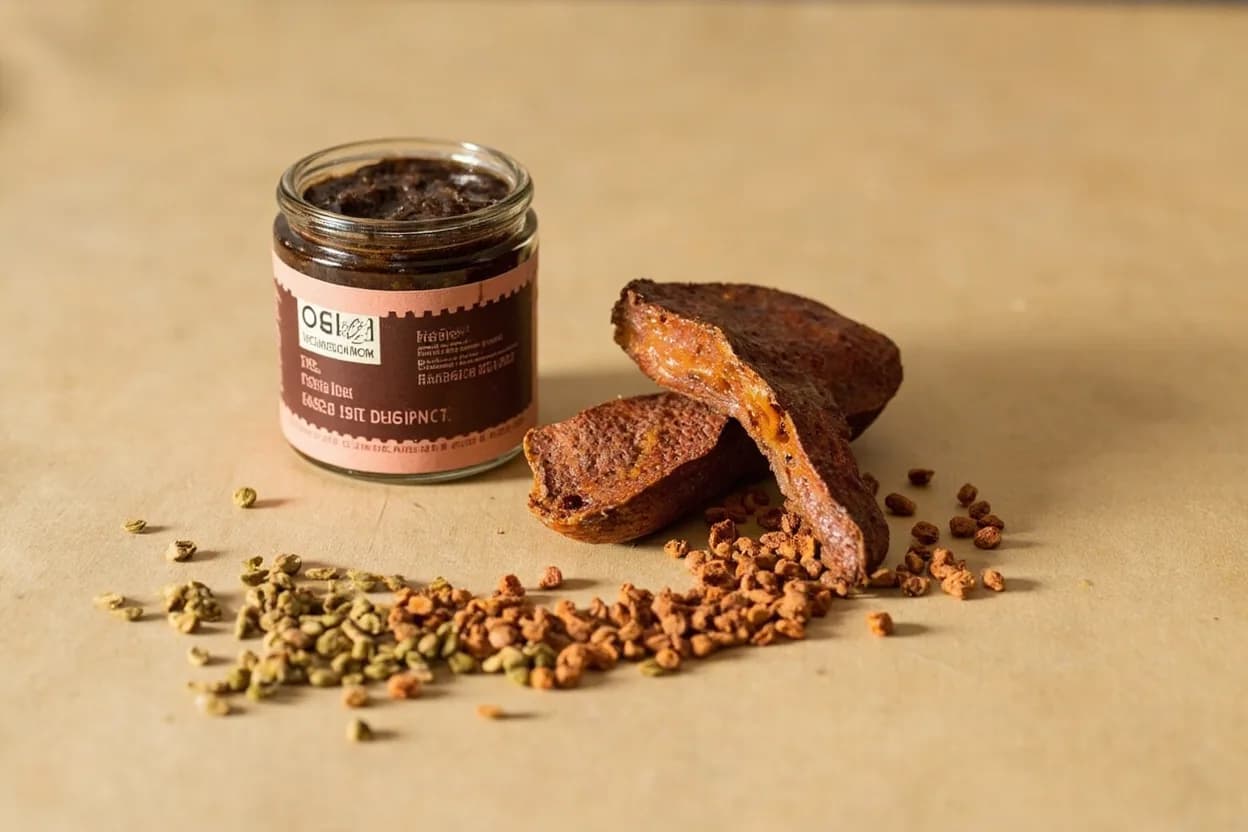
Ogiri is a traditional Nigerian fermented condiment made from castor seeds (Ricinus communis) — though the name also covers locust bean (iru) variants depending on region and community. The seeds are boiled for many hours to deactivate ricin, then dehulled and wrapped in banana or Thaumatococcus leaves, where they undergo bacterial fermentation (dominated by Bacillus subtilis) for several days to weeks. The result is a dark, strongly ammoniated paste with a resinous, almost truffled depth. It dissolves invisibly into soups but adds a round, savory bottom note that no substitute fully replicates. Even a teaspoon in a large pot of egusi or ofe onugbu transforms the broth from thin to complex.
In photos
Flavour profile
Classic pairings
- Egusi (melon seeds)Igbo, Yoruba
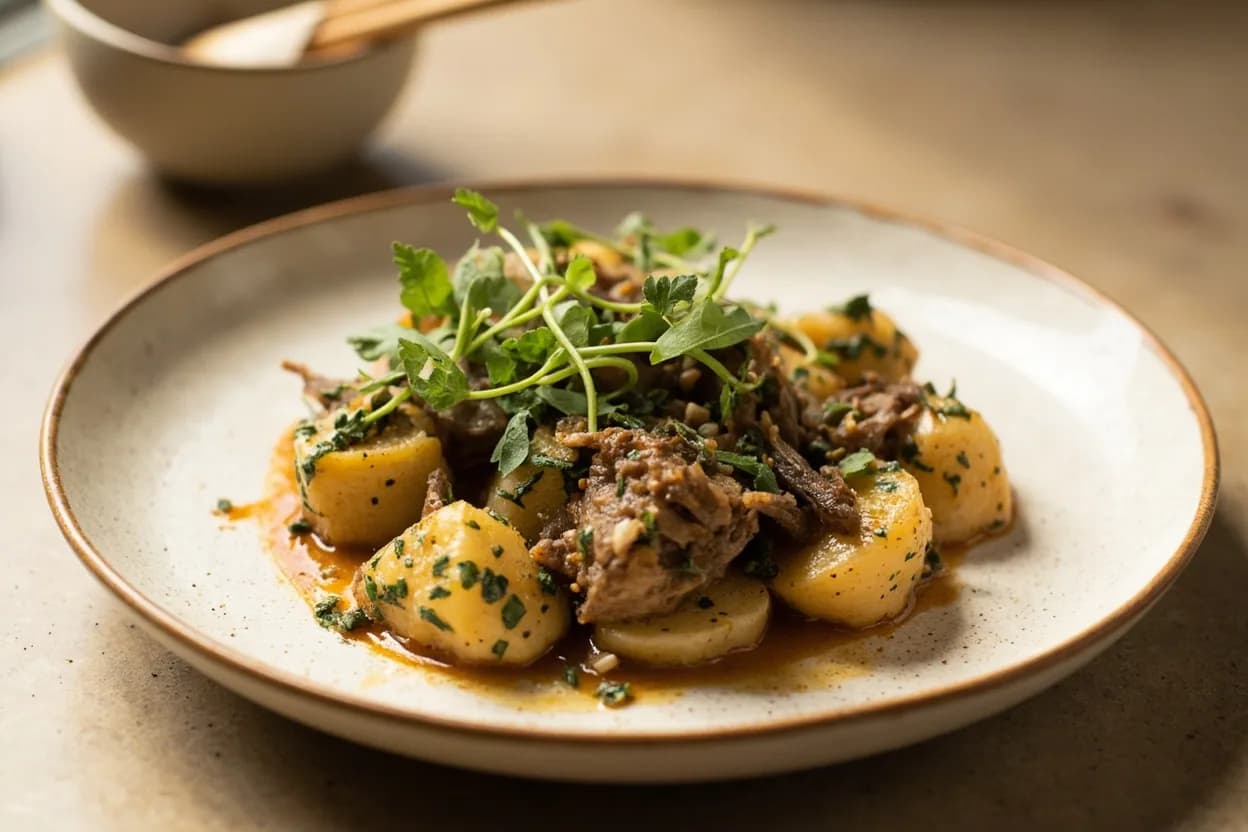
Ogiri is almost always added to egusi soup — its fermented bass note balances the fatty richness of ground melon seeds and anchors the palm oil base.
- Bitter leaf (Vernonia amygdalina)Igbo
The vegetal bitterness of the leaf is mediated by ogiri's savory depth; together they define ofe onugbu, the quintessential Igbo soup.
- Crayfish (dried)Nigerian
Dried crayfish and ogiri are the double umami engine of Nigerian soups — layered marine salt meets fermented funk for compounded savoriness.
- Palm oilWest African
The saturated richness of palm oil tames ogiri's sharpest edges, while ogiri adds fermented complexity to what might otherwise be a one-dimensional fat base.
- Oha leaf (Pterocarpus mildbraedii)Igbo
Delicate and slightly mucilaginous, oha leaves need ogiri's assertive backbone in ofe oha to arrive at full flavor.
- Goat meatNigerian
The gaminess of goat and the fermented funk of ogiri are sympathetic — both assertive, together building a broth of uncommon depth.
Adventurous pairings
A pinch of ogiri alongside white miso in a braise doubles the fermented umami without making either paste identifiable — a useful East-meets-West technique.
- Dark chocolate (70%+)
Both share resinous bitterness and fermentation-derived compounds (pyrazines). A tiny amount of ogiri stirred into a chocolate mole deepens savory complexity without tasting 'African.'
- Roasted mushrooms
Porcini or shiitake roasted until caramelized share glutamate density with ogiri; a whisper of paste added late to mushroom pan sauce pushes it toward demi-glace territory.
- Black bean soup (Latin-style)
Ogiri's fungal depth mirrors epazote-cumin profiles; added early in the simmer it integrates so completely it can replace half the cumin dose.
Tread carefully
- Delicate white fish (sole, flounder)avoid
Ogiri's ammoniated punch completely overwhelms mild, flaky fish — use sparingly or not at all with anything delicate.
- Cream-based saucesavoid
Dairy proteins curdle under ogiri's high-pH, strongly fermented alkalinity and the flavor clash — funk against cream — is unpleasant rather than interesting.
- Fresh herbs used raw (basil, mint)avoid
High-heat, long-simmer deployment is ogiri's register; paired raw or in a cold preparation it reads as purely off rather than savory.
How to use it
- Add early in the simmer (first 10–15 minutes) so volatile ammonia cooks off and only the glutamate base remains.
- Dissolve in a small amount of stock or palm oil before adding — the paste is dense and can sit as unincorporated clumps if dropped in raw.
- Start with a quarter teaspoon per 4-person pot; the flavor is multiplicative, not additive — it is easy to over-season.
- Wrap and store in the refrigerator in the original leaf if possible; the leaf slows further fermentation and maintains the paste's intended character.
- Toast lightly in dry palm oil for 30 seconds before building the soup to volatilize the sharpest ammonia and concentrate the earthy base.
Appears in
Related flavours
Closest functional substitute — also Bacillus-fermented, similarly glutamate-rich, but rounder and less resinous than ogiri.
The Sahelian cousin: fermented locust beans used across Ghana, Burkina Faso, Mali — different seed, same umami-funk principle.
- Shrimp paste (belacan, gapi)
Different fermentation substrate but analogous role: a small quantity of intensely fermented protein adds background savoriness to an entire dish.
References
- 1.Ihekoronye, A.I. & Ngoddy, P.O. — Integrated Food Science and Technology for the Tropics (Macmillan, 1985)
- 2.Oguntoyinbo, F.A. — 'Bacillus subtilis fermentation of locust beans and castor seeds' in Food Microbiology, 2014
- 3.Ossai-Chidi, C. — 'Nigerian Traditional Fermented Foods and Condiments' (University of Ibadan Press, 2002)
Confidence: high
Notes
Ricin safety
Raw castor seeds contain ricin, one of the most toxic naturally occurring substances. The extended boiling (often 12–24 hours) during ogiri production destroys ricin; commercially produced ogiri from reputable Nigerian producers is safe. Do not attempt home production from raw castor seeds without verified protocols.
Regional naming
In Igbo communities 'ogiri' often means the castor-seed version specifically; 'iru' refers to locust beans. In Yoruba regions the locust-bean version may also be called 'ogiri'. Context and community matter — confirm the substrate when purchasing.