Fats, Pastes & Condiments
Olive Oil (Finishing)
Also: extra-virgin olive oil, EVOO, huile d'olive vierge extra, olio extravergine di oliva
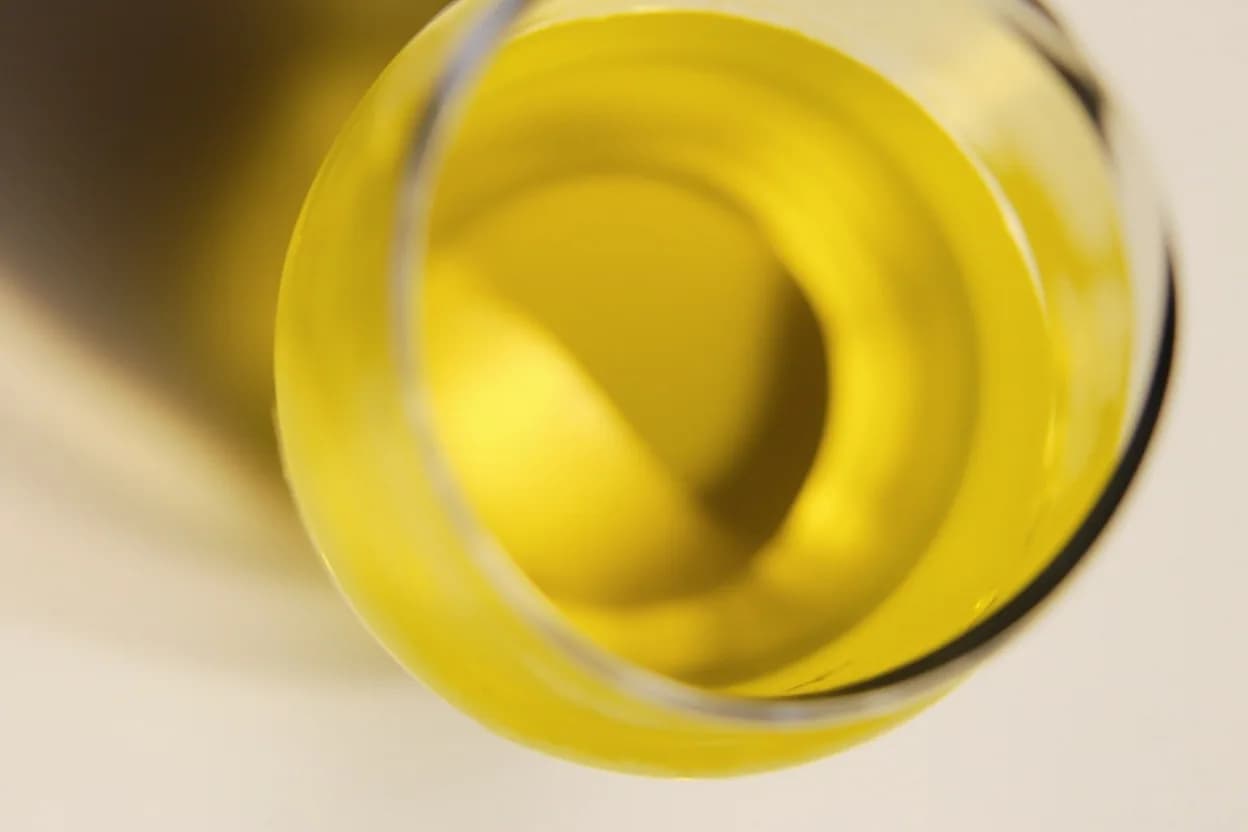
The final drizzle that ties a dish together — grassy, peppery, and alive with fruit.
Finishing olive oil refers to high-quality extra-virgin olive oil (EVOO) used at the end of cooking or raw, where its volatile aromatic compounds can be fully appreciated. Mechanically cold-extracted from fresh olives within hours of harvest, premium EVOO contains oleocanthal (a natural anti-inflammatory with a throat-stinging phenolic bite), chlorophyll (green freshness), and esters of oleic acid responsible for its characteristic fruitiness. Flavour ranges from buttery and mild (Taggiasca, Arbequina) to grassy and intensely peppery (Coratina, Koroneiki, Picual). Heat destroys the aromatic volatiles and phenolics that distinguish EVOO from commodity oil, so finishing use is the only way to taste what you are actually paying for.
In photos
Flavour profile
Classic pairings
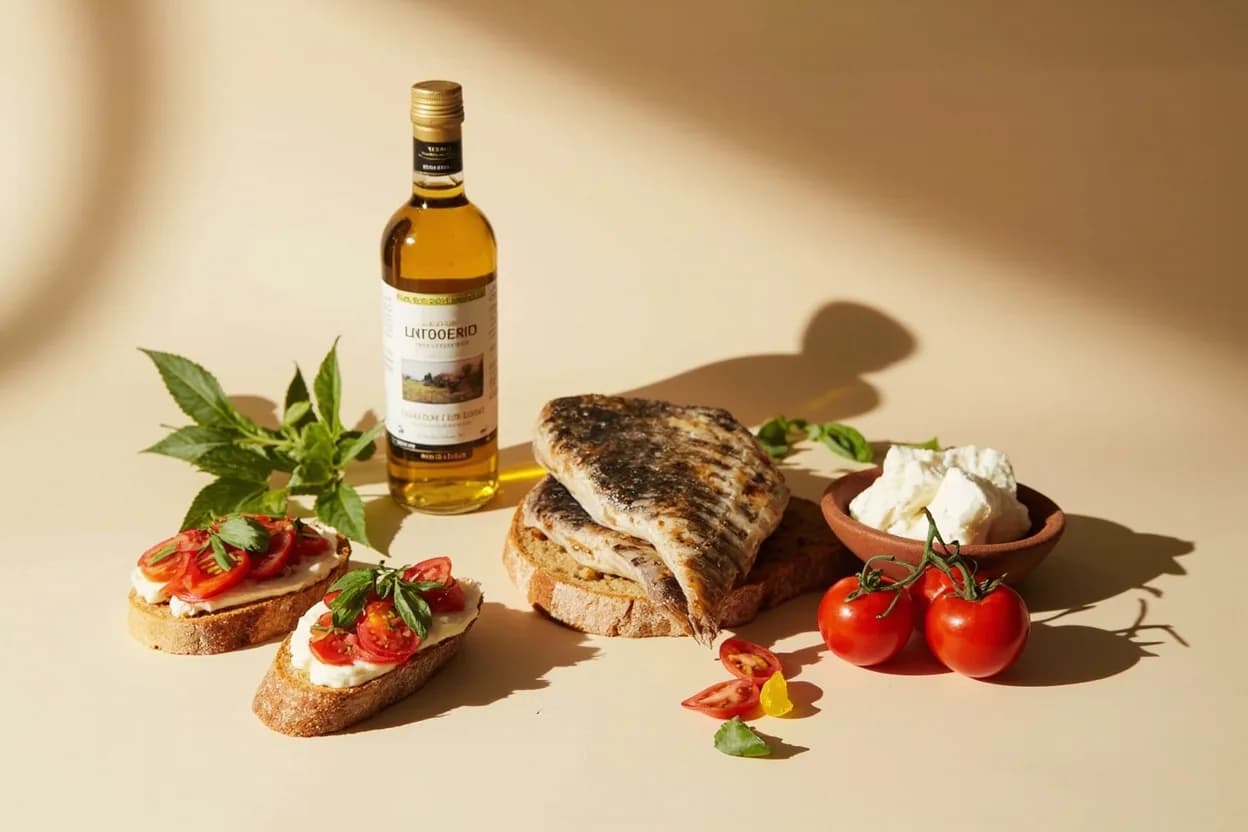
- Grilled or raw bread (bruschetta, pan con tomate)Italian/Spanish
Bread is a vehicle: a generous drizzle of peppery EVOO over warm, garlic-rubbed bread is the most direct expression of the oil's flavour.
- Burrata or fresh mozzarellaItalian
The cheese's milky neutrality is a blank canvas; the oil's pepper and grass notes define the entire dish. Salt and nothing else needed.
- Grilled fish (branzino, sea bass, swordfish)Italian/Greek
A last pour of EVOO over hot grilled fish re-emulsifies the cooking juices into a natural sauce; the oil's fruitiness matches seafood's marine sweetness.
- Chickpeas and white beansItalian/Middle Eastern
Legumes absorb oil beautifully; EVOO's grassiness counterpoints the beans' starchiness and makes a complete flavour picture with just lemon and herbs.
- Tomatoes (raw or roasted)Italian/Spanish/Greek
Shared carotenoid and green-aldehyde aromatic compounds in ripe tomatoes and fresh EVOO create one of Mediterranean cuisine's fundamental harmonies.
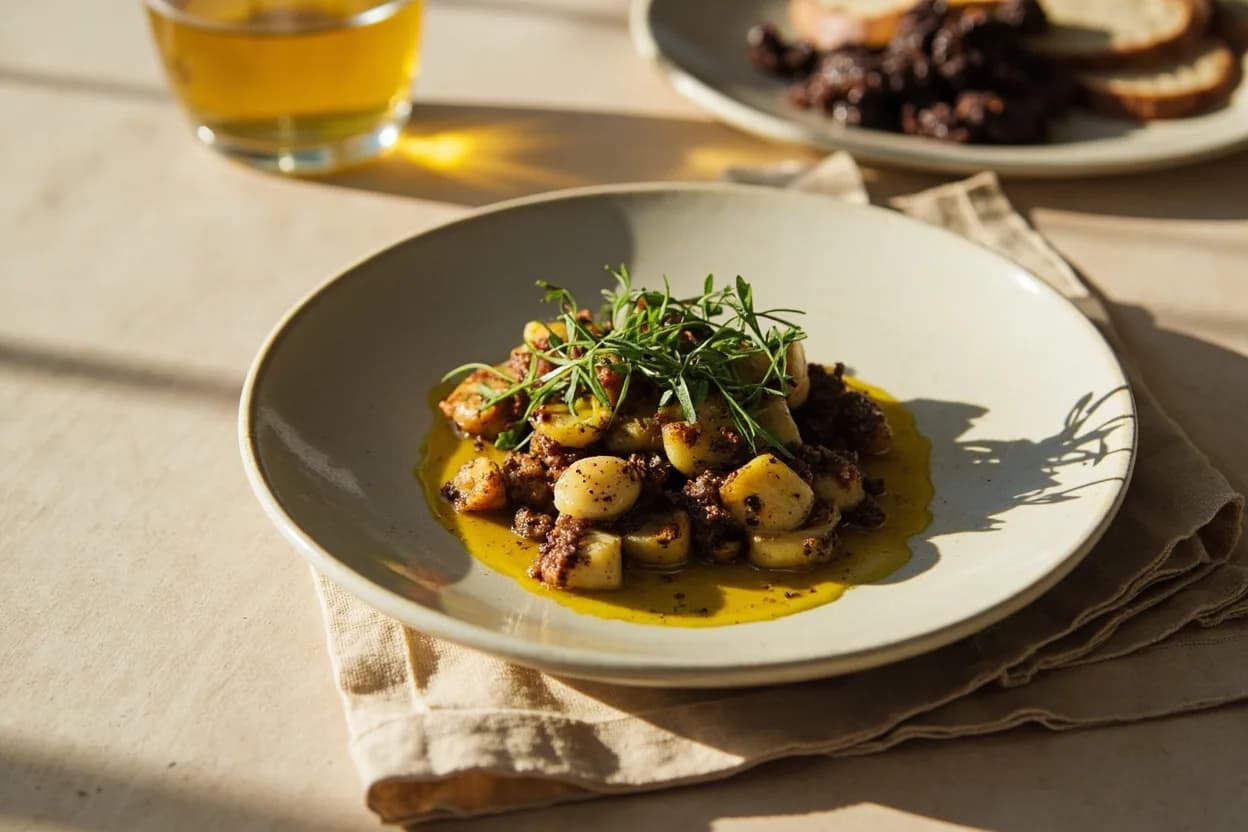
- Pasta (aglio e olio, finished pasta)Italian
A liberal pour over cooked pasta creates a light, aromatic sauce; the pasta water's starch emulsifies with the oil for cling without heaviness.
- Hummus and labnehLevantine
The oil pools in a well and soaks into the creamy paste; its pepper and fruit notes animate the otherwise flat profile of plain hummus.
- Steak and grilled meats (post-rest drizzle)Italian
Over a just-rested steak, EVOO's phenolics interact with the Maillard-browned crust; a Florentine bistecca without finishing oil is considered incomplete.
Adventurous pairings
A light drizzle of peppery Sicilian oil over dark chocolate intensifies the cacao's bitter-fruity notes; salt-and-EVOO chocolate truffles are now a pastry standard.
- Vanilla ice cream
A surprising Sardinian tradition: peppery EVOO over good vanilla gelato creates a hot-cold, sweet-bitter, fat-on-fat sensation that is more than the sum of its parts.
- Raw oysters
A tiny drizzle of grassy Ligurian oil — instead of mignonette — echoes the oyster's saline and green-marine notes while adding luxurious weight.
- Strawberries
Strawberry's aldehyde compounds (specifically trans-2-hexenal) share a green-leaf note with grassy EVOO; a drizzle with balsamic and black pepper is a composed Emilia-Romagna dessert.
A few drops of intensely fruity Sicilian oil on the crema of an espresso is a Palermitan café tradition; the oil's oleocanthal mirrors coffee's chlorogenic-acid bitterness.
Tread carefully
- Deep-frying or high-heat sautéingavoid
At frying temperatures, EVOO's aromatic phenolics vaporise immediately and the oil can smoke and turn bitter. For high heat, a mild refined olive oil or grapeseed oil is correct.
- Creamy mayonnaise-based dressingsavoid
Strong pepper and bitterness clash with the neutral emulsion; a milder Arbequina can work, but assertive oils compete with the mayo's egg character.
- Very delicate floral desserts (elderflower, rose)avoid
Even a good EVOO's pepper sting and grassiness will overpower delicate floral-scented confections.
How to use it
- Drizzle over dishes immediately before serving — do not reheat after adding
- Use as a dipping medium for bread alongside coarse salt and perhaps a pinch of dried herbs
- Emulsify with a splash of pasta water (starchy) and toss vigorously for a light sauce
- Dress salads just before eating to prevent wilting from the oil's acidity
- Finish soups and stews with a thread of oil swirled in the bowl
- Use in cold-sauce bases: pesto, aioli, romesco — processes where heat isn't involved
Appears in
Related flavours
- Lemon juice
The classic pairing partner: lemon's acidity cuts the oil's fat and heightens its aromatic volatiles; together they form the base of dozens of Mediterranean dressings
Mineral saltiness amplifies the oil's phenolics; finishing oil and finishing salt belong together
Garlic's sulphur compounds bloom in EVOO — every Italian soffritto and Middle Eastern marinade exploits this synergy
Fellow artisan finishing oil; more bitter and nutty, occupying a different aromatic register for cold dressings
References
- 1.Extra Virginity: The Sublime and Scandalous World of Olive Oil — Tom Mueller (Norton, 2012)
- 2.On Food and Cooking — Harold McGee (Scribner, 2004)
- 3.The Flavor Bible — Karen Page & Andrew Dornenburg (Little, Brown, 2008)
- 4.Six Seasons — Joshua McFadden (Artisan, 2017)
Confidence: high
Notes
Choosing a finishing oil
Match intensity to the dish. Delicate Ligurian (Taggiasca) or Catalan (Arbequina) oils — buttery, low-pepper — for raw seafood, fresh cheese, and mild salads. Assertive Pugliese (Coratina) or Greek (Koroneiki) oils for grilled meats, bold legumes, and bread dips. The PDO (Protected Designation of Origin) label is your best guide to provenance; harvest date trumps 'best before' for freshness.
Oxidation and storage
EVOO degrades rapidly in the presence of light, heat, and oxygen. Store in a dark cupboard, not on the counter near the stove. A dark-glass or tin container is ideal. Premium oil should be consumed within 12–18 months of harvest, not the purchase date.