Fermented Grains & Cereals
Purple Corn (Maíz Morado)
Also: maíz morado, purple maize, Peruvian purple corn, maíz culli
Peru's ancient anthocyanin-rich corn brings deep berry-and-earth flavor to drinks, puddings, and desserts, with a color so vivid it functions as a natural dye.
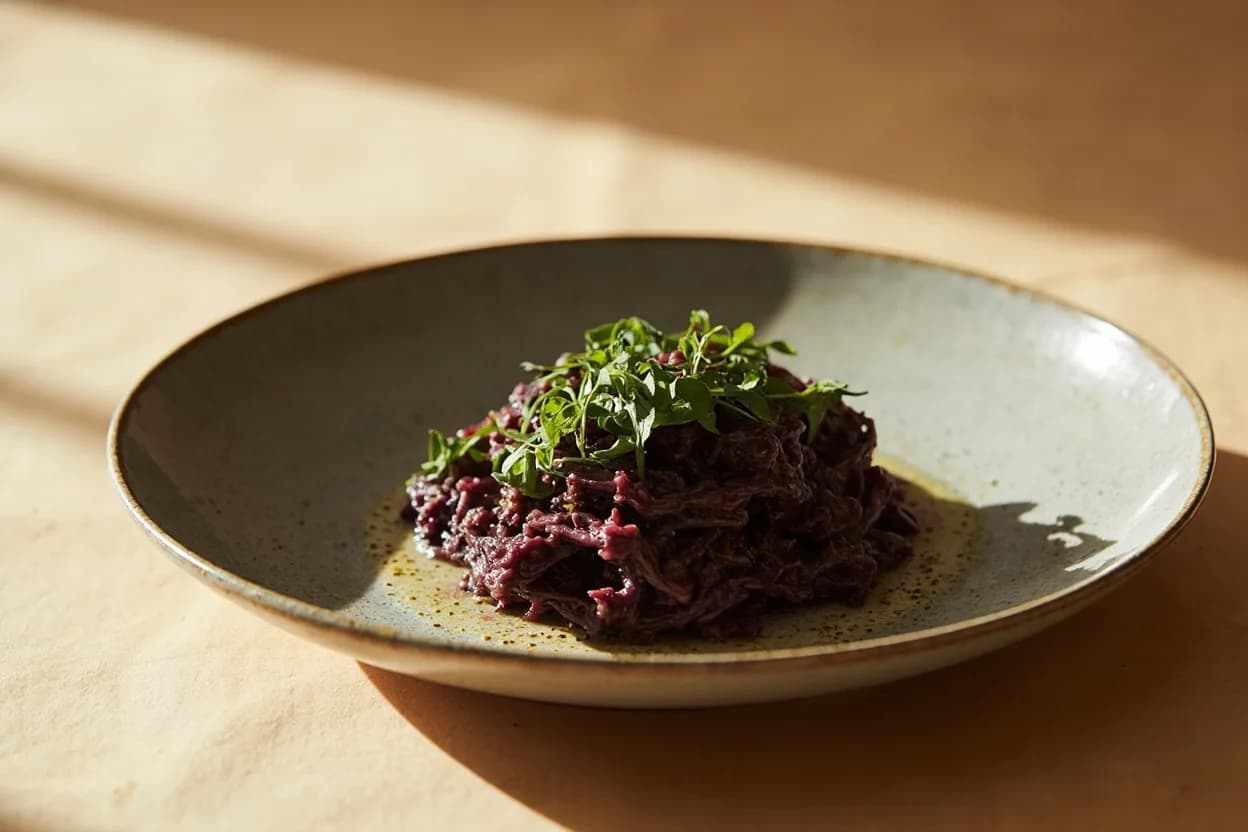
Maíz morado is a large-cobbed field corn native to Peru's Andean highlands, grown since pre-Inca times. Its deep purple-to-black color comes from an extraordinary concentration of cyanidin-3-glucoside and related anthocyanin pigments — among the highest of any grain. Culinarily, the cobs and husks are simmered in water to extract a rich, garnet-purple liquid that smells of dried cherries, cinnamon, and raw beet. The flavor is fruity (blackberry, mulberry, dried plum), earthy, and gently tannic, with starchy sweetness underneath. It is used primarily as chicha morada (a cold sweet drink) and mazamorra morada (a spiced pudding thickened with sweet potato starch), and increasingly as a natural food colorant and flavor in high-end pastry.
In photos


Flavour profile
Classic pairings
- Cinnamon and clovePeruvian
The canonical spice combination used when brewing chicha morada; warm baking spices amplify the corn's dried-fruit character and round its raw earthiness.
- Lime juicePeruvian
A squeeze of lime finishes chicha morada and mazamorra morada alike, cutting through the starchy sweetness and brightening the anthocyanin color. Acid also stabilizes the pigments.
- Quince (membrillo)Peruvian
Sliced quince is simmered alongside the corn cobs in traditional chicha morada; it contributes its characteristic floral-tartness and pectin, thickening the brew slightly.
- PineapplePeruvian
Dried pineapple rind or fresh pineapple chunks are added to the chicha pot; the tropical acidity counterpoints the corn's earthiness and adds a sweet-sour complexity.
- Sweet potato starch (camote)Peruvian
Mazamorra morada is thickened with sweet potato starch rather than cornstarch — the pairing is a pre-Columbian twin of two Andean staples, the purple corn's flavor deepened by the sweet potato's gentle sweetness.
- Dark chocolatePeruvian / Fusion
Both share deep berry tones and a characteristic earthiness; mazamorra morada is often served alongside arroz con leche and a shaving of dark chocolate in Lima restaurants.
- ApplePeruvian
Dried apple rings cooked with maíz morado contribute mild tartness and a further fruit dimension, a variation on the quince-pineapple combination common in Andean home cooking.
Adventurous pairings
- Oolong tea
Steep maíz morado alongside an oxidized oolong; both carry floral-fruity aromatics and a dry, tannic backbone — the combination produces a nuanced non-alcoholic drink with layered complexity.
- Hibiscus (jamaica)
Both are anthocyanin-rich infusions with a tart berry profile; blending them (with ginger syrup and lime) produces a layered agua fresca with near-inky depth of color and an intensified dried-fruit flavor.
- Goat cheese
A mazamorra morada reduction used as a savory-sweet coulis under whipped goat cheese leverages the corn's tannins and earth notes against the cheese's lactic tang — an inspired plated dessert crossover.
- Mole negro
Replace a portion of the dried chile soaking water with maíz morado extract in a dark mole; the purple corn's earthy, berry-tannic dimension deepens the mole's complexity with Andean resonance.
- Vanilla
Vanilla's lactone sweetness smooths maíz morado's edges; a purple corn panna cotta with vanilla cream is a natural extrapolation that lets the anthocyanin color do visual work.
Tread carefully
- Baking soda (in acidic contexts)avoid
Anthocyanins are pH-sensitive — alkaline conditions shift the color from vivid purple-red to an unappetizing blue-green. Avoid baking soda or alkaline agents in preparations where color matters.
- Prolonged high heatavoid
Boiling the cobs for more than 40–45 minutes begins to degrade the anthocyanins and produce a muddy, slightly bitter note; simmer gently and stop when the liquid runs deep garnet.
- Heavily roasted coffeeavoid
Coffee's bitter, ashy notes clash with maíz morado's delicate dried-berry earthiness; both contribute tannins in a way that becomes astringent and flat rather than complex.
How to use it
- Simmer whole dried cobs and husks (not the kernels) in water at a gentle boil for 35–40 minutes to extract maximum color and flavor
- Add spices (cinnamon stick, clove, allspice) to the simmering pot — fat-soluble aromatics in the spices meld into the aqueous extract
- Strain, cool, then acidulate with lime juice immediately before serving to brighten color and flavor
- Use the cold extract as a natural colorant in buttercreams, gelées, and sorbets
- For mazamorra, mix the cooled extract with sweet potato starch slurry and cook on low heat, stirring constantly until it thickens to a pudding consistency
- Dry the spent cobs and grind for use as a natural purple dye or for infusing into spirits
Appears in
Related flavours
- Hibiscus (jamaica)
A fellow anthocyanin-rich infusion with overlapping tart-berry notes; the two are often blended in aguas frescas.
The dry-roasted form of Andean corn — a textural and preparation counterpart that appears alongside maíz morado drinks in Peruvian menus.
- Blueberry
Shares the cyanidin anthocyanin pigment family and a similar dried-berry flavor; blueberry can substitute maíz morado extract in Western pastry contexts.
References
- 1.The Food of Peru — Gastón Acurio (2015)
- 2.Morales, A.M. et al., 'Anthocyanin composition in Peruvian purple corn (Zea mays L.)', Food Chemistry (2009)
- 3.Virgilio Martínez, Central: The Cookbook (2016)
- 4.Penelope Casas, Delicioso: The Regional Cooking of Spain (for context on analogous natural-dye traditions)
Confidence: high
Notes
Pre-Columbian heritage
Maíz morado has been cultivated in the Peruvian highlands since at least 2500 BCE, evidenced in ceramic vessels and textile dyes from the Nazca and Wari cultures. It is considered a 'national treasure' ingredient by the Peruvian government, and exports of the dried cob are tightly monitored. Its importance stretches beyond food: before synthetic dyes, maíz morado colored textiles, ceramics, and ritual face paint.
Anthocyanins as a working flavor tool
The same pigments that give maíz morado its color contribute real flavor — the cyanidin compounds have a slight astringency and a dried-fruit aroma that is absent from white or yellow corn. This means you are not just substituting for color; you are adding a flavor dimension. Use the extract judiciously in savory contexts where that earthiness and tannin are assets rather than distractions.