Fermented Grains & Cereals
Cancha (Toasted Corn)
Also: cancha serrana, chulpe tostado, Peruvian toasted corn, maíz cancha
The essential crunchy counterpoint to Peru's ceviche, delivering starchy depth and a nutty roast that no cracker or chip can replicate.
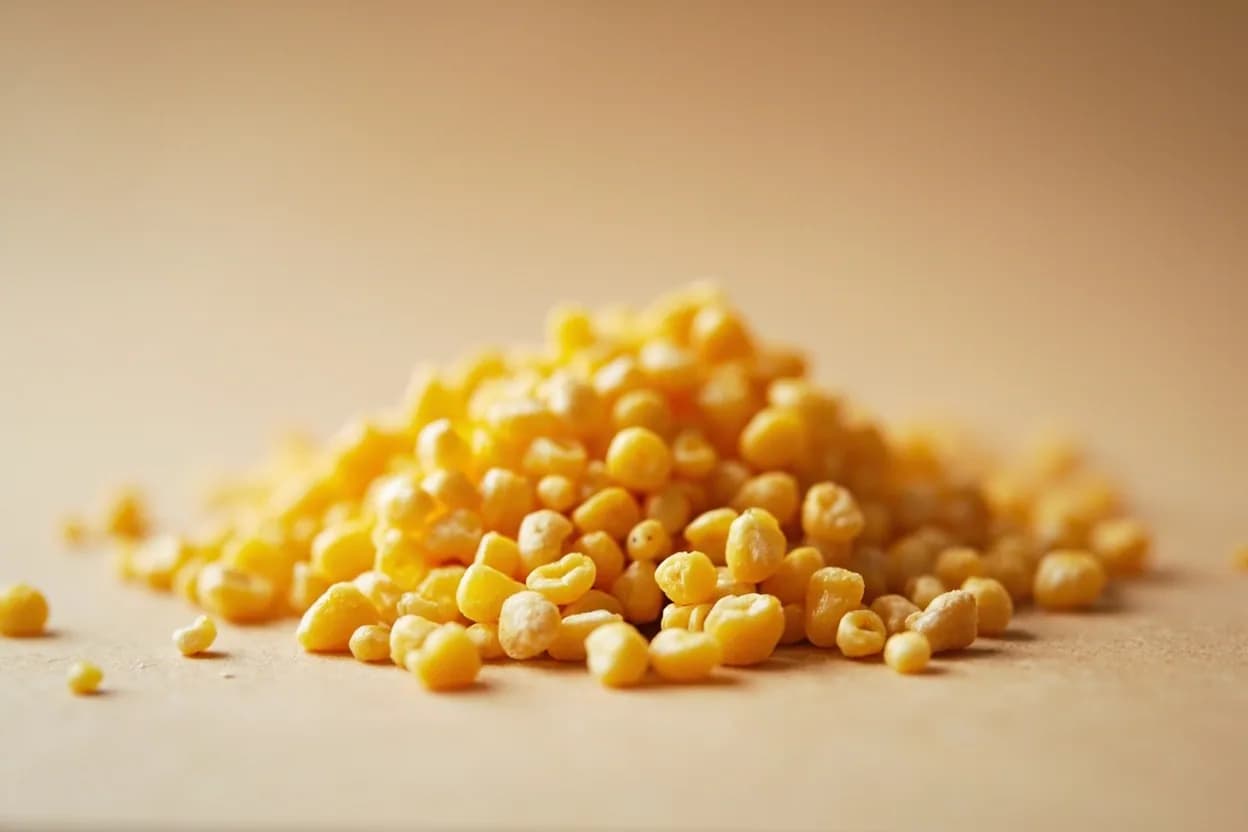
Cancha is a large-kernel field corn (chulpe or maíz de cancha variety) dry-toasted in a heavy pan with a little lard or oil until the hull blisters and the interior turns chalky-tender. The result is neither as hard as dried corn nor as soft as popcorn — it lands in a uniquely sandy-crunchy register. The flavor is decidedly nutty, faintly sweet, and lightly smoky from the contact heat, with a starchy, almost masa-like finish. It is salted generously and served warm or at room temperature as both a snack and a textural garnish, most famously alongside ceviche in Lima's cevicherías.
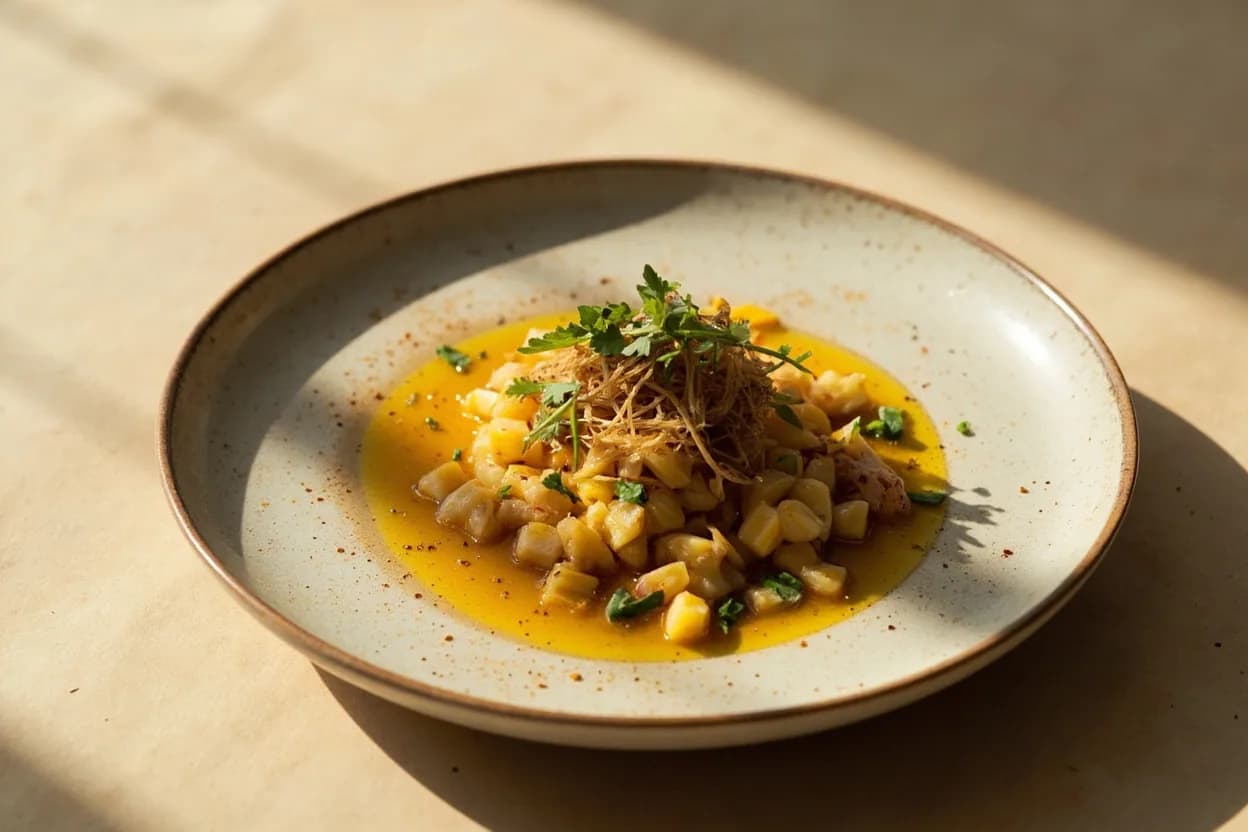
In photos

Flavour profile
Classic pairings
- Leche de tigre (tiger's milk)Peruvian
The bracing citrus-ají marinade of ceviche is the definitive foil: cancha's starchy crunch absorbs a little of the leche de tigre without going soggy, tempering acidity while adding textural relief.
- Raw sea bass or corvinaPeruvian
Peru's classic ceviche fish. Cancha and raw fish are plated together as a matter of tradition — the corn's roast note contrasts the clean, briny sweetness of the fish.
- Ají amarilloPeruvian
The bright, fruity heat of ají amarillo is a pillar of Peruvian cooking and appears in the ceviche leche de tigre alongside cancha; the chili's floral warmth plays against the corn's neutral starch.
- Causa rellenaPeruvian
Served as a textural garnish alongside the chilled yellow-potato terrine; the crunch breaks the dense, creamy potato filling and provides tonal contrast.
- Chicha de joraAndean
The ancestral fermented corn beer shares a common raw material; drinking cancha alongside chicha creates an earthy grain-on-grain harmony across different preparations of the same corn.
- Queso frescoPeruvian / Andean
The mild, milky saltiness of fresh cheese pairs with cancha in snacking contexts — both are sold by street vendors in the Andean highlands as a simple afternoon combination.
- Lime juicePeruvian
Spritzed directly onto freshly toasted, hot cancha, lime brightens the starch and amplifies the salt — a minimalist seasoning popular at home.
Adventurous pairings
- Smoked trout tartare
Substitute cancha for blini or crackers under smoked trout; the corn's roast note meets cold smoke in a compelling Andean-Nordic collision, while citrus in the tartare echoes leche de tigre logic.
- Miso butter
Toss freshly toasted cancha in a miso-brown butter while still hot; umami and caramelized dairy amplify the corn's own pyrazines and push it toward a premium snack territory.
- Dark chocolate (70%+)
Ground coarse and folded into chocolate bark or used as a garnish, cancha's chalky starch and faint bitterness marry dark chocolate's tannins in the same way nixtamalized corn does in Mesoamerican drinking chocolate traditions.
Scatter cancha over burrata with olive oil and flaky salt; the corn's starchy crunch offsets the cheese's oozing cream in a way that feels both unexpected and inevitable.
Tread carefully
- Delicate vinaigrettesavoid
Cancha's porous, starchy hull soaks up liquid dressing rapidly and turns paste-like within minutes; it should be kept dry until the moment of service.
- Heavy cream saucesavoid
Rich dairy coats the corn's surface and mutes both its crunch and its roasted flavor; the textural identity that makes cancha valuable is obliterated.
- Overpowering dried spices (e.g. fenugreek, clove)avoid
Cancha's flavor is subtle and starchy; assertive spices applied during or after toasting mask the gentle nutty notes that define it, turning it into a generic spiced corn snack.
How to use it
- Dry-toast in a cast-iron or heavy-bottomed pan over medium heat, stirring constantly, until kernels blister and turn light golden — 8–12 minutes
- Salt immediately after removing from heat while residual heat opens pores
- Add a thin coat of lard or neutral oil before toasting to encourage even browning without deep-frying
- Serve at room temperature (never cold) to preserve the distinctive sandy-crunchy texture
- Use as a last-second garnish on wet dishes (ceviche, causa) to prevent moisture uptake
Appears in
Related flavours
- Popcorn
Shares the dry-heat corn transformation but pops fully open — cancha only blisters, retaining a denser, mealier bite.
Appears alongside cancha in virtually every Peruvian ceviche context; the pairing is canonical.
- Hominy
Both are large-kernel corn preparations; hominy is nixtamalized and soft, cancha is dry-toasted and crunchy — opposite textural poles of the same botanical.
References
- 1.The Food of Peru — Gastón Acurio (2015)
- 2.Virgilio Martínez, Central: The Cookbook (2016)
- 3.Peru: The Cookbook — Gastón Acurio (2015)
- 4.Sophie Goldsmith, 'Cancha: the Peruvian snack you need to know', BBC Good Food (2022)
Confidence: high
Notes
The snack that defines a dining ritual
In Lima's cevicherías, cancha arrives at the table the moment you sit — eaten dry while you wait, the way bread arrives at a European restaurant. Its presence on the table signals an institution that takes Peruvian tradition seriously. Restaurantes abroad that serve ceviche without cancha are considered to have missed the point by Peruvian diners.
Chulpe vs. cancha corn
Strictly, 'cancha' refers to the preparation (dry-toasting) and 'chulpe' to the preferred variety of large, starchy field corn used. Maíz chulpe is grown in the Andean highlands at altitude and has a thicker, harder hull than popcorn varieties, which is why it blisters rather than pops. Outside Peru, large dried hominy or cuzco corn are the closest substitutes.