Proteins
Bay Scallop
Small, sweet, tender scallops that cook in seconds. Sear hot and fast or poach briefly; overcooking turns them rubbery, so pull them early.
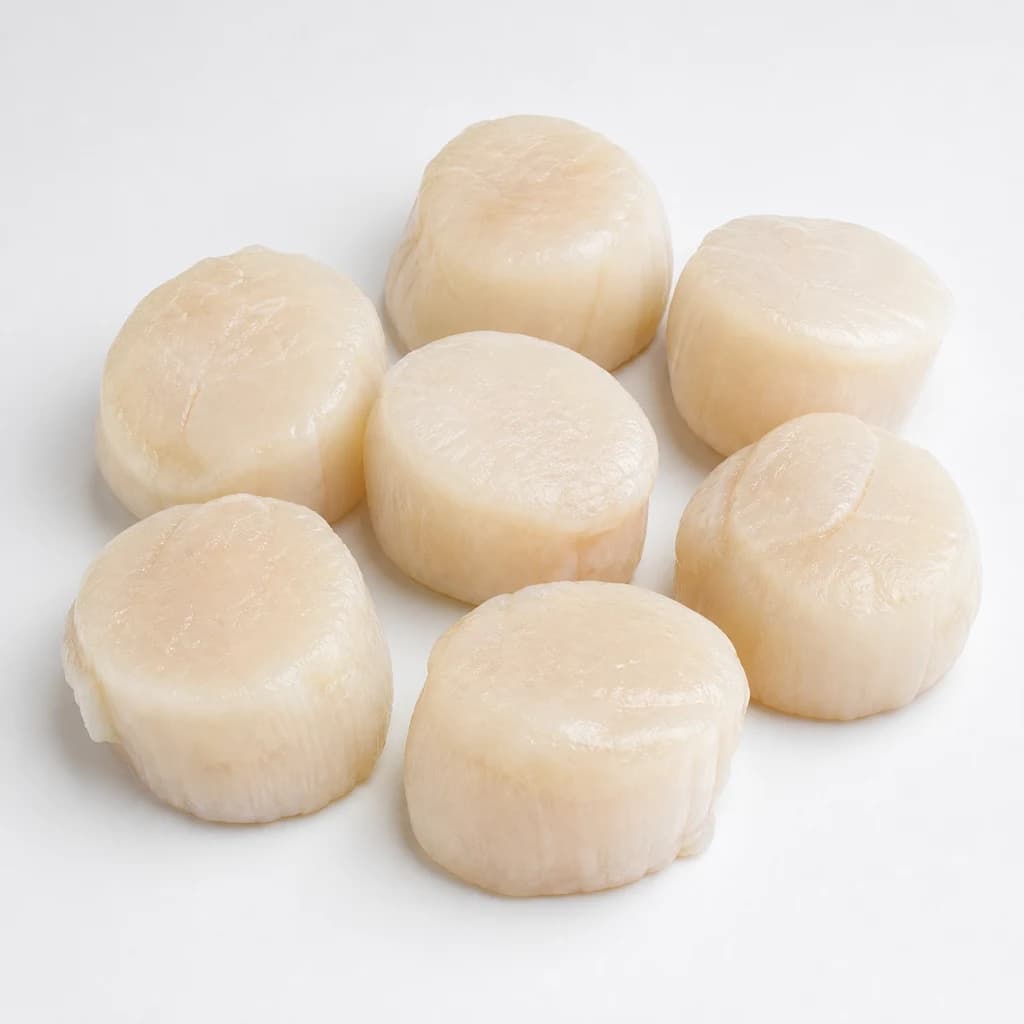
Bay scallops are the small, sweet cousin of the familiar sea scallop, harvested from the shallow bays, eelgrass beds, and protected estuaries of the U.S. Atlantic and Gulf coasts. The edible portion is the pure-white adductor muscle, typically ½ to ¾ inch across, and it is the smallest of the scallops you will find at a fish counter — 50 to 100 or more pieces per pound. That small size is the whole story: the flesh is more tender and noticeably sweeter than a sea scallop, and it cooks in roughly a minute per side, which makes it a luxury that punishes carelessness almost instantly.
Because the window between translucent and rubbery is measured in seconds, the cook's job is to do less, faster. Bay scallops reward high heat and a dry surface, and they have no patience for a cold pan, a crowded skillet, or the soapy liquid that wet-packed scallops exude in the pan. Wild Northeastern bay scallops — most famously from Nantucket and Peconic Bay — are a true seasonal treat, available only for a few weeks in late fall and early winter, which is why they fetch a premium and why much of what is sold year-round is now aquacultured or individually quick-frozen. When a recipe simply says "scallops," it almost always means sea scallops; choosing bay scallops is a deliberate decision to favor sweetness and speed over the meaty sear you get from a larger scallop.
- Measured in
- g
- Storage
- Refrigerate
Allergens
Find it in
Types & varieties
From Nantucket, Peconic Bay on Long Island, Martha's Vineyard, and Massachusetts waters; the most prized for sweetness, with a very short season in late fall.
Grown in lantern nets or bottom culture in Florida and the Northeast; provides a more consistent year-round supply, with quality that ranges from excellent to merely decent.
Harvested along the Gulf coast in summer (typically July through early September) and occasionally in fall; slightly softer in texture than the Northern wild ones.
Buying, packing, and storing
The single most important decision happens before you turn on the stove. Most of the trouble home cooks have with bay scallops traces back to how they were packed and how they were handled on the way home.
- Ask for dry-packed (unsoaked) scallops whenever you can find them. Wet-packed scallops are treated with sodium tripolyphosphate to bulk them up and keep them white; the same chemical makes them weep milky liquid in a hot pan, which prevents browning and dulls the natural sweetness.
- If only wet-packed is available, rinse them briefly under cold water and dry them very thoroughly on paper towels before cooking — do not expect a hard sear.
- Smell them: fresh bay scallops smell of clean sea air, never fishy or ammoniated.
- Get them home fast and onto ice in the coldest part of the fridge. Use within 1–2 days; if you cannot, freeze them in a single layer on a sheet pan, then bag, and use within a couple of months.
- Thaw frozen bay scallops overnight in the fridge, then drain and pat extremely dry. They release a lot of water, so they are better suited to pasta, risotto, and chowder than to a hard sear.
The sear: getting a crust in 90 seconds
Pan-searing is the move that exposes every weakness in your setup, so it is worth getting right. The principles are the same as for a steak: dry surface, very hot pan, single layer, no crowding, and out of the pan before you think they are done.
- Trim the small rectangular side muscle (tendon) if it is still attached. It is the only routine trimming; it stays tough even when the rest of the scallop is perfectly cooked.
- Pat the scallops bone-dry with paper towels, then dry them again. Surface moisture is the main reason bay scallops steam instead of sear.
- Heat a heavy skillet — cast iron or stainless — over high heat with a thin film of clarified butter or a neutral oil until the fat just begins to smoke.
- Lay the scallops in a single layer, leaving space between them. Cook 60–90 seconds per side; resist the urge to move them.
- Pull them when they are just opaque all the way through and still feel slightly soft to the touch. Carryover heat finishes them in seconds on the plate.
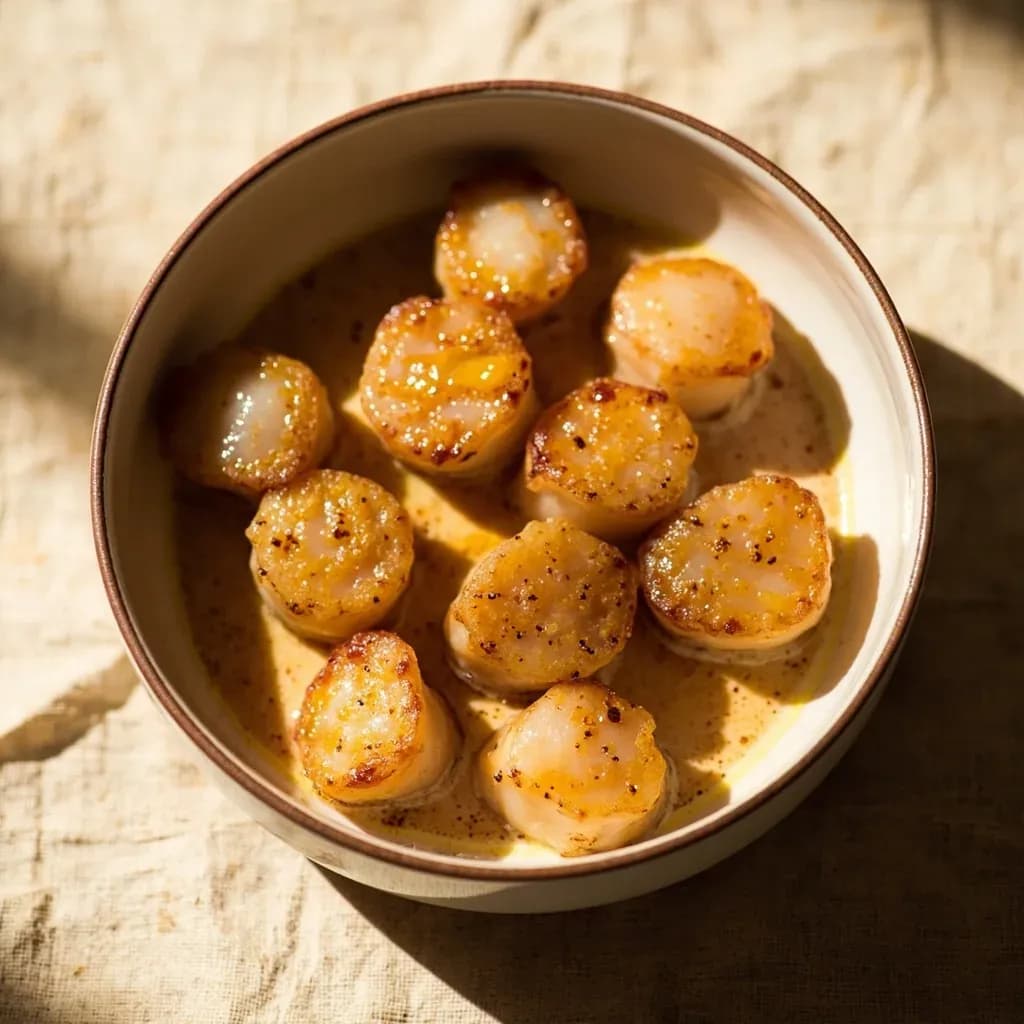
- Finish with flaky salt, a squeeze of lemon, and a spoon of brown butter — the classic Nantucket treatment.
Common uses
Tips & pitfalls
- Buy dry-packed (unsoaked) scallops whenever possible; wet-packed scallops treated with sodium tripolyphosphate weep in the pan and refuse to brown.
- Pat them very dry with paper towels before cooking — surface moisture is the main enemy of a good sear.
- Get the pan and fat smoking-hot before the scallops go in, and lay them in a single, uncrowded layer.
- Pull them when they are just opaque and still feel slightly soft in the center; carryover heat finishes them in seconds, and overcooking is irreversible.
- Remove the small rectangular side muscle (tendon) if it is still attached — it stays tough even when the rest of the scallop is perfect.
- Salt lightly and at the end of cooking. Their small size and sweetness means seasoning penetrates quickly, and salt draws out moisture.
- Cook in small batches. Crowding drops the pan temperature and turns a sear into a steam.
- Frozen bay scallops release a lot of water as they thaw; sear them only if you have thawed and dried them thoroughly, otherwise steer them into sauces, pasta, or chowder.
Nutrition
Nutrition
No USDA FoodData Central match for Bay Scallop yet. We surface a per-100 g profile once a generic whole-food entry is matched and verified.
In the shops
Matched grocery products
 €7.99
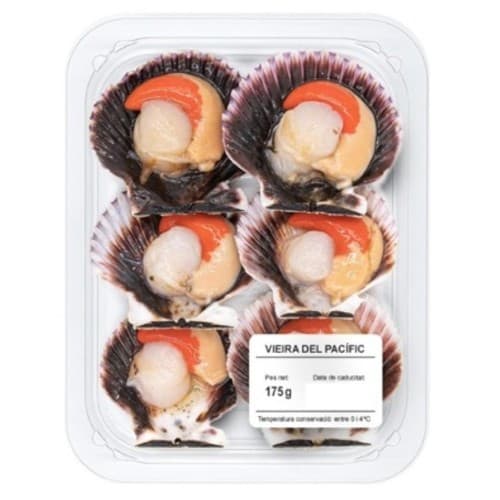
€7.99Pacific Scallop
ud · Bonpreu
 €5.85
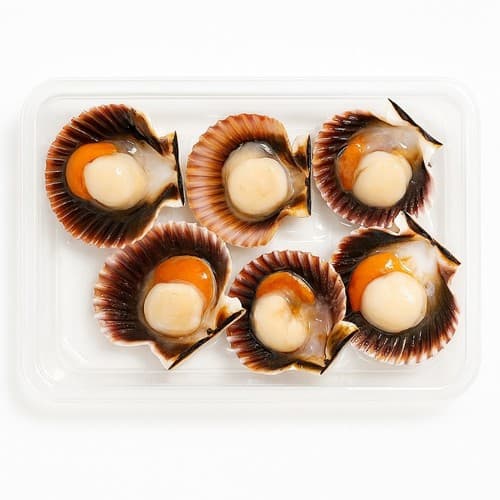
€5.85Scallop Half Shell
EUROPACIFICO · kg · Bonpreu
Good to know
- Species
- Argopecten irradians
- Range
- Atlantic coast of North America, Massachusetts south through the Gulf of Mexico
- Size
- About ½ to ¾ inch (1.25–2 cm) across the adductor muscle; 50–100+ per pound
- Flavor
- Sweet, delicate, lightly briny — noticeably sweeter than sea scallops
- Edible portion
- Adductor muscle only; about 90% yield after removing the small side tendon
- Cook time
- 60–90 seconds per side when seared hot; 2–3 minutes in a broth or sauce
- Northeast season
- Late fall through winter, peaking October–December; closed in summer spawning months
- Storage
- Use within 1–2 days, packed on ice in the coldest part of the fridge; freeze promptly if not using right away
Substitutes
- Sea scallops, quartered — Cut large dry-packed sea scallops into bite-sized pieces; they are heartier and more briny, so reduce the cook time slightly.
- Calico scallops (Argopecten gibbus) — Similar small size and inexpensive, but softer and noticeably less sweet; cook even more briefly and use the same day.
- Japanese hotategai (Yezo scallops) — Small sushi-grade scallops, sweet and tender; use raw or barely warmed through.
- Frozen bay scallops, thawed — An acceptable substitute in pasta, risotto, or chowder; not ideal for searing because they release excess water.
Pairs with
Also called
cape scallop · small scallop