Proteins
Flat Iron Steak
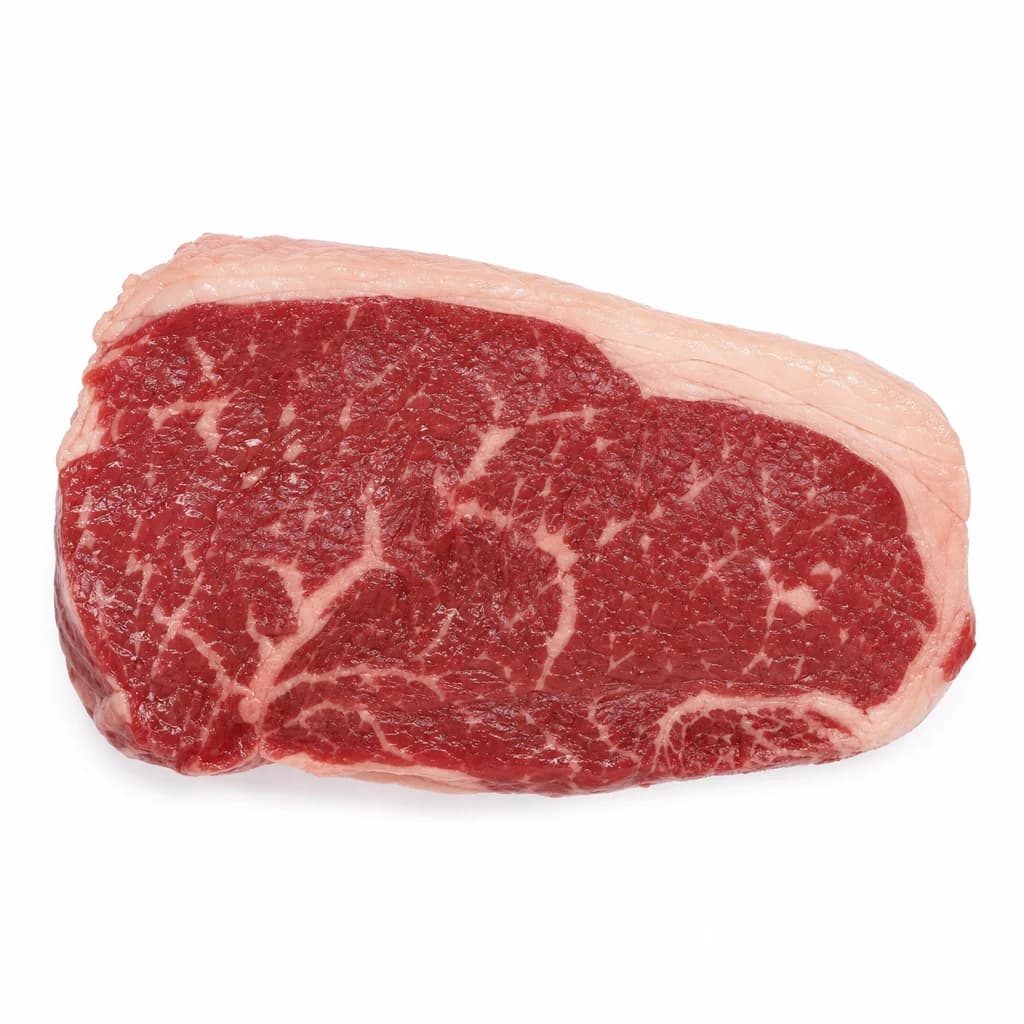
Tender, well-marbled shoulder cut (top blade) with a center gristle line removed. Sears fast and hot like a steak; slice across the grain. Great value alternative to ribeye.
The flat iron steak is one of the great success stories of modern American meat science. Cut from the top blade (infraspinatus) muscle of the chuck shoulder, it was identified in the early 2000s through the Beef Checkoff value-cut program — primarily research out of the University of Nebraska — as the second-most tender muscle on the entire beef carcass, beaten only by the tenderloin. The catch was a tough ribbon of connective tissue running down the center of the intact muscle, which is why the cut had historically been ground into chuck. Remove that seam, butterfly the muscle open, and you have a uniformly thick, well-marbled steak with a flavor profile closer to ribeye than to any other chuck cut — at roughly half the price.
The muscle is unusually fine-grained and even-textured, which is what makes it forgiving despite being leaner than a strip or ribeye. Cooked hot and fast to no more than medium, and sliced thinly across a clearly visible grain, it behaves like a steakhouse classic. The two main failure modes are familiar: cooking it slowly like a chuck roast (it is not a braise), or pushing it past 150°F, at which point the muscle fibers tighten and the celebrated tenderness disappears. Think of it as a thicker, more flavorful tenderloin — one that rewards attention to doneness rather than to marinade or low-and-slow technique.
For a cook, the practical upshot is that flat iron delivers a near-ribeye experience on a weeknight budget, in six to ten minutes, with minimal fuss. It also slices beautifully for sandwiches, fajitas, stir-fries, and steak salads — anywhere thin, tender strips of beefy meat are the goal. Once you learn to spot the grain and pull the steak off the heat five degrees early, the cut becomes a true workhorse.
- Measured in
- g
- Storage
- Refrigerate
Find it in
Types & varieties
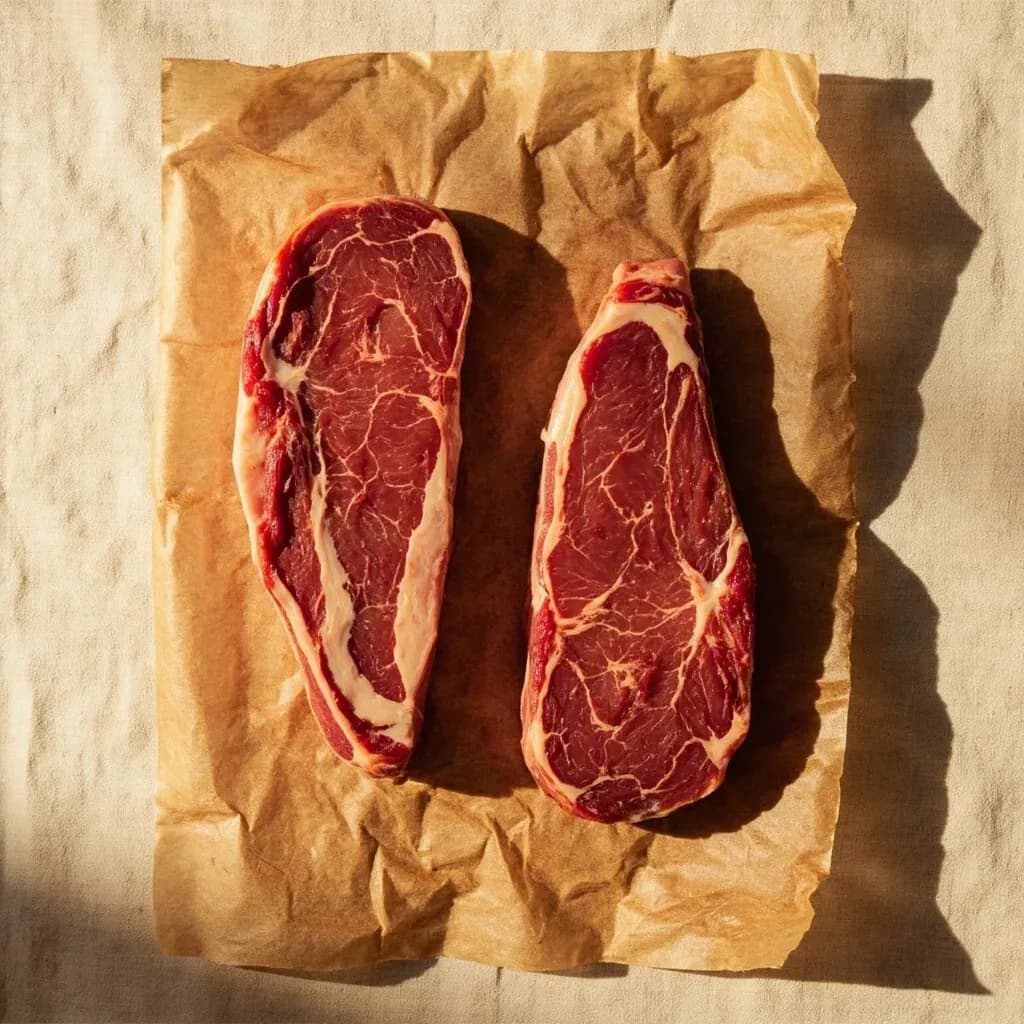
Same muscle with the central gristle seam left in; sold as 'book steak' in some regions. Must be carved around the seam, or seam-removed at home.
The top blade with the gristle seam removed, then butterflied open into a single uniform steak — the form most retail and restaurants use.
Australian and British name for the same infraspinatus muscle, typically sold with the seam intact.
Marketing names for the same cut, sometimes a smaller portion or pre-portioned for single servings.
Often sold pre-marinated in chipotle-pepper, garlic-herb, or Korean bulgogi styles by butchers and grocery chains.
Top blade vs. flat iron: knowing what you're buying
The terms are often used interchangeably at the meat case, but they describe two different things. The top blade is the whole infraspinatus muscle, with its signature line of gristle running lengthwise through the middle. The flat iron is what you get when a processor (or a careful home cook) removes that seam and lays the two halves open to form one evenly thick steak. The trimmed version is what most recipes assume and what most restaurants serve. If you buy an untrimmed top blade, you can either butterfly and seam-remove it yourself with a sharp boning knife, or cook it whole and carve carefully around the connective tissue on the plate. Either way, do not ignore the seam — chewing through it is the single most common flat iron complaint.
- Top blade = whole muscle with gristle; flat iron = top blade with gristle removed and butterflied.
- If buying top blade, remove the seam before cooking or carve around it on the plate.
- A boning knife and a quick pass under the seam is all the butchery required at home.
Slicing technique: the single biggest variable
More than the cook, more than the seasoning, the angle of the knife against the grain determines whether flat iron eats like filet mignon or like shoe leather. The fibers of the infraspinatus run in one continuous direction across the full width of the steak, longer than most cuts, which makes the grain especially easy to identify and especially punishing if you ignore it. Look at the raw steak, find the direction of the striations, and slice thinly — a quarter inch or less — across them, ideally on a slight bias. This step is what unlocks the cut's tenderness. A perfectly cooked flat iron sliced with the grain will be chewy; a slightly overcooked one sliced against the grain will still be tender.
- Find the grain direction on the raw steak before it goes on the heat — note it, don't guess.
- Slice thin, across the grain, on a slight bias. A quarter inch or less is the target.
- Always rest the steak 5–7 minutes before slicing, tented with foil.
Common uses
Tips & pitfalls
- Dry-brine with kosher salt 40–60 minutes before cooking; it seasons the depth of the muscle and pulls surface moisture for a better sear.
- Use very high heat — a 450°F+ grill or a smoking-hot cast-iron skillet — and sear 2–4 minutes per side for medium-rare. The cut is thin and overcooks fast.
- Pull at 130–135°F internal; carryover will finish it. Going past 150°F tightens the muscle and kills the tenderness.
- Identify the grain on the raw steak before cooking and slice thinly against it on a slight bias — the fibers run longer than on most cuts.
- Rest 5–7 minutes tented with foil after cooking. This cut is lean and loses a surprising amount of juice if cut too early.
- Common mistake: braising or low-and-slow cooking. It is a steak, not a chuck roast; high heat is essential.
- Common mistake: buying top blade (untrimmed) and grilling it whole without removing or carving around the central gristle seam. Buy the trimmed flat iron or carve carefully around it.
- Common mistake: under-salting. A lean steak like this needs a generous dry brine or finishing salt to taste fully seasoned.
Nutrition
Energy
649 kJ · per 100 g
Where the calories come from
Protein
21.8g
44% DV
Carbs
0g
0% DV
Fat
7.6g
10% DV
Fiber
0g
0% DV
Sugars
0g
of which
Sodium
59mg
3% DV
Source · USDA FoodData Central · approx. Beef, New Zealand, imported, oyster blade, separable lean only, raw
View on FDC →In the shops
Matched grocery products
No matched grocery products for Flat Iron Steak yet.
Good to know
- Primal source
- Beef chuck (shoulder), specifically the top blade / infraspinatus muscle
- Also called
- Top blade steak (with gristle), butter steak, oyster blade (AU/UK), book steak
- Tenderness rank
- Second-most tender of all beef cuts after the tenderloin, per the National Beef Tenderness Survey
- Developed
- Early 2000s by University of Nebraska and the Beef Checkoff as a fabricated value cut
- Marbling
- Moderate; even distribution through the muscle
- Flavor
- Rich and beefy; comparable intensity to ribeye
- Internal doneness
- Best at medium-rare to medium (130–145°F / 54–63°C); do not exceed 150°F
- Best method
- Hot-and-fast dry heat: cast-iron sear, grill, or broil — 6–10 minutes total
- Gristle seam
- A line of tough connective tissue runs through the center of the intact muscle; it is removed to make flat iron
Substitutes
- Skirt steak — Similar loose grain and rich beefy flavor; benefits from marinade and must be sliced across the grain. Slightly chewier and thinner.
- Flank steak — Lean and intensely flavored; needs thin slicing across the grain. Slightly tougher than flat iron — flank wins on price.
- Hanger steak (onglet) — Comparable tenderness and deep flavor; prized bistro cut. Harder to source and usually pricier than flat iron.
- Tri-tip — Tender and beefy; can be grilled whole and sliced. Different shape but a very workable swap for roasting or grilling.
- Top sirloin (center-cut) — Lean, tender, and affordable. Lacks the marbling of flat iron, so do not cook past medium.
- Chuck eye steak — Closest in flavor (same primal, heavily marbled) though it carries more external fat and the occasional gristle piece.
Pairs with
Also called
flat iron · top blade steak · butler's steak · oyster blade