Proteins
Hanger Steak (Onglet)
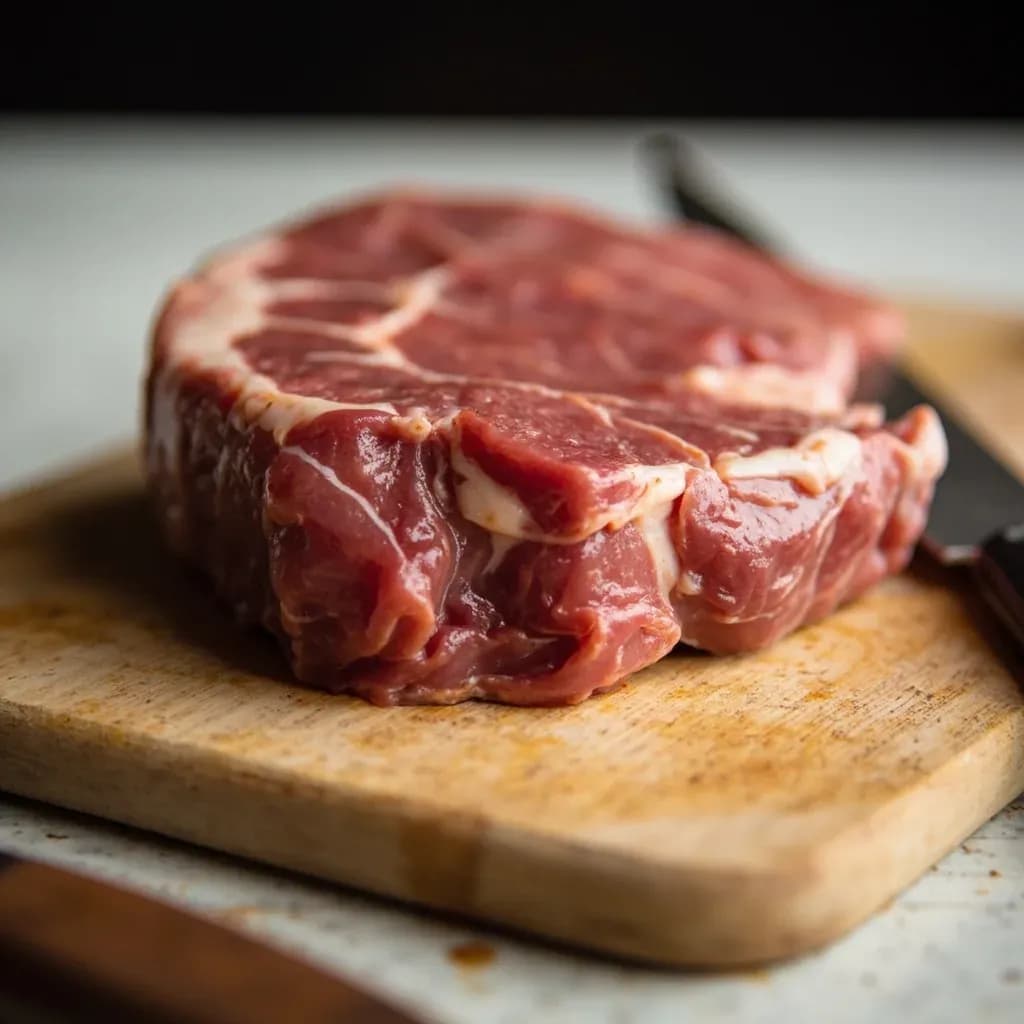
Intensely beefy, tender cut from the diaphragm, best seared rare and sliced across the grain.
Hanger steak, known in French as onglet, hangs from the diaphragm of the cow and carries a deep, robust beef flavor. Once a butcher's secret, it is now a bistro favorite, quickly seared and served rare to medium-rare with shallots or chimichurri. It must be sliced thin against the grain to stay tender.
The hanger steak, called onglet in France, is the diaphragm muscle of the cow—a single, horseshoe-shaped cut that runs between the last ribs and the spine. There is only one per animal, yielding roughly one to one-and-a-half pounds, which made it a traditional butcher's treat kept off the cutting board for himself. That history earned it the nickname "butcher's steak." The muscle does significant work supporting the animal, which gives it a coarser grain and more pronounced, mineral-y beef flavor than the tenderloin or ribeye—deeper and more complex than those pampered cuts, and more assertive than sirloin. It is genuinely tender when cooked correctly, but it demands respect: the lean meat has no marbling to insulate it, so overcooking dries it out and turns it chewy. In French brasseries, onglet is a fixture—sliced thin for steak frites, topped with a knob of shallot butter, served with a glass of Burgundy. In the United States it remains a specialty cut, worth seeking out from a trusted butcher. The payoff is a steak with real character: bold flavor, satisfying texture, and a crust that high heat coaxes from the lean flesh.
- Measured in
- g
- Storage
- Fridge
Types & varieties
The intact cut as it comes from the butcher; two lobes separated by a thick lengthwise membrane that must be removed entirely
The two halves separated; each lobe is the usable meat, easier to handle and season evenly
The French term; in France, onglet is a standard butcher's and bistro cut, more widely available than in most US markets
Sometimes sold pre‑marinated in Latin American or specialty markets; fresh is generally preferable for control of seasoning
Understanding the membrane
The hanger's structure is simple but unforgiving: two lobes of meat running parallel, connected by a thick, silvery‑white membrane. This membrane will not soften with cooking—it stays tough and rubbery no matter how long or how hot you cook it. Before cooking, you must separate the two lobes and strip away every trace of silver skin. A sharp boning knife makes this manageable; work with the grain, peeling the membrane away as you go. If your butcher hasn't done this, budget the ten minutes it takes. The reward is clean, edible meat with no unpleasant surprises.
- Use a sharp boning knife for control
- Peel the membrane away from the grain, not against it
- Both lobes require membrane removal—check each side
Slicing technique
The hanger has a very visible, straight grain running the length of each lobe. This makes slicing it correctly almost too easy—you simply turn the steak 90 degrees and cut perpendicular to those fibers. Slicing across the grain shortens the muscle fibers, turning what would be a chewy bite into something tender and manageable. Cut too thin and you risk mushiness; too thick and you lose the textural payoff. Aim for slices about three‑eighths to half an inch thick. Let the steak rest five to ten minutes after cooking before slicing—this allows the juices to redistribute rather than running out onto the cutting board.
- Slice across the grain at a 90‑degree angle to the length of the steak
- Let rest 5–10 minutes before slicing
- Aim for 3/8‑ to 1/2‑inch slices for best texture
Cooking philosophy for lean meat
The hanger steak's leanness is both its strength and its challenge. Without intramuscular fat, there is nothing to render or to protect the interior from drying out. This means you must supply what the meat lacks: a deep, caramelized crust produced by aggressive Maillard browning. That crust is the steak's moisture, its flavor, and its visual appeal all at once. Achieve it with maximum heat—cast iron, a ripping‑hot grill, or a broiler—and resist the urge to move the steak before a proper crust forms. Cook it rare to medium‑rare only; pull it from the heat about five degrees below your target temperature, since carryover cooking will bring it up another five degrees during the rest.
- Maximum heat is essential for crust on lean meat
- Do not press the steak with a spatula—this squeezes out juices
- Pull from heat 5 °F below target temperature to account for carryover cooking
Common uses
Tips & pitfalls
- Trim every trace of silver skin yourself or confirm your butcher has done it—heat will not soften this membrane and it becomes rubbery and inedible
- Season aggressively with coarse salt just before cooking; this cut can handle more salt than a prime rib
- Do not marinate for more than 2 hours; the dense muscle fiber resists penetration and a long marinade can make the surface mushy
- Use the hottest possible heat—cast iron, grill, or broiler—as the lean meat needs strong Maillard reaction for crust and flavor
- Let the steak come to room temperature for 30 minutes before cooking to ensure even cooking through the center
- Slice ONLY across the grain; the fibers run straight and long, making them very obvious but easy to sever correctly
- Do not press the steak with a spatula while cooking; this squeezes out juices you need for a moist interior
- If searing in a pan, use a heavy pan (cast iron or carbon steel) and do not move the steak until a deep brown crust forms, typically 3–4 minutes per side for a 1‑inch steak
- The steak will continue to cook while resting; pull it from heat about 5 °F below your target temperature
Nutrition
Nutrition
No USDA FoodData Central match for Hanger Steak (Onglet) yet. We surface a per-100 g profile once a generic whole-food entry is matched and verified.
In the shops
Matched grocery products
No matched grocery products for Hanger Steak (Onglet) yet.
Good to know
- Origin
- Diaphragm muscle of the cow, between the ribs and loin; historically kept by butchers for themselves, earning the name "butcher's steak"
- Yield
- One hanger per animal, approximately 1–1.5 lbs; about 85% edible after membrane removal
- French name
- Onglet; the standard term in France and on French menus
- Also called
- Hanging tender, butcher's steak, Philadelphia steak (US)
- Flavor
- Intensely beefy, bold, and mineral—more pronounced than sirloin or ribeye due to its working muscle location
- Texture
- Coarse‑grained, tender when cooked to rare or medium‑rare; chewy if overcooked; distinct bite when sliced correctly
- Fat content
- Very lean, typically 5–10%; no marbling; relies on crust and juices for moisture
- Critical prep
- Must be trimmed of silver skin before cooking; heat will not break this membrane down and it becomes rubbery
Substitutes
- Skirt steak — Similar beefy intensity and chewy texture; cut across the grain and cook quickly over high heat; the closest substitute in most kitchens
- Flat iron steak — From the chuck shoulder; very tender with good beefy flavor; not as intense as hanger but reliable and widely available
- Tri‑tip — Lean and triangular; can be grilled or roasted but has a different grain structure; slice thin and across the grain
- Sirloin flap — Coarse‑grained like hanger; good sear and beefy flavor; requires the same across‑the‑grain slicing technique
- Flank steak — Lean and fibrous with strong beefy flavor; widely available; same across‑the‑grain rule applies; slightly more chewy than hanger
Pairs with
Also called
Onglet · Butcher's Steak · Hanging Tender
Related
Egg
The kitchen's everything ingredient — bind, leaven, enrich, or fry
Chicken Breast
Lean, quick-cooking white meat for everyday dinners

Ground Beef
Versatile minced beef for burgers, ragù, tacos, and meatballs
Pork Loin
Lean, tender roasting cut that stays juicy with care
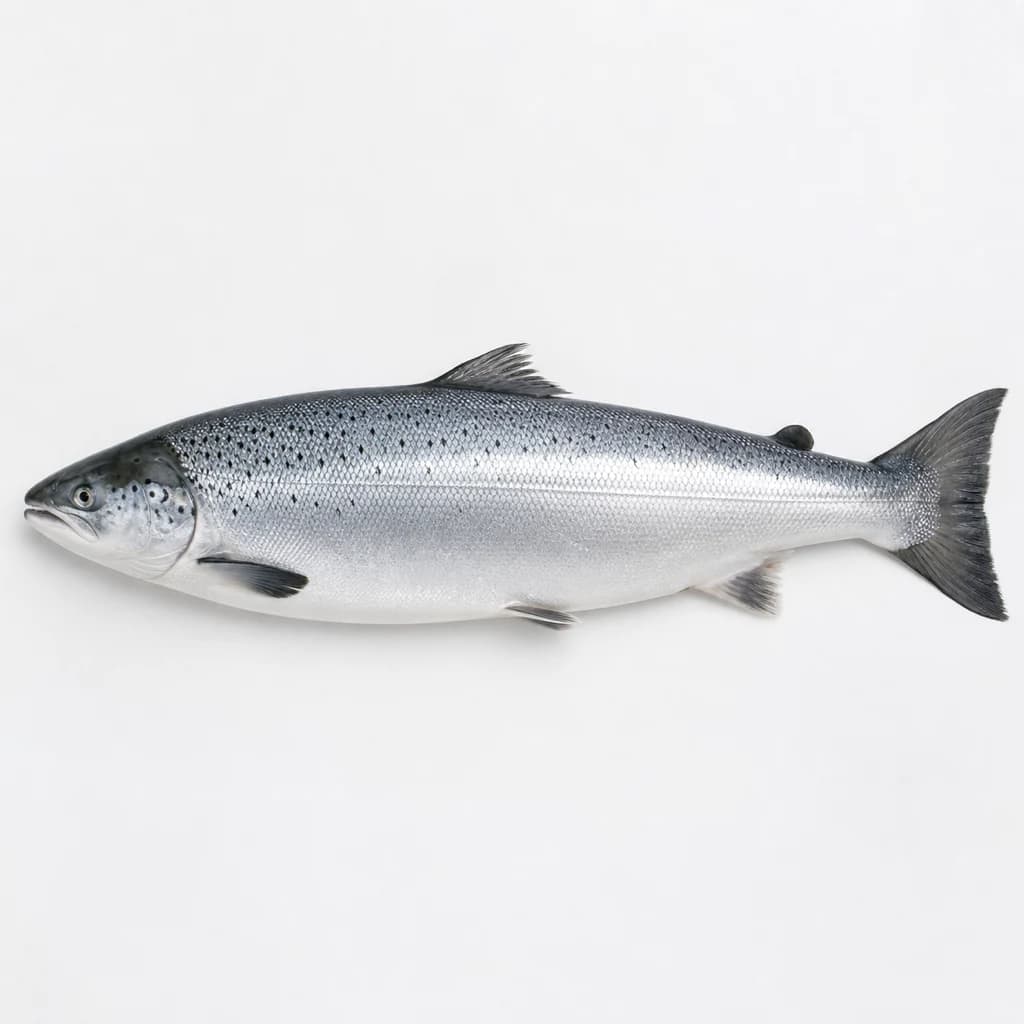
Salmon
Rich, rosy fish that roasts, grills, or cures beautifully

Egg White
Pure protein that whips to airy peaks for meringue and more
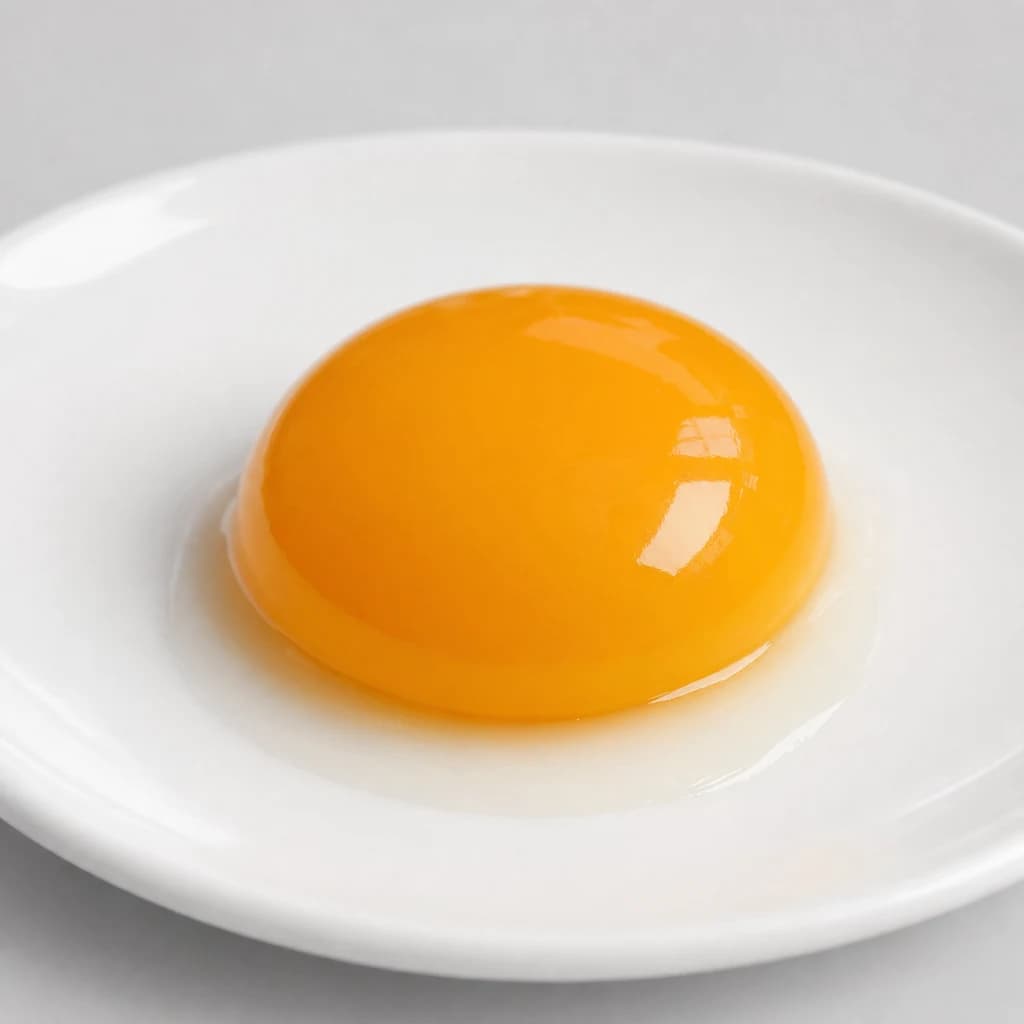
Egg Yolk
Rich, golden yolk for custards, mayonnaise, and pasta

Quail Egg
Tiny, speckled eggs for garnishing and elegant bites