Proteins
Bavette / Sirloin Flap
Loose-grained, well-marbled flank-area steak with deep beefy flavor; takes marinade well and must be seared hot then sliced thin across the grain to stay tender.
Bavette is the French name for a flat, flap-shaped steak cut from the bottom sirloin butt — the American butcher's "sirloin flap" or "flap meat." The muscle sits just below the loin and gets plenty of exercise during the animal's life, which gives it a long, loose grain and a deep, distinctly beefy flavor that many cooks find more steak-like than flank or skirt. In France it has been a bistro workhorse for generations, prized for delivering bold flavor at a fraction of the price of strip or ribeye. In the United States it long lingered as a butcher's secret, sold cheaply or relabeled as fajita meat, before steakhouses and craft butchers popularized it in the 2010s as an off-menu favorite.
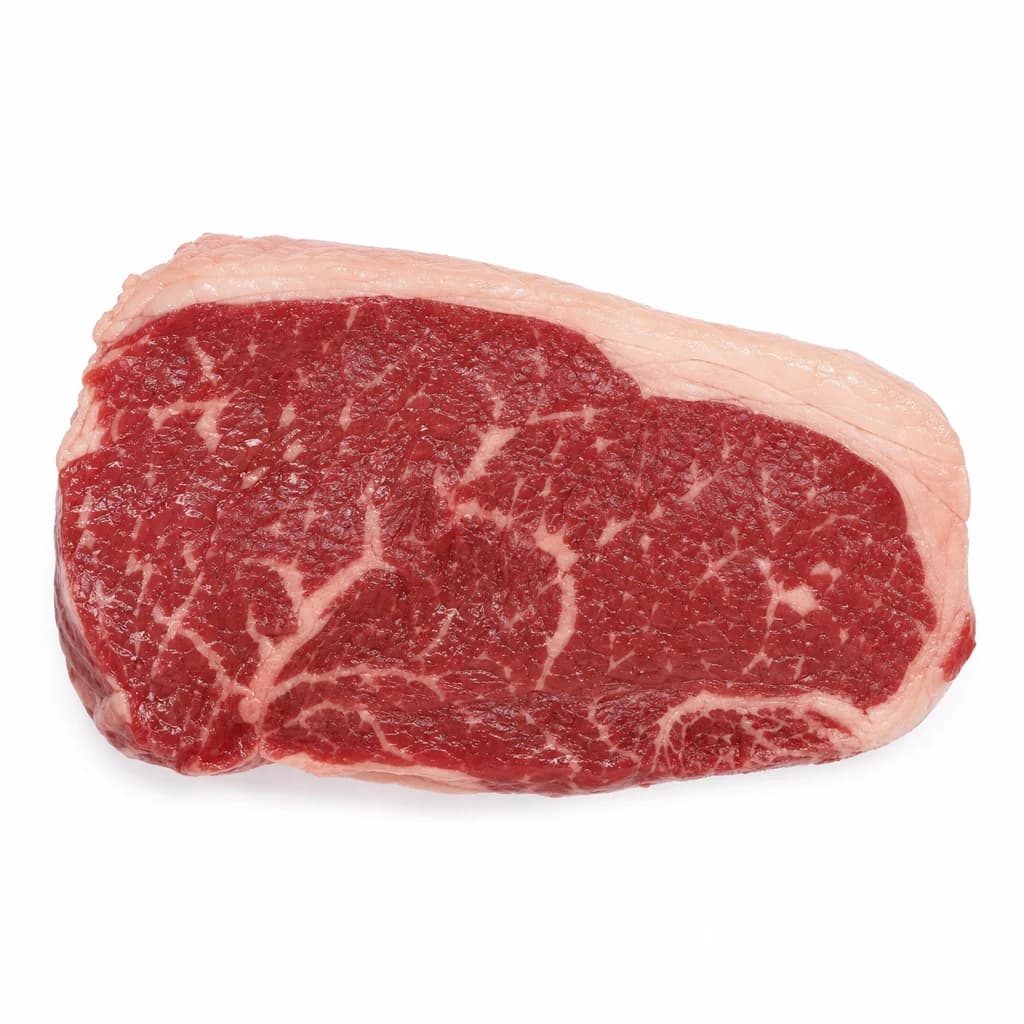
What defines bavette in the pan is its unusually open muscle structure. The fibers are long, visible to the eye, and run across the cut — though the flap can split into two lobes where the grain shifts, so the longest run of fibers is what you actually read. It also takes marinade better than almost any steak: the loose, almost spongy tissue soaks up flavor quickly, which is why it anchors everything from French steak frites to Mexican arrachera to Korean bulgogi. The same openness means over-marinating in strong acid can turn the surface mushy in just a few hours.
The cardinal rule is slicing. A bavette cooked to a perfect medium-rare but carved with the grain will chew like leather, while the same piece cut thin across the grain melts on the tongue. Identify the grain direction on the whole cut before you ever heat the pan, and bavette will outscore many steaks that cost three times as much.
- Measured in
- g
- Storage
- Refrigerate Sealed In The Coldest Part; Use Within A Few Days Or Freeze.
Find it in
Types & varieties
The sirloin flap from the bottom sirloin butt — the cut American cooks usually mean by "bavette."
The flank bavette, cut from the abdominal wall; sometimes sold as bavette de flanc. Different muscle, similar loose grain and use.
Mexican butchers commonly label the sirloin flap as arrachera, though the same name is also applied to skirt steak; marinade-driven preparation is traditional.
Reading and slicing the grain
More than any other steak, bavette lives or dies by how you carve it. The muscle fibers are unusually long and easy to see with the naked eye, and they almost always run in a single direction across the whole cut — though the flap can have two lobes where the grain shifts, so look at the longest run of fibers and slice perpendicular to that. Aim for slices no thicker than a quarter inch. A sharp slicing knife or long chef's knife works better than a serrated blade, which can tear the loose tissue. If you are serving bavette to guests, portion the whole steak and slice it at the table after pointing out the grain — it is the single detail that separates a good plate from a tough one.
- Look for the longest visible fibers on the raw cut before it goes over heat.
- If the flap has two lobes, treat each lobe's grain separately.
- Slice ¼ in or thinner, perpendicular to the fibers.
- Use a smooth, sharp blade rather than a serrated one to avoid tearing.
The bistro tradition, and why this cut is suddenly everywhere
French bistros have leaned on bavette for decades because it offers real steak character at a price that lets a working restaurant put a plate of frites and a generous portion of beef in front of a customer for not much money. The classic preparation is austere: a hard sear, a few minutes of rest, thin slicing across the grain, and a finishing shower of shallots cooked in browned butter, sometimes with a splash of red wine stirred into the pan. American steakhouses and butcher shops adopted the same logic in the 2010s, and bavette became a quietly celebrated off-menu item before moving onto printed menus. In Hispanic markets the same cut has long been sold as arrachera, marinated in citrus, garlic, and chiles for tacos and plates.
- Bistro bavette: sear, rest, slice thin, finish with shallot butter and a pan of frites.
- Arrachera: marinate in lime, garlic, cumin, oregano, and chile, then grill hot and slice thin for tacos.
- Korean or Japanese influence: soy, sugar, garlic, sesame, and pear or apple work beautifully with the loose grain.
- The cut's value lies in flavor-per-dollar, not tenderness — slicing is what unlocks that.
Common uses
Tips & pitfalls
- Identify the grain direction on the whole raw cut before you season it — once the steak is hot, the fibers contract and the line is harder to read.
- Dry-brine with salt 40–60 minutes ahead of cooking rather than salting at the last minute; the surface dries, seasons deeply, and sears far better.
- Pull the steak from the fridge 30–45 minutes before cooking and pat it very dry; surface moisture is the enemy of a deep crust.
- Sear hot and fast — 2 to 3 minutes per side for a 1-inch portion on a screaming cast-iron skillet or over high grill grates.
- Rest loosely tented for at least 5–7 minutes; the loose muscle structure needs the relaxation time for juices to redistribute.
- Slice thin (¼ in or less) and strictly across the grain — thick slices parallel to the fiber direction will chew like leather even at perfect temperature.
- Keep marinades with strong acid (wine, citrus) to 1–4 hours; longer turns the surface of this cut mushy.
- Avoid cooking past medium. Beyond about 140°F the fat renders out and the texture tightens and toughens.
- Save the fond and any resting juices for a quick pan sauce — seared bavette leaves behind some of the most flavorful drips of any steak.
Nutrition
Energy
1301 kJ · per 100 g
Where the calories come from
Protein
41.7g
83% DV
Carbs
34.7g
13% DV
Fat
3g
4% DV
Fiber
17.5g
63% DV
Sodium
10mg
0% DV
Source · USDA FoodData Central · approx. Meat extender
View on FDC →In the shops
Matched grocery products
No matched grocery products for Bavette / Sirloin Flap yet.
Good to know
- Primal
- Bottom sirloin (bottom sirloin butt, also called the sirloin flap)
- French butchery name
- Bavette d'aloyau — distinct from bavette de flanchet, which is cut from the flank
- Other names
- Sirloin flap, flap meat, flap steak; arrachera in many Hispanic markets (a name shared with skirt steak)
- Texture
- Loose, open grain with long, visible muscle fibers; tender only when sliced thin across the grain
- Marbling
- Moderate to generous intramuscular fat, though the cut reads lean on the surface
- Internal temp target
- Best at medium-rare to medium (130–140°F / 54–60°C); past medium it dries out and tightens
- Typical portion
- Whole flap runs 2–4 lb; retail cuts are usually 8–16 oz, about 1 to 1.5 in thick
- Name origin
- French "bavette" means bib or apron, a nod to the cut's flat, flap-like shape
Substitutes
- Skirt steak (outside) — Closest cousin in flavor and texture; tighter grain, thinner, and cooks even faster — watch for overcooking.
- Flank steak — Leaner with longer fibers; benefits more from marinade and should be sliced extra thin against the grain.
- Hanger steak — Similar loose, beefy character from a different primal; the central membrane must be removed before cooking.
- Tri-tip — Different shape and grain pattern but cooks well hot-and-fast and slices beautifully against the grain; not a 1:1 swap for whole-cut presentations.
- Flat iron (top blade) — Tender alternative with good marbling; lacks the same loose, spongy texture but works in the same marinade-and-slice applications.
Pairs with
Also called
sirloin flap · bavette steak · flap meat · sirloin tip flap