Proteins
Striploin (NY Strip)
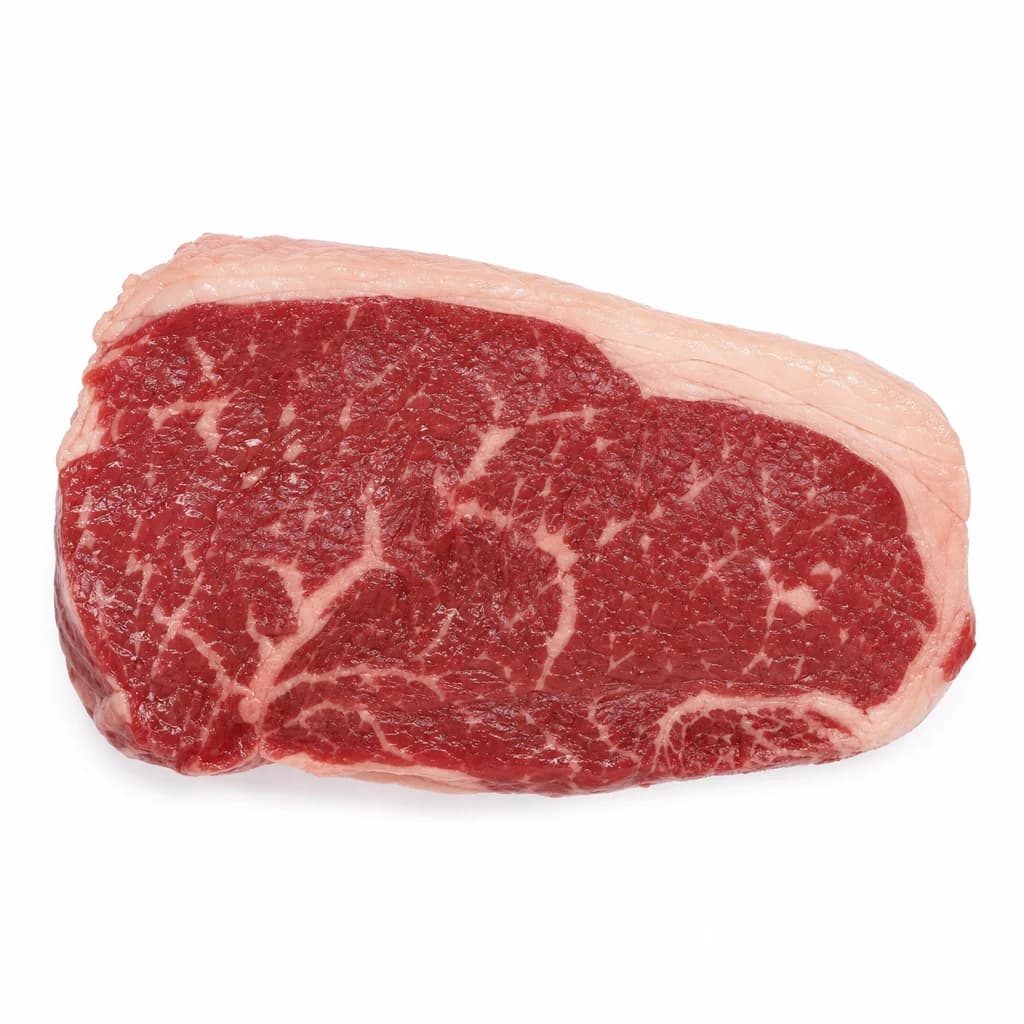
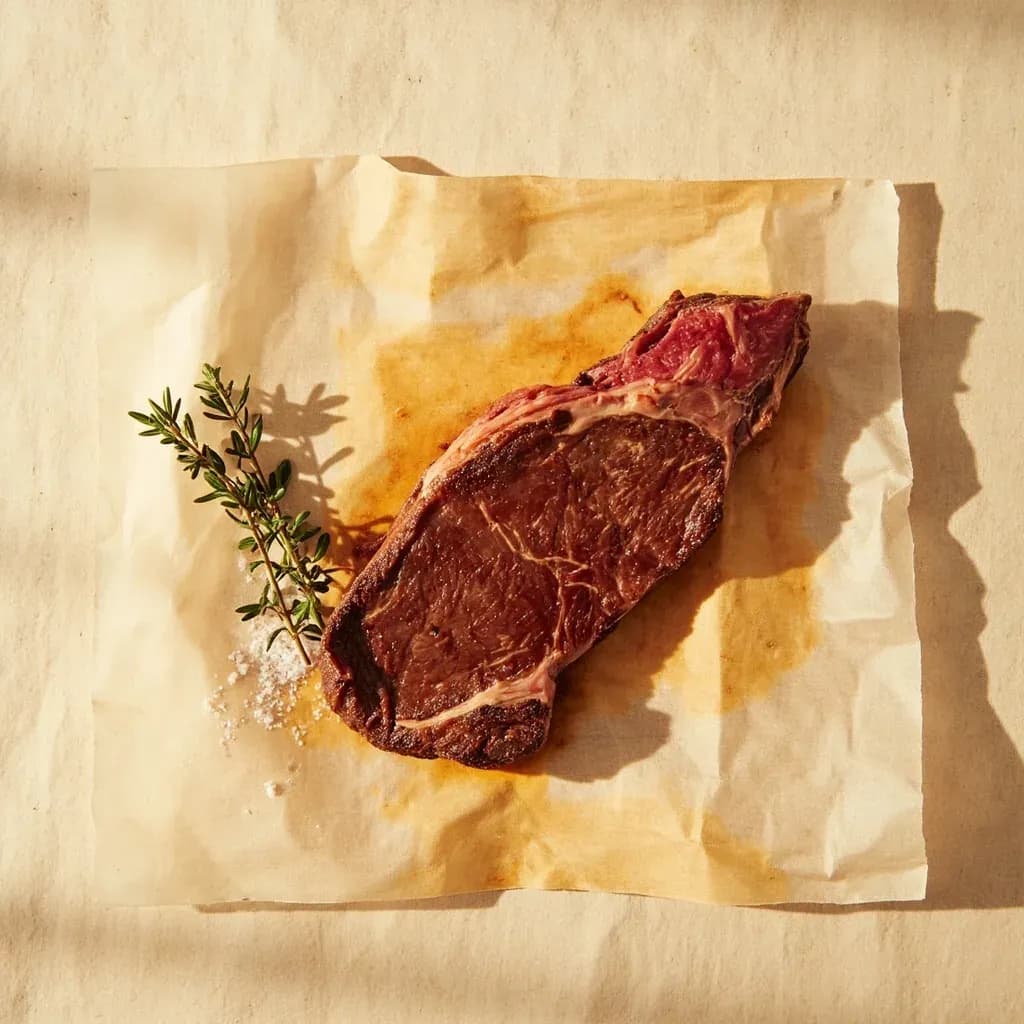
Tender loin steak with a firm bite and a fat cap along one edge; sears fast and stays juicy. Best grilled or pan-seared hot to medium-rare, rested before slicing.
The strip loin is the subprimal that gives us the NY Strip, one of the great center-of-plate steaks of North American butchery. It comes from the short loin primal, just behind the rib and ahead of the sirloin, and is made up almost entirely of the longissimus dorsi muscle — a relatively underworked muscle, which is why the meat is markedly more tender than chuck or round. The boneless steak most cooks know as the NY Strip keeps a signature fat cap along its curved edge; that fat renders as it cooks and bastes the meat on the plate, and most of the cut's identity lives in that contrast of lean center and rendered edge.
What separates the strip from the ribeye is leaner, more focused beef flavor, and what separates it from the tenderloin is a firmer, more satisfying bite. Strip has moderate marbling — enough to keep the meat juicy at medium-rare, less so if you push past medium — and a fine-grained texture that takes a hard sear beautifully. Because there is less intramuscular fat to buffer against overcooking than ribeye has, an instant-read thermometer is the single most valuable tool for this cut. Cook it hot, rest it well, and slice against the grain; those three habits are the difference between a forgettable steak and one that tastes like a steakhouse.
- Measured in
- g
- Storage
- Refrigerate
Find it in
Types & varieties
The same longissimus muscle with the feather bone removed; the most widely sold form at retail.
Strip with rib bone and intercostal meat attached; many cooks find the bone adds flavor during cooking.
1.5–2 inches thick; best handled with reverse-searing or two-zone grilling.
Aged 21–60+ days in controlled humidity; deeper, nuttier, funkier flavor, crust trimmed away, 15–30% weight loss.
Highest intramuscular fat grade; most forgiving under high-heat dry cooking.
Most common retail grade; flavorful but slightly less tolerant of cooking past medium.
Heavily marbled and very rich; cooks noticeably faster than conventional strip because of intramuscular fat.
British and Australian butchers use "striploin" for the boneless strip; rump and sirloin are separate cuts.
Choosing and Cooking by Thickness
Thickness dictates technique more than any other variable with strip. A 1-inch steak rewards a hard sear on both sides and almost nothing else; a 1.5- to 2-inch steak rewards a low-and-slow finish before that sear. The mistake most home cooks make is treating every strip the same way, then blaming the cut when the thick one comes out bullseye-edged with a raw band and the thin one comes out gray.
- 1 inch or less: Pat dry, salt 40 minutes ahead, sear in a smoking-hot cast-iron pan 2–3 minutes per side, baste with butter, garlic, and thyme in the final minute. Rest 5 minutes.
- 1.25–1.5 inches: Same pan method but sear about 3 minutes per side, then move to a 400°F oven to finish to temperature. Or sear, flip, sear, and use carryover to coast to target.
- 1.5–2 inches (and thicker): Reverse-sear. Salt and rest uncovered in the fridge overnight, then cook in a 250°F oven until the center reads 115°F. Rest 5 minutes, then sear hard in a smoking pan with high-smoke-point oil, 60–90 seconds per side. Edge-to-edge medium-rare with a deep crust.
- Bone-in Kansas City Strip: Treat as a 1.25–1.5-inch steak by weight; the bone insulates the meat nearest it, so probe the center of the boneless side, never against the bone.
Common uses
Tips & pitfalls
- Dry-brine with salt for at least 40 minutes before cooking, or season right before the steak hits the pan; the 5-to-40-minute window is the worst of both worlds because moisture drawn to the surface has not yet been reabsorbed and will steam instead of sear.
- Pat the surface completely dry with paper towels before searing — surface moisture is the enemy of a deep Maillard crust.
- Preheat a heavy pan (cast iron or carbon steel) until just smoking, then add a high-smoke-point oil like avocado or grapeseed before the steak goes in.
- Baste with butter, smashed garlic, and thyme in the last minute of cooking for classic steakhouse flavor and color.
- Pull the steak from heat about 5°F below your target internal temperature — carryover will finish the cook.
- Rest at least 5 minutes for a 1-inch steak and closer to 10 for thick-cut, so the juices redistribute into the meat instead of running onto the board.
- Slice perpendicular to the visible muscle fibers (against the grain) to maximize tenderness; identify the grain before you start cutting.
- Trim only the thickest exterior fat and leave the signature fat cap (the lip) intact — it renders during cooking and flavors the pan sauce.
- Use an instant-read thermometer; eyeballing doneness is the single most common cause of overcooked strip.
- Avoid pressing the steak with a spatula while cooking — it squeezes out juices and drops pan temperature at the worst moment.
- When grilling, sear first over direct high heat, then move to indirect heat to finish without burning the exterior before the center catches up.
Nutrition
Energy
628 kJ · per 100 g
Where the calories come from
Protein
20.9g
42% DV
Carbs
0.7g
0% DV
Fat
7g
9% DV
Fiber
0g
0% DV
Sugars
0g
of which
Sodium
47mg
2% DV
Source · USDA FoodData Central · Beef, New Zealand, imported, striploin, separable lean only, raw
View on FDC →In the shops
Matched grocery products
No matched grocery products for Striploin (NY Strip) yet.
Good to know
- Primal cut
- Short loin (subprimal: strip loin, longissimus dorsi muscle)
- Other names
- NY Strip, Kansas City Strip (bone-in), Shell Steak (bone-in), Ambassador, Hotel, Club, Delmonico
- Boneless vs. bone-in
- Boneless = NY Strip; bone-in = Kansas City Strip / Shell Steak
- Marbling & grades
- Moderate flecks along the eye; USDA Prime is richest, Choice is the retail standard, Select is leaner
- Doneness sweet spot
- Medium-rare, 130–135°F (54–57°C); pull 5°F below target for carryover
- Best cooking methods
- High-heat grilling, cast-iron pan-searing, broiling, or reverse-sear for thick cuts
- Resting time
- 5–10 minutes, loosely tented with foil
- Aging & storage
- Wet-aged by default, dry-aged 21–60+ days at specialty butchers; refrigerate 34–38°F and use within 3–5 days, or vacuum-seal and freeze up to 6–12 months
Substitutes
- Ribeye steak — More marbling and richer flavor; slightly softer texture. The best substitute when indulgence matters more than price.
- Top sirloin steak — Leaner and more economical; noticeably less tender, so slice thinly against the grain.
- Beef tenderloin (filet mignon) — More tender, far less fatty and beefy; swap when tenderness matters more than flavor.
- Porterhouse or T-bone steak — Includes the strip plus a portion of tenderloin; cook as one piece and portion after resting.
- Tri-tip roast — Sliced across the grain, it offers comparable beefy flavor at a lower price point; best cooked to medium-rare.
- Flank or skirt steak — Much chewier and must be sliced very thin against the grain; marinade-friendly budget option.
Pairs with
Also called
NY strip · New York strip · strip steak · shell steak · contre-filet · sirloin steak