Spices
Chile de Árbol
Small, sharply hot chile with a clean, grassy bite; toasted into fiery table salsas, infused chile oils, and a heat-forward garnish for stews and noodles.
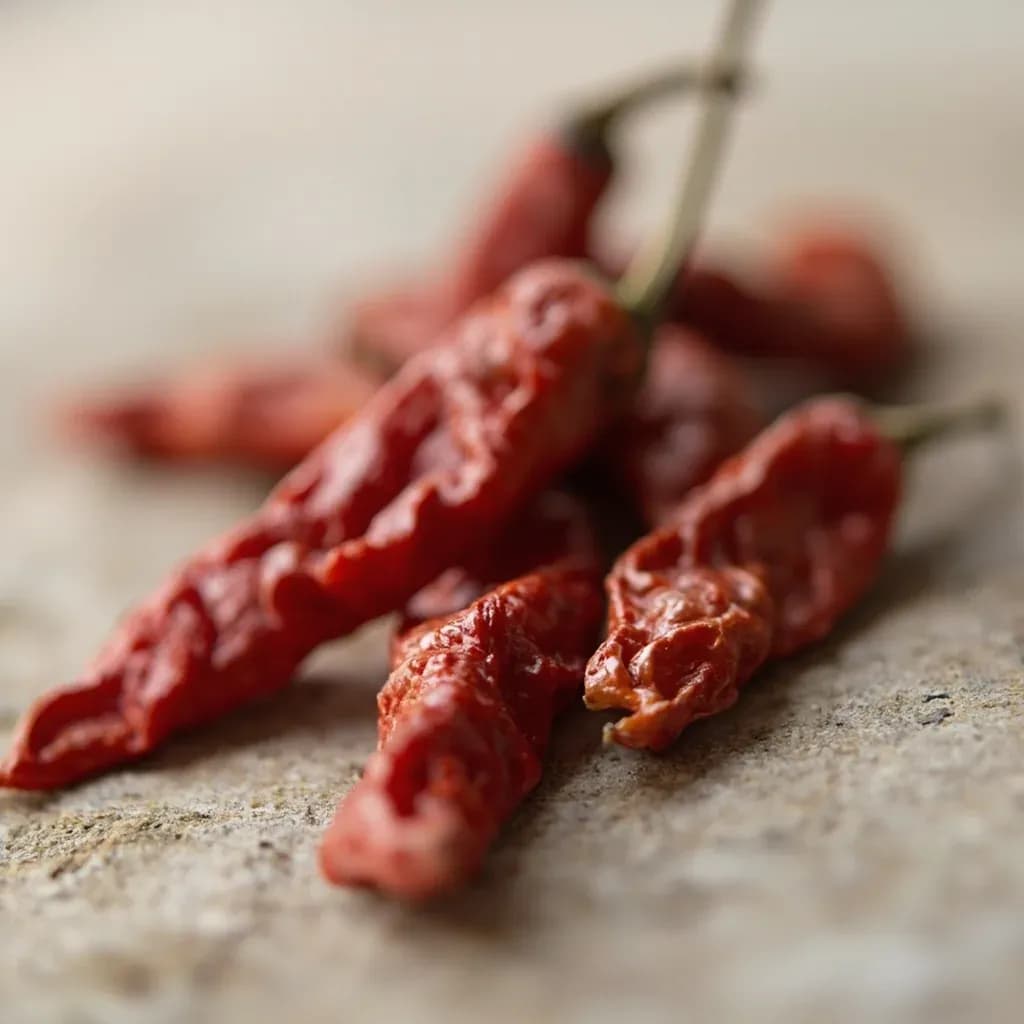
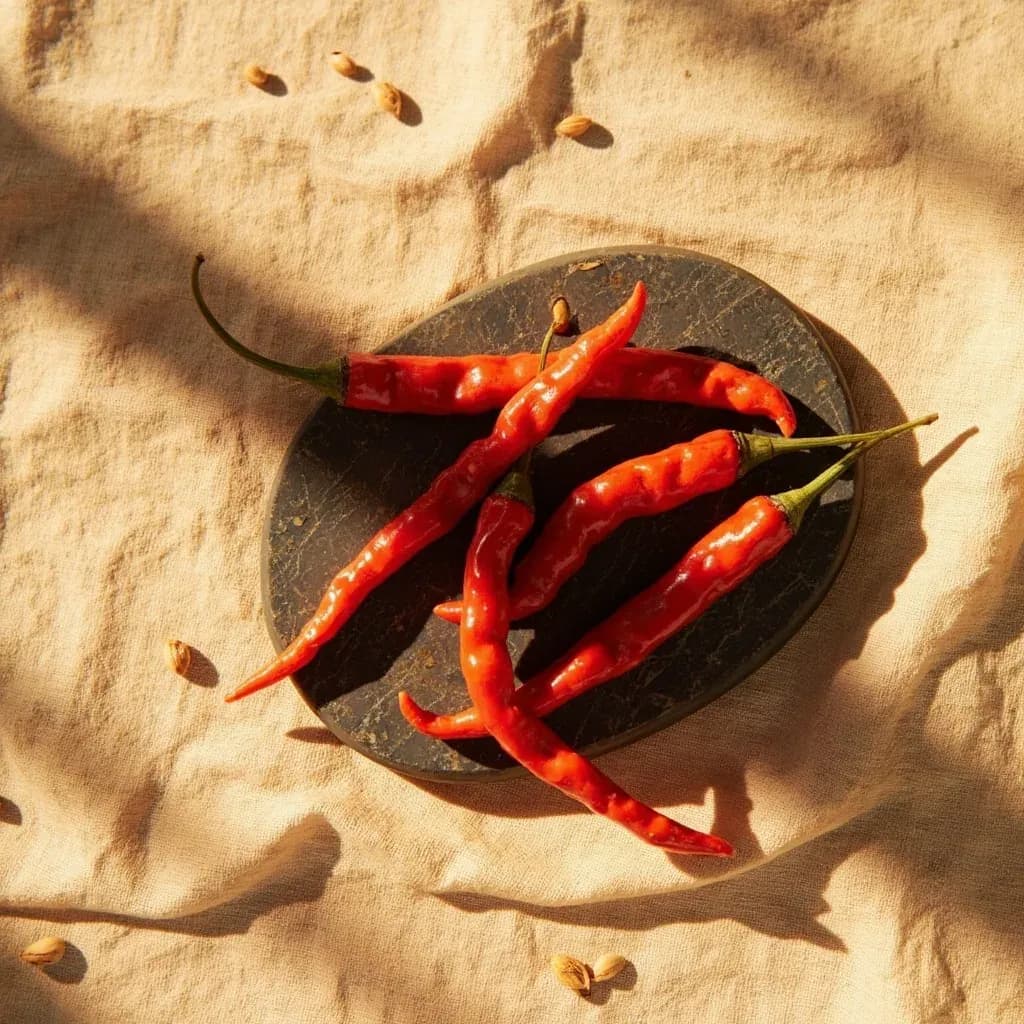
Chile de árbol is the slim, scarlet dried pod that anchors the heat in a great deal of Mexican home cooking, particularly in Oaxaca, Jalisco, and Zacatecas. It belongs to Capsicum annuum — the same species as cayenne and the bell pepper — and at 15,000–30,000 Scoville units it sits firmly in the medium-hot range, comparable to cayenne but with a brighter, grassier, slightly smoky-nutty character that comes from its thin walls and the way it is cured on the bush. The name, 'chile of the tree,' refers to the woody, fibrous stem rather than the plant's size; the pods themselves are small (about 5–8 cm), tapered, and almost always sold fully dried, which is what gives árbol its status as a year-round pantry workhorse rather than a seasonal ingredient.
The defining behavior of árbol is how it responds to dry heat. A brief toast on a comal or skillet — ten to twenty seconds per side — wakes the oils and deepens the flavor without browning the pod, and the thin walls mean the chile crisps rather than softens, which is why it works equally well as a blended salsa base, an oil infusion, and a crumbled finishing garnish. The heat lives in the seeds and white ribs; the stems are tough and inedible. Because the walls are thin and the color is the point, the most common error in cooking with árbol is over-toasting, which turns the pods acrid and dulls the brilliant red that signals a good batch.
In practice, árbol plays three overlapping roles. It brings sharp, clean heat to red and green table salsas, where its color and potency are the attraction. It infuses cleanly into warm oil — a handful of pods in a cup of grapeseed yields a vivid, fragrant chile oil in minutes. And it is crumbled, whole or broken, over finished dishes from noodles to elote to a fried egg, where its crunch and scarlet flecks are as much visual as flavor. Understanding those three jobs — and the restraint each one requires — is what separates thoughtful use of árbol from simply making a dish very hot.
- Measured in
- g
- Storage
- Dark Cool
Find it in
Suits
Types & varieties
The classic small red dried chile sold in markets; the reference form for salsas and oils.
The immature fresh form, grassier and slightly milder, named for its beak-like shape. Used in green salsas and pickles when in season.
Pale, yellowish dried variant from Jalisco; noticeably milder (around 5,000–10,000 SHU) with a softer, hay-like flavor — the in-family choice when you want aroma over fire.
Look-alike dried red chile with a curled, longer pod; often sold alongside or blended with árbol. Similar heat, slightly fruitier profile.
The Three Jobs of Chile de Árbol
Almost every dish that uses árbol falls into one of three patterns, and recognizing which one you are in changes how you handle the pod.
Reading a Good Pod
Quality shows up in the pod, not the price. Here's what to look — and look out — for at the market.
- Color should be a clean, bright scarlet. Dull brick-red, brown patches, or pale orange pods are old or heat-damaged and will taste flat.
- Pods should be intact and firm, not bendy or brittle. Limpness means moisture got in; excessive snap-to-shatter means the chiles are over-aged and have lost volatile oils.
- A slight sheen is fine; a dusty white film means mold — discard.
- Buy whole whenever possible. Pre-ground árbol in jars loses its grassy top-note in a matter of weeks.
Toasting: The Defining Move
The single technique that matters most. Done right, it wakes the oils and deepens the flavor; done a few seconds too long, it ruins the batch.
- Heat a dry comal, cast-iron skillet, or heavy sauté pan over medium heat — not high.
- Lay pods in a single layer and press them flat against the surface for 10–20 seconds per side.
- Flip when you see the first faint blister or smell the aroma lift; do not wait for browning.
- Pull the pan off the heat the moment a pod darkens — residual heat will carry the toast another few seconds.
- Let them cool before handling; the oils are still migrating and a hot pod scorches fingers.
Arbol vs. Guajillo (and Other Common Mix-Ups)
Arbol is often shelved next to guajillo, pasilla, and California chiles, and cooks new to Mexican chiles reach for them interchangeably. They are not the same. Guajillo is larger, sweeter, and a fraction of the heat; árbol is smaller, sharper, and four to six times hotter. A one-for-one swap with guajillo will make most salsas and braises punishingly spicy and flatten the fruit-forward character a guajillo was meant to provide. Use árbol to punctuate, not to build the base.
Infusing Chile Oil
A cup of neutral oil and four to six pods is enough to season a week's worth of meals. The keys are temperature and timing.
- Warm the oil to about 150–160°C (300–325°F) — a dropped pod should sizzle gently and slowly deepen in color, not foam or darken fast.
- Pull the woody stems before infusing; they add no flavor and only make straining awkward.
- Pull the pan off the heat as soon as the oil turns a clear, rich red. The pods will continue to steep as the oil cools.
- Strain once cool, or leave the pods in for visual punch; they re-crisp as they sit and are excellent on noodles or rice.
- Refrigerated, plain chile oil keeps for several weeks; if garlic or other aromatics are in the bottle, use within a week or two.
Common uses
Tips & pitfalls
- Toast dried chiles in a dry comal or skillet over medium heat for 10–20 seconds per side until fragrant and just lightly blistered — never let them blacken or smoke, as burnt chiles turn acrid and bitter.
- Always pull the stem (and most of the seeds for moderate heat) before toasting; woody stems do not soften and will roughen salsas.
- For smooth salsas, rehydrate toasted chiles in just-boiled water for 10–15 minutes, then blend with a small ladle of that soaking liquid — it carries flavor.
- Grind in a dedicated spice grinder or mortar; the thin walls crush easily but the seeds can dull a regular blade grinder.
- When making chile oil, keep oil below 180°C (350°F) — a test chile should sizzle gently, not foam, to preserve color and avoid bitterness.
- A single árbol can season a 4-serving pot of beans or soup; this is a chile that rewards restraint.
- Store dried pods whole, not ground, in a jar away from the stove — heat and light fade the red color and dull the flavor within weeks.
- If a recipe calls for guajillo and you only have árbol, do not swap one-for-one — árbol is roughly 4–6 times hotter; start with one-third the amount.
Nutrition
Nutrition
No USDA FoodData Central match for Chile de Árbol yet. We surface a per-100 g profile once a generic whole-food entry is matched and verified.
In the shops
Matched grocery products
No matched grocery products for Chile de Árbol yet.
Good to know
- Species
- Capsicum annuum, the same species as cayenne, jalapeño, and bell pepper
- Origin
- Mexico; especially associated with Oaxaca, Jalisco, and Zacatecas
- Name meaning
- 'Chile of the tree' — the woody stem, not the plant's size
- Fresh length
- About 5–8 cm (2–3 inches), slim and tapered
- Mature color
- Bright red when ripe; almost always sold fully dried
- Scoville heat
- Approximately 15,000–30,000 SHU, comparable to cayenne
- Heat location
- Concentrated in seeds and white ribs; stems are woody and never eaten
- Storage
- Whole dried pods, airtight and away from light, 6–12 months; ground loses potency in weeks
Substitutes
- Cayenne pepper (dried whole or ground) — Closest match in heat and body; flavor is a touch earthier and less grassy. Use roughly equal weight for whole pods, slightly less for ground.
- Thai bird's eye chiles (fresh or dried) — Comparable heat, brighter and more citrusy; works in salsas and oils but lacks the smoky-nutty depth of árbol.
- Chile pequin (or tepín) — Wild-style tiny red chiles, often hotter (40,000–60,000 SHU) with a fruitier profile; use about half as many.
- Crushed red pepper flakes (high-quality) — Workhorse pantry swap for finishing heat; lacks the toasted complexity of árbol so add early in cooking rather than as garnish.
- Chile de Árbol Blanco — If you want the same shape and color but less heat, the white variety from Jalisco is the in-family option.
Pairs with
Also called
chile de arbol · bird's beak chile · rat's tail chile