Spices
Chipotle
Smoke-dried ripe jalapeño with deep, smoky-sweet medium heat; powers adobo, smoky salsas, marinades, and rubs for grilled meats and beans.
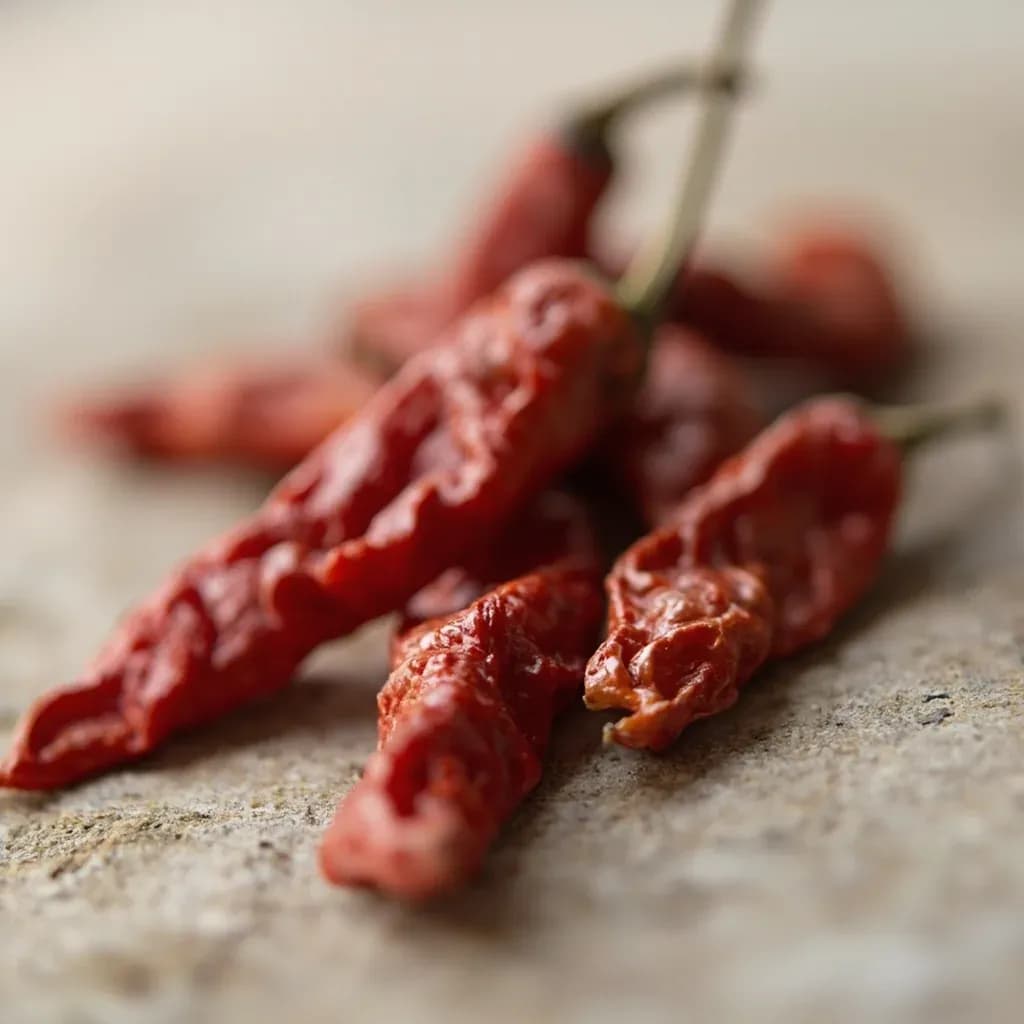
Chipotle is not a different plant but a process: ripe red jalapeños are left on the vine until fully colored, then smoke-dried over hardwoods until they lose roughly four-fifths of their weight and turn leathery, wrinkled, and deeply aromatic. The technique is pre-Columbian — the word itself comes from the Nahuatl chilpoctli, "smoked chili" — and remains the most concentrated way to capture the character of a fully ripened jalapeño: a sweet-fruity pepper that has been pushed through fire and time into something darker, denser, and unmistakably savory.
What chipotle brings to a dish is a three-part flavor: wood smoke (pyrazines formed over the fire), dried-fruit sweetness with hints of plum, tobacco, and dark caramel, and a medium heat of roughly 2,500–8,000 Scoville units — comparable to a fresh green jalapeño but felt differently, because drying concentrates both the sugars and the capsaicinoids while muting the grassy, vegetal notes of the raw pepper. The smoke compounds are fat-soluble, which is why chipotle blooms in oil rather than water, and why it shines in long-simmered sauces, rubs applied to fatty cuts, and creamy emulsions.
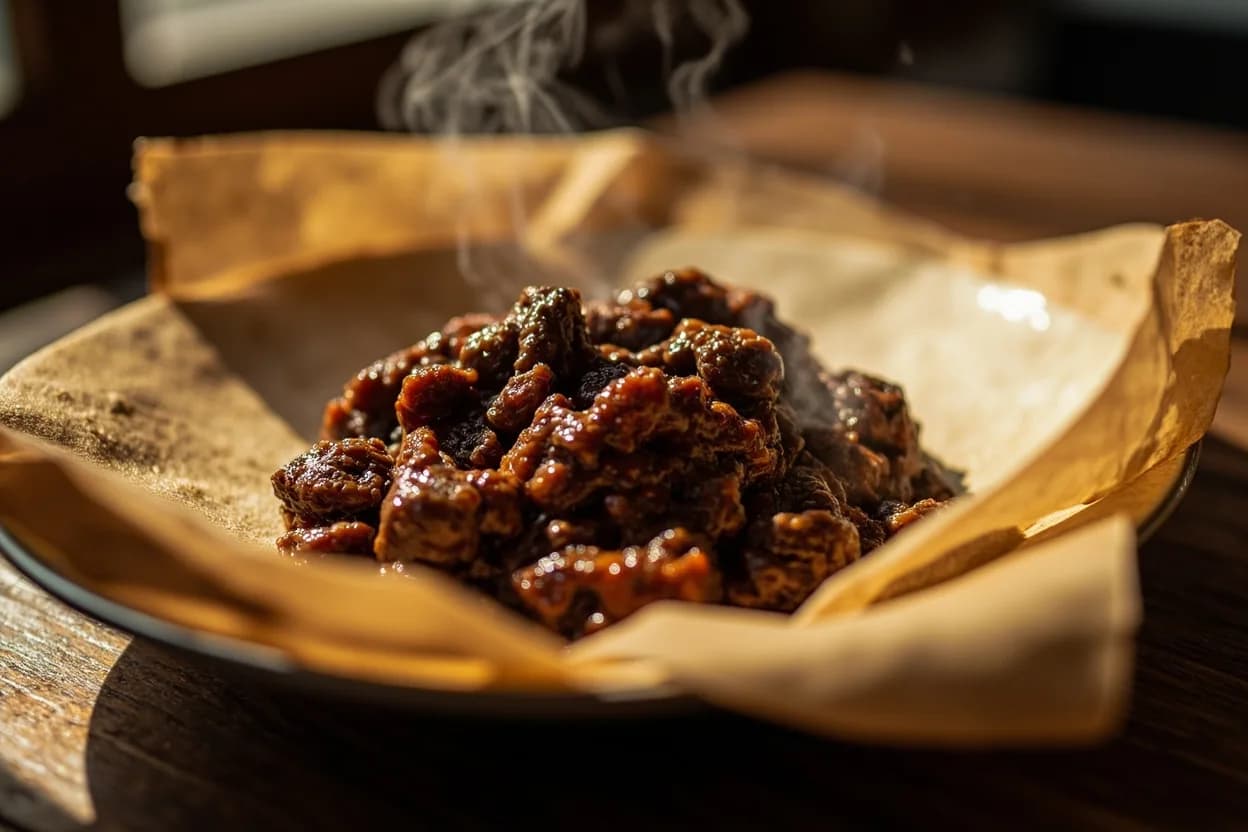
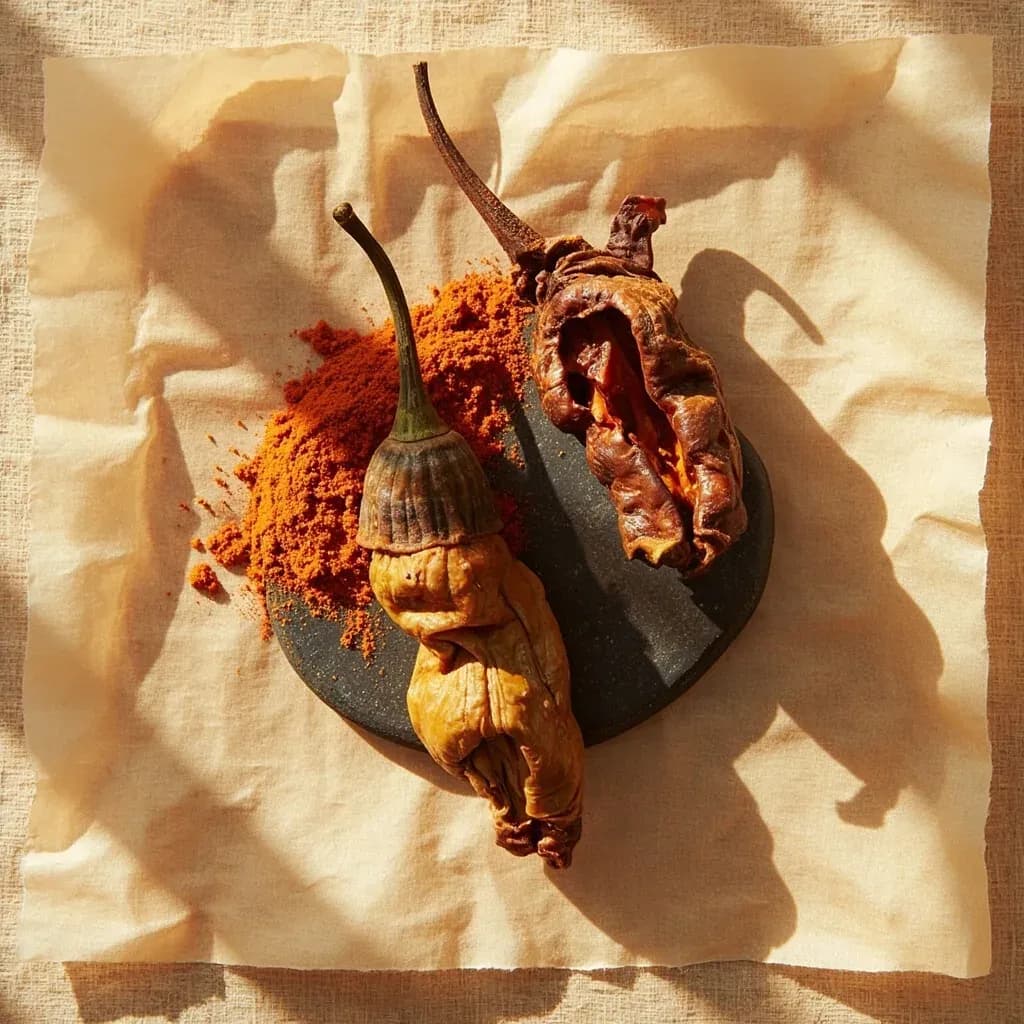
In the kitchen you will encounter it in three forms: whole dried pods (which you toast, rehydrate, or grind as needed), ground powder (convenient but quick to lose aroma), and the canned "chipotles en adobo" — pods rehydrated and packed in a tangy tomato-vinegar sauce that is, in effect, a ready-made chipotle braising liquid. Two commercial types dominate. Morita, smoked for a shorter time and kept on the redder side, is the workhorse: fruitier, brighter, slightly hotter, and the default in U.S. markets and in canned adobo. Meco (sometimes labeled Meco Morita) is smoked longer until it turns dark brown and almost grey; its flavor is deeper, earthier, more bittersweet, and it leans toward moles, black bean pots, and long braises where its profile can soften and integrate.
- Measured in
- g
- Storage
- Dark Cool
Find it in
Suits
Types & varieties
Smoked for a shorter time, kept on the redder side; smaller pod, fruitier, brighter acidity, slightly hotter. The variety most commonly sold in the U.S. and the type typically packed in canned chipotles en adobo.
Smoked longer until pods turn dark brown/grey and develop a leathery texture; deeper, earthier, more bittersweet and less hot. Traditional in northern Mexican cooking, especially moles and long-simmered stews.
Made from the darkest, fully mature red jalapeños; less common, with an intense sweet-smoky character; mainly used in regional Mexican kitchens.
Choosing between Morita and Meco
Most cooks will only ever see Morita, because it is what U.S. distributors stock and what gets packed in adobo. Reach for Morita when you want the smoke to read clearly and quickly: salsas finished in the food processor, vinaigrettes, chipotle mayo, glazes for grilled chicken, and any dish where you want a bright, fruitier note on top. Meco is the quieter, more contemplative chipotle — its smoke has rounded off into something closer to leather and dried tobacco, and it integrates into long-cooked liquids rather than sitting on top of them. It is the right call for mole, birria, dark bean stews, and any braise that will simmer past the hour mark, where Meco's bittersweet depth can dissolve into the sauce without disappearing.
Working with the three forms
Each form of chipotle behaves differently and rewards different handling. Ground powder is the fastest but also the most fragile: it loses aroma within weeks, blooms instantly in warm fat, and is best added early in cooking so its dusty edge cooks off. Whole dried pods are the most expressive: toast them briefly in a dry pan to wake the oils, rehydrate in hot water or broth (and reserve that liquid — it is flavor), then mince, blend into a salsa, or simmer whole in a braise. Canned chipotles en adobo are a separate product in their own right: the pods have already been rehydrated and packed in a seasoned tomato-vinegar sauce, so they bring smoke, heat, acid, and body in a single ingredient. Treat them as a braising paste, a salsa shortcut, or a portion-controlled flavor base that you freeze in cubes for later use.
Common uses
Tips & pitfalls
- Bloom ground chipotle or chopped rehydrated pods in warm oil or fat for 20–40 seconds before adding liquids; this unlocks the fat-soluble smoky compounds and cooks off the raw "dustiness" of powders.
- Rehydrate whole dried chipotles in just-boiled water or hot broth for 20–30 minutes, then reserve the soaking liquid — it carries a lot of flavor and can be added to beans, rice, or sauces.
- Stem, slit, and shake out the seeds if you want a milder result; in dried pods the pith and veins hold a surprising share of the heat.
- Use less than you think. As a rule of thumb, 1 teaspoon chipotle powder ≈ 1–2 minced rehydrated Moritas ≈ 1 tablespoon of canned chipotles en adobo (including some sauce).
- Toast whole dried pods in a dry skillet over medium heat for 15–30 seconds per side before grinding to deepen the aroma — but be careful not to scorch; burnt chipotle turns acrid fast.
- Match the variety to the cook time: Meco suits long, slow braises and dark sauces; Morita is better for quick salsas, finishing, and any dish where you want a brighter, fruitier smoke note.
- Buy whole pods and grind in small batches when possible; ground chipotle loses aroma within weeks, while whole pods keep for many months.
- Freeze leftover canned chipotles en adobo (pods and sauce) in ice-cube trays; each cube is a ready-to-use portion for chilis, soups, and braises.
- Don't substitute smoked paprika 1:1 when you actually need heat. Smoked paprika is mild; combine it with a pinch of cayenne or a hotter chile powder if the dish depends on warmth.
- Balance smoke with sweetness and acid. A touch of honey, brown sugar, lime, or tomato keeps chipotle from tasting ashy or harsh, especially in dry rubs and vinaigrettes.
Nutrition
Nutrition
No USDA FoodData Central match for Chipotle yet. We surface a per-100 g profile once a generic whole-food entry is matched and verified.
In the shops
Matched grocery products
No matched grocery products for Chipotle yet.
Good to know
- Origin
- Mexico; smoke-drying of ripe jalapeños is a pre-Columbian preservation technique. The name comes from Nahuatl chilpoctli ("smoked chili"). Modern production is concentrated in northern states such as Chihuahua and Zacatecas.
- Source pepper
- Fully ripe red jalapeño, left on the plant until it colors fully before smoking.
- Heat (Scoville)
- Roughly 2,500–8,000 SHU, comparable to a fresh jalapeño; perceived warmth varies with variety and how much pith is retained.
- Flavor profile
- Smoky backbone with sweet-fruity undertones — dried plum, tobacco, dark caramel; longer-smoked types add a deeper, raisined bittersweet note.
- Common forms
- Whole dried pods; coarse or fine powder; canned "chipotles en adobo" (rehydrated pods packed in a tangy tomato-vinegar sauce).
- Color
- Tan to deep chocolate-brown; Morita leans reddish-brown, Meco leans dark brown/grey.
- Size
- Whole pods generally 5–10 cm (2–4 in) long, often wrinkled and curved from drying.
- Typical wood for smoking
- Traditionally hardwoods such as mesquite, oak, or pecan in Mexican production; fruitwoods like apple and cherry are also used commercially.
- Storage — whole dried
- Airtight container, cool and dark, 6–12 months. Whole pods re-absorb moisture and can mold in humid conditions.
- Storage — ground
- Sealed jar away from light, 2–3 months for best aroma; loses flavor much faster than whole pods.
- Storage — canned in adobo
- Unopened, shelf-stable. Once opened, refrigerated in a sealed container for 2–3 weeks; frozen in ice-cube trays for months.
- Equivalents
- 1 teaspoon chipotle powder ≈ 1–2 minced rehydrated Moritas ≈ 1 tablespoon canned chipotles en adobo (with sauce); one whole Morita rehydrates to roughly 1 tablespoon minced.
Substitutes
- Smoked paprika (pimentón) + cayenne — Best quick substitute: use 1:1 smoked paprika for the smokiness, then add a pinch of cayenne to recover the heat. Sweet and savory character is close, but the fruity ripe-jalapeño note is missing.
- Ancho powder + smoked paprika — Ancho (dried poblano) gives a similar deep, slightly sweet body; mix roughly 2 parts ancho to 1 part smoked paprika for a rounder, mildly smoky stand-in in rubs and beans.
- Pasilla powder + smoked paprika — Pasilla brings a darker, raisined note that mirrors the Meco profile; combine with smoked paprika for moles and long-cooked sauces.
- Guajillo powder + smoked paprika — Use when you want a tangier, berry-like undertone; a 2:1 guajillo-to-smoked-paprika blend approximates chipotle in lighter salsas and marinades.
- Gochugaru + a few drops of liquid smoke — Not a clean match, but workable in chili crisp or stir-fry sauces where fruity heat plus smoke is acceptable; go light on the liquid smoke, which turns harsh quickly.
- Fresh jalapeño + smoked paprika — For uncooked applications where you still need raw chili bite: use minced fresh jalapeño and season with smoked paprika to evoke the profile without the dried-fruit sweetness.
Pairs with
Also called
chipotle meco · chipotle morita · smoked dried jalapeno · chile chipotle