Produce
Maize / Corn
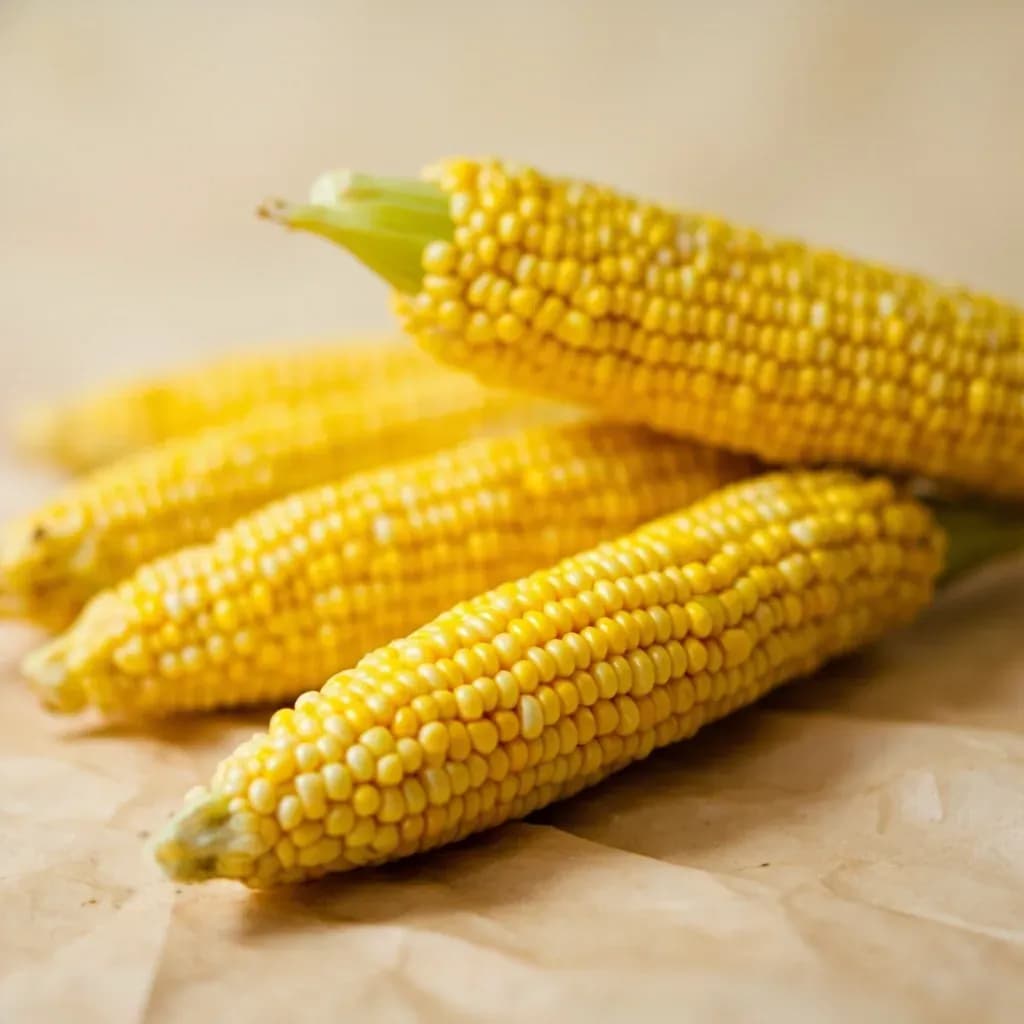
Whole corn kernels and cobs, eaten fresh, dried, ground, or boiled across the world.
Maize, or corn, is a cereal grain eaten fresh on the cob, as boiled or grilled kernels, and dried for grinding into meal and flour. It is a dietary staple across the Americas and Africa, used in everything from grilled street corn to ground porridges. Dried kernels are also nixtamalized for masa or popped.
Maize, known as corn in most English-speaking countries, is a domesticated grass (Zea mays) originating in Mesoamerica where it was cultivated in Mexico roughly 9,000 years ago. It is now one of the world's three most-produced cereals alongside rice and wheat, with the United States, China, and Brazil as leading producers. The vast majority of the global corn crop is field (dent) corn—a processed commodity used for livestock feed, ethanol, and industrial products—while the sweet corn sold fresh represents a tiny fraction. This discrepancy means most cooks interact with corn only through derivatives: cornstarch, cornmeal, corn syrup, and masa.
Corn's behavior in cooking depends heavily on its form and processing. Fresh sweet corn is delicate; its sugars begin converting to starch within hours of harvest, which is why roadside stands taste so different from supermarket corn. Dried corn kernels are dense and require soaking or long cooking, unless nixtamalized—an alkaline treatment with lime (calcium hydroxide) that loosens the hulls, releases bound niacin, and transforms the grain into something genuinely nutritious and pliable. Without nixtamalization, corn-dependent diets risk pellagra, a disease of niacin deficiency. This process is the foundation of tortillas, tamales, pozole, and virtually all traditional Mesoamerican corn cuisine.
The kitchen applications of corn span a remarkable range: eaten fresh on the cob, ground into meal for cornbread and polenta, milled into flour for tortillas, popped into snacks, or processed into starches, syrups, and oils. Each variety—sweet, dent, flint, flour, popcorn, waxy, blue, and white—has distinct characteristics suited to specific preparations. Understanding which variety you have (or need) is the first practical skill in cooking with corn.
- Measured in
- g
- Storage
- Pantry
Types & varieties
High sugar content; eaten fresh, frozen, or canned; varieties include Silver Queen (white), Golden Bantam, Peaches and Cream (bicolor)
Indentation on kernel crown; 90% of US crop; primarily used for livestock feed, ethanol, and processed products (cornmeal, starch, syrup)
Hard outer layer, soft center; multi-colored kernels; traditional in Latin American and Caribbean cuisine for hominy, pororoché, and polenta; longer shelf life than dent corn
Soft, easily ground starch; used for corn tortillas and baked goods in Native American cuisine
Specialty variety; moisture inside kernels converts to steam when heated, causing explosion; must have ~14% moisture content to pop properly
High amylopectin (waxy) starch; used as thickener in sauces and as a food-grade adhesive
Pigmented with anthocyanins; used in Pueblo and Southwestern cuisine; slightly nutty, denser texture; common in blue corn chips and atole
Milder, sweeter flavor than yellow; preferred in Southern US and Latin American cuisine for tortillas and hominy; varieties include White Sugary and White Argentine
Nixtamalization: The Process That Made Corn Civilization Possible
Nixtamalization—cooking dried corn kernels in an alkaline solution of slaked lime (calcium hydroxide) or wood ash—is one of the most significant food-processing discoveries in human history. The alkaline environment swells the kernels, loosens the germ and hull, and chemically alters the endosperm structure. More critically, it liberates bound niacin (vitamin B3), making it bioavailable and preventing pellagra—a devastating disease causing dermatitis, diarrhea, and dementia that plagued corn-dependent populations for centuries.
The nixtamal produced can be ground wet into masa (used for tortillas, tamales, pupusas, and arepas) or ground dry into masa harina (shelf-stable flour reconstituted with water). Hominy is whole nixtamalized corn with the hulls and germs removed, giving it the characteristic chewy texture essential for pozole, hominy grits, and soups. Traditional nixtamalization uses cal, cal viva (unslaked lime), or wood ash; modern commercial production typically uses food-grade calcium hydroxide. The ratio is roughly 1 tablespoon lime per pound of dried corn, simmered in water for 20–30 minutes until the hulls loosen and the kernels turn bright yellow with a distinct cooked-corn aroma.
- Without nixtamalization, corn is nutritionally deficient in niacin and lysine—an essential amino acid.
- Masa harina is not interchangeable with regular cornmeal; only nixtamalized corn yields the proper texture and flavor for tortillas.
Buying, Storing, and Prep
For fresh sweet corn, buy unhusked ears with bright green husks that cling tightly—loose or dried husks indicate age. Silk should be golden and slightly sticky to the touch. If the husk feels lightweight, the ear may be underdeveloped. Store unhusked corn in the refrigerator in a plastic bag; do not remove husks until ready to cook. The window for peak sweetness is narrow—use within 1–2 days for best flavor.
To remove kernels efficiently, place the cleaned ear on its flat base and slice downward with a sharp chef's knife, rotating a quarter-turn after each pass. For deeper cooking applications like creamed corn or succotash, use the back of the knife to scrape out the milky liquid (the "milk")—this starchy liquid adds body and flavor.
Frozen corn should be cooked from frozen; thawing produces mushy results in most preparations. Canned corn works well in soups, casseroles, and salads where its softer texture is an asset, not a liability. For dried corn (flint or field varieties), you need either a long soak (8 hours overnight) or pressure cooking (40 minutes at high pressure) before the kernels become tender enough to eat.
- Test freshness by puncturing a kernel with your fingernail—it should squirt milky liquid. Watery or dry kernels are past prime.
- Corn stored at room temperature loses up to 50% of its sugar within 24 hours; refrigeration dramatically slows this conversion.
Common uses
Tips & pitfalls
- Cook corn as close to harvest as possible—sugar converts to starch within 24–48 hours at room temperature; refrigerate unhusked immediately.
- To remove kernels cleanly: stand ear vertically on its cut base and slice downward with a sharp chef's knife, rotating as you go.
- Boiling sweet corn robs water-soluble nutrients (B vitamins, vitamin C); grill or roast to preserve them and develop caramelized sugars.
- For tortillas and nixtamalized products, cooking with lime (calcium hydroxide) releases niacin and makes lysine available—critical for preventing pellagra in corn-dependent diets.
- Do not soak shucked corn in water; it leaches sugars and flavor—store dry in airtight containers in the refrigerator.
- Popcorn kernels must have 13.5–14% moisture for optimal popping; old or improperly stored kernels produce many unpopped seeds (old maids).
- Frozen corn: do not thaw before cooking; add directly to soups, stir-fries, or boiling water to minimize mushiness.
- Common mistake: overcooking sweet corn—4–6 minutes in boiling water is sufficient; longer yields tough, mealy kernels.
Nutrition
Energy
360 kJ · per 100 g
Where the calories come from
Protein
3.2g
6% DV
Carbs
19g
7% DV
Fat
1.2g
2% DV
Fiber
2.7g
10% DV
Sugars
3.2g
of which
Sodium
15mg
1% DV
Source · USDA FoodData Central · Corn, sweet, white, raw
View on FDC →In the shops
Matched grocery products
No matched grocery products for Maize / Corn yet.
Good to know
- Scientific name
- Zea mays
- Origin
- Mesoamerica, domesticated in Mexico ~9,000 years ago
- Family
- Poaceae (grass family)
- Peak season
- Fresh sweet corn: summer (June–September in Northern Hemisphere)
- Flavor
- Sweet and milky (sweet corn); starchy, mildly sweet (field corn); nutty (flint varieties)
- Primary forms
- Fresh on the cob, dried kernels, ground (meal, flour, masa), canned, frozen, corn syrup/solids
- Key nutrients
- Carbohydrates, dietary fiber, B vitamins (thiamine, folate), lutein and zeaxanthin (eye-health antioxidants)
- Storage (fresh)
- Unhusked in refrigerator 1–2 days; sugar converts to starch rapidly after harvest
- Yield
- 1 medium ear ≈ ¾ cup kernels; 1 cup kernels ≈ 2 medium ears
- Common processing
- Nixtamalization (lime treatment for masa), dry or wet milling, hominy
Substitutes
- Hominy — For recipes requiring nixtamalized corn (pozole); similar chewy texture and alkaline-treated flavor
- Canned or frozen corn — For fresh sweet corn; taste is diminished but acceptable for cooked dishes, soups, and salads
- Polenta (coarse cornmeal) — For cornbread or hot cereal; requires cooking with liquid
- Rice or barley — For soups and salads; different texture but neutral flavor
- Cornstarch or arrowroot — As a thickener; not equivalent for eating corn on the cob or salads
- Wheat berries — For salads and grain bowls; similar chewy bite when cooked
Pairs with
Also called
Kharang · Corn · Maize (Corn)
Appears in these dishes
Related

Tomato
Juicy, sun-sweet fruit for sauces, salads, and slow-cooked depth

Yellow Onion
The aromatic backbone of soups, sofritos, and braises

Garlic
Pungent cloves that perfume nearly every savory dish

Lemon
Bright, acidic citrus that wakes up almost any dish

Potato
Humble, hearty staple — roast, mash, fry, or boil

Carrot
Sweet, crunchy root — raw, roasted, or the base of a sofrito

Cucumber
Cool, crisp, and watery — for salads, pickles, and tzatziki

Lettuce
Crisp leaves for salads, wraps, and a fresh crunch