
Natural form
Fresh ears of corn with husks partially pulled back to reveal golden yellow kernels.
Shows the whole cob in its harvested state so readers can identify fresh corn at a market or farm stand.
Produce
Fresh Corn
Sweet corn on the cob or as kernels, grilled, boiled, or stirred into stews and salads.
Fresh corn is the tender, sweet kernels of the maize plant, eaten on the cob or cut off and cooked. It is grilled as street-food elote, boiled, added to soups, stews, and salads, and ground fresh in some Latin American dishes. Its sugars convert to starch after harvest, so it is sweetest when eaten soon after picking.
Fresh corn is Zea mays indentata, an annual vegetable (biologically a grain) prized for its sweet, milky kernels. Unlike field corn grown for feed or industrial use, sweet corn is harvested young, while the kernels are still tender and contain high levels of natural sugars. What distinguishes great fresh corn from mediocre corn is almost entirely a matter of time: from the moment an ear is picked, its sugars begin converting to starch, and within 24 hours at room temperature, roughly half that sweetness vanishes. This is not a subtle degradation—it is the difference between an ingredient that tastes of summer and one that tastes of nothing.
For this reason, serious cooks treat fresh corn with urgency. The ideal is to buy it the morning it was harvested, shuck it minutes before cooking, and eat it within the hour. Farmers markets and stands that move high volume are your best sources; supermarket corn, often already 24–48 hours old, is acceptable for cooked dishes where it plays a supporting role but disappointing when corn is the star. The thumbnail test—pressing a kernel until milky liquid squirts out—is the most reliable indicator of freshness, more trustworthy than husk color or silk appearance.
The good news is that corn's sweetness and texture make it extraordinarily versatile. It transitions seamlessly from a simple buttered side dish to a component in complex salads, soups, and gratins. Its flavor partnerships are broad: it welcomes richness (butter, cream, cheese), brightness (lime, cilantro, chili), and savory depth (bacon, shrimp, black beans) with equal grace. When treated as the seasonal treasure it is, fresh corn is one of the most rewarding ingredients of summer.
- Measured in
- piece
- Storage
- Fridge
Types & varieties
Extra-high sugar content; crisper, waterier kernel texture; holds sweetness longer after harvest
Moderate sugar boost with tender kernel texture; popular for home gardens and farmers markets
Combines tenderness with sweetness; good all-purpose fresh-eating variety
Classic sweet corn flavor; tender kernels; best eaten day of purchase
White kernels, often considered sweeter and more tender by enthusiasts; varieties include Silver Queen
Mix of yellow and white kernels on same ear; combines flavor profiles of both
Heirloom yellow variety introduced 1902; strong corn flavor; smaller ears, more variable germination
Bicolor su/se hybrid; tender with good sweetness; widely available
Why Freshness Is Everything
The sugar-to-starch conversion in corn is enzymatic and temperature-dependent. Cold storage slows it dramatically—which is why refrigerating unhusked corn extends its usable life—but it does not stop it. Even properly stored corn loses sweetness with each passing hour. This is not a matter of opinion; it is plant physiology. The implication for the home cook is direct: plan your corn purchase and preparation as a single event when corn is the centerpiece of the meal. For soups, salads, and casseroles where corn plays a supporting role, less fresh corn is more acceptable because other ingredients carry the flavor.
- Buy corn the day you plan to cook it whenever possible
- Refrigerate unhusked corn immediately after purchase
- Husk only what you can use in the next few minutes
The Anatomy of an Ear
An ear of corn typically contains 400–800 kernels arranged in 16–22 rows. The kernels grow on a central cob (the pithy core), and each kernel is individually attached to a silk thread that runs through the cob to the tip. Silk emerges from the husk tip; its condition indicates pollination success and kernel development. Plump, uniformly sized kernels without gaps indicate good pollination. The husk protects the kernels from pests and moisture loss, which is why you should never remove it until just before cooking.
- More rows generally indicate a well-pollinated, full ear
- Gaps or missing kernels indicate poor pollination, not age
- The stem end should feel moist and cut cleanly, not dried out
Common uses
Tips & pitfalls
- Buy corn in season and use it the same day; out-of-season corn is starchy and lacks sweetness.
- Do not husk corn until you are ready to cook or eat it—exposure to air accelerates sugar-to-starch conversion.
- To test freshness: press a thumbnail into a kernel; it should squirt milky liquid. Watery or dry liquid indicates age.
- For boiling, bring a large pot of water to a rolling boil, submerge shucked ears, and cook exactly 4–5 minutes for tender-crisp kernels. Overcooking beyond 7–8 minutes makes them tough and mealy.
- For grilling, peel back husks, remove silk, replace husks as a handle, brush with oil or butter, and grill over medium-high heat 12–15 minutes, turning occasionally.
- When cutting kernels off the cob for recipes, use a bundt cake pan or insert ear in an angel-food pan—the center catches the runoff. Stand the ear upright and slice downward with a sharp knife.
- Sweet corn freezes well only if blanched first; raw frozen corn becomes tough and discolored.
- Do not add salt to boiling water—salt can toughen the kernels. Add butter and salt after cooking.
Nutrition
Energy
360 kJ · per 100 g
Where the calories come from
Protein
3.2g
6% DV
Carbs
19g
7% DV
Fat
1.2g
2% DV
Fiber
2.7g
10% DV
Sugars
3.2g
of which
Sodium
15mg
1% DV
Source · USDA FoodData Central · Corn, sweet, white, raw
View on FDC →In the shops
Matched grocery products
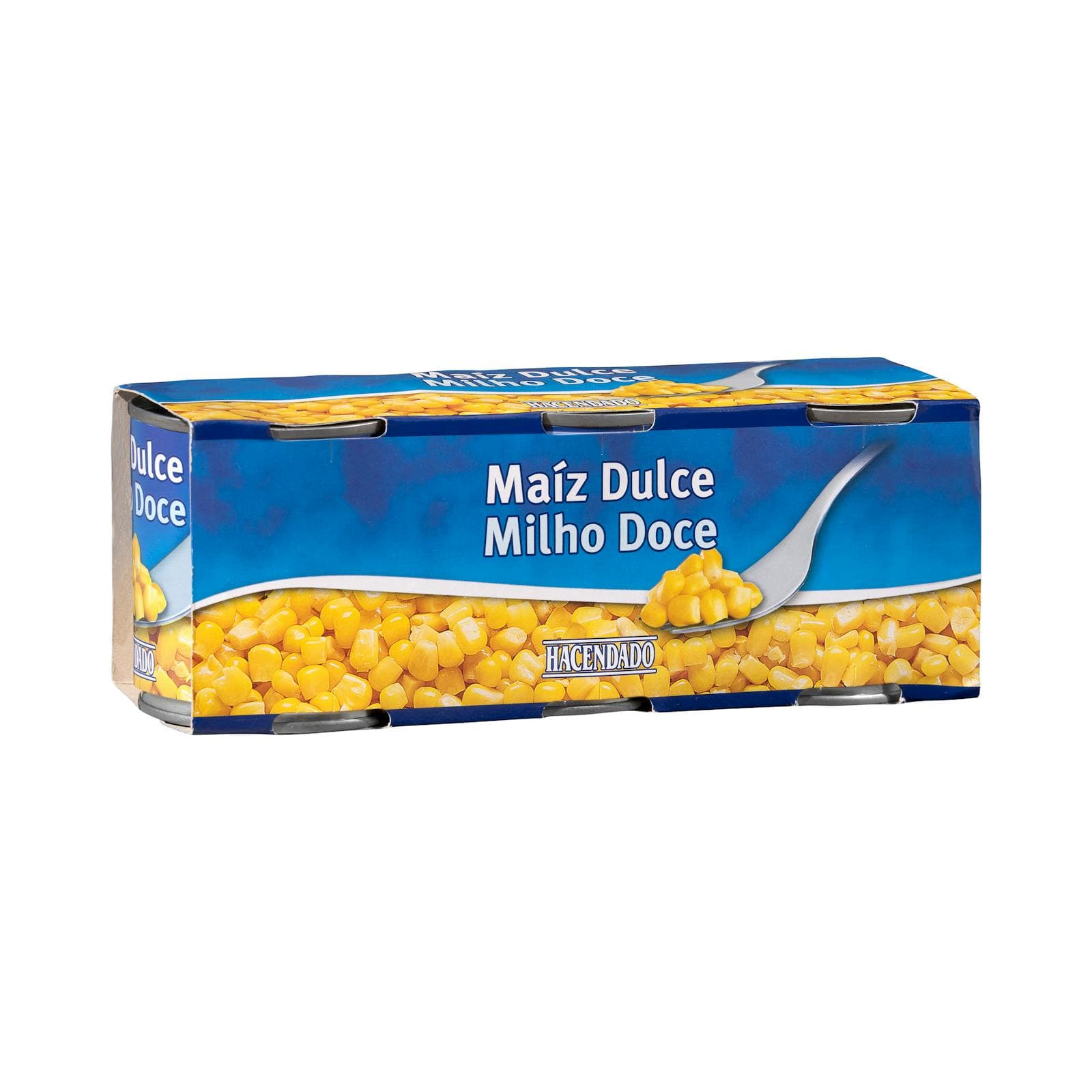 €1.55
€1.55Sweet Corn
Hacendado · 450 g · Mercadona
 €1.59
€1.59Sweet Corn Bonpreu
BONPREU · kg · Bonpreu
 €2.49
€2.49Sweet Corn Bonpreu
BONPREU · kg · Bonpreu
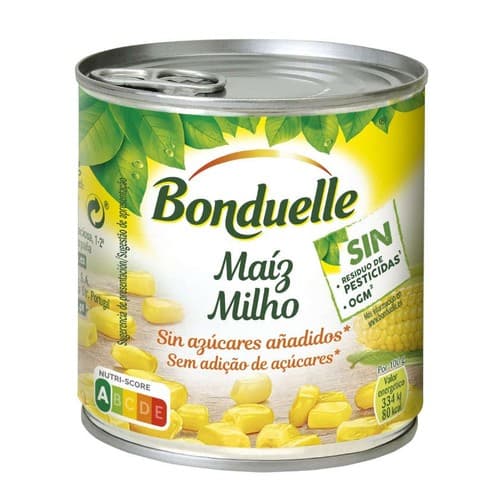 €1.99
€1.99Bonduelle Sweet Corn
BONDUELLE · kg · Bonpreu
 €2.99
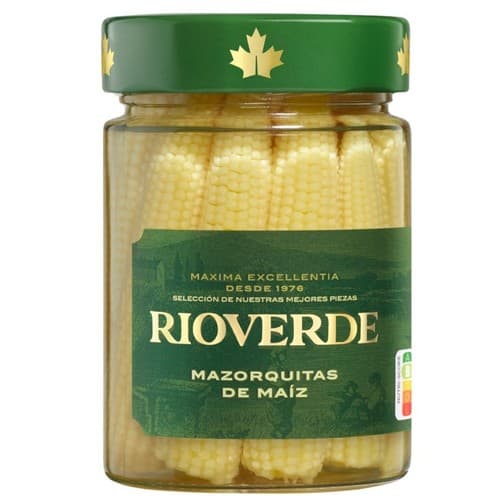
€2.99Pickled Corn Kernels
RIOVERDE · kg · Bonpreu
 €3.15
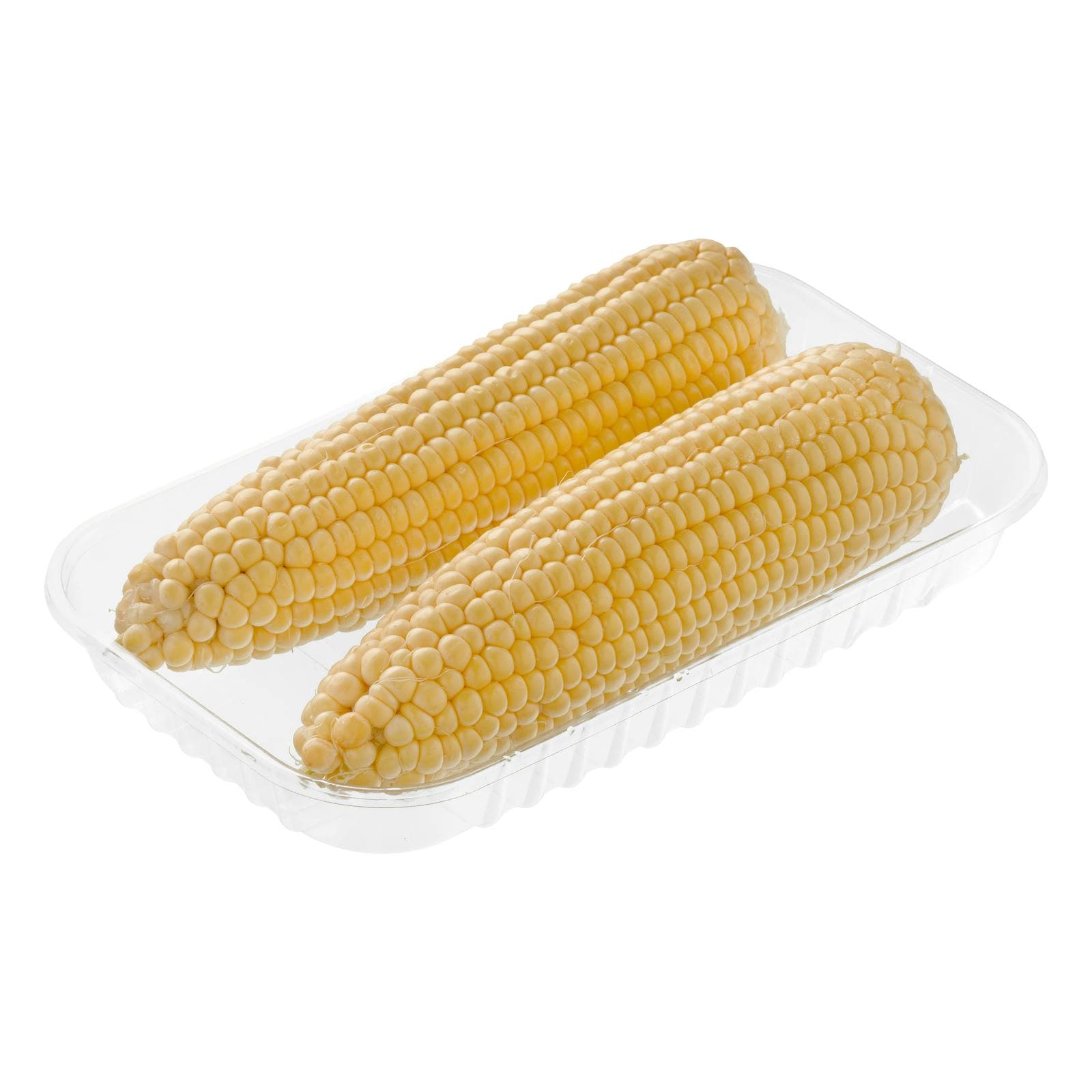
€3.15Sweet Corn on the Cob
2 ud · Mercadona
Good to know
- Type
- Vegetable (annual grain, Zea mays indentata)
- Peak Season
- May through September in Northern Hemisphere; July–August in most U.S. regions
- Primary Colors
- Yellow, white, or bicolor (yellow and white mixed)
- Flavor Profile
- Sweet, milky, fresh; sugar converts to starch rapidly after harvest
- Storage
- Refrigerate unhusked up to 1–2 days; do not shuck until ready to use
- Freezing
- Blanch kernels 4 minutes, cool, drain, and freeze up to 8 months
- Yield
- One medium ear yields approximately ¾ to 1 cup kernels
- Nutritional Note
- Good source of fiber, B vitamins (especially thiamin), lutein, and potassium; moderate sugar content when fresh
- Sugar-to-Starch Conversion
- At 68°F, a harvested ear loses roughly 50% of its sugar content within 24 hours
- Selection
- Look for bright green, tightly adhering husks; moist stem end; kernels that are plump and release milky liquid when pressed
Substitutes
- Frozen corn (blanched, plain) — Acceptable in soups, stews, and salads; lacks fresh sweetness and tender-crisp texture; do not need to cook, just thaw
- Canned corn (drained) — Mushy texture, tinny flavor; suitable only as a last resort in cooked dishes; rinse before using
- Hominy (dried corn, nixtamalized) — Completely different flavor and chewy texture; used in pozole and menudo, not interchangeable for fresh corn uses
Pairs with
Also called
Elote · Choclo · Mealie · Fresh Maize · Mahindi · Sweet Corn · Sweetcorn · Corn Kernel · Maize
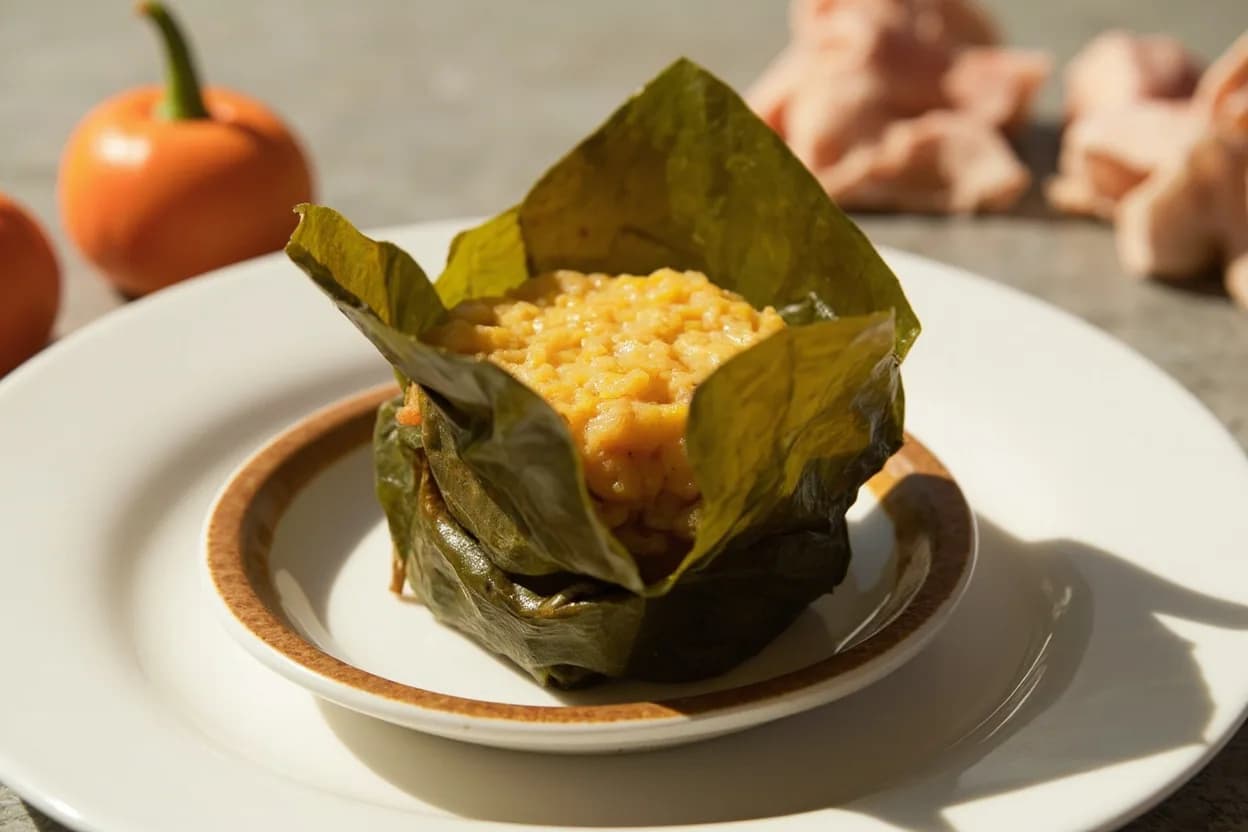
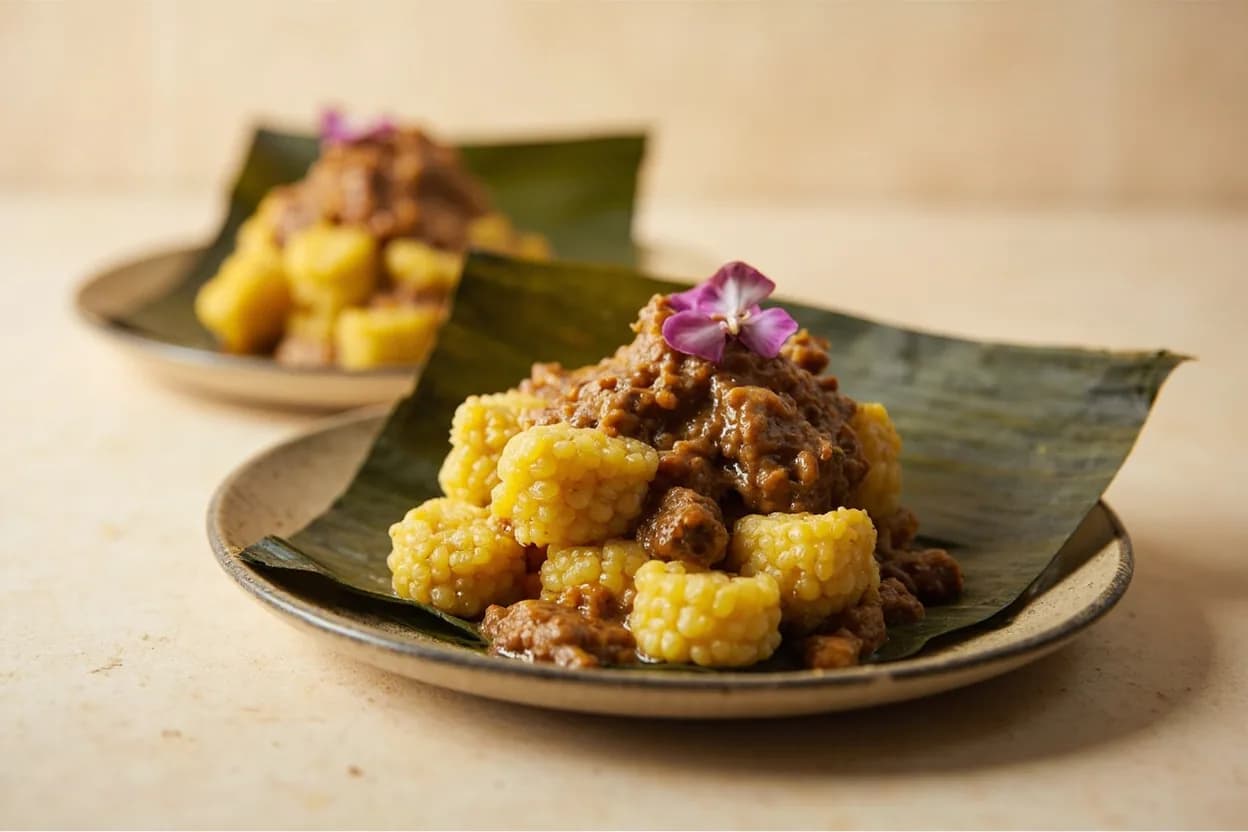
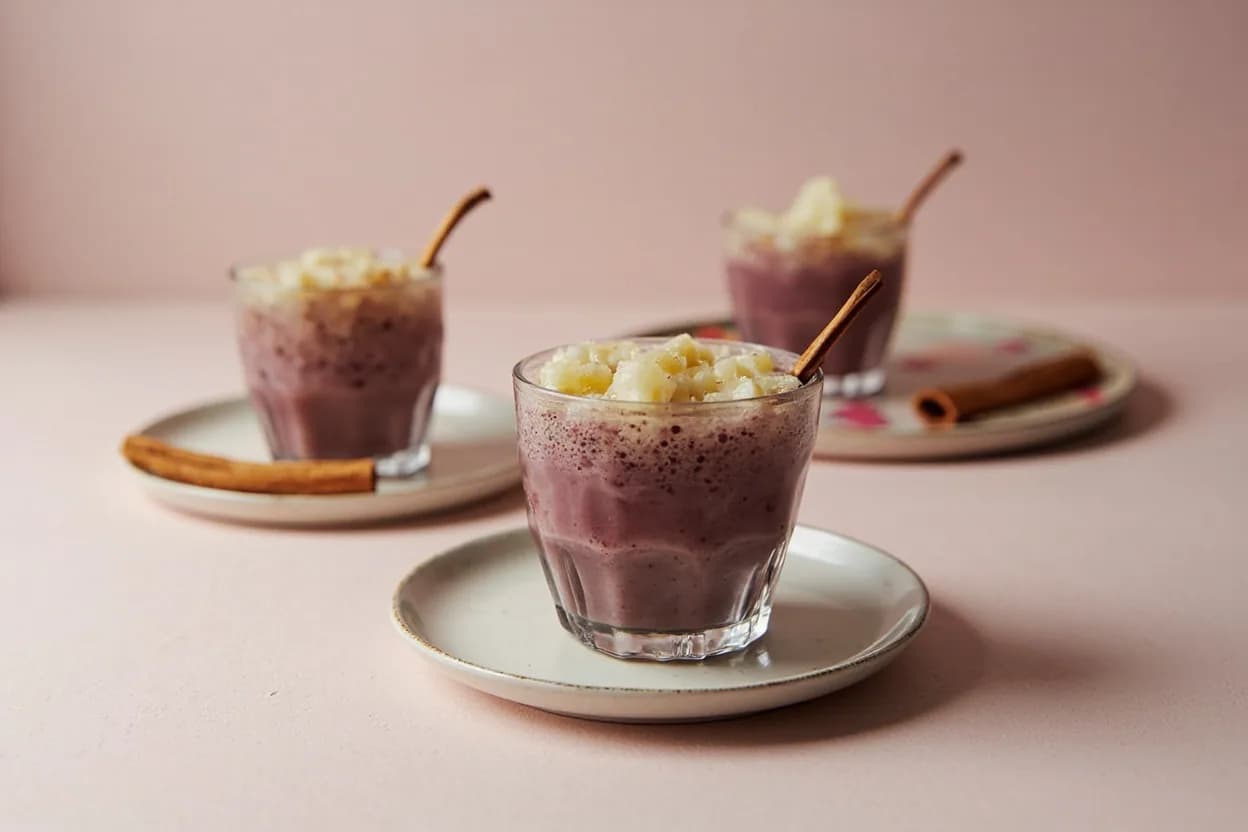
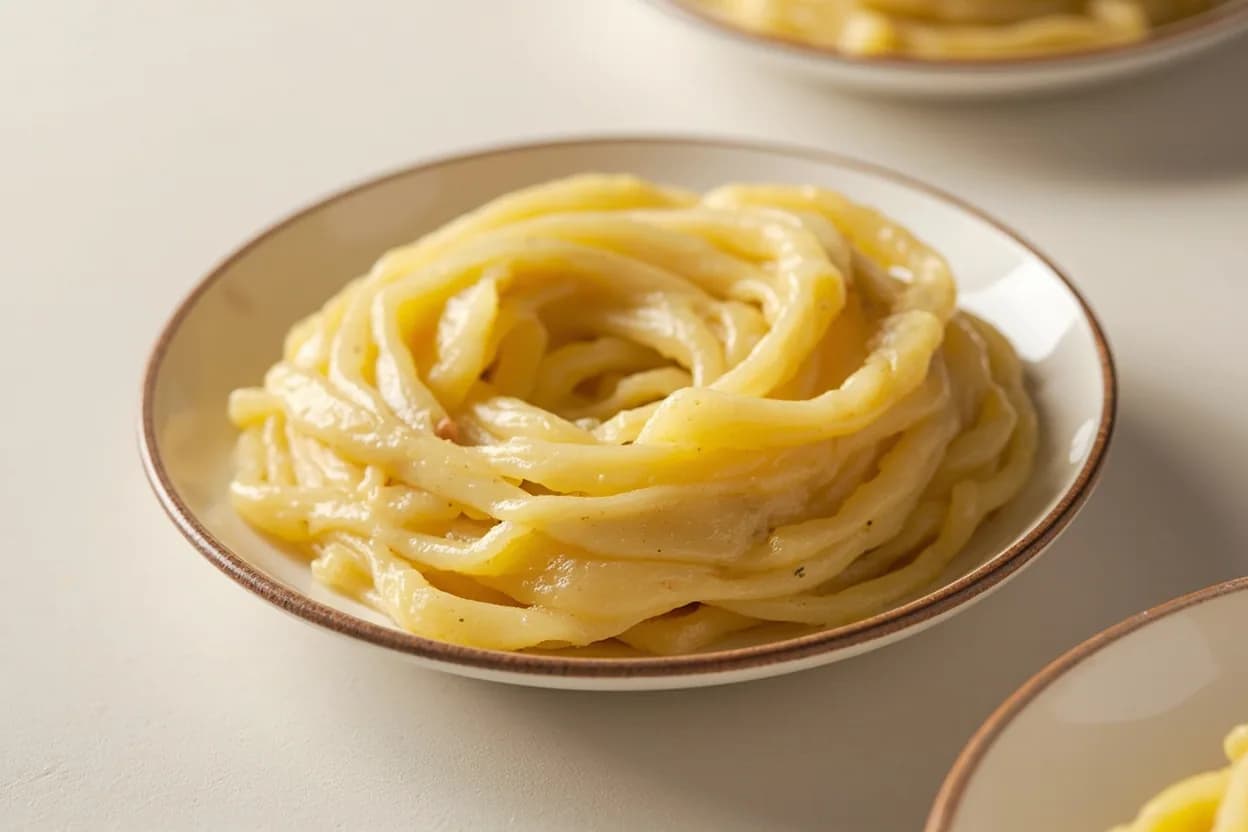
Appears in these dishes
Related
Tomato
Juicy, sun-sweet fruit for sauces, salads, and slow-cooked depth
Yellow Onion
The aromatic backbone of soups, sofritos, and braises
Garlic
Pungent cloves that perfume nearly every savory dish
Lemon
Bright, acidic citrus that wakes up almost any dish
Potato
Humble, hearty staple — roast, mash, fry, or boil
Carrot
Sweet, crunchy root — raw, roasted, or the base of a sofrito
Cucumber
Cool, crisp, and watery — for salads, pickles, and tzatziki

Lettuce
Crisp leaves for salads, wraps, and a fresh crunch