Stored
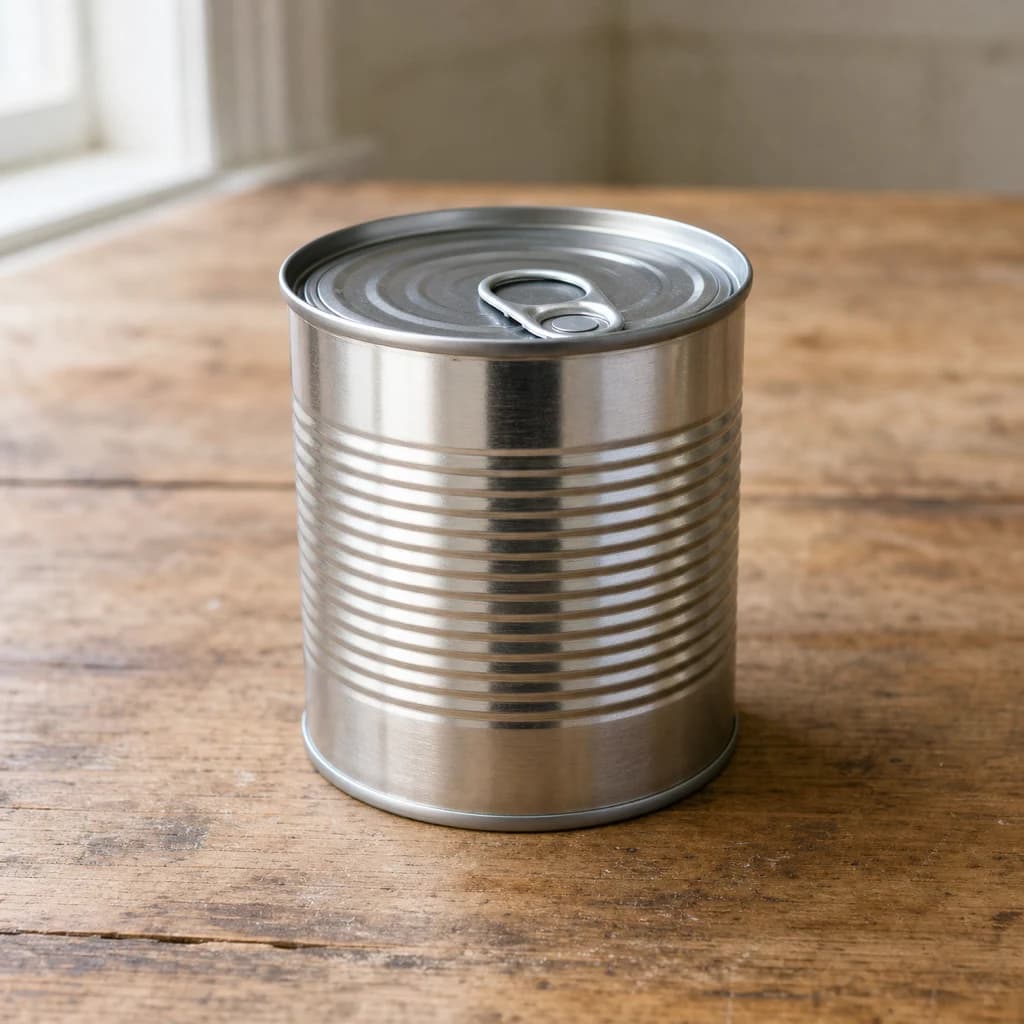
A standard tin of canned corn, the familiar pantry staple ready to open and use.
Shows the recognizable sealed can form that defines this ingredient as a pantry product, distinct from fresh or frozen corn.
Produce
Canned Corn
Cooked sweet corn kernels preserved in a can, ready to add to salads, soups and casseroles.
Canned corn is sweet corn kernels that have been cooked and sealed in a can with brine, ready to use straight from the tin. It is a convenient pantry staple stirred into salads, soups, chowders, casseroles, and Mexican street-corn dishes. Draining and a quick sauté in butter restores some of the texture and sweetness of fresh corn.
Canned corn is a pantry workhorse made from sweet corn (Zea mays) that has been blanched, packed in water with salt, and pressure-cooked to sterilize and preserve. The canning process fully cooks the kernels, making them ready to eat straight from the can. This convenience comes with a trade-off: the heat softens cell walls and dulls the bright, snappy sweetness of fresh corn, resulting in a more tender, uniformly soft texture and a flavor that leans salt-forward unless you adjust. Understanding this behavior is key to using canned corn well—it excels in preparations where its tenderness is an asset, not a liability.
The canning liquid is an undervalued byproduct. It contains dissolved starches and sugars that bleed from the kernels during processing, making it useful as a partial substitute for water or stock in corn chowders, cornbreads, and braised dishes. Whole-kernel corn keeps individual kernels intact and rinses clean for salads and casseroles, while cream-style corn has partially pureed kernels whose starches thicken the liquid—ideal for chowders, pot pies, and any dish that needs body. Knowing which style you have, and when to use each, separates competent cooks from careless ones.
Canned corn is not a last resort; it is a specific ingredient with specific strengths. Its year-round availability, long shelf life (2–5 years unopened), and zero-prep convenience make it indispensable for quick weeknight cooking. Treat it as a finished ingredient—already cooked, already seasoned—and your dishes will reflect that understanding. Add it late to soups and stews, season deliberately around its inherent saltiness, and when you want browning or crisping, take the extra step to pat it dry before it hits the pan.
- Measured in
- g
- Storage
- Pantry
Types & varieties
Individual kernels remain intact; most versatile; rinses clean for salads and casseroles
Kernels partially pureed; starches thicken the liquid; ideal for chowders, pot pies, and casseroles requiring body
Standard yellow sweet corn; most widely available; balanced sweetness and firm texture
Milder, more delicate sweetness than yellow; less common in cans; found in specialty brands
Bred for higher sugar content; retains sweetness better than standard varieties; less starchy
No synthetic pesticides or fertilizers; may have lower sodium; similar taste and texture to conventional
Reduced sodium by 25–75%; rinse well to remove residual sodium; slightly less flavorful without seasoning adjustment
The Canning Liquid: Do Not Discard It
The liquid in canned corn is not waste water. During blanching and pressure cooking, starches and sugars leach from the kernels into the liquid, creating a mild, slightly sweet, starchy liquid. Use it as a partial substitute for water or stock in corn chowders, cornbread batters, or braised vegetable dishes. It adds body and corn flavor without diluting the dish the way plain water would.
- Substitute up to half the liquid in cornbread or corn muffin batter
- Use in place of water when poaching eggs with corn hash
- Add to vegetable stock for soups where corn is a starring ingredient
Whole Kernel vs. Cream-Style: Choosing Strategically
The choice between whole-kernel and cream-style is not arbitrary—it fundamentally changes a dish's texture and behavior. Whole-kernel corn maintains structural integrity and visual appeal, making it correct for salads, grain bowls, and any dish where you want distinct kernels. Cream-style corn is a built-in thickener whose starchy liquid and broken kernels create body and cohesion—essential for chowders, pot pies, and casseroles. Mixing both styles in equal parts gives you both texture and body, a technique common in Southern-style corn casseroles.
- Use whole-kernel for cold applications: salads, salsas, grain bowls
- Use cream-style for hot, bound dishes: chowders, pot pies, scalloped corn
- Combine both for casseroles that need both structure and thickness
Common uses
Tips & pitfalls
- Drain and rinse under cool water to reduce sodium by 25–40%; pat dry before sautéing or frying for better browning
- Do not overcook: corn is already fully cooked; add to soups and stews in the last 5–7 minutes of simmering to preserve kernel integrity
- Save the canning liquid: it is starchy and flavorful; use it as a partial substitute for water or stock in corn chowders and breads
- For crispy texture, spread drained kernels on a paper towel, let surface moisture evaporate 5 minutes, then sauté in a hot, lightly oiled pan without stirring for 2–3 minutes
- Season deliberately: since canned corn contains salt, add it early when building a dish so flavors integrate, then adjust at the end
- When a recipe specifies fresh corn, substitute 1 can (about 1.5 cups) drained corn per 2 large ears of raw corn
- Combine whole-kernel and cream-style to balance texture and body in casseroles and soups
- Store opened cans in glass or plastic containers, never in the open can; metal leaches faster when exposed to air in refrigeration
Nutrition
Energy
314 kJ · per 100 g
Where the calories come from
Protein
2.3g
5% DV
Carbs
18.2g
7% DV
Fat
0.6g
1% DV
Sodium
347mg
15% DV
Source · USDA FoodData Central · approx. Corn with red and green peppers, canned, solids and liquids
View on FDC →In the shops
Matched grocery products
 €1.55
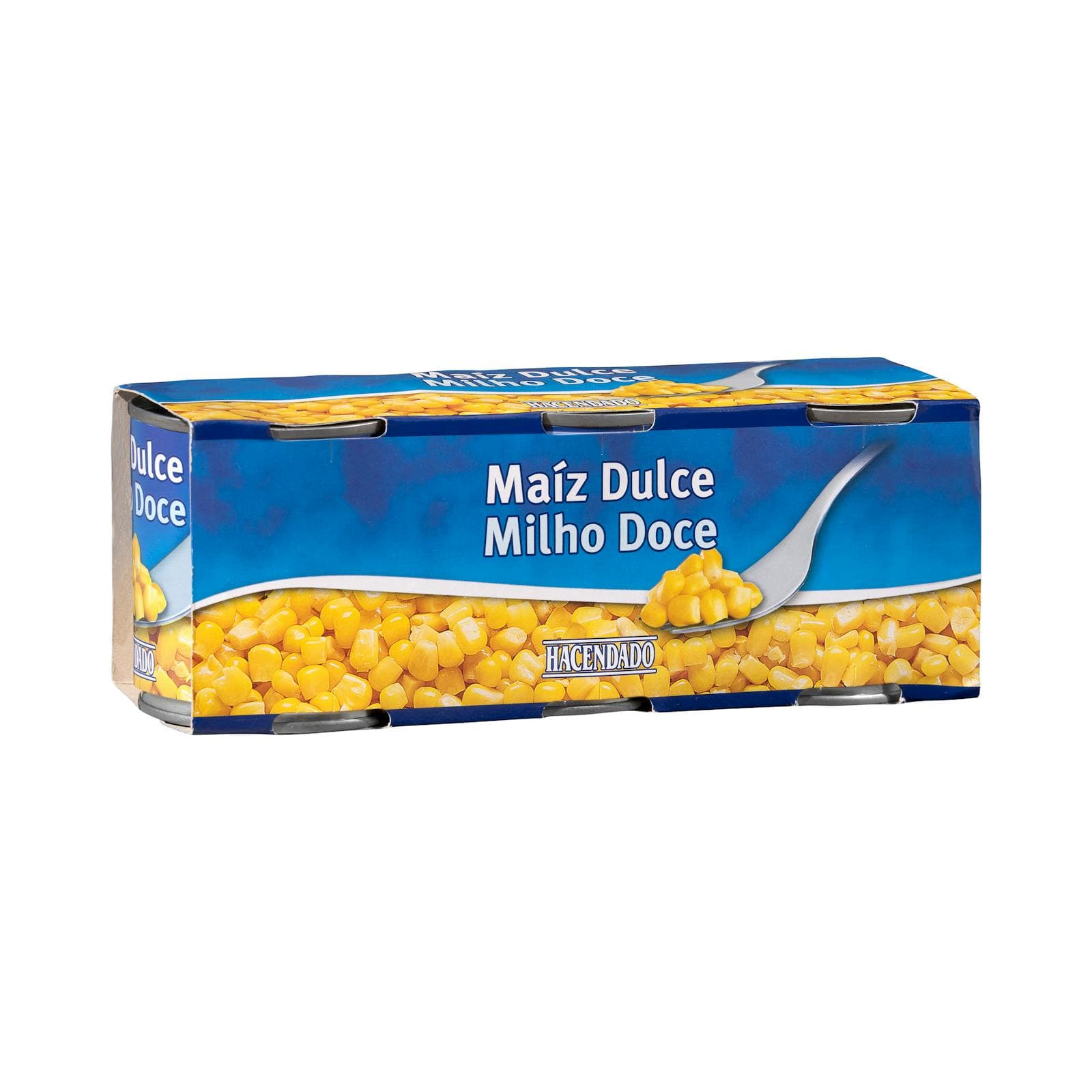
€1.55Sweet Corn
Hacendado · 450 g · Mercadona
 €1.59
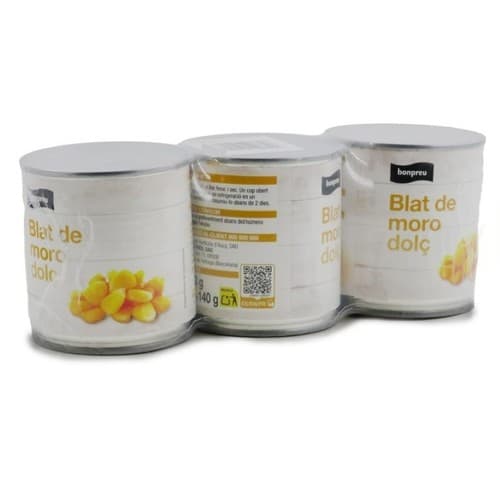
€1.59Sweet Corn Bonpreu
BONPREU · kg · Bonpreu
 €2.49
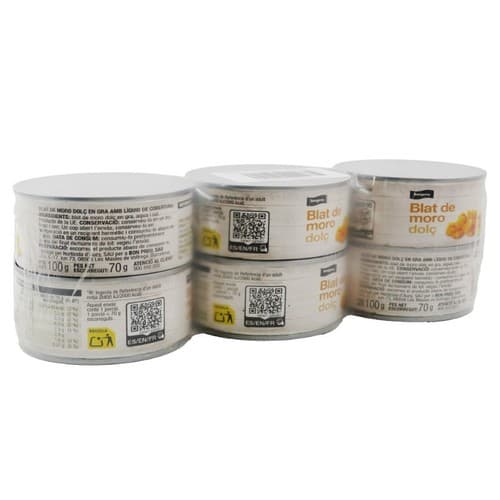
€2.49Sweet Corn Bonpreu
BONPREU · kg · Bonpreu
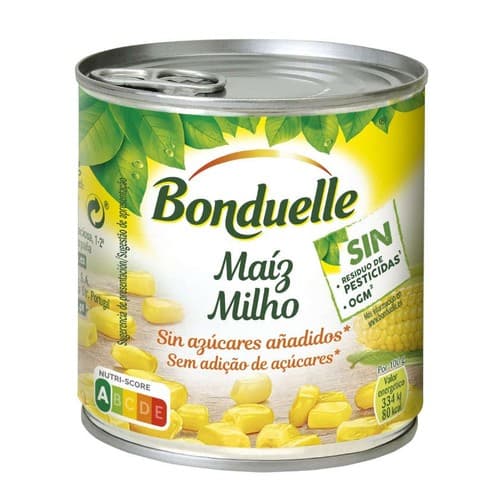 €1.99
€1.99Bonduelle Sweet Corn
BONDUELLE · kg · Bonpreu
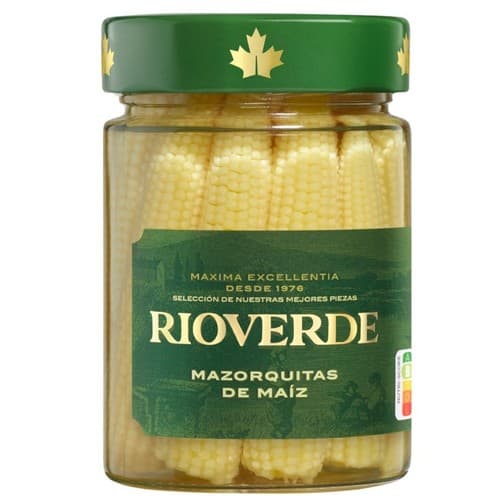 €2.99
€2.99Pickled Corn Kernels
RIOVERDE · kg · Bonpreu
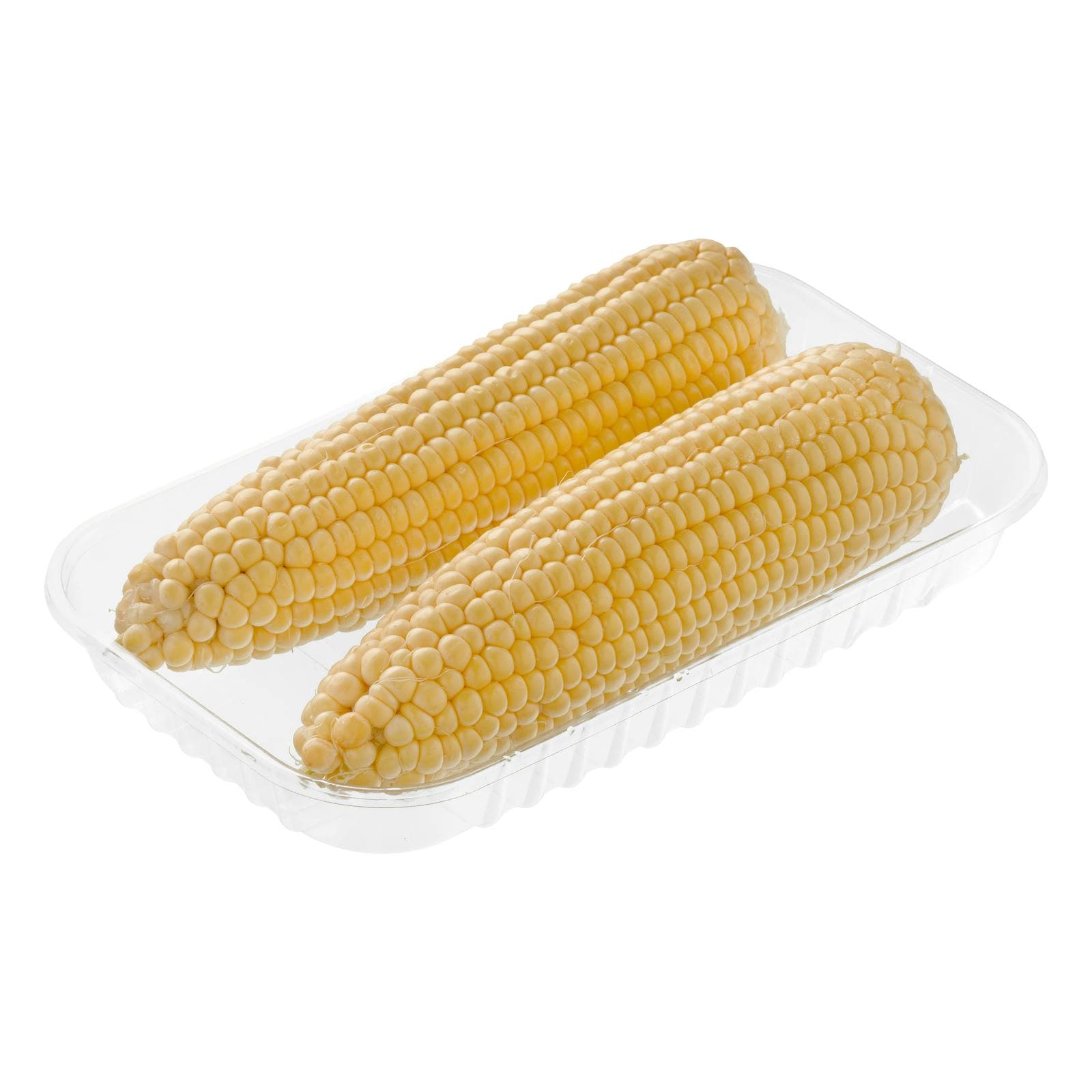 €3.15
€3.15Sweet Corn on the Cob
2 ud · Mercadona
Good to know
- Primary Type
- Sweet corn (Zea mays) kernels preserved in cans
- Canning Process
- Corn is blanched, packed in cans with water and salt, and pressure-cooked to sterilize and preserve
- Typical Can Size
- 15–16 oz (425–450 g) in the US; 400–425 g in metric countries
- Sodium Content
- Typically 350–500 mg per 1/2 cup serving; low-sodium varieties available (under 140 mg)
- Shelf Life (Unopened)
- 2–5 years from packaging date
- Flavor Profile
- Sweet, slightly muted compared to fresh; uniformly tender; salt-forward unless low-sodium
- Form
- Ready to eat; already fully cooked during canning
- Opened Storage
- 3–4 days refrigerated in a sealed glass or plastic container; never leave in the open metal can
Substitutes
- Frozen Corn — Thawed frozen corn has a fresher, brighter flavor and similar texture; use equal volume; does not need draining but may need patting dry
- Fresh Corn Kernels — Cut raw from cob for crisp, sweet flavor; requires cooking if serving warm; 2 medium ears yield about 1.5 cups, equivalent to one 15-oz can
- Roasted Fresh Corn — Charred kernels have smokier, more complex flavor; roughly equivalent volume; adds caramelization that canned lacks
- Hominy (Drained) — Larger, chewier kernels with a more neutral, starchy flavor; not sweet; works in soups and stews but not as a direct swap for corn's sweetness
- Canned Mixed Vegetables — Contains corn along with peas, carrots, and beans; useful in emergency soups and casseroles but introduces other flavors and textures
- Frozen Corn Thawed — Nearly identical to canned in convenience; superior flavor if good quality; still requires draining and rinsing for sodium reduction
Pairs with
Also called
Sweetcorn · Tinned Corn
Related

Tomato
Juicy, sun-sweet fruit for sauces, salads, and slow-cooked depth

Yellow Onion
The aromatic backbone of soups, sofritos, and braises

Garlic
Pungent cloves that perfume nearly every savory dish

Lemon
Bright, acidic citrus that wakes up almost any dish

Potato
Humble, hearty staple — roast, mash, fry, or boil

Carrot
Sweet, crunchy root — raw, roasted, or the base of a sofrito

Cucumber
Cool, crisp, and watery — for salads, pickles, and tzatziki

Lettuce
Crisp leaves for salads, wraps, and a fresh crunch