Grains & Rice
Dent Corn
Starchy field corn with a dented kernel top, ground for cornmeal, masa, and feed.
Dent corn is named for the small dent that forms in the top of each kernel as its soft starch dries. It is the most widely grown corn type, used for cornmeal, grits, masa, tortillas, animal feed, and industrial products rather than eaten fresh. Its high starch content makes it ideal for milling.
Dent corn (Zea mays indentata) is the workhorse of the corn world—the primary variety grown globally for processing into cornmeal, masa, cornstarch, animal feed, and industrial products. Unlike sweet corn, which is harvested immature and sugary, dent corn is allowed to fully mature and dry in the field. The characteristic dent that gives this corn its name forms as the soft starch in the kernel crown shrinks during the final drying stage, leaving a visible indentation at the top of each kernel. The kernel structure is dual: a hard starch layer surrounds a softer, powdery starch center, making it ideal for grinding and processing. Dent corn dominates global production not because it tastes better fresh—it doesn't, and is never eaten that way—but because its high starch content, dry texture, and hard structure make it exceptionally suitable for storage, transport, and industrial milling. The vast majority of the world's corn supply is dent corn, whether yellow, white, blue, or red.
For the cook, dent corn is the raw material behind some of the most fundamental foods in the Americas. It becomes cornmeal for Southern cornbread and Italian polenta, nixtamalized masa for tortillas and tamales, hominy for pozole, and processed into the cornstarch that thickens sauces worldwide. Its behavior depends entirely on how it is processed: stone-ground cornmeal retains the germ and oils for richer flavor but turns rancid quickly; steel-ground meal is finer and more stable. Blue dent corn, an ancestral variety, produces a denser, more flavorful meal that absorbs more liquid than its yellow counterpart. Understanding that you are always working with dried, processed dent corn—not fresh vegetable—is the first practical fact a cook needs.
- Measured in
- g
- Storage
- Pantry
Types & varieties
Most widely grown commodity variety; neutral, starchy flavor; standard for feed and masa production
Slightly sweeter, more delicate flavor than yellow; preferred for human consumption in Latin America; used for tortillas and hominy
Ancestral variety; nutty, earthy flavor; used for blue cornmeal, chips, and decorative masa; higher anthocyanin content
Less common; used for specialty masa products and decorative purposes
The Role of Nixtamalization
Nixtamalization is the alkaline cooking process that transforms hard, poorly digestible dent corn into pliable, nutritious masa. Without this step, the human body cannot properly absorb the niacin (vitamin B3) locked in corn's cellular structure—a deficiency that causes pellagra. The process involves cooking dried dent corn in a solution of water and food-grade slaked lime (calcium hydroxide) or wood ash, then soaking it overnight. The alkali breaks down the hemicellulose, loosens the germ, and makes the hull slip off easily. The cooked corn is then rinsed and ground while still warm. Nixtamalized corn develops a distinctive aroma, a slightly sticky texture, and a flavor that plain-ground cornmeal simply cannot replicate.
- Without nixtamalization, cornmeal is gritty, bland, and difficult to digest
- Slaked lime (cal) is the traditional and most reliable alkali for home nixtamalization
- Wood ash produces a different flavor profile and variable alkalinity—use with caution
- Modern instant masa flours eliminate the cooking step but sacrifice some authentic flavor
Common uses
Tips & pitfalls
- Dent corn is never eaten fresh—always dried and processed before culinary use
- For masa, the corn must undergo nixtamalization: cook with food-grade slaked lime (cal) or wood ash to loosen the hull and release niacin
- Home grinding dried dent corn without nixtamalization produces gritty, poorly digestible cornmeal—appropriate only for animal feed or hominy base
- Stone-ground cornmeal retains the germ and germ oils (higher flavor, shorter shelf life); steel-ground is finer, more processed, longer shelf life
- Store whole cornmeal in an airtight container in the refrigerator or freezer to prevent rancidity—shelf life is 6 months at room temperature
- When substituting cornmeal for flour in baking, use roughly 25% less, as cornmeal does not develop gluten and behaves differently
- Blue cornmeal is denser than yellow; recipes may require adjusting liquid ratios
Nutrition
Energy
360 kJ · per 100 g
Where the calories come from
Protein
3.2g
6% DV
Carbs
19g
7% DV
Fat
1.2g
2% DV
Fiber
2.7g
10% DV
Sugars
3.2g
of which
Sodium
15mg
1% DV
Source · USDA FoodData Central · approx. Corn, sweet, white, raw
View on FDC →In the shops
Matched grocery products
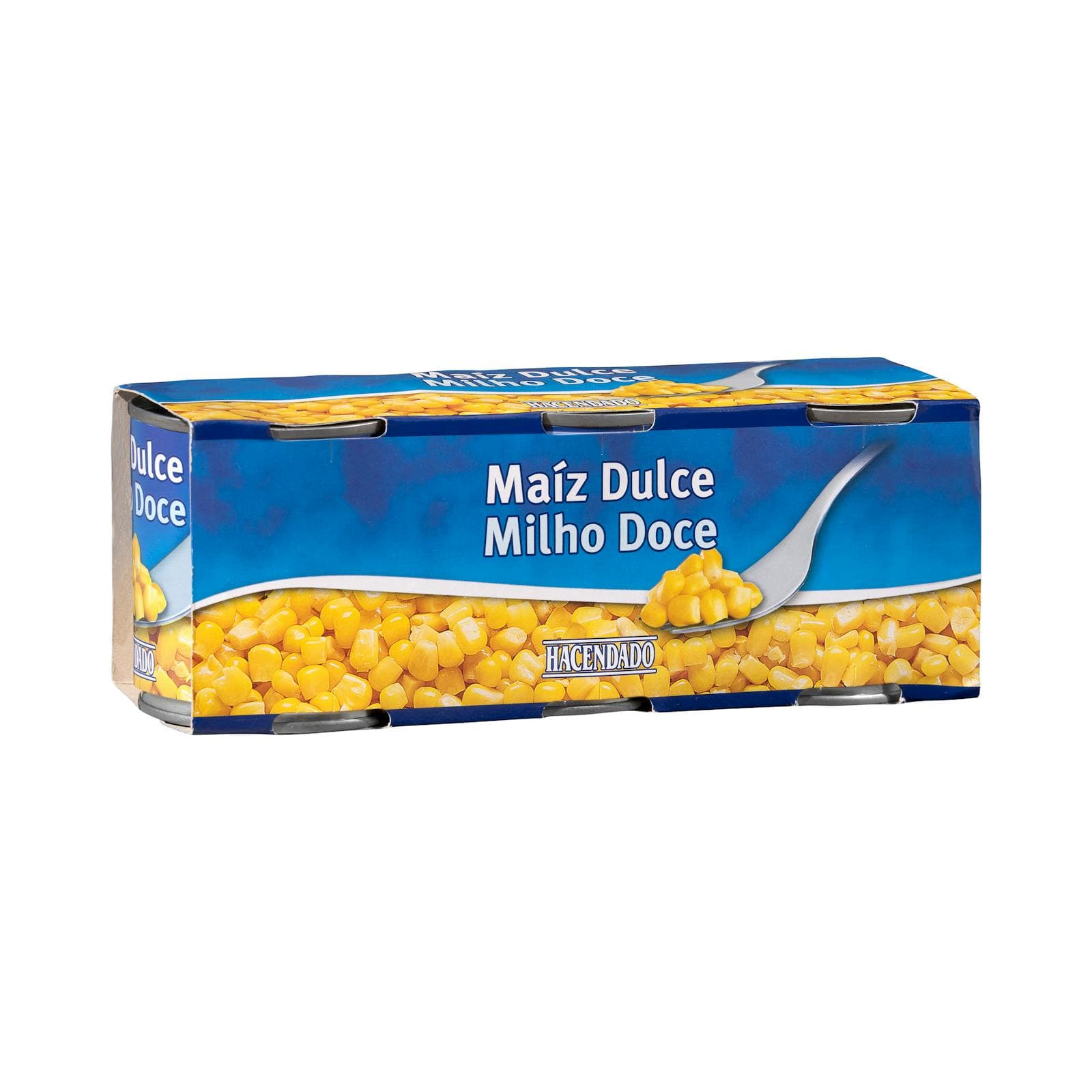 €1.55
€1.55Sweet Corn
Hacendado · 450 g · Mercadona
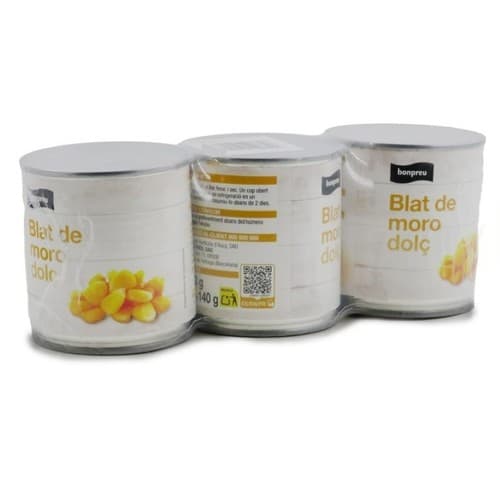 €1.59
€1.59Sweet Corn Bonpreu
BONPREU · kg · Bonpreu
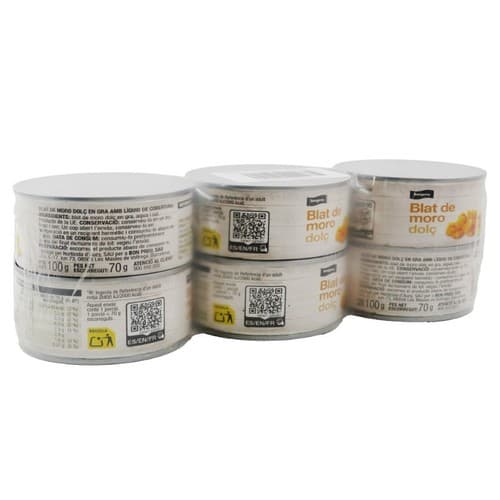 €2.49
€2.49Sweet Corn Bonpreu
BONPREU · kg · Bonpreu
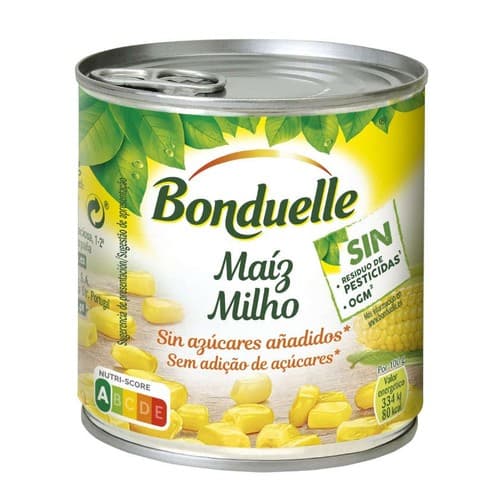 €1.99
€1.99Bonduelle Sweet Corn
BONDUELLE · kg · Bonpreu
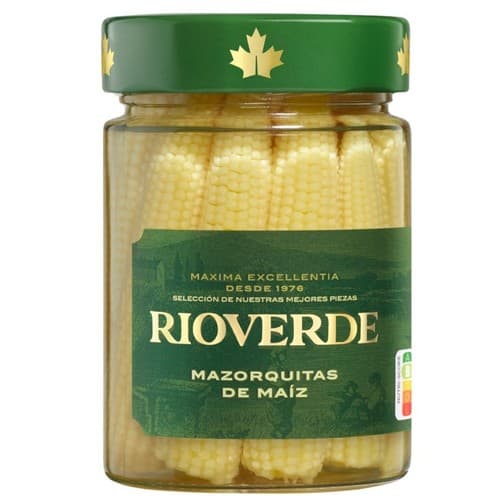 €2.99
€2.99Pickled Corn Kernels
RIOVERDE · kg · Bonpreu
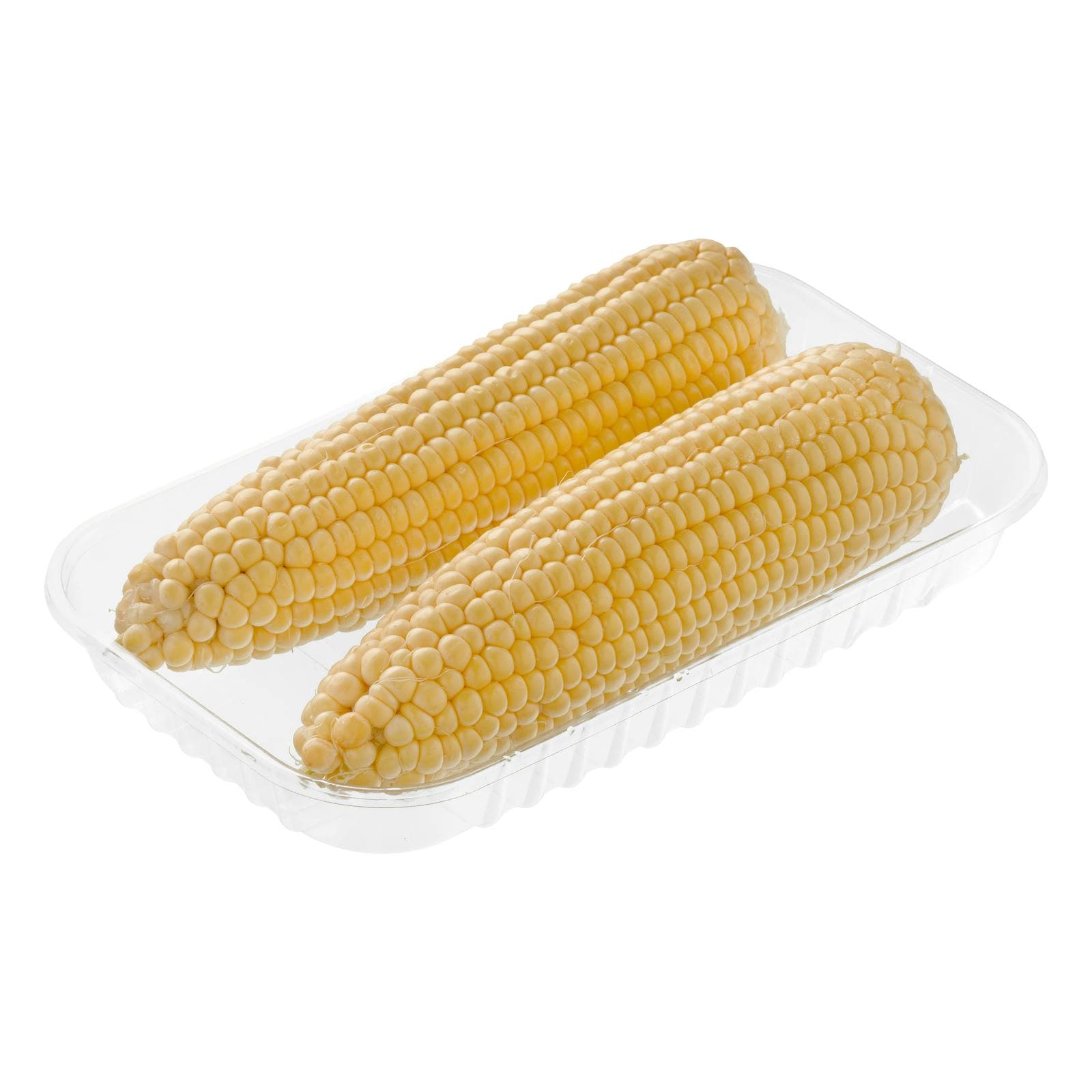 €3.15
€3.15Sweet Corn on the Cob
2 ud · Mercadona
Good to know
- Scientific Name
- Zea mays indentata
- Type
- Field corn; starchy maize
- Kernel Structure
- Hard starch on sides, soft starch in center; crown forms a visible dent as kernel dries
- Primary Colors
- Yellow (most common), white, blue, red
- Primary Use
- Animal feed (~80% of U.S. crop); processed human food; industrial products
- Harvest State
- Fully mature, dried in the field (unlike sweet corn, harvested immature)
- Key Difference
- Not sweet corn—sugar content is low; not popcorn—doesn't pop; not flint corn—has soft interior starch
Substitutes
- Flint Corn (pozole corn) — Harder starch, less processing required for nixtamalization; can substitute in hominy and pozole recipes
- Popcorn Kernels — Ground popcorn produces a dense, highly starchy flour; acceptable for certain masa applications but unusual
- Instant Corn Masa Mix (Maseca) — Commercially nixtamalized and dried; reliable substitute when making tortillas or tamales from scratch
Pairs with
Also called
Field Corn
Appears in these dishes
Related

White Rice
Fluffy long-grain rice — the neutral base for almost any meal

White Bread
Soft sandwich loaf for toast, sandwiches, and crumbs
Brown Rice
Nutty, whole-grain rice with chew and extra fiber

Basmati Rice
Fragrant, long-grain rice that cooks up light and separate
Jasmine Rice
Soft, floral-scented rice that's the pillar of Thai meals
Arborio Rice
Plump, starchy rice that makes risotto creamy
Fusilli
Spiraled pasta that twirls up sauce and dresses cold salads
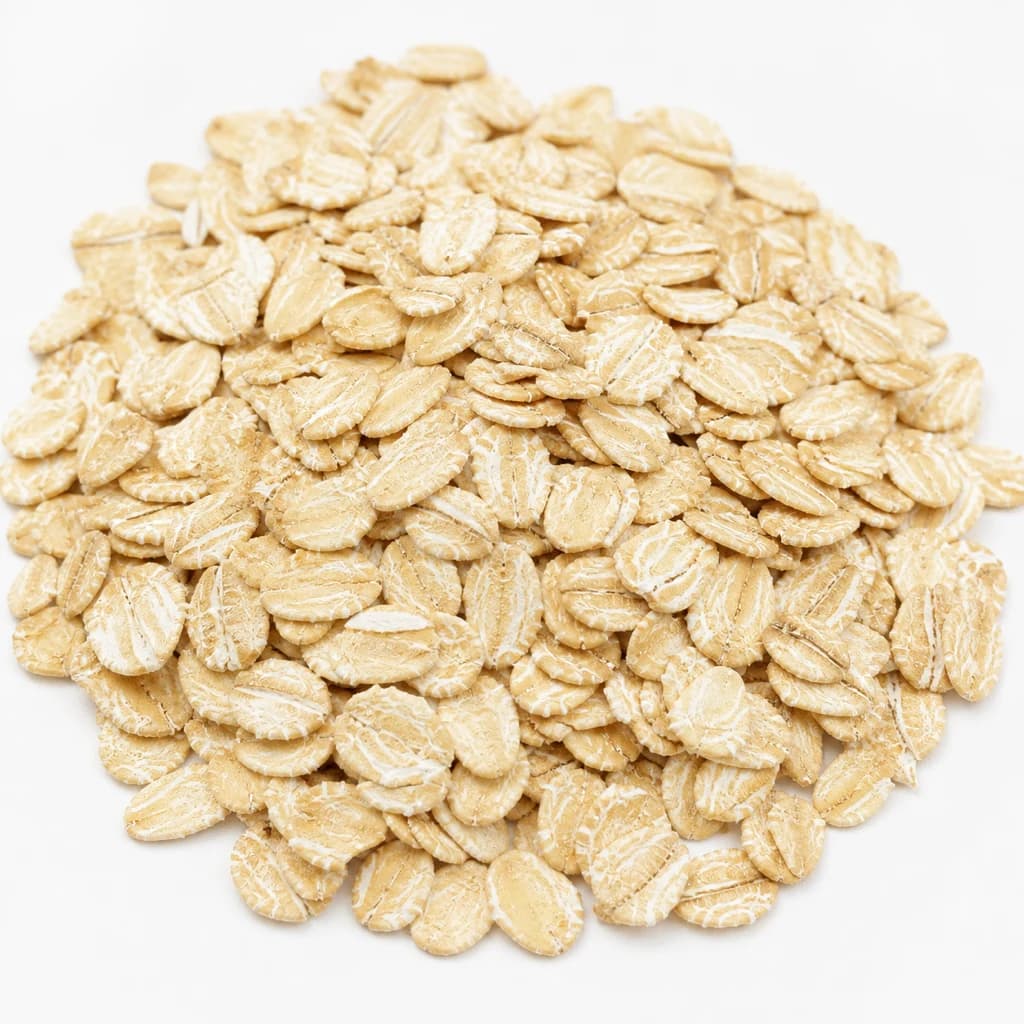
Rolled Oats
Hearty flakes for porridge, granola, and chewy cookies