Baking
Cream of Tartar
Acidic powder that stabilizes whipped egg whites and stops sugar crystallizing; pair with baking soda to improvise baking powder.
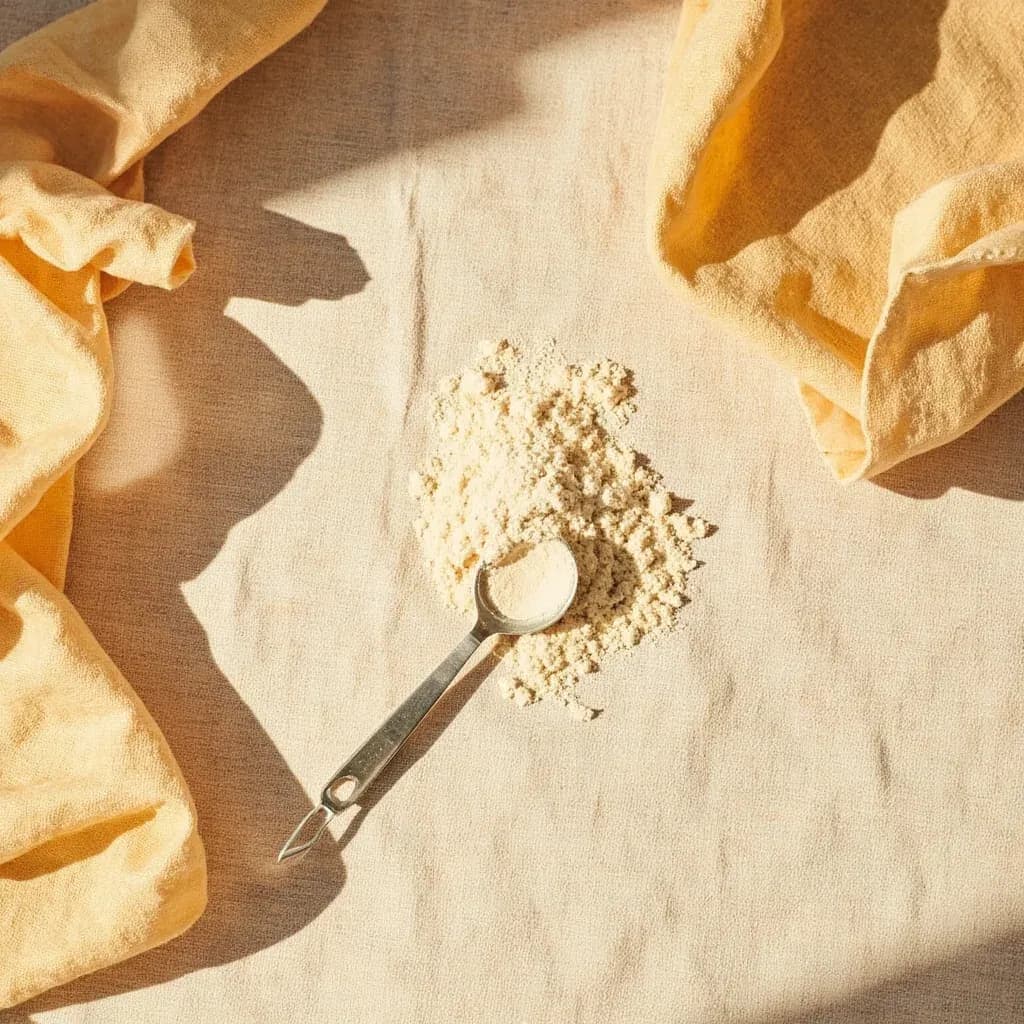
Cream of tartar is the common kitchen name for potassium bitartrate, a dry, white, faintly gritty acid salt that crystallizes out of grape juice as it ferments into wine. Commercial supplies are scraped from the inside of wine casks and purified into a fine powder, which means that despite its glamorous origin it is essentially a byproduct sold in small jars and used by the pinch. To a cook it behaves like bottled acidity: clean, sharp, and dry, with the pure tang of tartaric acid and none of the flavor baggage that lemon juice or vinegar would bring.
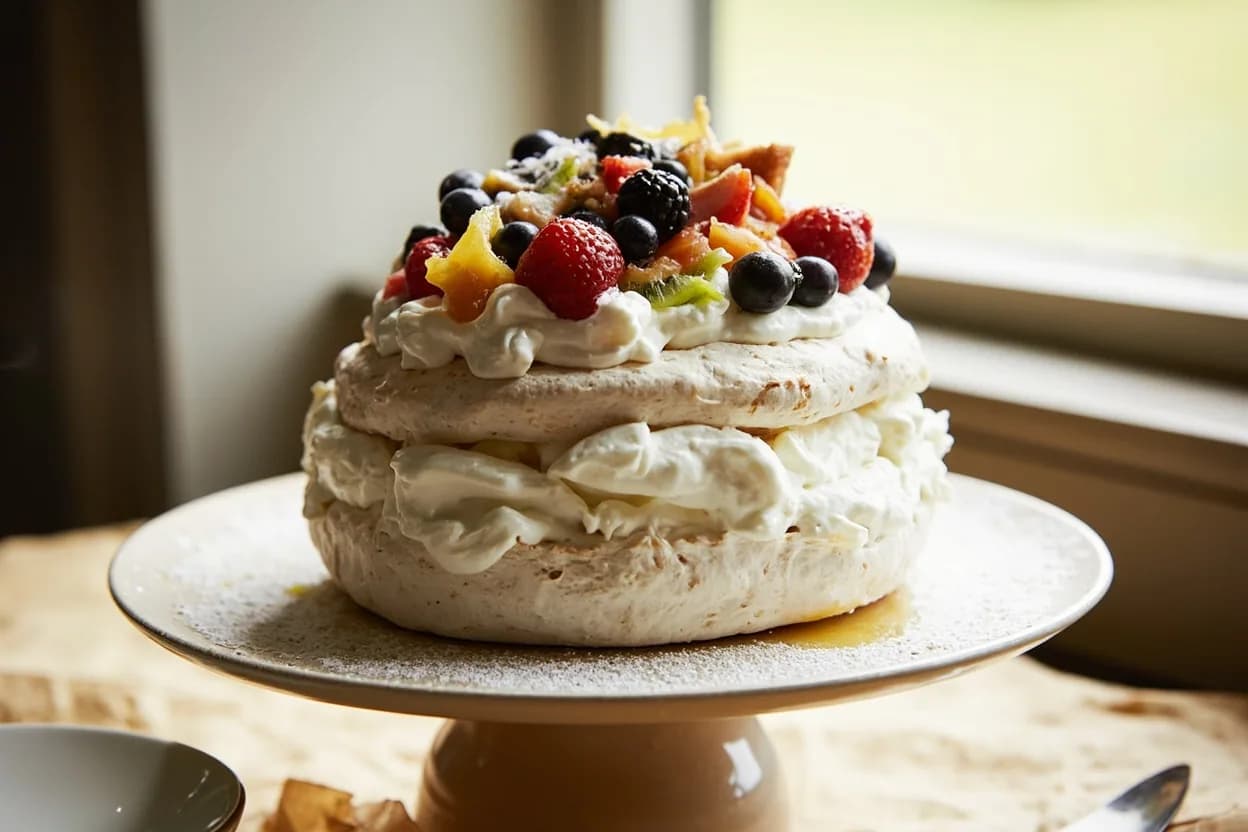
Its value in the kitchen comes from two distinct physical tricks. First, when whisked into egg whites it lowers the pH of the foam, which makes the protein strands unfold faster and bond to each other more tightly — the result is a meringue that climbs higher in the bowl, holds its gloss, and weeps far less on the plate. Second, dissolved into a boiling sugar syrup it gets in the way of sucrose molecules trying to line up into crystals, which is why a pinch in caramel or fudge keeps the finished candy smooth and glossy instead of grainy. It is not, on its own, a leavener: it is an acid waiting for an alkali, almost always baking soda, to produce carbon dioxide.
Modern bakers meet it most often in snickerdoodles, angel food cake, and homemade baking powder, and a single jar lasts most households for years because the quantities are always tiny — a pinch per egg white, a quarter teaspoon in a homemade baking powder mix, never more. The name has nothing to do with tartar sauce; both words descend from tartaric acid, once fancifully thought to originate in Tartary.
- Measured in
- g
- Storage
- Pantry
Find it in
Suits
Types & varieties
The standard commercial product, scraped from wine casks and purified. Whether the source grape is red or white makes no practical difference to performance in the kitchen.
How it works in the kitchen
Cream of tartar does two unrelated jobs, and understanding the difference keeps you from using it badly.
- On egg proteins: an acidic environment denatures the globulins in egg white faster and more thoroughly than whisking alone, so the foam builds volume sooner and the resulting network is tighter and more stable. This is why a meringue made with a pinch of cream of tartar stands up in a piping bag without weeping, and why angel food cakes made with it rise higher and slice cleaner.
- On sugar: as sugar syrup boils, sucrose molecules want to crystallize back into a solid. Tartrate ions in solution lodge on the growing faces of those crystals and slow them down, so the syrup stays liquid longer and the cooled candy sets smooth rather than gritty. The same mechanism keeps fondants, pulled sugar, and some caramels workable.
- On leavening: it is the acid half of an acid–alkali reaction. Mixed with baking soda in the presence of moisture it releases carbon dioxide immediately, which is why a homemade cream-of-tartar baking powder is single-acting — unlike commercial double-acting powder, which holds back a second burst of gas for the oven.
A short history
The snickerdoodle is the most visible survivor of an older way of baking, before baking powder was invented in the mid-19th century.
- Eighteenth- and nineteenth-century cooks who wanted a tender, tangy crumb paired cream of tartar directly with pearl ash or bicarbonate of soda in their doughs.
- The American snickerdoodle — soft, chewy, and rolled in cinnamon sugar with a cracked top — is essentially that recipe preserved in cookie form.
- Cream of tartar's name has nothing to do with tartar sauce; both descend from tartaric acid, named in the belief that the crystals came from Tartary. Tartar sauce is a mayonnaise-based condiment and shares no meaningful ingredient with cream of tartar.
Common uses
Tips & pitfalls
- Add cream of tartar to egg whites only after they begin to foam; adding it to the raw, unbeaten whites can actually hold back volume.
- Use roughly 1/8 teaspoon per large egg white — more than 1/4 teaspoon per white can taste metallic and bitter in the finished meringue.
- Sift cream of tartar with the other dry ingredients to break up clumps, especially in delicate batters and meringue where undissolved grains will leave specks.
- For smooth caramel or fudge, brush down the inside of the pan with water during cooking and add a small pinch of cream of tartar to the syrup; sugar crystals seeding back into the batch during cooking are a common reason home fudge turns grainy.
- Cream of tartar must be paired with a base such as baking soda to leaven — on its own it is an acid, not a leavener, and will not make a cake rise.
- Keep the jar tightly closed; cream of tartar is hygroscopic and clumps in humid kitchens. Clumps do not spoil it, but they make accurate measuring harder.
- Do not confuse cream of tartar with tartar sauce, with tartaric acid sold as a wine additive, or with 'cream of tartar baking powder' — read the label, because many commercial baking powders also contain cornstarch to buffer the reaction.
- A copper bowl beats whites to a similarly stable foam through copper ions; cream of tartar is the modern, non-metallic way to get the same result.
Nutrition
Energy
1079 kJ · per 100 g
Where the calories come from
Protein
0g
0% DV
Carbs
61.5g
22% DV
Fat
0g
0% DV
Fiber
0.2g
1% DV
Sugars
0g
of which
Sodium
52mg
2% DV
Source · USDA FoodData Central · approx. Leavening agents, cream of tartar
View on FDC →In the shops
Matched grocery products
No matched grocery products for Cream of Tartar yet.
Good to know
- Chemical name
- Potassium bitartrate (potassium hydrogen tartrate)
- Formula
- KC4H5O6
- Source
- Crystalline sediment scraped from the inside of wine barrels during fermentation
- Flavor
- Clean, sharp, dry acidity — essentially tartaric acid with a faintly metallic edge
- pH (saturated solution)
- Approximately 3.5
- Solubility
- Soluble in hot water; only about 0.5 g per 100 ml in cold water at 25 °C / 77 °F
- Shelf life
- Indefinite if kept dry; does not spoil
- Homemade baking powder ratio
- 1/4 tsp cream of tartar + 1/4 tsp baking soda ≈ 1 tsp single-acting baking powder
Substitutes
- Lemon juice — Best stand-in for stabilizing egg whites — about 1/2 teaspoon per large egg white. Adds a faint citrus note that is usually welcome in meringues.
- White vinegar — About 1/2 teaspoon per egg white. Clean acidity with a neutral flavor in such small quantities.
- Baking powder (commercial) — Can replace a cream-of-tartar-plus-baking-soda mix in most recipes, though the leavening pattern and tang will differ slightly.
- Citric acid — Works for both leavening and syrup inhibition, but tastes sharper and more lemony; use a touch less than the recipe's cream of tartar.
- Unlined copper bowl — Not a chemical substitute — beating whites in copper stabilizes the foam through copper ions, mimicking cream of tartar's effect without any additive.
Pairs with
Also called
potassium bitartrate · tartaric acid salt · cremor tártaro · raising agent