Spices
Green Peppercorn
Unripe pepper berries, sold brined or freeze-dried, with a fresh, mild, herbaceous bite. Crush into creamy steak sauces, pâté and Thai curries where black pepper would be too sharp.
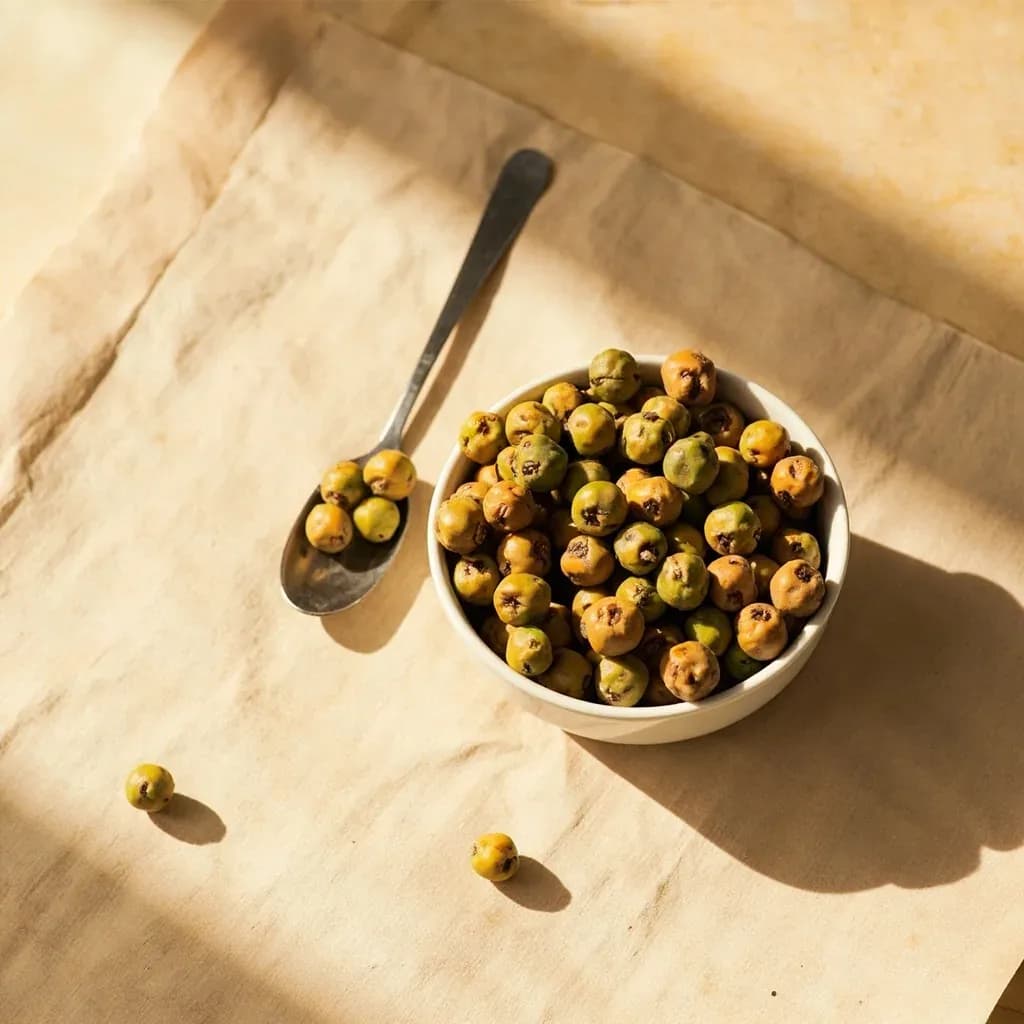
Green peppercorns are the unripe drupes of Piper nigrum, the same climbing vine that gives us black and white pepper, picked one to two weeks before maturity when the berries are still bright green and firm. Because piperine — the alkaloid that gives pepper its sting — accumulates as the fruit ripens, these immature berries deliver a gentler warmth and a fresher, almost herbal character than their black or white cousins. That mildness is exactly why cooks reach for them: in cream sauces, pâtés, and Thai curries, the floral, slightly vegetal bite adds depth without dominating the dish.
In practice, you almost never encounter fresh green peppercorns outside producing regions; the pantry form is berries preserved in brine (sometimes vinegar, sometimes salt water) or freeze-dried. The brining liquid doubles as seasoning, so the ingredient behaves more like a condiment than a dry spice — tangy, salty, and ready to drop straight into a pan sauce. Freeze-dried berries, by contrast, concentrate the pure pepper flavor without the added acid and salt, rehydrating in a few minutes when bloomed in warm liquid.
Green peppercorns are not a variety in the strict sense but a stage of harvest, and that stage defines how they're used. French bistro cooking leans on them for steak au poivre and rich terrines; Southeast Asian kitchens fold them into green curry paste and Cambodian stir-fries. The single most common mistake is treating them like black pepper — cooking them hard and long, or substituting one for one — when their whole appeal is freshness and restraint.
- Measured in
- g
- Storage
- Pantry
Find it in
Suits
Types & varieties
Soft, plump berries in cloudy white vinegar; the classic pantry form for steak au poivre and cream sauces.
Cleaner, less acidic flavor; preferred for Thai curries, stir-fries and dipping sauces.
Larger commercial format with slightly softer, more uniform berries.
Dry, concentrated berries that snap when bitten; rehydrate quickly in warm liquid, with no added salt or acid.
Dull olive-green with a papery skin; closer to black pepper in pungency than fresh green.
Available briefly in producing countries during harvest; perishable, used within days, with the brightest flavor of all.
Brined vs. freeze-dried: when to choose which
Both forms deliver the same botanical flavor, but they behave very differently in the pan. Brined peppercorns are a working ingredient — the vinegar or salt brine seasons the sauce, softens the berry, and adds a tangy edge that pairs naturally with cream and butter. Freeze-dried berries are a finishing ingredient — concentrated, dry, and salt-free, so they let you control seasoning precisely. Reach for brined when you want built-in acidity and the soft, melting texture of a French pan sauce. Reach for freeze-dried when you're building a delicate beurre blanc or any dish where added salt would be a problem.
- Brined: drop straight into hot butter with shallots for steak au poivre; the vinegar brightens the pan and the berry softens in minutes.
- Freeze-dried: bloom 1 tablespoon in warm stock or wine for 5 minutes before whisking into a cream or butter sauce.
- Brined berries can mute a long-cooked sauce; freeze-dried hold their aroma better in a finished sauce you plan to keep warm.
Reading the jar
A jar of brined green peppercorns tells you a lot before you open it. Cloudy, sediment-rich brine is normal and even desirable — it signals whole, unprocessed berries. Murky liquid with an off, fermented, or yeasty smell, or berries that look collapsed and brown, means the pack is past its prime. In Asian markets, some brands tint the brine with turmeric or annatto for visual consistency; this is harmless but worth knowing if you're using the brine as part of a pale cream sauce.
- Clear brine with plump green berries signals a fresh pack.
- Cloudy white sediment is normal and means whole berries, not a fault.
- Brown or collapsed berries, or any yeasty or fermented smell, means discard.
- Tinted brine (yellow or orange) is sometimes used for color uniformity; flavor is unaffected.
Common uses
Tips & pitfalls
- Drain and briefly rinse brined peppercorns when you need to control sodium; skip the rinse for instant punch in pan sauces.
- Add them toward the end of cooking. Long simmering mutes their freshness and turns the brine muddy.
- For freeze-dried berries, bloom them in a tablespoon of warm stock, wine or cream for 5 minutes before adding to fat-based sauces so they rehydrate evenly.
- Crush with the flat of a knife rather than a fine grinder — uneven chunks release flavor in stages and look more appetizing in a finished sauce.
- Don't substitute green peppercorns 1:1 for black pepper; their flavor is softer and the brined kind is salty, so seasoning must be adjusted at the end.
- Avoid high direct heat on brined peppercorns; their moisture content causes them to sputter and can break an emulsion.
- Pink peppercorns are not a true substitute; they bring sweetness and a different botanical character. Use them alongside, not instead of, when you want both notes.
- If a recipe calls for fresh green peppercorns and you only have brined, halve the amount and skip any added salt until you taste.
- Freeze-dried berries keep best with a silica sachet in the jar; humidity is their main enemy.
Nutrition
Energy
84 kJ · per 100 g
Where the calories come from
Protein
0.9g
2% DV
Carbs
4.6g
2% DV
Fat
0.2g
0% DV
Fiber
1.7g
6% DV
Sugars
2.4g
of which
Sodium
3mg
0% DV
Source · USDA FoodData Central · Peppers, sweet, green, raw
View on FDC →In the shops
Matched grocery products
No matched grocery products for Green Peppercorn yet.
Good to know
- Botanical source
- Unripe drupes of Piper nigrum, harvested 1–2 weeks before maturity while still green and firm.
- Primary forms
- Brined (vinegar or salt water), canned in brine, freeze-dried, and rarely air-dried or fresh.
- Main producers
- India (Malabar and Kerala), Thailand, Vietnam, Cambodia, Indonesia, Madagascar, and Brazil (Pará region historically branded 'pimenta-verde').
- Flavor profile
- Brighter, fruitier, and markedly less pungent than black pepper, with a fresh, slightly vegetal bite; brined versions carry tang and salt.
- Heat level
- Very low pungency; piperine rises as the berry ripens, so green peppercorns read as gentle warmth rather than sharp bite.
- Shelf life, brined
- Several months unopened; refrigerate after opening and use within 2–3 months (brine may cloud but stays safe).
- Shelf life, freeze-dried
- 1–2 years sealed and away from light and moisture; rehydrates in about 5 minutes in warm liquid.
- Yield note
- Brined berries are roughly 50–60% water by weight; a standard 200 g jar typically yields 80–100 g of drained berries.
- Cost
- Mid-range specialty spice; freeze-dried and imported brined jars typically run 3–6× the price of standard black peppercorns.
Substitutes
- Black peppercorns (light hand) — Use about half the quantity of crushed black pepper plus a splash of white wine vinegar to approximate the brightness; you'll lose the herbal note.
- Pink peppercorns — Not true pepper but visually and texturally similar; milder and slightly sweet, so pair with a squeeze of lemon to mimic green peppercorn's lift.
- Capers (rinsed) — Work in pan sauces and steak preparations for the briny pop, though the flavor profile is more floral-brine than peppery.
- Green coriander seeds — Crushed lightly, they echo the fresh, herbaceous quality and pair well with pork and seafood; not a swap for brined preparations.
- Sichuan peppercorns (green) — A last-resort stand-in for their floral, citrusy edge, but expect a numbing buzz that green peppercorns do not have.
Pairs with
Also called
green pepper · brined peppercorns · fresh peppercorns · poivre vert