Produce
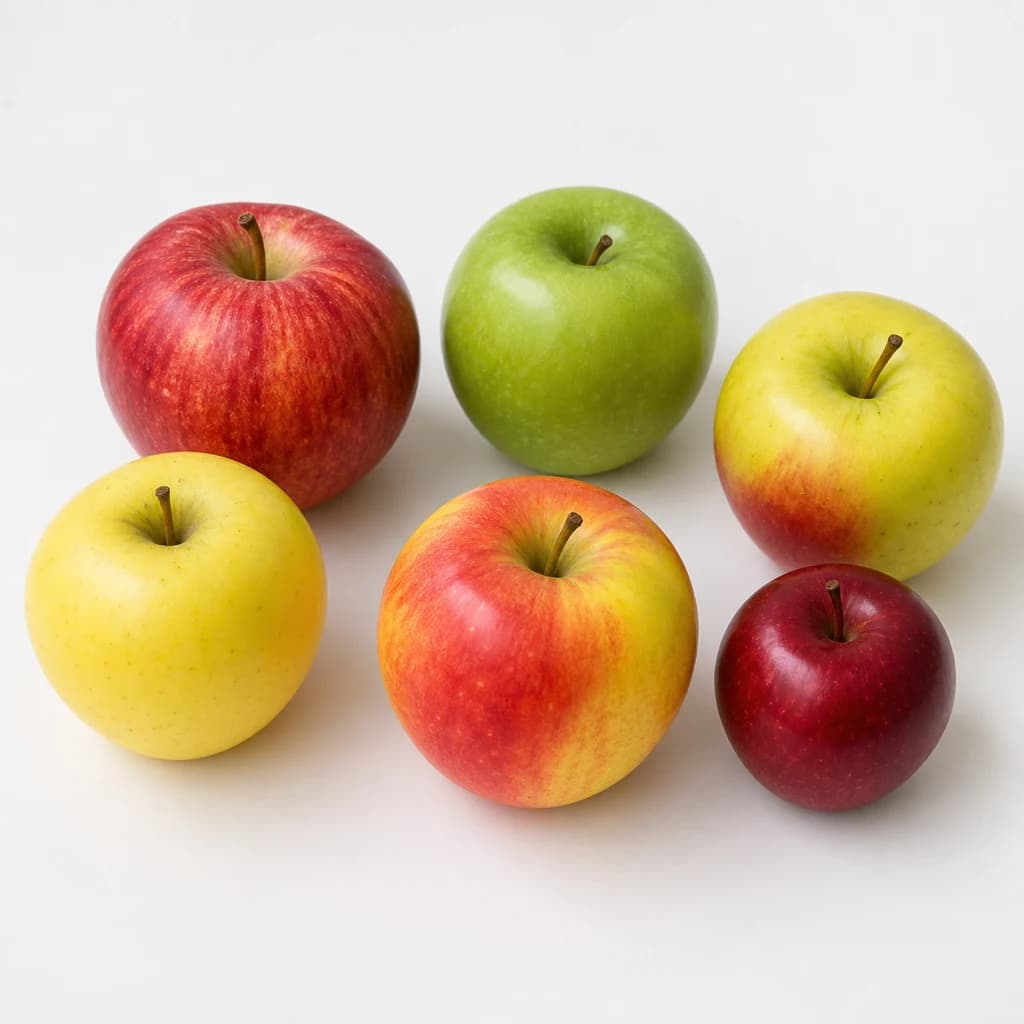
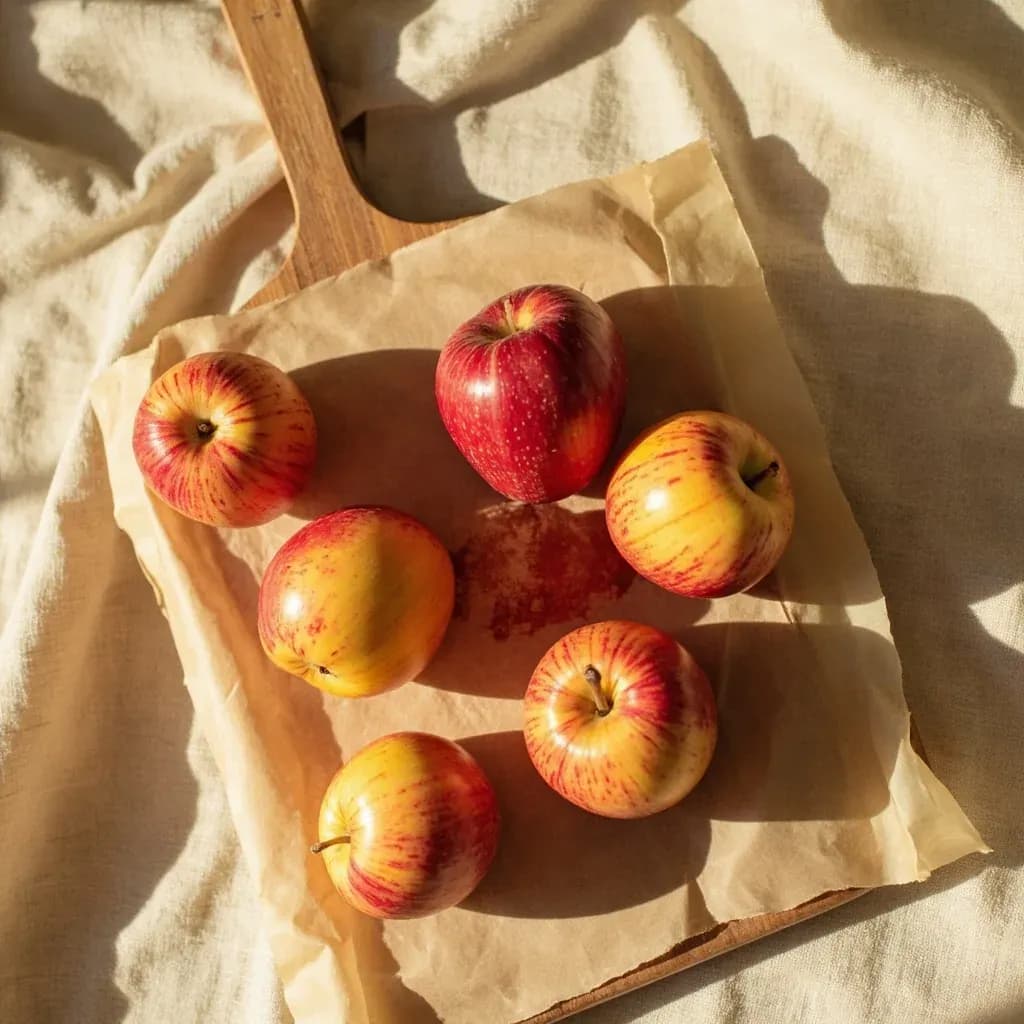
Honeycrisp Apple
Exceptionally crisp, juicy apple with a sweet-tart honeyed flavor; best eaten fresh or in slaws and salads since it softens less elegantly when baked.
The Honeycrisp is a textbook case of how texture can remake an entire category of food. Bred at the University of Minnesota and released commercially in 1991, it upended consumer expectations by being engineered less for flavor than for an audible, almost explosive crunch — the result of unusually large parenchyma cells that rupture cleanly when bitten. That cell structure is also why the apple behaves differently in the kitchen than its peers: it browns more slowly when cut, holds its shape in salads and slaws far longer than softer varieties, and collapses into mealiness when baked alone. For cooks, treating Honeycrisp as primarily a fresh-eating and raw-preparation apple — with strategic exceptions — is the key to using it well.
Behind that snap is a balanced sweet-tart flavor with light honeyed and floral notes, moderate acidity, and a juicy, almost watery crunch. It is medium-to-large, with a thin, slightly tough mottled red skin over cream-colored flesh. The apple's virtues come with agricultural challenges — biennial bearing, susceptibility to bitter pit and soft scald, and sensitivity to harvest timing — which is why it carries a price premium and why the University of Minnesota's breeding program, alongside other programs, has produced a wave of Honeycrisp descendants (SweeTango, Rave, Cosmic Crisp, and others) trying to capture the crunch with fewer headaches for the grower.
Harvested from late August through mid-October depending on the region, and available from cold storage into spring, Honeycrisp rewards cooks who plan around its strengths. Peak flavor runs October through December; by April the skin may turn greasy and the flavor flatten, though the texture holds surprisingly well. Whether you are building a cheese board, dressing a slaw, glazing a pork loin, or pressing cider, the rule of thumb is the same: keep it cold, cut it sharply, and don't ask it to do work — like a long bake — that its fragile cells can't perform.
- Measured in
- piece
- Storage
- Refrigerate In The Crisper Drawer To Preserve Crispness.
Find it in
Suits
Types & varieties
UMN-bred Honeycrisp × Zestar! offspring; managed/club variety with similar crunch, slightly more floral and spicy.
Honeycrisp offspring; very early-ripening, bright red, snappy with a zesty finish.
Honeycrisp × Enterprise cross from Washington State University; denser, sweeter, longer-keeping.
UMN variety in Honeycrisp's grandparent lineage; small, intensely sugary, used in cider and breeding.
Honeycrisp's seed parent; firm, very sweet, dense, and aromatic.
UMN pipeline selections with Honeycrisp parentage; not yet widely named.
Why Honeycrisp Behaves Differently in the Kitchen
Almost every quirk of this apple — its strengths and its frustrations — traces back to those oversized parenchyma cells. They fracture explosively in the mouth, which is the sensation the cultivar was literally bred for, but they also collapse readily under prolonged heat, releasing their juice and leaving a soft, mealy texture that defeats the point of baking with a 'good' apple. The same structure explains why cut Honeycrisp oxidizes more slowly than Gala or McIntosh, why it sheds less liquid in a slaw, and why it holds its shape in a quick sauté or chutney where softer varieties turn to sauce.
- Use it raw or with minimal heat: hand-eating, salads, slaws, charcuterie, fresh salsas, lunchboxes.
- Avoid long bakes as the sole variety: large cells collapse into mealiness; if baking, dice and combine with a firmer, more acidic apple (Granny Smith, Braeburn, Northern Spy) for structure.
- Lean on it where juiciness matters more than structure: pan sauces for pork, mulled cider, and purées where a bit of liquid is welcome.
- Take advantage of its slow browning: better for buffets, fruit plates, and pre-cut lunchboxes than softer varieties.
Buying, Seasonality, and Storage
Honeycrisp is a cool-weather apple by nature and a cold-storage workhorse by design. Domestic availability runs from September through April, but the eating window is not flat across that span. Fresh-picked fruit in October and November delivers the cleanest balance of honeyed sweetness and snap; by February through April the texture can still be excellent, but the skin may develop a waxy or greasy feel and the flavor tends to flatten, becoming more one-dimensionally sweet. Plan accordingly if a recipe depends on the bright floral or tart notes.
- Peak fresh flavor: October through December.
- Choose fruit that feels heavy for its size and is uniformly firm; soft spots indicate bruising, not ripeness.
- Refrigerate at 32–38°F in a vented bag or crisper drawer; do not store at room temperature longer than a day or two — the snap fades quickly.
- Keep away from strong-smelling foods (onions, garlic, cabbage); the thin skin readily absorbs off-odors.
- Home growers: thin the crop aggressively in 'on' years to reduce biennial bearing and bitter pit.
Working with Honeycrisp
Two practical habits separate a great Honeycrisp dish from a mediocre one: keep the apple cold until you cut it, and use a sharp knife. A warm, blunt blade crushes the very cells you are paying for, releasing juice before the slice is even off the board and dulling the snap that makes the apple special. Cold fruit cuts cleanly, holds its shape, and stays crisp in dressed salads for noticeably longer.
- Chill fruit for at least an hour before slicing or dicing for raw preparations.
- Use a sharp chef's knife or santoku; avoid serrated blades that tear the flesh.
- If prepping ahead, brush cut surfaces with a 1:3 lemon-water solution — oxidation is slower than most varieties but still visible in 20–30 minutes.
- For caramel apples, blanch briefly (10–15 seconds in boiling water) and dry the surface so the coating sticks cleanly.
- In salads and slaws, dress the leaves or vegetables first, then add apple at the last moment to preserve snap.
Common uses
Tips & pitfalls
- Keep cold — Honeycrisp's crispness fades fast at room temperature; chill before eating for maximum snap.
- Eat skin-on for the signature crunch; peel only when a smooth sauce or uniform texture is the goal.
- Cut with a sharp knife; blunt blades crush the large cells and release juice prematurely.
- Brush cut surfaces with a 1:3 lemon-water solution if prepping ahead; oxidation is slower than most varieties but still occurs in 20–30 minutes.
- Avoid baking as the sole pie apple; the large cells collapse and the flesh turns mealy. If baking, dice and combine with a firmer variety (Granny Smith, Braeburn, or Northern Spy) for structure.
- For caramel apples, blanch briefly (10–15 seconds) and dry before dipping so the candy adheres cleanly.
- Choose fruit that feels heavy for its size and is firm all the way through; soft spots indicate bruising, not ripeness.
- Store away from strong-smelling foods in the fridge — the thin skin readily absorbs off-odors.
Nutrition
Energy
218 kJ · per 100 g
Where the calories come from
Protein
0.3g
1% DV
Carbs
13.8g
5% DV
Fat
0.2g
0% DV
Fiber
2.4g
9% DV
Sugars
10.4g
of which
Sodium
1mg
0% DV
Source · USDA FoodData Central · approx. Apples, raw, with skin (Includes foods for USDA's Food Distribution Program)
View on FDC →In the shops
Matched grocery products
 €2.84
€2.84Golden Apples
1.58 kg · Mercadona
 €0.44
€0.44Golden Apple
200 g · Mercadona
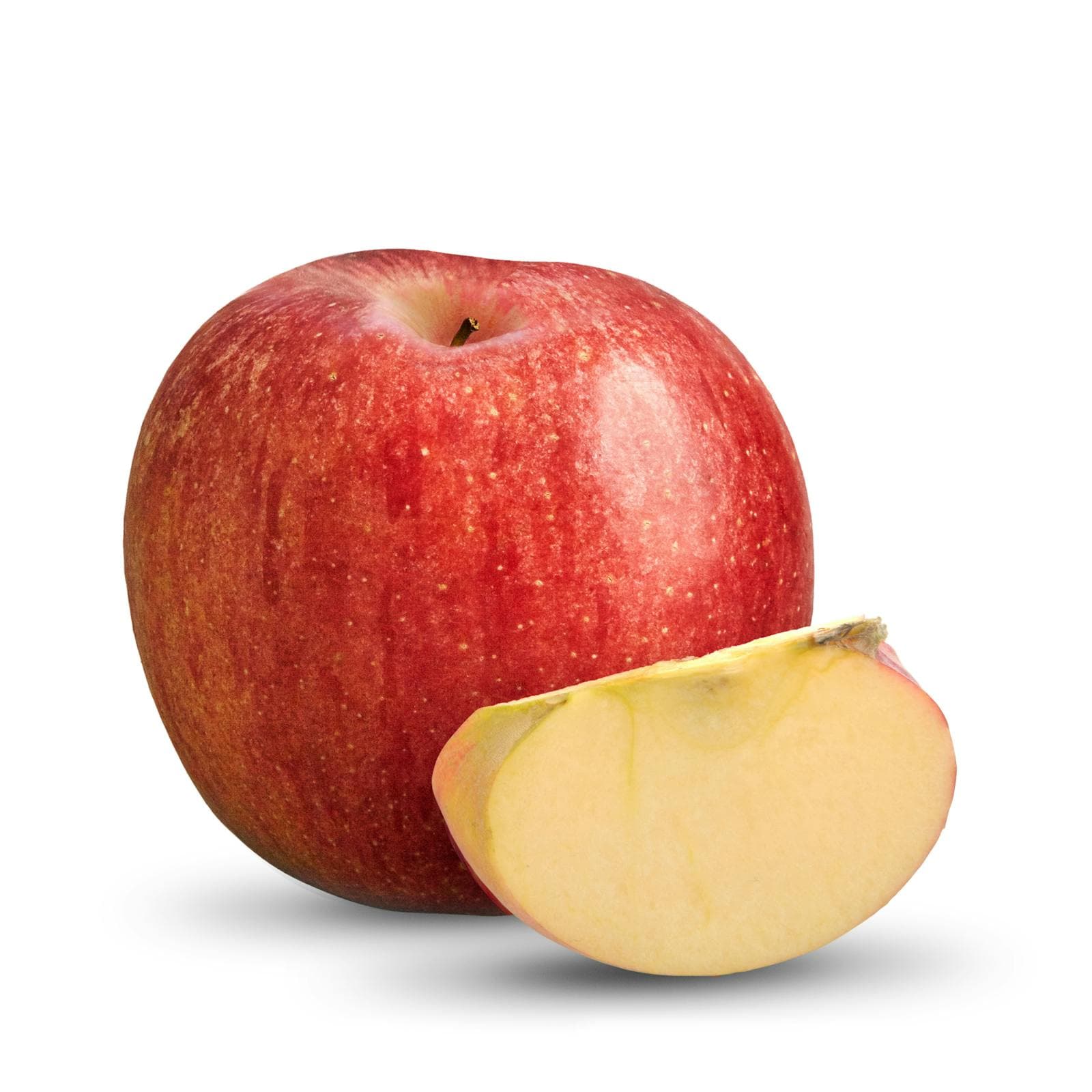 €0.62
€0.62Red Sweet Apple
230 g · Mercadona
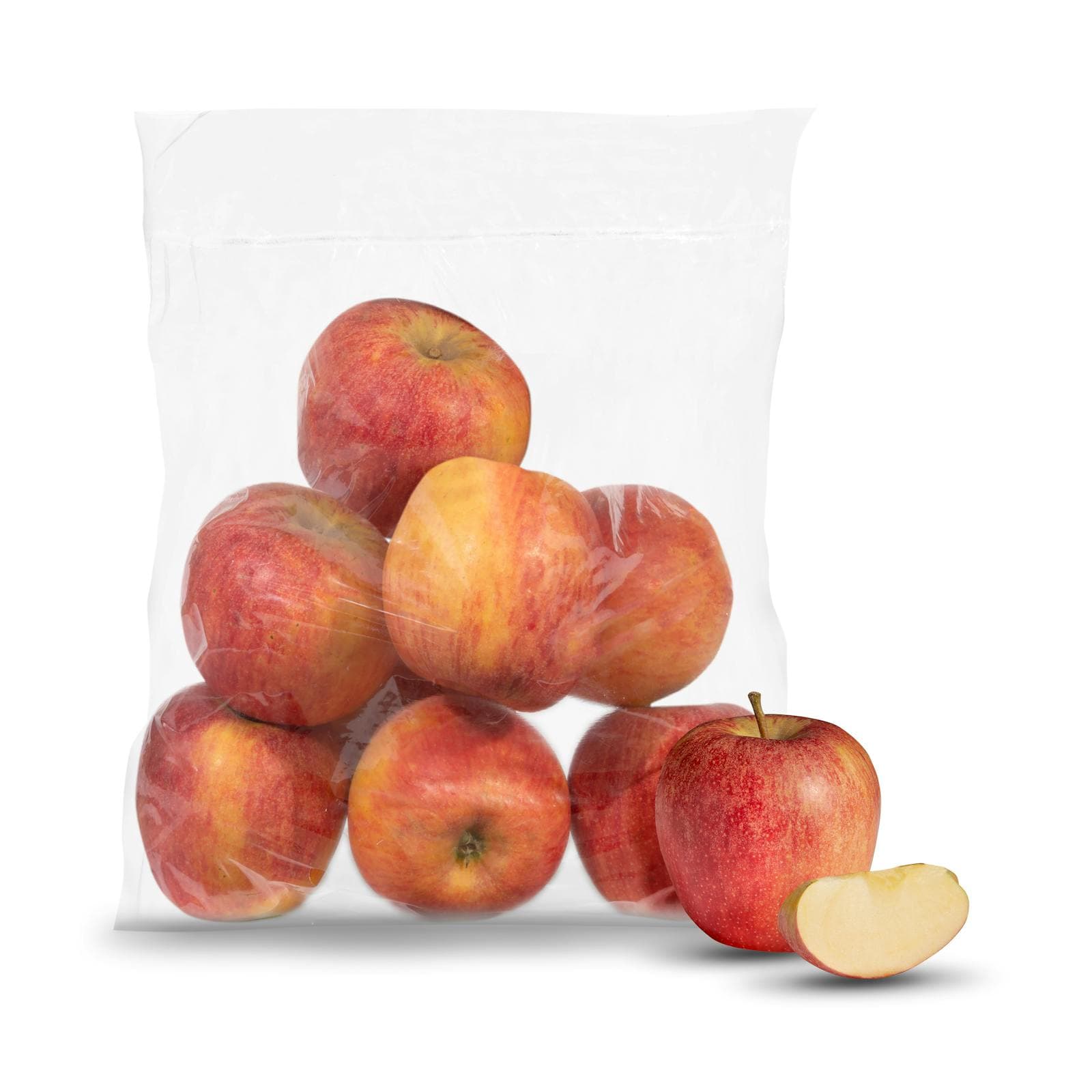 €3.77
€3.77Sweet Red Apples
1.57 kg · Mercadona
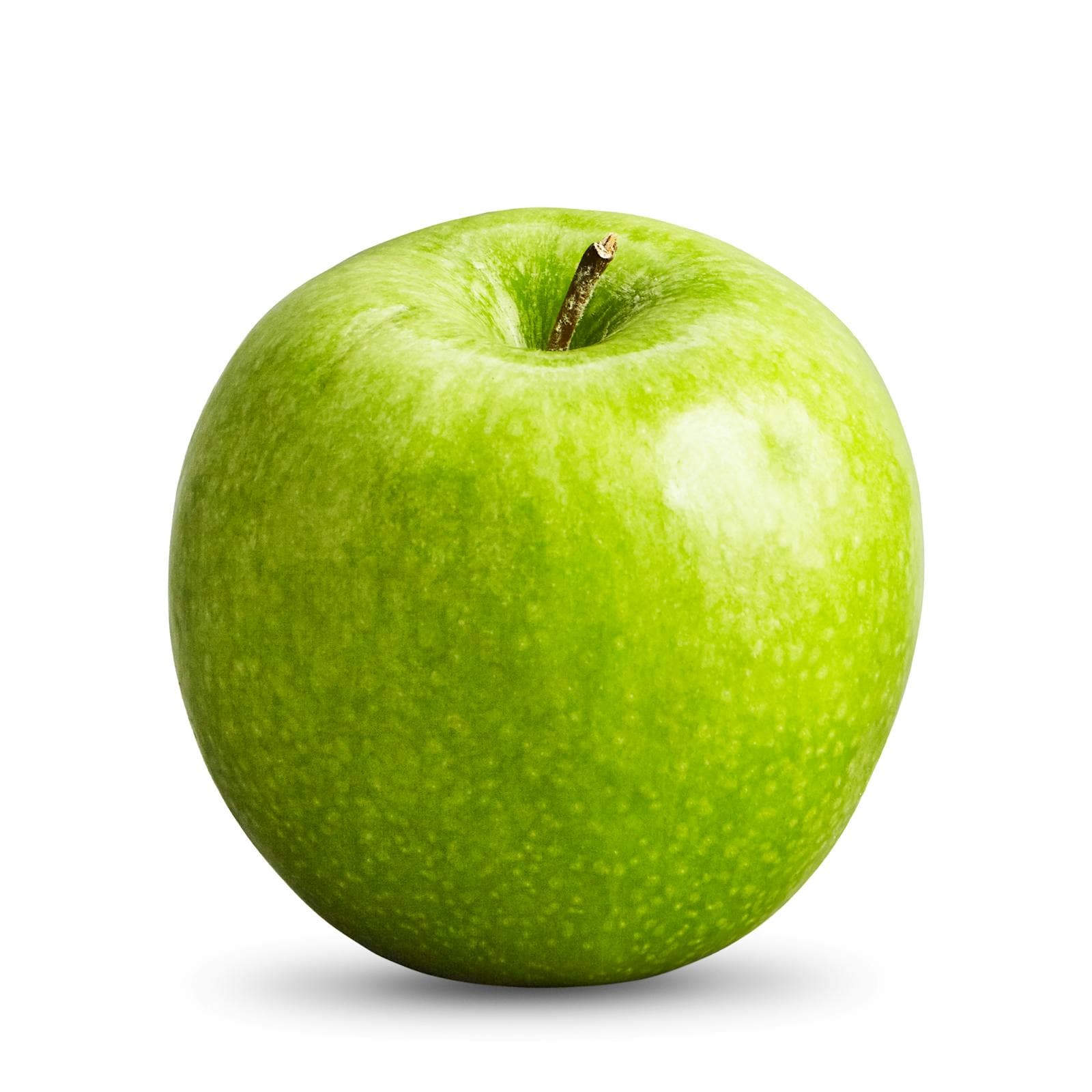 €0.43
€0.43Granny Smith Apple
180 g · Mercadona
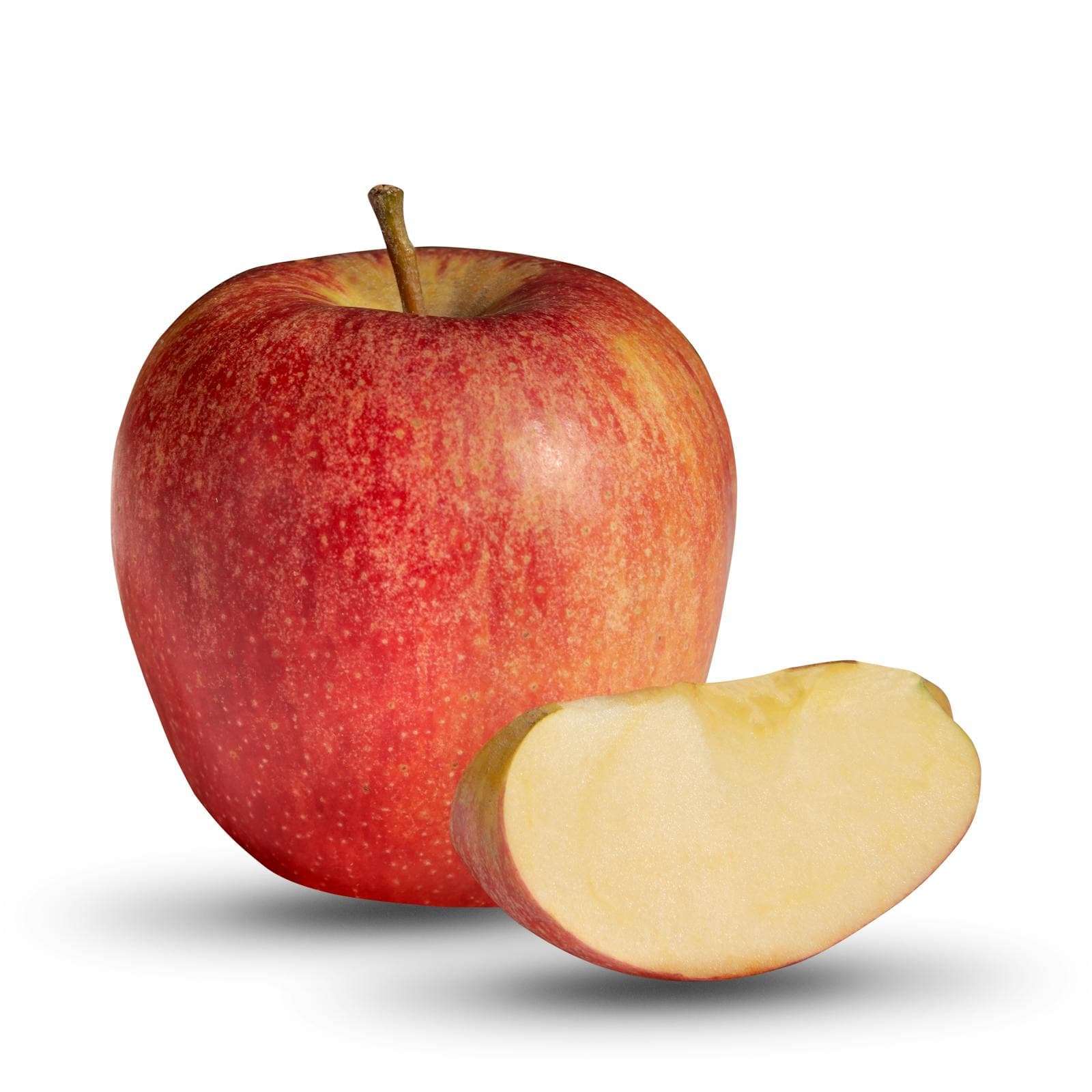 €0.59
€0.59Semi-Sweet Red Apple
220 g · Mercadona
Good to know
- Origin
- Developed by the University of Minnesota's apple breeding program; introduced commercially in 1991.
- Parentage
- Cross of Keepsake (seed parent) and MN1627 (pollen parent); originally tested as MN 1711.
- Plant Patent
- U.S. Plant Patent 7,197, granted 1990 — one of the first major commercial apples to be patented.
- Skin & Flesh
- Mottled red (60–90% blush) over a yellow-green ground; thin to medium, slightly tough. Flesh is cream-colored, coarse-celled, and very juicy.
- Texture Cause
- Cells are unusually large and rupture easily when bitten, producing the signature 'explosive' crunch.
- Flavor Profile
- Balanced sweet-tart with light honeyed and floral notes; moderate acidity.
- Storage Life
- 6–7 months in commercial cold storage (36–38°F / 2–3°C, held warmer than most apples to prevent chilling injury); 2–3 months in a home refrigerator.
- Cooking Yield
- 1 lb (about 2 medium) yields ~3 cups diced or 2½ cups sliced; juice yield ~60%.
Substitutes
- SweeTango — Closest match in crispness and flavor lineage; slightly more aromatic and spicy.
- Fuji — Very sweet, crisp, and juicy; good for eating but lacks Honeycrisp's tart edge.
- Cosmic Crisp — Crisp and very long-keeping; firmer flesh, more sugar, less acidity.
- Ambrosia — Sweet, low-acid, very crisp; gentler flavor but similar texture.
- Jazz — Dense, crisp, sweet-tart; holds up well in salads and slaws.
- Pink Lady (Cripps Pink) — Crisp with higher acidity; a good all-rounder for eating and light cooking.
- Braeburn — Crisp and complex sweet-tart; a stronger substitute for baking than the others.
Pairs with
Also called
honeycrisp