Baking
Natural Cocoa Powder
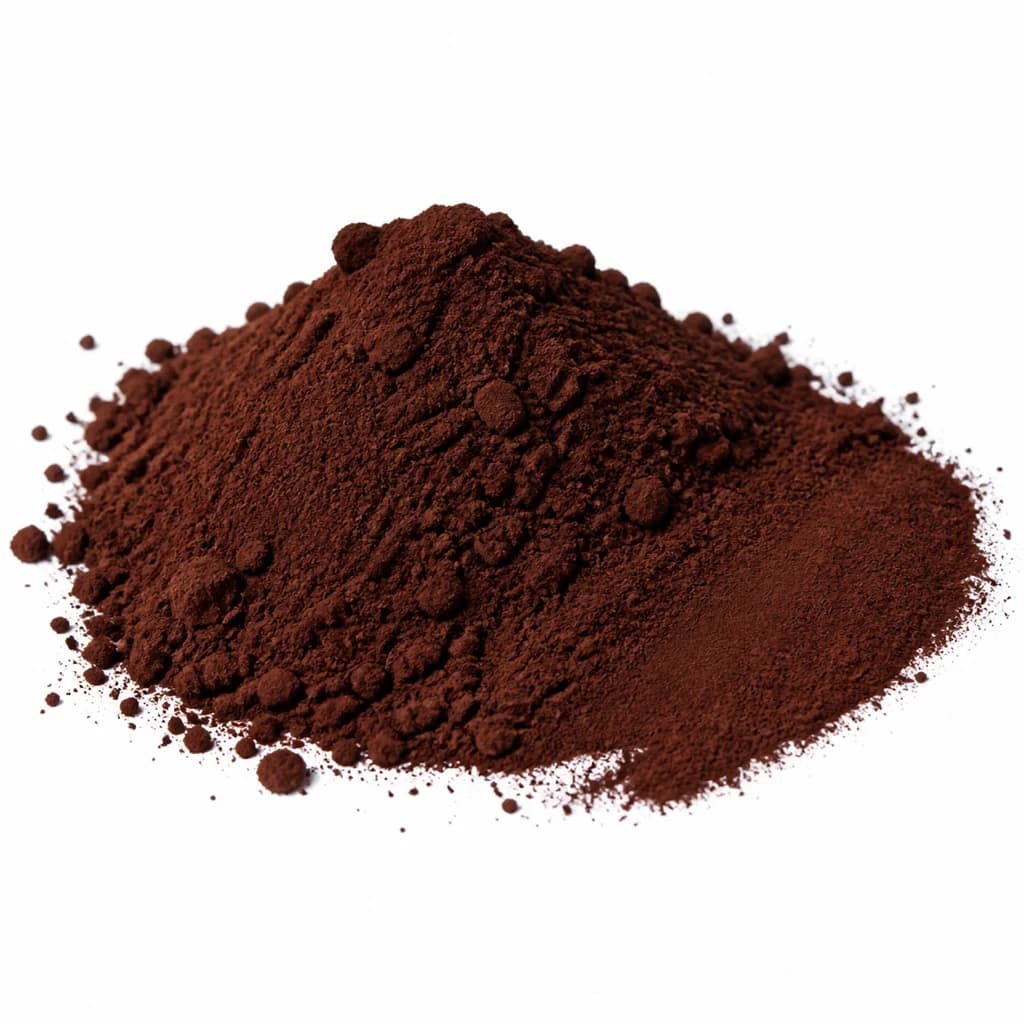
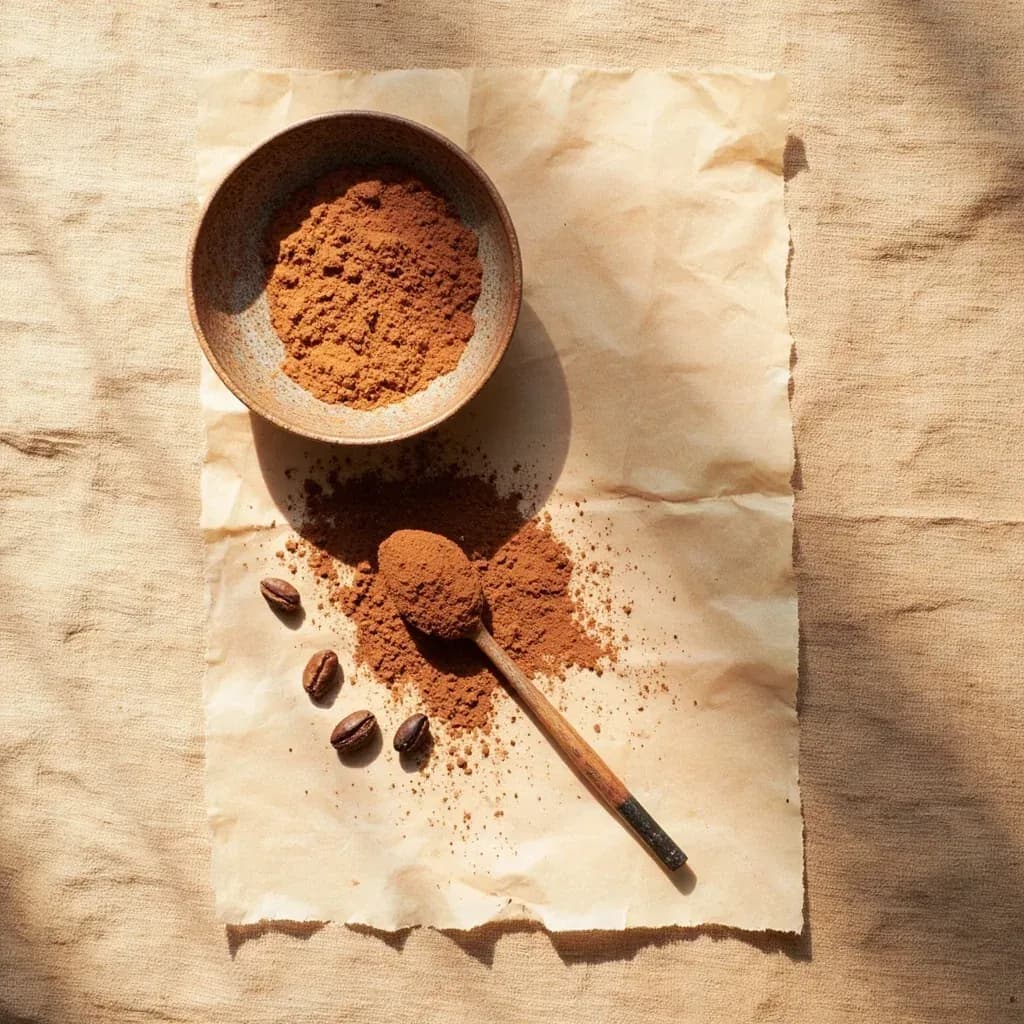
Non-alkalized cocoa — light brown, sharp and acidic; reacts with baking soda for lift, so it isn't a 1:1 swap for Dutch-process cocoa.
Natural cocoa powder is what you get when roasted cacao nibs are ground, pressed to remove most of their cocoa butter, and pulverized into a fine dry powder — with no alkalizing wash applied afterward. The word 'natural' refers only to the absence of that Dutch (alkalized) treatment, not to how the beans were grown or handled. The result is a lighter, more reddish-brown powder than Dutch-process, and a noticeably more acidic one, typically with a pH between 4.5 and 5.8.
That acidity is the whole reason natural cocoa exists as a distinct baking ingredient. When it meets sodium bicarbonate in a batter, an acid-base reaction releases carbon dioxide and gives the bake its lift — the same chemistry that powers a vinegar-and-baking-soda science-fair volcano, only leavening a cake. Recipes that call for natural cocoa almost always pair it with baking soda (and a backup acid like buttermilk, brown sugar, or vinegar) to put that reaction to work. Swap in alkalized cocoa and the batter loses both its lift and its bright, sharp chocolate flavor, which is why a 1:1 substitution is the single most common reason a chocolate cake comes out flat and dusty.
In the glass, natural cocoa tastes sharper, fruitier, and more aggressively chocolatey than Dutch-process — closer to melted unsweetened chocolate than to the rounded, mellow profile of an alkalized powder. It is the cocoa of red velvet, devil's food, classic fudgy brownies, and Mexican drinking chocolate, and any cook who understands its chemistry will find it a more flexible and more interesting ingredient than its reputation suggests.
- Measured in
- g
- Storage
- Pantry
Find it in
Suits
Types & varieties
The everyday supermarket variety — defatted, unalkalized, 10–12% fat. Brands include Hershey's, Ghirardelli Natural Unsweetened, and Droste.
Less defatted (15–22% fat), softer mouthfeel, slightly less acidic; closer to European 'Trinkschokolade.' Look to Valrhona and Cacao Barry.
Unblended beans from one region: Ghana (classic, robust), Madagascar (fruity, raspberry/red-fruit), Ecuador/Arriba (floral, nutty), Dominican Republic (mellow, balanced), Peru (earthy, herbal).
Minimally processed, often cold-pressed below 40 °C; sharper, more bitter and fruity. Functionally similar in baking but may not deliver Maillard depth if the recipe expects a roasted flavor.
Heavily alkalized and very dark — not strictly a natural cocoa, but used in small amounts blended with natural cocoa for Oreo-like color and flavor.
Why natural cocoa is the leavening cocoa
Every leavener in the baking aisle does its job by producing gas, and the way that gas is produced is what determines which one to use. Baking soda (sodium bicarbonate) is a base on its own and needs an acid to react with; baking powder already contains both an acid and a base and just needs moisture and heat. Natural cocoa is naturally acidic — more so than most ingredients in a cake — so when it sits in a batter alongside baking soda, the two react almost immediately, releasing carbon dioxide and giving the cake a tender crumb and a deep, even rise. The remaining acid also softens gluten and tenderizes the crumb, which is why devil's food and red velvet feel so much softer than comparable vanilla cakes.
The practical upshot is straightforward: if a recipe pairs natural cocoa with baking soda, the cocoa is doing real chemical work. Dutch-process cocoa, with a pH of roughly 6 to 8, has had most of that acid neutralized and will sit there inertly. A baker who reaches for Dutch-process in a soda-leavened recipe gets a flat cake that tastes dusty and one-noted, because the leavening never fired and the chocolate flavor has been smoothed into the background. The fix is either to match the cocoa to the recipe (natural with soda, Dutch with baking powder) or to restore the missing acid by adding cream of tartar or a splash of vinegar. The rule, in short: read the leavener line before you swap the cocoa line.
- Natural cocoa + baking soda = active acid-base reaction, CO2 release, tender rise.
- Dutch-process cocoa + baking soda = little to no reaction, flat cake, muted flavor.
- Dutch-process cocoa + baking powder = balanced and correct; baking powder carries its own acid.
- Brown sugar, buttermilk, vinegar, and cream of tartar all add the acid natural cocoa already supplies.
Common uses
Tips & pitfalls
- Always pair natural cocoa with baking soda (or with baking powder that contains soda) when it is the sole leavener; without enough acid in the batter, the cocoa will not lift the cake properly.
- Bloom the cocoa in hot water, coffee, or melted butter before adding to the batter — this dissolves starches, hydrates the powder, and concentrates the chocolate flavor.
- Sift cocoa together with the flour and other dry ingredients; it clumps easily and resists even distribution if added straight from the tin.
- Do not swap Dutch-process for natural 1:1. If you must substitute Dutch-process in a natural-cocoa recipe, reduce the baking soda by about 1/4 teaspoon per cup of cocoa, or replace it with baking powder, and add roughly 1/4 teaspoon of cream of tartar or 1 tablespoon of vinegar to restore acidity.
- 'Unsweetened cocoa' on a label is not a guarantee of natural — it simply means no sugar was added; the powder may be Dutch-process. Check the ingredient list or the color of the powder in the tin.
- Higher-fat cocoas give silkier ganaches and buttercreams; lean, defatted cocoas are fine for baking but can taste chalky when whisked straight into milk for a drink.
- Store cocoa in an airtight container away from spices, garlic, and onions — cocoa powder absorbs volatile odors aggressively and will taste like a curry cabinet within weeks.
- For a deeper, rounder chocolate note in cakes and brownies, bloom the cocoa in hot coffee rather than water; the small amount of acidity and the roasted compounds in coffee amplify the cocoa without leaving a coffee flavor behind.
Nutrition
Energy
954 kJ · per 100 g
Where the calories come from
Protein
19.6g
39% DV
Carbs
57.9g
21% DV
Fat
13.7g
18% DV
Fiber
37g
132% DV
Sugars
1.8g
of which
Sodium
21mg
1% DV
Source · USDA FoodData Central · Cocoa, dry powder, unsweetened
View on FDC →In the shops
Matched grocery products
No matched grocery products for Natural Cocoa Powder yet.
Good to know
- Type
- Defatted cocoa solids, unalkalized
- pH
- Acidic, roughly 4.5–5.8 depending on origin and roast
- Color
- Light to medium reddish-brown, distinctly lighter than Dutch-process
- Flavor
- Sharp, fruity, intense, slightly bitter — the 'true' chocolate profile
- Fat content
- Typically 10–22% cocoa butter; U.S. 'cocoa' must contain at least 10% (FDA)
- Leavener pairing
- Reacts with baking soda to release CO2; the chemistry behind red velvet and devil's food
- Production
- Fermented, dried, roasted nibs are ground and pressed to remove ~75% of cocoa butter, then pulverized
- Storage
- Airtight, cool, dark, dry; best flavor within 2–3 years; freezes well for longer keeping
Substitutes
- Dutch-process cocoa — Not a 1:1 swap. To approximate 1 cup natural cocoa with Dutch-process, reduce baking soda by about 1/4 teaspoon (or replace with baking powder) and add 1/4 teaspoon cream of tartar or 1 tablespoon vinegar per cup of cocoa to restore acidity and rise.
- Cacao powder — Generally interchangeable 1:1 in baking; expect a slightly more bitter, fruity result, and check that the recipe's leavener still has enough acid to react with.
- Black cocoa — Heavily alkalized and very intense — use at 25 to 50% of the called-for natural cocoa, blended with regular cocoa, for an Oreo-like color and flavor.
- Carob powder — Naturally sweet and caffeine-free, but lacks cocoa's bitter edge and reacts differently with soda. Use about 3:4 by volume and reduce added sugar; not recommended in red velvet.
- Cocoa mix or drinking chocolate — Already contains sugar and often milk powder; cannot be substituted in baking without major reformulation of sugar and dairy.
Pairs with
Also called
natural cocoa powder · unsweetened cocoa · non-alkalized cocoa