Baking
Dutch-Process Cocoa
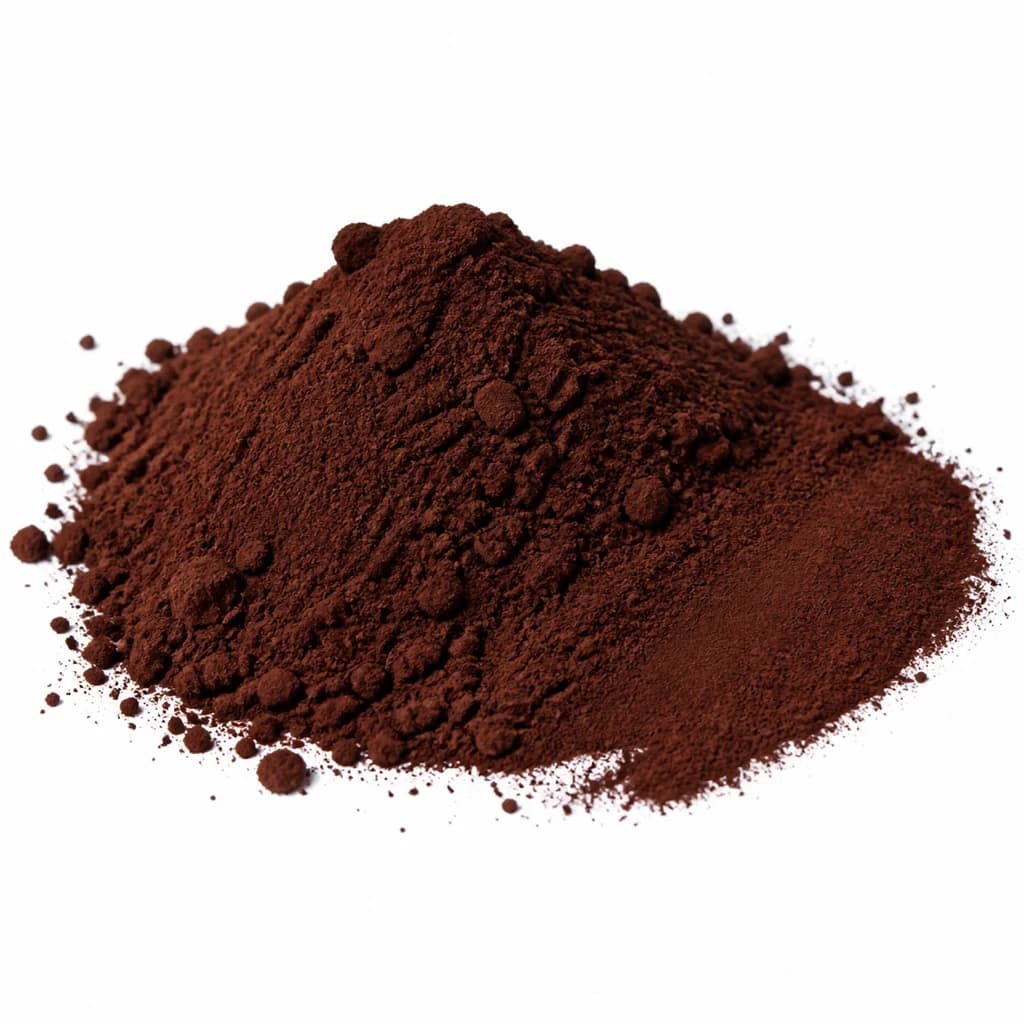
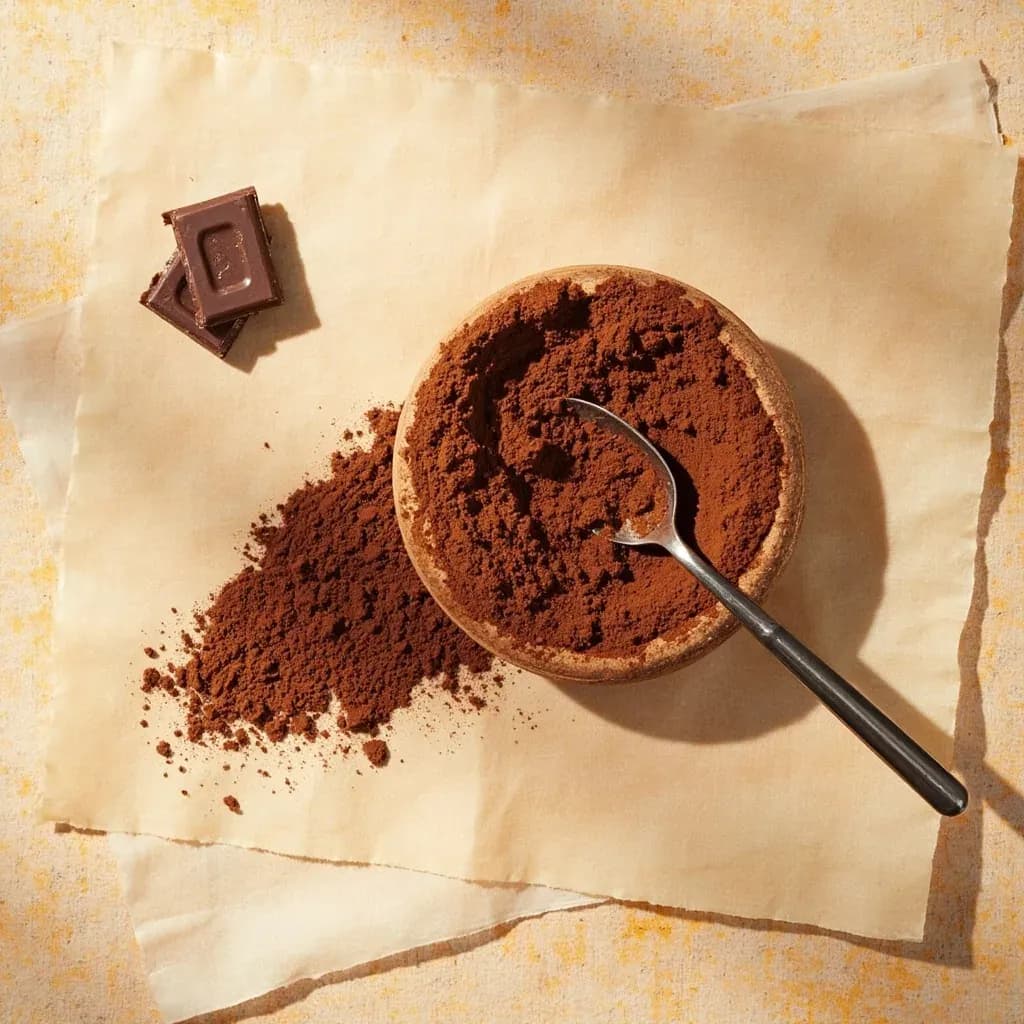
Alkalized cocoa powder — dark, mellow and pH-neutral; pairs with baking powder rather than soda
Dutch-process cocoa is unsweetened cocoa powder that has been treated with an alkaline solution — typically potassium carbonate, sodium carbonate, or ammonium hydroxide — before being dried and milled. The treatment, developed by the Van Houten company in the Netherlands in the 19th century, neutralizes the natural acids in cocoa (raising the pH from roughly 5.0–5.8 to somewhere between 6.8 and 8.0), which fundamentally changes how the powder looks, tastes, and behaves in a recipe.
In the cup, Dutch-process cocoa reads as darker, rounder, and less sharply bitter than natural cocoa. The harsh fruity and acetic notes are dialed down; what remains is a smooth, mellow chocolate flavor that sits comfortably alongside sugar, dairy, and other sweet ingredients. Because the particles disperse more easily, the powder dissolves readily into cold milk or water, which is why European-style drinking chocolates almost always rely on an alkalized cocoa.
The most important practical difference, and the one that catches home bakers most often, is the leavening. The acid in natural cocoa reacts with baking soda to produce lift and to deepen browning; Dutch-process cocoa has been neutralized, so it no longer reacts with soda. A recipe written for Dutch-process almost always calls for baking powder (which contains its own acids) and may also include a true acidic ingredient like buttermilk or brown sugar for flavor balance. Reach for natural cocoa when the recipe says baking soda, and Dutch-process when it says baking powder — that single rule will resolve most of the confusion in older or European cookbooks.
- Measured in
- g
- Storage
- Pantry
Find it in
Suits
Types & varieties
Mild alkalization (pH ~6.5–7.0); gentler flavor, lighter brown color, sometimes sold as "breakfast cocoa"
Standard alkalization (pH ~7.0–7.5); the everyday dark-brown baking cocoa used in most European and American recipes
Stronger alkalization (pH ~7.5–8.0); very dark, smooth, slightly earthy
Extremely alkalized, nearly black powder with a faintly metallic edge; the cocoa behind Oreo-style cookies; almost always blended with regular Dutch-process at 25–50%
Very lightly alkalized; retains a reddish tint used in specialty baking
Why the leavener matters
Cocoa powder is naturally acidic, and that acidity is not just a flavor feature — it is a chemical tool. In a recipe using baking soda (an alkaline leavener), the acid in natural cocoa is one of the ingredients that creates carbon dioxide and gives the bake its rise. Dutch-process cocoa has had that acid neutralized, so the same reaction no longer happens. Using Dutch-process with baking soda tends to produce a flat, dense crumb, and any excess soda left unreached by acid can read as a bitter, soapy aftertaste. Using natural cocoa with baking powder produces a cake that browns poorly and tastes sharper than intended.
The fix is mechanical. To swap natural for Dutch-process in a baking-powder recipe, replace the baking powder with about one-quarter its volume of baking soda, and make sure the batter still has an acid present — buttermilk, sour cream, yogurt, brown sugar, or even a teaspoon of vinegar. To go the other way, swap Dutch-process for natural in a baking-soda recipe, and add roughly 1/8 teaspoon of baking soda per 3 tablespoons of cocoa, plus a splash of acid if the formula does not already include one.
- Recipe calls for baking soda → assume natural cocoa.
- Recipe calls for baking powder → assume Dutch-process.
- Unclear which the author meant? Look for buttermilk, sour cream, or vinegar; their presence points to natural cocoa and baking soda.
Choosing a cocoa for the job
Treat Dutch-process as a default for any dessert where you want a deep, mellow chocolate presence that does not fight sugar — dark layer cakes, fudgy brownies, ganache, custards, hot cocoa. Reach for natural cocoa when the recipe is built around its acidity: devil's food cake, classic red velvet with buttermilk and soda, and any chocolate cake that depends on a tangy lift. Black cocoa is a specialist tool for cookie fillings and very dark, Oreo-style biscuits; it is almost never used straight because its flavor is one-dimensional and slightly metallic.
- Dark color + mellow flavor = Dutch-process (cake, brownies, ganache, drinking chocolate).
- Tangy crumb + baking soda = natural (devil's food, traditional red velvet).
- Jet-black cookie or filling = black cocoa, usually blended with regular Dutch-process.
Common uses
Tips & pitfalls
- Match cocoa to leavener — Dutch-process with baking powder, natural with baking soda. Swapping one without the other is the single most common mistake in chocolate baking.
- Sift before measuring; Dutch-process compacts in the bag and a packed cup can throw off a recipe noticeably.
- Reinforce flavor with a small pinch of espresso powder; it deepens perceived chocolate without adding the bitterness that alkalization sometimes masks.
- For Oreo-style cookies, blend 25–50% black cocoa into regular Dutch-process — pure black cocoa tastes flat and faintly metallic on its own.
- Read the label. Hershey's Special Dark is Dutch-process; the standard Hershey's unsweetened is natural. The cans look almost identical.
- Use Dutch-process for cold-mixed drinking chocolate; its alkalized particles disperse in cold milk far better than natural cocoa, without needing to heat the liquid first.
- Store in an airtight container away from spices and strong aromatics; the powder can pick up off-odors easily.
- When a recipe lists only "unsweetened cocoa powder" and calls for baking powder, assume Dutch-process; when the leavener is baking soda, assume natural.
Nutrition
Energy
954 kJ · per 100 g
Where the calories come from
Protein
19.6g
39% DV
Carbs
57.9g
21% DV
Fat
13.7g
18% DV
Fiber
37g
132% DV
Sugars
1.8g
of which
Sodium
21mg
1% DV
Source · USDA FoodData Central · approx. Cocoa, dry powder, unsweetened
View on FDC →In the shops
Matched grocery products
No matched grocery products for Dutch-Process Cocoa yet.
Good to know
- Also known as
- Dutched cocoa, alkalized cocoa, European-style cocoa
- Origin
- Netherlands; alkalization developed in the mid-19th century, attributed to the Van Houten company
- Process
- Cocoa nibs, liquor, or pressed cake are treated with an alkaline solution (potassium carbonate, sodium carbonate, or ammonium hydroxide), then dried and ground
- pH range
- Approximately 6.8–8.0, versus 5.0–5.8 for natural cocoa
- Fat content
- Typically 20–24% residual cocoa butter; "low-fat" versions run lower
- Color
- Dark reddish-brown to nearly black depending on degree of alkalization
- Leavener pairing
- Pairs with baking powder; does not react with baking soda
- Storage
- Airtight, cool, dry, dark; keeps 1–2 years, generally longer than natural cocoa
Substitutes
- Natural cocoa powder — 1:1 by volume, but you must adjust leavener: swap baking powder for baking soda at roughly one-quarter the amount, and make sure the recipe still contains an acid (buttermilk, sour cream, brown sugar, or vinegar)
- Black cocoa (for ultra-dark cookies only) — Use sparingly or blend at 25–50% with regular Dutch-process; on its own it tastes flat and slightly metallic
- Carob powder — Acceptable only in non-chocolate applications; it lacks true cocoa flavor and will read sweeter and beanier — swap 1:1 and recalibrate sugar
Pairs with
Also called
dutched cocoa · alkalized cocoa · Dutch cocoa powder