Grains & Rice
Pearled Farro
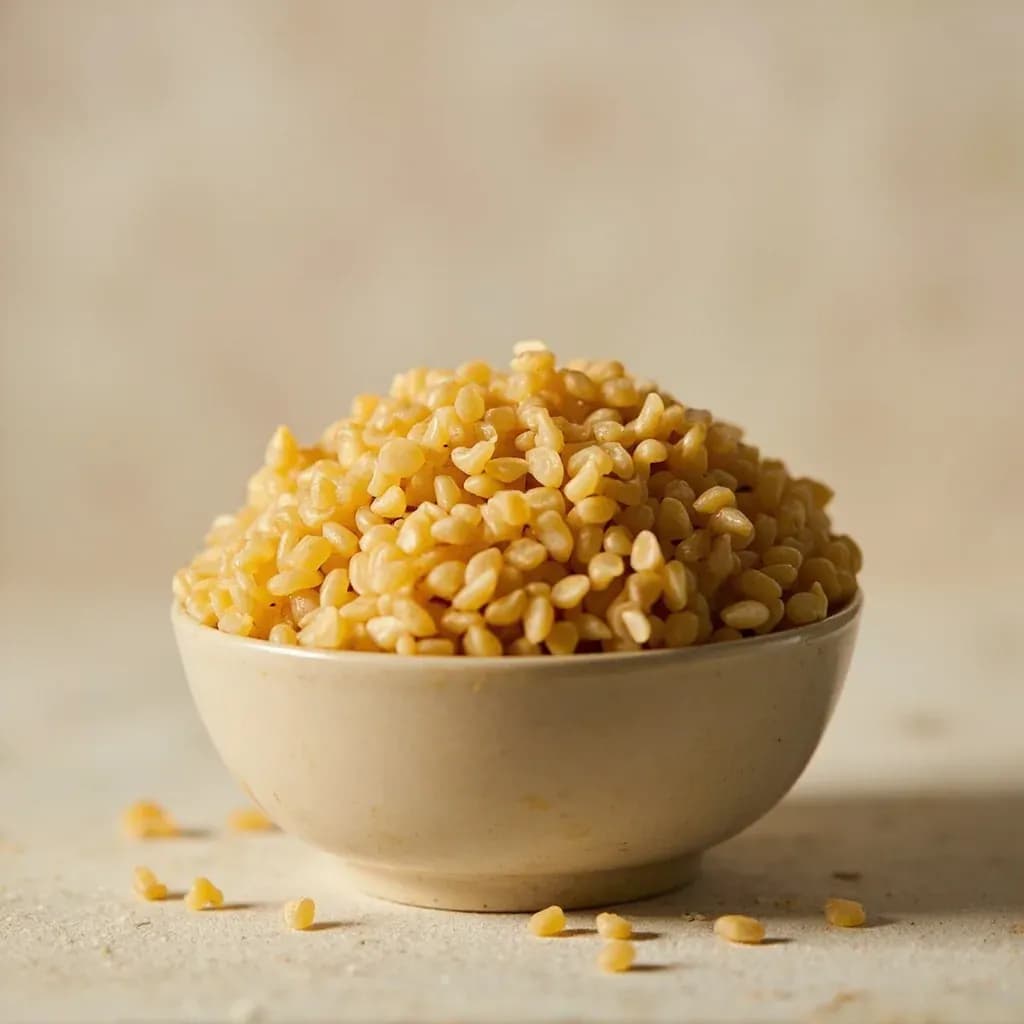
Farro with the bran partly polished off so it cooks faster, around 20 minutes, while staying nutty and chewy. Great for quick grain salads, risotto-style farrotto, and soups.
Pearled farro is an ancient wheat grain — most often emmer (Triticum dicoccum), though the name is applied loosely to spelt and sometimes einkorn — that has been abrasively polished to remove the tough outer bran layers. What remains is mostly endosperm with a faint trace of bran, which trades a meaningful share of fiber and B vitamins for a much faster, more forgiving cook. Pearled farro simmers to a tender chew in 15 to 20 minutes with no soaking required, making it the most weeknight-friendly form of farro and a reliable pantry grain for cooks who want something more interesting than rice but easier than whole wheat berries.
In the pan, the grains behave a lot like a cross between brown rice and barley: they hold their shape, give a definite nutty bite, and release just enough starch to make a lightly creamy dish when stirred. That starch release is exactly why pearled farro is the classic choice for farrotto, the Tuscan answer to risotto, and why it slips comfortably into grain salads, hearty soups, and pilafs. It is mildly sweet and earthy, with a wheaty backbone that absorbs broths, vinaigrettes, and assertive cheeses without disappearing. Because it still contains gluten, it is not suitable for people with celiac disease, but for everyone else it is one of the most useful whole-food grains to keep in the cupboard.
- Measured in
- g
- Storage
- Pantry
Allergens
Find it in
Suits
Types & varieties
The classic Italian 'farro' and the traditional choice for farrotto and Tuscan bean soups; rich, nutty flavor.
Slightly larger, milder grain; a large share of the 'farro' sold in the U.S. is actually spelt.
Smaller grain with a softer, more delicate chew; less commonly pearled.
Only part of the bran removed; cooks in 25–30 minutes and keeps more nutrition and bite than fully pearled.
Pearled grains broken into smaller pieces; cooks in 10–12 minutes and is good for porridge or quick sides.
Pearled vs. Whole (Hulled) Farro
The package on the shelf is the most important decision, because the two forms behave very differently. Whole or hulled farro has the bran fully intact; it chews like a serious wheat berry, needs 40 minutes or more on the stove, and almost always benefits from an overnight soak. Pearled farro has had the bran polished off; it cooks in 15 to 20 minutes, gives up some fiber and B vitamins in the bargain, and is the form you want for fast weeknight salads, pilafs, and farrotto. Semi-pearled sits between the two: 25 to 30 minutes, a bit more nutritional payoff, and a slightly firmer chew. As a rule, if a recipe simply says 'farro' and you are cooking it tonight, reach for the pearled bag.
- Whole (hulled) farro: bran intact, 40+ min cook, often soaked overnight, maximum bite and fiber.
- Semi-pearled (semi-perlato): partial bran removal, 25–30 min, middle ground for nutrition and texture.
- Pearled (perlato): bran largely removed, 15–20 min, the most forgiving and weeknight-friendly choice.
Buying and Storing
Look for pearled farro in 1 lb / 500 g bags or in bulk bins, often near the rice, barley, and other whole grains. Italian imports are common, and American brands frequently source from Italy as well. The grains should look pale tan to golden, uniform in size, and free of dust or debris. If the species matters to your recipe (a strict Tuscan zuppa, for instance, traditionally calls for emmer), check the label — many U.S. products labeled 'farro' are actually spelt, and the difference is more botanical than culinary for most dishes.
- Keep dry farro in an airtight container in a cool, dark place for 6–12 months; freeze for longer storage.
- Refrigerate cooked farro up to 4–5 days; freeze in portioned containers up to 3 months.
- Cooked farro freezes well — slightly undercook it if you plan to reheat in a sauté or grain bowl.
Common uses
Tips & pitfalls
- Toast the dry grains in a little oil or butter for 2–3 minutes before adding liquid; the added nuttiness is well worth the extra minute.
- Rinse pearled farro briefly under cool water before cooking to wash off residual dust and surface starch, which helps prevent a gluey pot.
- Cook in well-salted water — or better, broth — the way you would pasta, then drain any excess rather than absorbing it all off.
- Pull the pot at al dente: the grains should still have a slight chew in the center, because they continue to soften as they cool and absorb liquid.
- For farrotto, add hot broth in ladlefuls and stir constantly, just as with risotto — pearled farro releases more starch than whole farro and builds creaminess quickly.
- Let the grains rest off the heat for 5 minutes after cooking; the texture firms up and the flavors settle into a cleaner, nuttier profile.
- Cook a big batch — pearled farro holds up beautifully for 4–5 days and is arguably better in cold salads the next day.
- Do not confuse pearled (15–20 min) with whole or hulled farro (40+ min or overnight soak); the packages look similar, but timing them wrong ruins the texture.
Nutrition
Nutrition
No USDA FoodData Central match for Pearled Farro yet. We surface a per-100 g profile once a generic whole-food entry is matched and verified.
In the shops
Matched grocery products
No matched grocery products for Pearled Farro yet.
Good to know
- Other names
- Perlato farro; the semi-pearled form is called semi-perlato
- Type
- Ancient wheat, most often emmer (Triticum dicoccum); often spelt in U.S. markets
- Processing
- Abrasive pearling removes the bran, leaving mostly the endosperm and a trace of bran
- Cooking time
- About 15–20 minutes simmer; no pre-soak needed
- Liquid ratio
- Roughly 1 cup pearled farro to 2½–3 cups water or broth
- Yield
- 1 cup dry yields about 2½–3 cups cooked
- Texture when cooked
- Pleasantly chewy with a definite bite; nuttier and less firm than whole farro
- Gluten
- Contains gluten — not suitable for celiac or gluten-free diets
Substitutes
- Pearled barley — Closest in chewy texture and quick cooking time; slightly starchier and milder, works in soups and salads.
- Spelt berries (hulled) — Very similar flavor; needs 40–60 minutes, so not a drop-in for time, but an excellent 1:1 swap in salads and pilafs.
- Semi-pearled farro — Add about 10 minutes to cooking and a bit more liquid; nearly identical eating experience.
- Wheat berries — Firmer and more toothsome; needs 45+ minutes and more liquid. Use when you want a heartier, more rustic bite.
- Brown rice — Gluten-free option with a chewy bite; flavor is more neutral, cooking time is similar (about 25–30 minutes).
Pairs with
Also called
perlato farro · semi-pearled farro