Spices
Pimentón de la Vera (DOP)
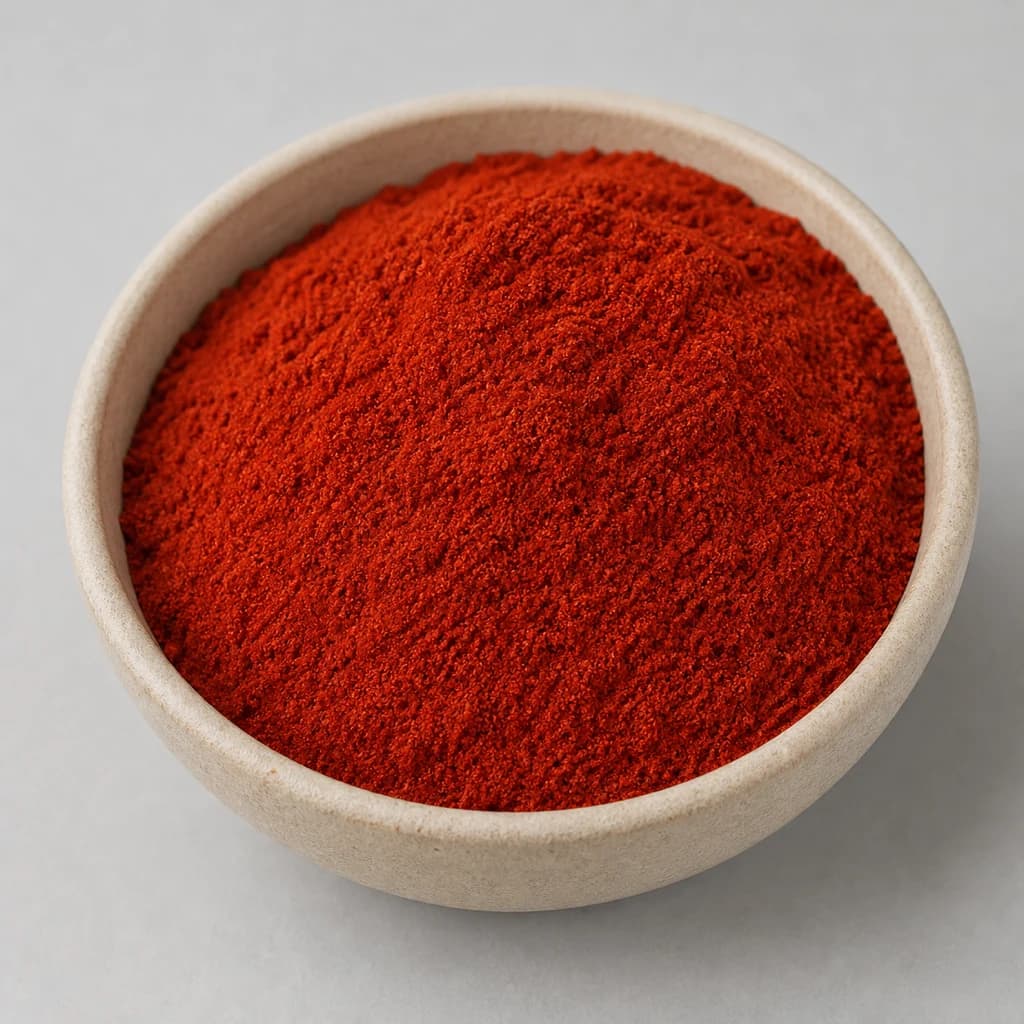
Oak-smoked Spanish paprika with deep campfire aroma. Bloom in warm oil for chorizo, paella sofrito, or patatas; a little overwhelms, so dose lighter than sweet paprika.
Pimentón de la Vera is the protected-designation Spanish paprika made from red peppers (Capsicum annuum) dried over slow-burning oak in the La Vera comarca of Cáceres, Extremadura. Unlike air- or sun-dried paprikas, the peppers cure in low, ventilated drying houses (secaderos) for 10–15 days, absorbing a deep, woodsy smoke that gives the finished powder its signature note — closer to a resinous hearth than to meat smoke. It carries Denominación de Origen Protegida status, with the smoking method and pepper varieties codified in the DOP rules.
The grade matters as much as the smoke. There are three official types — dulce (sweet, bright red, from Bola and Jaranda peppers), agridulce (bittersweet, deeper red-brown, mostly Jariza), and picante (hot, but still oak-smoked). Agridulce is the chorizo grade and the one most home cooks underuse; it has a savory, slightly fermented depth that sweet paprika cannot match. Only the picante carries real heat; dulce and agridulce are mild by any standard.
In the pan, pimentón behaves like a fat-soluble essence: it releases its aroma in seconds once it meets warm oil, and scorches easily if the pan is too hot. Treat it more like a finishing spice or a quick-bloom seasoning than a long-cooked one — though adding it early in a sofrito gives a mellower, integrated flavor. Color and aroma both fade quickly once the tin is open, so buy small and use it fast.
- Measured in
- tsp
- Storage
- Store In An Airtight Tin Away From Light & Heat
Find it in
Suits
Types & varieties
Sweet, mild, bright red; from Bola and Jaranda peppers; the everyday cooking and finishing grade
Bittersweet, medium-bodied, deeper red-brown; mainly Jariza peppers; the classic chorizo grade with a savory, slightly fermented depth
Hot, but still oak-smoked; made with a proportion of hot pods (often Jaranda type)
Why oak smoke, why La Vera
The smoking tradition is usually traced to the Hieronymite monks of the Yuste monastery in the 16th century. The La Vera climate — humid, with limited late-summer sun — made air-drying the peppers unreliable, so the monks adapted by smoking them over oak in low drying houses. The method stuck, and the resulting flavor profile became the regional standard; the same low-and-slow oak smoking is required by today's DOP. What you taste in a fresh tin is less like cured meat and more like a stone hearth or a forest: resinous, woody, slightly tannic, with the bright red-pepper fruit underneath. Hungarian smoked paprika is also typically oak-smoked, but usually runs sharper and sits on a less sweet pepper base, which is why cooks notice a difference in the pan.
- Smoking takes 10–15 days — far longer than industrial paprika processes
- The peppers go from fresh pod to smoked-dry in the secadero; air-drying is not the primary method under the DOP
- Color is a useful freshness signal: bright red means recent; brick-orange or brown means faded
Choosing and storing
Buy in small tins (70 g is the traditional Spanish size) from a grocer that turns stock quickly. Avoid the large supermarket jars that have been sitting under fluorescent lights for months — by the time you open them at home, much of the smoke has oxidized away. Once opened, decant into an airtight opaque container and store in a cool, dark cupboard. Do not refrigerate: condensation will clump the powder and dull the aroma. If the color has gone brick-orange and the smoke on the air is faint, the tin is past its prime and best reserved for long-cooked stews, where some of the loss is masked by other ingredients.
Common uses
Tips & pitfalls
- Bloom in warm (not smoking) extra-virgin olive oil for 20–40 seconds before adding liquids — the standard Spanish technique that unlocks the fat-soluble aroma compounds.
- Never bloom in very hot oil or in butter: the powder scorches within seconds and turns acrid and bitter. Medium-warm oil is the sweet spot.
- Dose light. About ½ teaspoon per 4 servings is a sensible starting point for stews; finish with a fresh pinch if needed, but you cannot undo over-powdering.
- Add late for a clean, bright smoke; add early in the sofrito for a mellower, integrated flavor. Both are legitimate — pick the outcome you want.
- Buy small and use fast. A 70 g tin from a busy Spanish grocer will outperform a half-kilo jar that has been on a warm shelf for half a year.
- If a tin has been open more than a year and the color has gone brick-orange, retire it to long braises only — most of what you paid for has oxidized.
- Keep a separate finishing tin if you cook often; the finishing grade never gets bloomed or simmered, so its aroma stays intact for plating.
Nutrition
Nutrition
No USDA FoodData Central match for Pimentón de la Vera (DOP) yet. We surface a per-100 g profile once a generic whole-food entry is matched and verified.
In the shops
Matched grocery products
No matched grocery products for Pimentón de la Vera (DOP) yet.
Good to know
- Origin
- La Vera comarca, Cáceres province, Extremadura, Spain
- Protected status
- Denominación de Origen Protegida (DOP); Spanish DO granted 1998
- Smoking fuel
- Oak (Quercus ilex and Quercus pyrenaica)
- Smoking time
- 10–15 days over slow oak smoke in ventilated secaderos
- Pepper varieties
- Capsicum annuum — principally Jaranda, Jariza, and Bola
- Harvest
- Late September through October
- Grades
- Three: dulce (sweet), agridulce (bittersweet), picante (hot) — distinguished by variety and ratio, not just heat
- Shelf life
- Best within 12–18 months of opening; color and aroma drop quickly
Substitutes
- Hungarian smoked paprika — Closest single substitute; usually a touch sharper and slightly less earthy, but acceptable in most savory Spanish dishes. Sweet and hot grades are widely available.
- Plain sweet paprika plus a drop of liquid smoke — Emergency patch only — roughly 8 parts paprika to 1 part liquid smoke. Will never quite match the woody depth of oak-smoked Vera.
- Other Spanish smoked paprikas (non-DOP) — Often made from Bola peppers and smoked over oak; similar profile but typically less complex than Vera. Fine for everyday cooking.
- Kashmiri chili powder — For color and gentle warmth in non-traditional applications; lacks the smoke, so pair with another smoky element if needed.
Pairs with
Also called
smoked spanish paprika · pimenton · la vera paprika · spanish smoked paprika