Proteins
St. Louis Cut Ribs
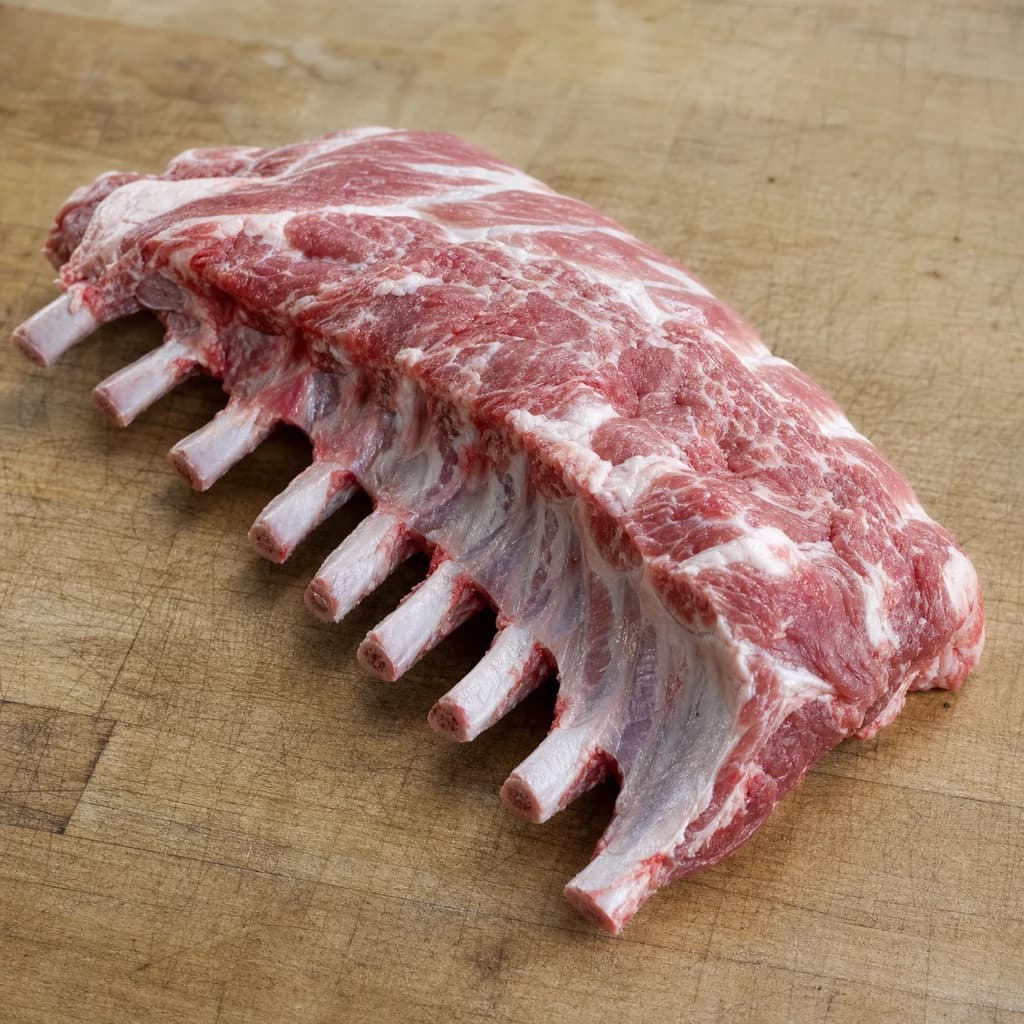
Spare ribs trimmed to a flat, even rack (sternum and skirt removed). Meatier than baby backs; ideal for low-and-slow smoking or braising until the meat pulls from the bone.
St. Louis cut ribs are spare ribs that have been butchered into a uniform, flat rectangle. The trim takes a whole slab of belly-side spare ribs and removes the sternum, the rib tips (the wedge of cartilage at the breastbone end), and the thin skirt flap of meat on the inside curve. What is left is a tidy rack of ten to thirteen bones with parallel edges, even thickness, and a clean footprint on the grate or in the pan.
That standardization is the whole point. A spare rib in its natural shape has a wide, bony end and a narrow, cartilaginous end, which means the thin tip overcooks long before the meaty center is done. By squaring it off, the cook gets predictable heat penetration, even bark formation, and a rack that can be sliced cleanly into portions. It is the format that dominates competition barbecue and commercial smokehouses, and the format most recipes mean when they say "spare ribs."
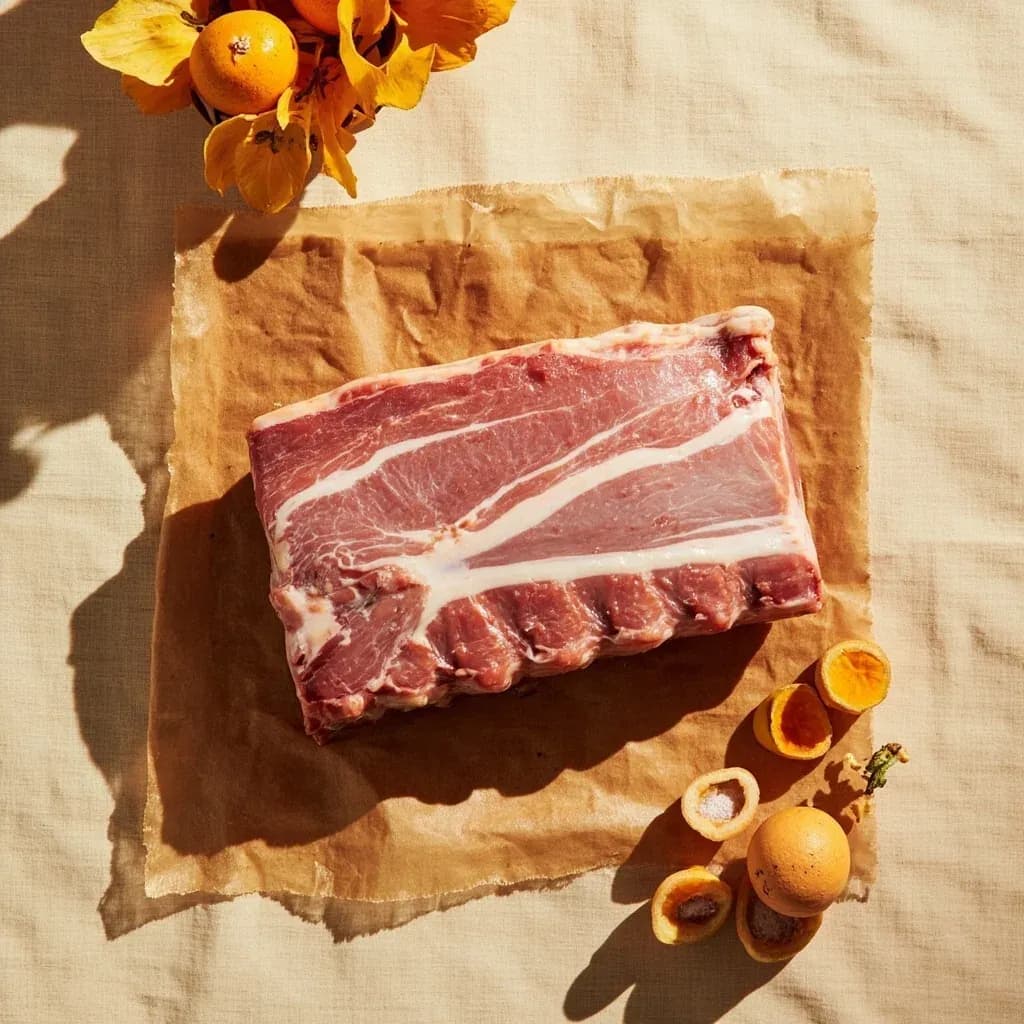
The rack feels meaty and dense in the hand, with a generous fat cap on the meat side and a translucent membrane (the pleura) clinging to the bone side. It is fattier and more connective than baby backs, which means it tolerates — and rewards — long, low cooking. The fat renders, the collagen softens into gelatin, and the meat loosens from the bone while staying moist enough to chew rather than disintegrate.
- Measured in
- g
- Storage
- Refrigerate
Find it in
Types & varieties
The standard: spare ribs squared off by removing sternum, rib tips, and skirt.
The parent cut before St. Louis trimming; includes the sternum, rib tips, and skirt flap.
The cartilaginous wedge trimmed off the sternum end; smoked or braised separately, often chopped into a burnt-end style.
The thin flap of meat and fat on the inside curve of the spare; removed during trim but can be ground or cooked on its own.
Effectively the same rectangular trim; the names are used interchangeably in many shops.
A different cut from the upper rib cage; leaner, more curved, and faster-cooking than St. Louis.
Why the trim exists
A whole spare rib is two things at once: a meaty middle and a triangular wedge of cartilage and bone at the sternum end. On a grill or in a smoker, the wedge reaches the stall and then dries out long before the meaty portion has surrendered its connective tissue. The St. Louis cut solves that by removing everything that doesn't cook at the same rate as the rest.
- Removing the sternum and rib tips leaves a flat surface that contacts the grate or rack evenly, so heat is uniform edge to edge.
- Trimming the skirt flap prevents thin, ragged edges from charring or tearing during the cook.
- A rectangular rack slices into clean, equal portions for plating, judging, and portion control.
- The trim turns the spare rib into a competition-legal shape; most BBQ sanctioning bodies define 'spare ribs' by the St. Louis trim.
Reading doneness without a thermometer
Internal temperature gets you close, but spare ribs are one of the cuts where feel and flex tell you more than numbers. Lift the rack with tongs at the center and let one end droop; the surface should crack along the top of the meat, and the bones should begin to show through the surface as the connective tissue gives up. If it bends almost in half and tears apart, it has gone past tender into mush.
- Probe tender: a thermometer probe slides into the meat between two bones with no resistance, like pushing into room-temperature butter.
- Bend test: pick up the rack from the middle with tongs; the surface should crack visibly and the ends should point toward the floor.
- Bone pull: a bone you grasp with a paper towel should wiggle and slide out cleanly when the rack is at the tender end of done.
- Bark check: the exterior should be deep mahogany to almost black in spots, dry to the touch, and tight against the meat rather than flaking off.
Common uses
Tips & pitfalls
- Pull the membrane every time: slide a butter knife or the tip of a spoon under the pleura at one corner, grip it with a paper towel for traction, and peel it off in one sheet. It will not render, and it blocks rub and smoke from reaching the bone-side meat.
- Trim to a uniform thickness by beveling any thick hump of meat over the center bones down to match the thinner edges; this prevents the thin sides from overcooking while the middle is still tough.
- Salt the rack the night before and refrigerate it uncovered. The dry brine seasons deeply and dries the surface so the bark sets faster in the smoker.
- Pull by feel, not by the clock: every rack is different, and ambient temperature, humidity, and rub composition change the cook time. Aim for probe tender at 195–203°F and stop watching the timer.
- Wrap once the bark is the color of dark mahogany and the rub has set, not before. Foil braises in steam for a fall-off-the-bone texture; butcher paper lets the bark stay firmer while the meat tenderizes.
- Rest loosely tented for 10–20 minutes before slicing. Cutting into a just-off-heat rack dumps juice onto the board instead of onto the plate.
- Sauce in the last 20–30 minutes of the cook. Sugar-based sauces applied early will burn, blacken, and turn the bark bitter.
- Common mistakes to avoid: cooking too hot (fat renders before collagen softens and the meat dries out), skipping the membrane, saucing at the start, slicing immediately off the heat, and trimming so completely that all the fat cap is gone — that fat is what keeps the meat lubricated through a long cook.
Nutrition
Energy
636 kJ · per 100 g
Where the calories come from
Protein
21.8g
44% DV
Carbs
0g
0% DV
Fat
6.5g
8% DV
Fiber
0g
0% DV
Sugars
0g
of which
Sodium
45mg
2% DV
Source · USDA FoodData Central · approx. Pork, fresh, loin, center rib (chops or roasts), boneless, separable lean only, raw
View on FDC →In the shops
Matched grocery products
 €2.20
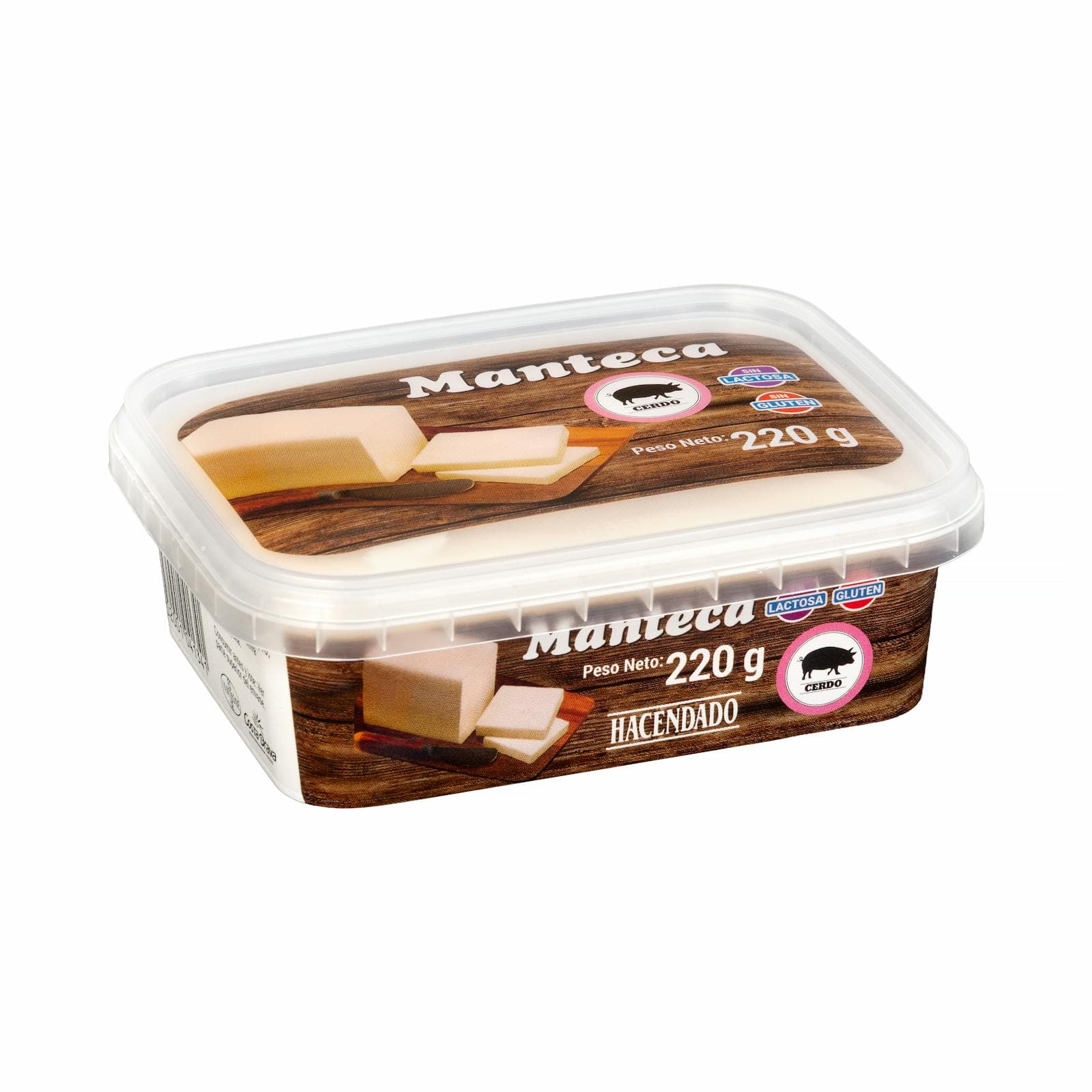
€2.20Pork Lard
Hacendado · 220 g · Mercadona
 €3.40
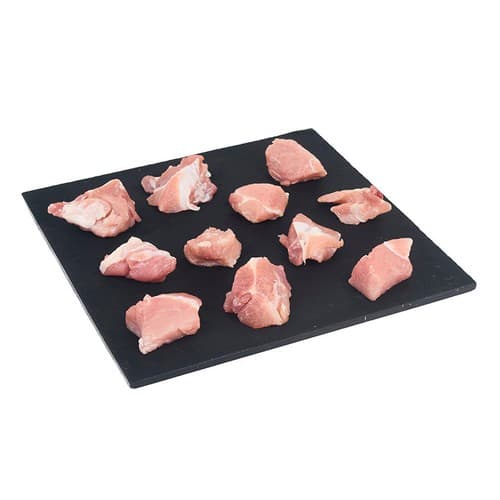
€3.40Pork Stew
BONPREU · ud · Bonpreu
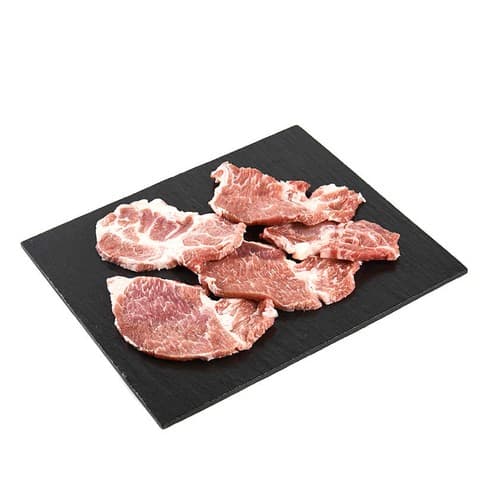 €3.45
€3.45Lean Pork
BONPREU DE L'ERA · ud · Bonpreu
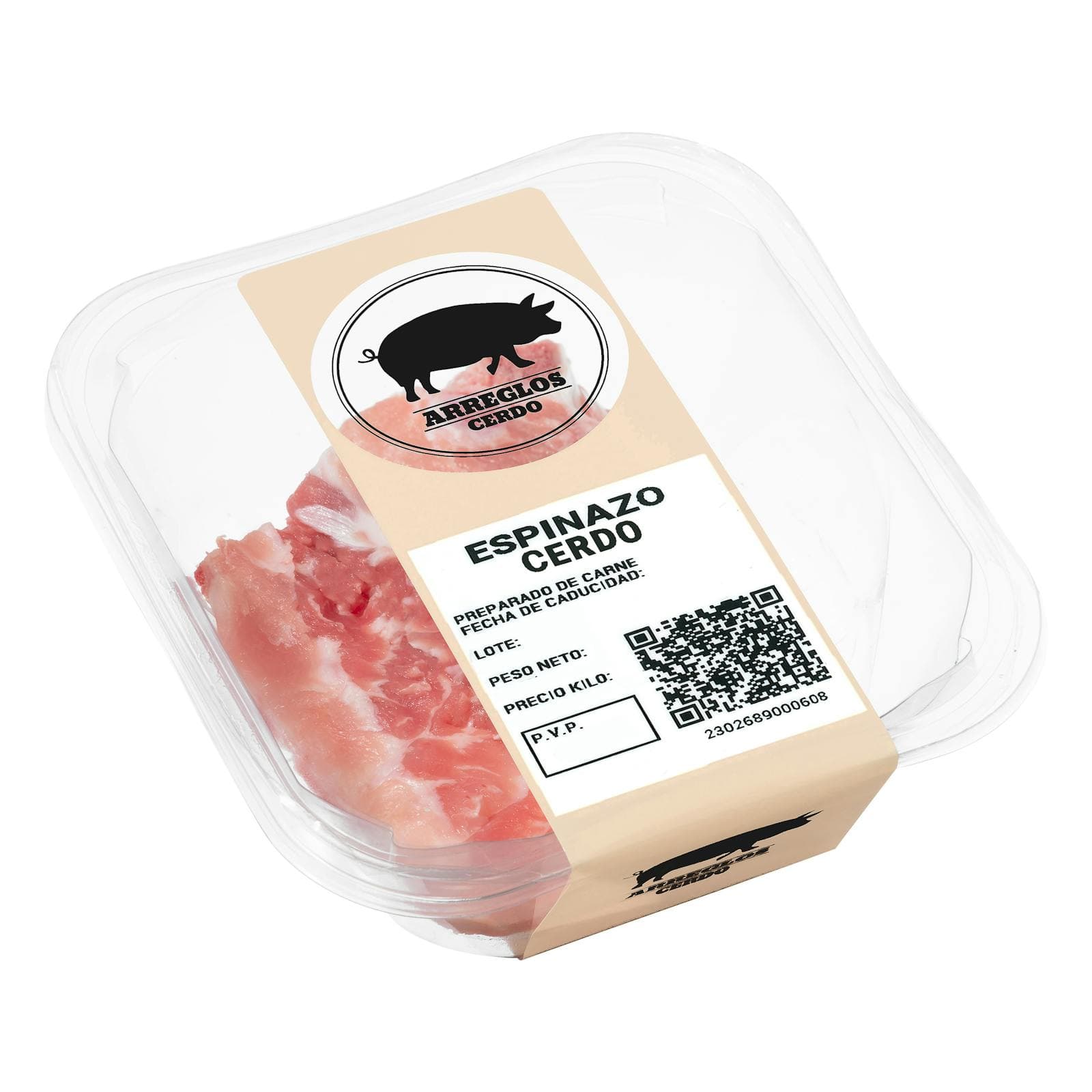 €2.10
€2.10Pork Spine
300 g · Mercadona
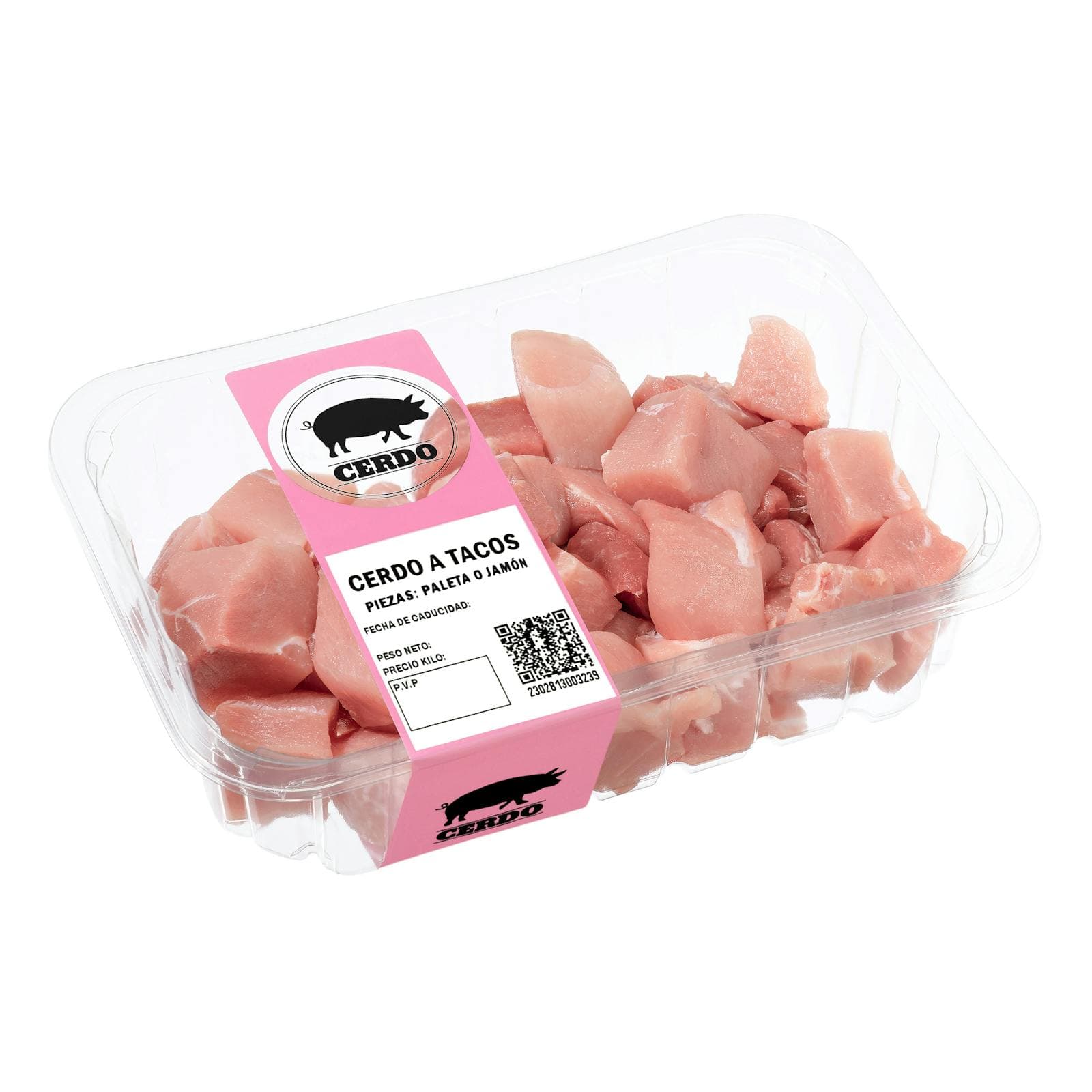 €3.22
€3.22Diced Pork
560 g · Mercadona
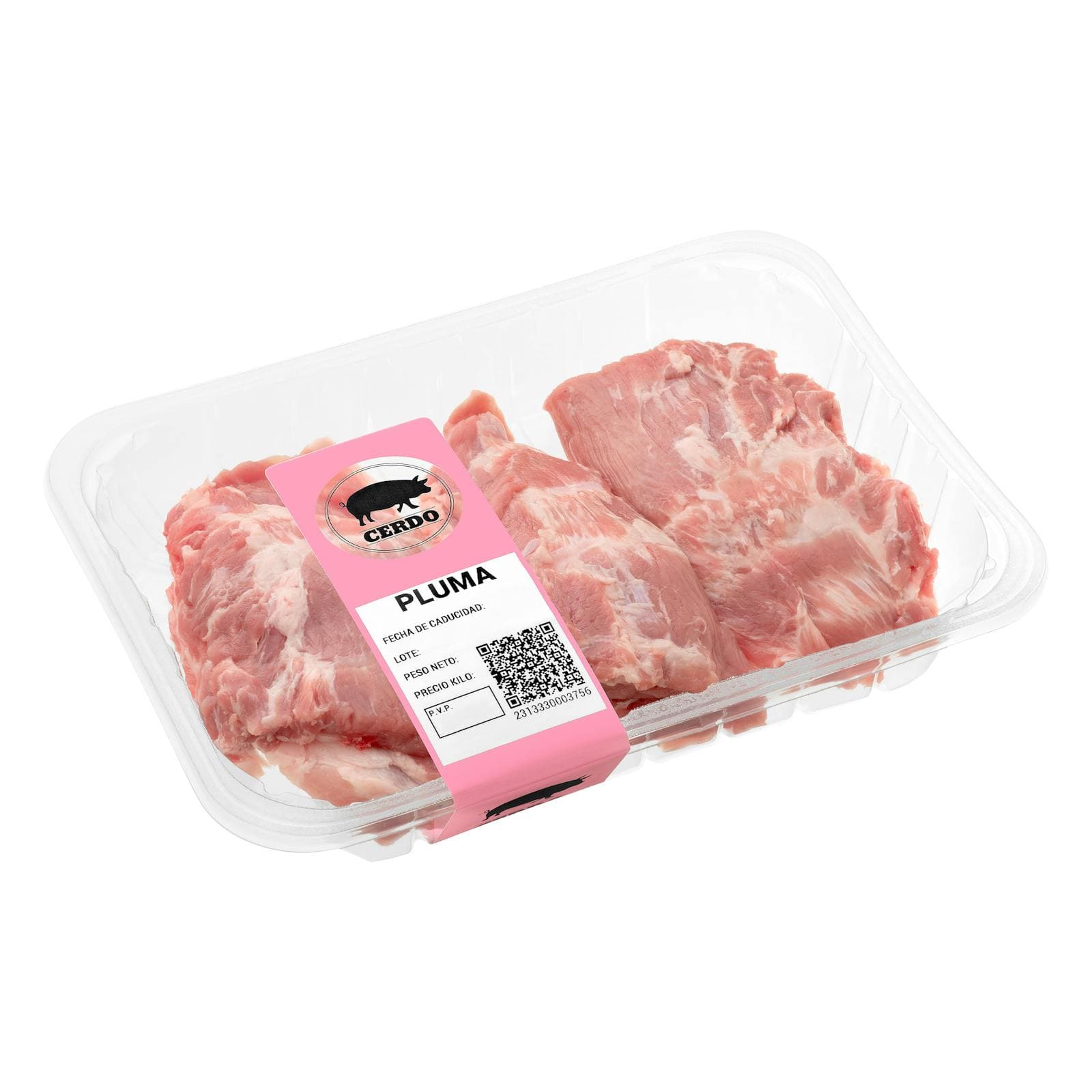 €3.75
€3.75Pork Pluma
300 g · Mercadona
Good to know
- Also known as
- St. Louis–style spare ribs; center-cut spare ribs
- Primal source
- Belly side of the pig's rib cage (ventral portion), typically ribs 6–10
- Standard trim
- Sternum, rib tips, and skirt flap removed to leave a flat rectangular rack
- Typical rack weight
- 2.0–3.0 lb (0.9–1.4 kg) after trimming
- Bone count
- About 10–13 rib bones per rack
- Membrane
- Tough pleura on bone side should be removed before seasoning
- Doneness benchmark
- 195–203°F (90–95°C) internal; meat should bend and crack the surface without falling apart
- Cook yield
- Roughly 50–60% of raw trimmed weight after long smoking
Substitutes
- Untrimmed spare ribs — Same meat, but plan on 20–30 minutes of butchery to remove sternum, rib tips, and skirt; cook time matches once trimmed.
- Baby back ribs — Leaner and quicker-cooking; reduce time by about a third and watch for drying, especially over the loin end.
- Pork rib tips — The trimmed-off wedge from the St. Louis cut; cooks faster because of the cartilage and works well for chopped rib dishes but not for a full-rack presentation.
- Beef short ribs (flanken or English cut) — Different animal, different texture, but follows the same low-and-slow logic; a useful stand-in for braising and smoking when pork isn't an option.
- Country-style pork ribs — Actually shoulder meat, not ribs; cooks faster, lacks the bone presentation, and won't give you the same chew or bark.
Pairs with
Also called
St. Louis ribs · St. Louis spare ribs · trimmed spare ribs