Produce
Red Potato
Thin-skinned waxy potato that holds its shape when boiled or roasted; ideal for potato salad, gratins, and skin-on roasties where starchy types fall apart.
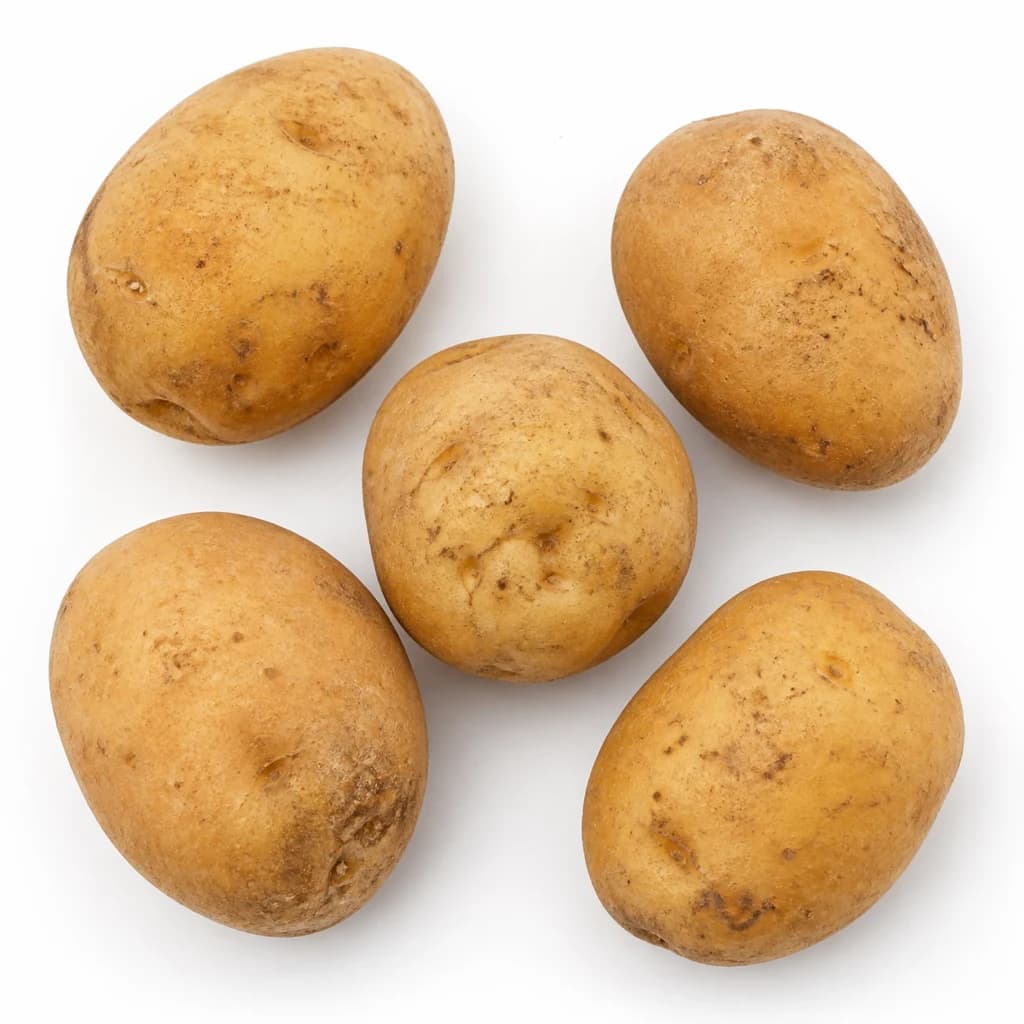
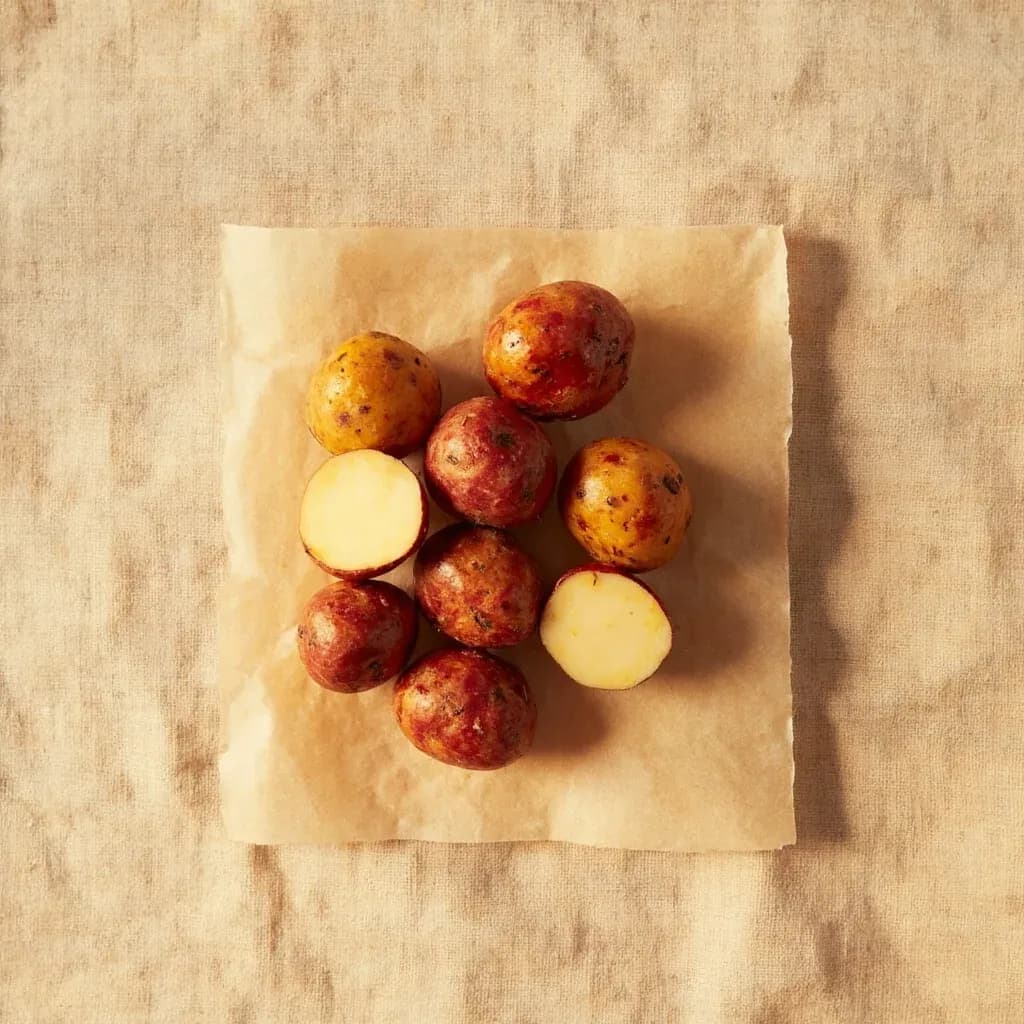
Red potatoes are the everyday workhorse of the waxy potato category: small to medium tubers with a thin, smooth, red-pink skin and dense, creamy-white flesh. Their defining trait is a low starch content (roughly 14–16%, compared to 22% or more in a russet) and correspondingly high moisture, which means the cells stay bonded together when cooked rather than breaking apart into a fluffy, floury mass. That structural integrity is the entire reason cooks reach for them: the cubes stay cubed in a vinaigrette, the slices hold their stack in a gratin, and the roasted halves develop a crisp, lacquered skin without collapsing into mush.
Flavor is subtle — mildly sweet, earthy, sometimes faintly nutty — and the thin skin carries much of that character along with most of the fiber, so it's almost always left on. The trade-off is that red potatoes are a poor choice when you want a starchy, aerated result. A russet will give you a cloud-like baked potato and fries with a shatteringly crisp crust; a Yukon Gold will give you buttery, dense mashed potatoes. Reds will give you a gummy paste if you try to whip them, and they don't fry up crisp, since high moisture and low starch keep the surface from drying into a glassy crust. Choose them when shape, color, and a creamy bite matter more than fluff.
- Measured in
- each
- Storage
- Dark Cool
Find it in
Suits
Types & varieties
The long-standing U.S. commercial standard, especially for potato salad. Tender skin, shallow eyes, a sweet flavor. Now less widely grown due to lower yields and disease susceptibility, but the name persists as a generic label.
Heirloom released in Florida in 1945. Round, deep-red tubers with white flesh; a tough, drought-resistant plant widely grown in the South and Midwest.
Early-season variety from North Dakota (1957), with smooth, oblong, bright-red skin and a mild, waxy flesh. Sold as 'Red Norland' or 'Dark Red Norland'.
Common in the southern U.S.; large, slightly flattened tubers with light-red skin and shallow eyes. Out-yields Red Bliss in warm climates.
Mid-season Iowa State release (1966). Medium-large, round-oblong with bright red skin; stores well and resists scab.
Modern 1999 release from North Dakota State University. Bright red skin, white flesh, good storage and disease resistance; increasingly common in grocery stores.
Smaller, round red with deep-red skin and shallow eyes — a good choice for potato salad where neat, even pieces matter.
European pink-skinned waxy cultivar with a firm, nutty character; frequently interchanged with American reds in salads and roasts.
French heirloom fingerling-type with a reddish-tan skin, dense flesh, and pronounced chestnut-like flavor.
How to choose and store red potatoes
Look for firm, smooth, unblemished tubers with tight, shallow eyes and no green patches, sprouts, or soft spots. Green areas signal solanine, a bitter and mildly toxic compound that develops when potatoes are exposed to light; cut it away deeply or, if the greening is widespread, discard the potato. Avoid any that feel hollow, lightweight, or give under gentle pressure.
Storage is where most home cooks go wrong. Red potatoes want it cool (45–50°F / 7–10°C), dark, dry, and well-ventilated — a paper or burlap bag in a basement, pantry, or cool garage is ideal. The refrigerator is the enemy: temperatures below about 40°F convert the potato's starch to sugar, which produces an unpleasantly sweet flavor and dark, sometimes blackened flesh on cooking. Keep them away from onions, which release moisture and gases that shorten potato shelf life. Properly stored, they'll keep for 2–3 weeks; late-crop potatoes that have been cured can last considerably longer.
Why not mash (or bake) a red potato?
It helps to understand the science before you reach for a ricer. Waxy potatoes have tightly packed cells held together by pectin and reinforced with relatively little starch. When you boil them, the cells soften but stay connected — that's why a red potato cube keeps its edges in a salad. Starchy potatoes like the russet have larger cells with thick, starchy walls that, when heated, gelatinize and absorb water; under mechanical force (a masher, a ricer, a fork), those cells burst apart into a fluffy cloud of separate starch granules, which is exactly what you want for mashed potatoes.
Whip a red potato and the same low starch means there's nothing to fluff: the cells break down into a dense, gluey paste, often with little bits of intact skin that turn chewy. Bake a red potato whole and you'll get a dense, waxy, somewhat damp interior rather than the dry, mealy fluff of a twice-baked russet. Save the reds for dishes where the cell structure is the point, and reach for a Yukon Gold (creamy, medium-starch) or a russet (fluffy, high-starch) when you want to break them down.
Common uses
Tips & pitfalls
- Do not refrigerate — cold storage converts starch to sugar, yielding a sweet taste and darkened flesh on cooking.
- Start in cold salted water for even cooking when boiling; add 1–2 tablespoons of vinegar to the water if you want edges that hold together in a salad.
- Cut to a uniform size (about 1.5-inch chunks) so every piece finishes at the same time — waxy potatoes go from perfectly tender to waterlogged quickly.
- Leave the skin on for color, fiber, and structural integrity; just scrub well with a vegetable brush.
- For crispy roast potatoes, par-boil in salted water, then rough up the surfaces by shaking the pot or pressing each piece with the back of a spoon before adding hot fat.
- Don't try to whip them into fluffy mashed potatoes — reds turn gummy and gluey; use Yukon Gold or russet instead.
- Toss cooked reds with vinaigrette while still warm so they absorb flavor; season in layers (salt the cooking water, then salt again after draining).
- Pick firm potatoes without green spots or sprouts; greening indicates solanine and bitterness — cut deeply or discard.
Nutrition
Energy
293 kJ · per 100 g
Where the calories come from
Protein
1.9g
4% DV
Carbs
15.9g
6% DV
Fat
0.1g
0% DV
Fiber
1.7g
6% DV
Sugars
1.3g
of which
Sodium
18mg
1% DV
Source · USDA FoodData Central · Potatoes, red, flesh and skin, raw
View on FDC →In the shops
Matched grocery products
 €0.40
€0.40Potato
210 g · Mercadona
 €4.65
€4.65Potatoes
3 kg · Mercadona
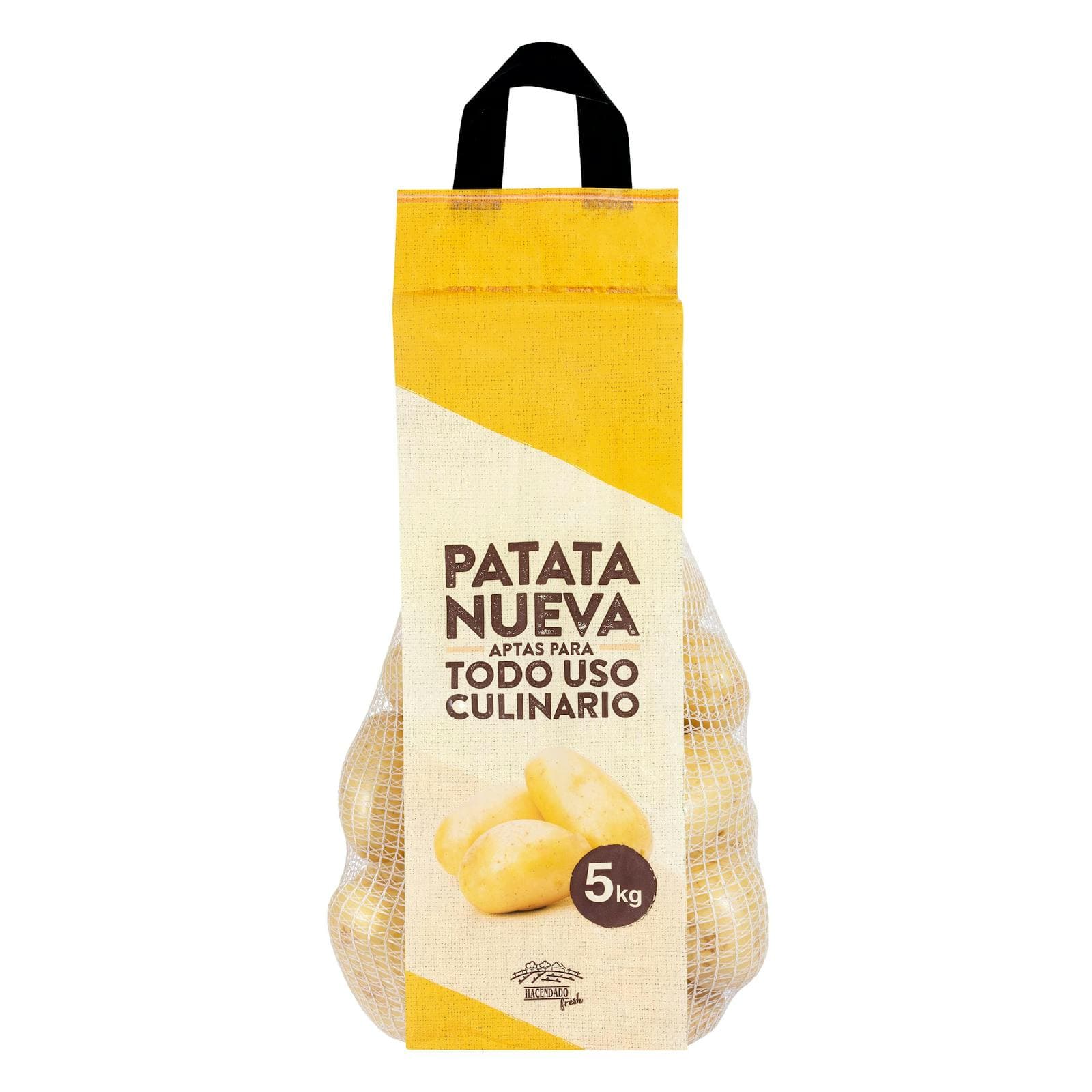 €5.60
€5.60Potatoes
5 kg · Mercadona
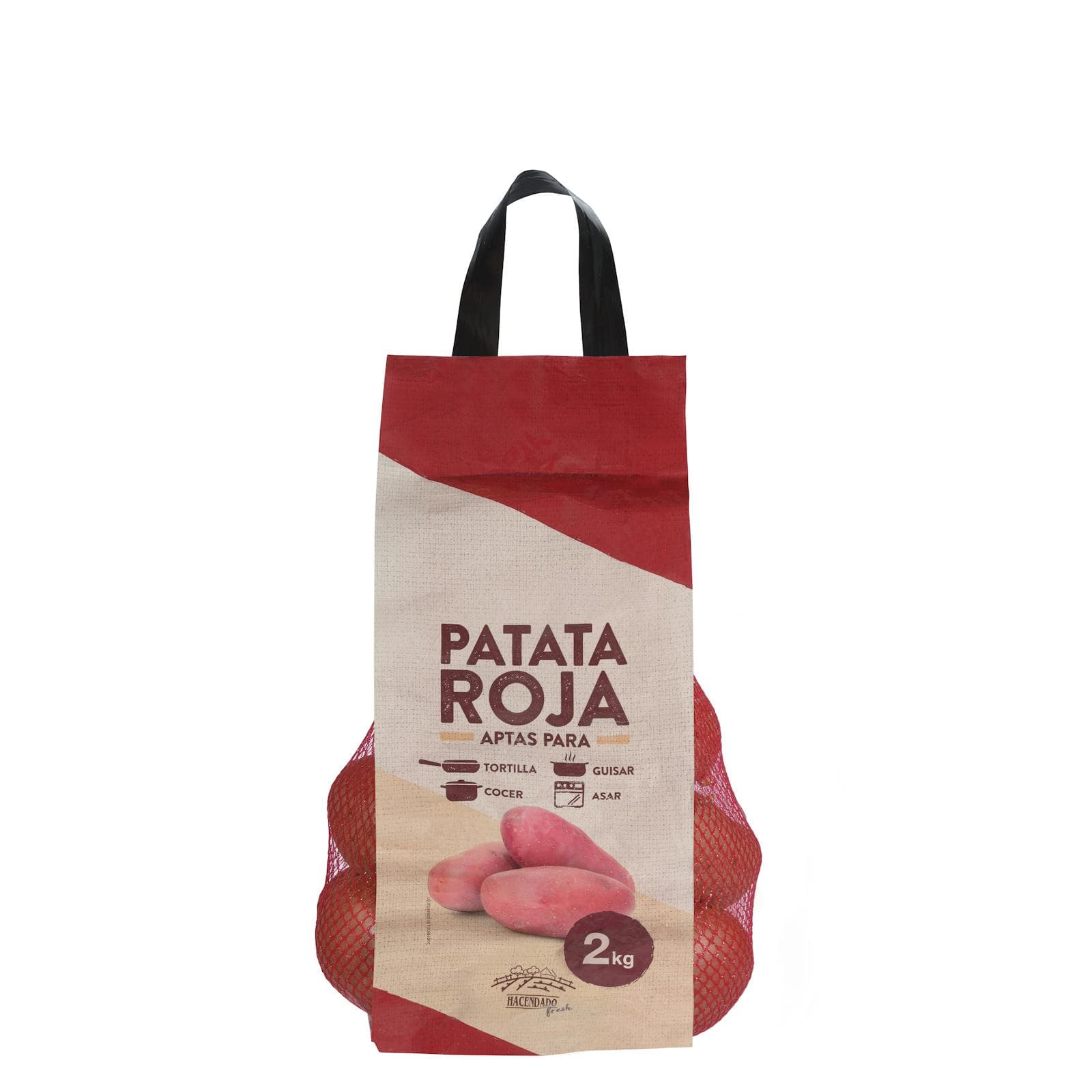 €3.80
€3.80Red Potatoes
2 kg · Mercadona
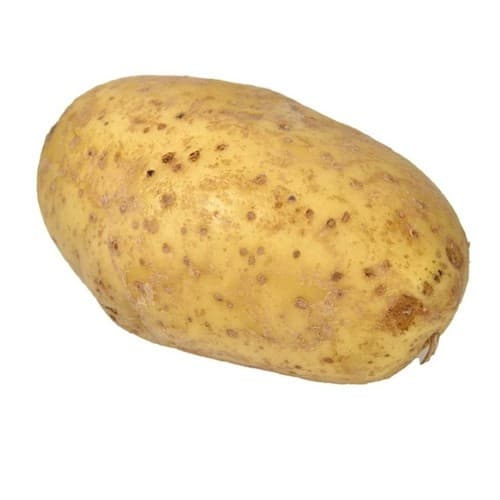 €0.45
€0.45Potato 1 unit
Bonpreu
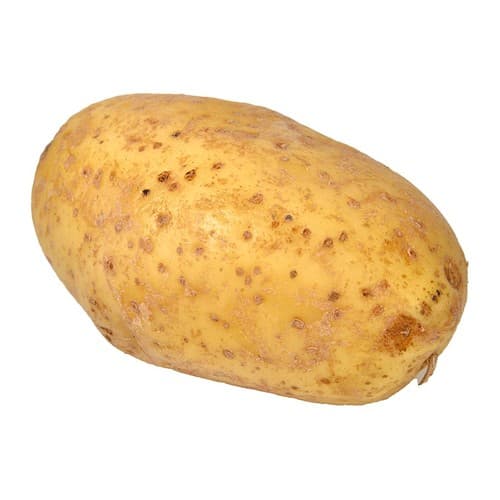 €0.70
€0.70Potato 1 unit
ud · Bonpreu
Good to know
- Category
- Produce — root vegetable, tuber
- Texture
- Waxy, dense, and moist; holds shape when cooked
- Starch content
- Low to medium (≈14–16%, versus ~22% in russets)
- Skin
- Thin, smooth, red-pink; almost always left on
- Flesh
- White to creamy, mildly sweet
- Storage
- Cool (45–50°F / 7–10°C), dark, dry, well-ventilated; never refrigerate
- Shelf life
- 2–3 weeks under proper conditions
- Best for
- Boiling, roasting, smashing, gratins, potato salad, soups, stews
Substitutes
- Yukon Gold — Closest waxy substitute, with buttery yellow flesh and a similar ability to hold shape; slightly creamier in texture.
- New potatoes (any small, thin-skinned variety) — Functionally interchangeable in salads, boiling, and roasting.
- Fingerling potatoes — Waxy and firm with a nutty flavor; use a mix of red-skinned fingerlings and red round potatoes for visual contrast.
- Baby Dutch potatoes (yellow or white) — Similar small size and waxy texture; mild, slightly buttery flavor.
- Carola or German Butterball — Waxy yellow-fleshed potatoes that hold their shape when cooked.
Pairs with
Also called
red bliss potato · new potato · waxy potato