Grains & Rice
Rice Vermicelli
Very thin gluten-free rice noodles for stir-fries, salads, soups, and spring rolls.
Rice vermicelli are very fine, thread-like noodles made from rice flour, naturally gluten-free. Used widely across Southeast and East Asia, they are soaked briefly then tossed into salads like bún, stir-fried, added to soups, or wrapped into fresh spring rolls. They cook in minutes and absorb dressings and broths readily.
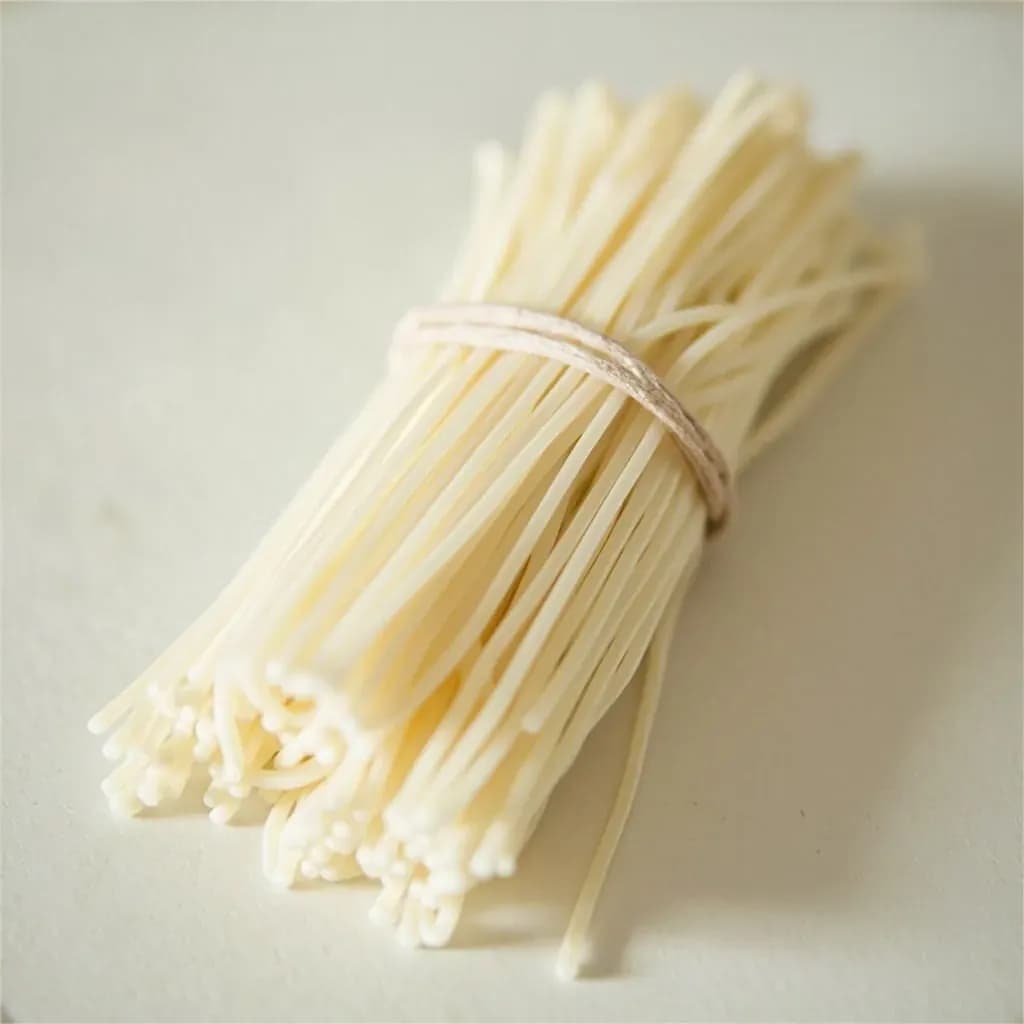
Rice vermicelli consists of extremely thin, round strands made from rice flour and water, sometimes with small additions of tapioca or corn starch for improved texture. Unlike wheat-based noodles, it is naturally gluten-free, making it essential in Southeast Asian and southern Chinese cooking for those avoiding gluten. When raw, the noodles appear opaque and white; after soaking and cooking, they become translucent and glossy, with a tender, almost melt-in-the-mouth quality that absorbs dressings and sauces beautifully.
The noodles are central to Vietnamese, Thai, Laotian, Cambodian, and southern Chinese cuisines, appearing everywhere from fresh spring rolls to noodle soups to cold salads. Their neutral flavor and delicate texture make them a vehicle for bold sauces and aromatics rather than a dish in themselves. Because they are so thin, they cook quickly and can become gummy if overdone—handling and timing are everything.
One critical distinction: do not confuse rice vermicelli with cellophane or glass noodles (made from mung bean starch), which have a distinct chewier bite. Rice vermicelli should be tender and yielding, not snappy. The standard preparation is soaking in warm water rather than boiling, which keeps the strands intact and gives you control over final texture. The noodles roughly double to triple in volume when soaked, so plan portions accordingly.
- Measured in
- g
- Storage
- Pantry
Types & varieties
The standard very-thin round noodle used in gỏi cuốn, bún thịt nướng, and bún bò Huế; sold in compressed coils
Thai term; used in pad thai, Thai salads, and noodle soups; similar profile to Vietnamese bánh đa
Chinese term; used in Singapore noodles, fried rice vermicelli, and soups; sold in tight bundles
Flat rice noodles of varying widths; not technically vermicelli but often grouped with it; medium and wide sizes common in stir-fries and phở
Pre-gelatinized or flash-fried; rehydrates in minutes with boiling water; common in instant cup noodles
Soaking vs. Boiling: The Critical Distinction
The most common mistake with rice vermicelli is treating it like pasta and dropping it into boiling water. Rice vermicelli should almost never be boiled. Hot tap water or recently boiled water that has cooled to approximately 40–50 °C works best. Boiling makes the starches gelatinize too quickly, turning the noodles gummy and causing them to break apart when stirred. Some brands—especially thinner or lower-quality varieties—may still require a brief 1–2 minute blanching; check the package instructions. If a recipe calls for blanching, use actively boiling water but limit the time strictly and shock the noodles in cold water immediately afterward.
- Soak in warm water (40–50 °C) until pliable, 15–30 minutes
- Taste test: noodles should bend easily without breaking
- Do not soak until fully soft—they continue softening as they rest
- For firmer texture in spring rolls, shorten the soak by a few minutes
Working with Tangled Noodles
Rice vermicelli often comes packed in tight, compressed coils that tangle badly when soaked whole. Before soaking, use scissors to cut the coil into 2–3 inch segments. This prevents the frustrating mass of tangled strands that is difficult to separate and portion evenly. After soaking, drain thoroughly and rinse briefly with cold water to stop the cooking process and prevent clumping. Toss the drained noodles immediately with a small amount of neutral oil (vegetable, grapeseed, or peanut oil) to keep the strands separate until you are ready to use them in your dish.
- Cut coiled noodles before soaking to avoid tangling
- Rinse with cold water after draining to stop cooking
- Toss with a small amount of neutral oil immediately
- Work quickly—do not let soaked noodles sit for more than 30 minutes before using
Common uses
Tips & pitfalls
- Soak in warm water (approximately 40–50 °C / 104–122 °F), not boiling water; boiling makes them gummy and causes them to break apart when stirred.
- Soak 15–30 minutes until they bend easily without breaking but before they feel fully soft; they continue to soften as they sit and from residual heat.
- Use scissors to cut the coiled mass before soaking—this prevents the strands from tangling into an unmanageable knot that is nearly impossible to separate.
- After soaking, drain thoroughly and rinse briefly with cold water to stop the cooking and prevent clumping.
- Toss with a small amount of neutral oil (vegetable, grapeseed) immediately after draining to keep strands separate and workable.
- For stir-frying: blanch 30–60 seconds, rinse cold, drain completely dry, then add to a very hot wok with oil; they cook in 1–2 minutes once added.
- For spring rolls: use noodles directly from the soak—they should be pliable but not fully soft; over-soaked noodles will tear the rice paper wrapper.
- Do not overcook; they should retain a slight resistance (al dente) because they continue cooking from residual heat and from contact with hot sauces and liquids in the dish.
Nutrition
Energy
1523 kJ · per 100 g
Where the calories come from
Protein
6g
12% DV
Carbs
80.2g
29% DV
Fat
0.6g
1% DV
Fiber
1.6g
6% DV
Sugars
0.1g
of which
Sodium
182mg
8% DV
Source · USDA FoodData Central · approx. Rice noodles, dry
View on FDC →In the shops
Matched grocery products
No matched grocery products for Rice Vermicelli yet.
Good to know
- Made from
- Rice flour and water; some brands add tapioca or corn starch for improved texture and translucency
- Shape
- Round, spaghetti-thin strands (0.75–1.5 mm diameter)
- Raw color
- Opaque white
- Cooked color
- Translucent, glossy
- Origin
- Southeast Asia (Vietnam, Thailand, China); central to Vietnamese, Thai, Laotian, Cambodian, and southern Chinese cuisines
- Gluten-free
- Yes, unlike wheat-based noodles
- Typical prep
- Soaked in warm water (40–50 °C / 104–122 °F), 15–30 minutes; some brands need brief blanching of 1–2 minutes
- Yield
- Doubles to triples in volume when soaked
- Shelf life (dried)
- 12–24 months in a cool, dry place; no refrigeration required
- Shelf life (cooked)
- 1–2 days refrigerated
Substitutes
- Rice sticks (flat rice noodles) — Wider, flatter profile; blanch 3–5 minutes instead of soaking; suitable for stir-fries, soups, and salads where the wider shape is acceptable
- Cellophane / glass noodles (mung bean starch) — Made from mung bean starch, not rice; similarly thin and translucent when cooked; comparable in stir-fries and spring rolls but have a slightly different chew and blander, starchier flavor
- Kelp noodles — Low-calorie, neutral-flavored; maintain more crunch even when cooked; not a close flavor match but works for cold salads and spring rolls as a low-carb alternative
- Thin rice ramen or instant rice stick noodles — May be pre-cooked or flash-fried; check the label for additives; useful for quick applications when traditional soaking time is unavailable
Pairs with
Also called
Bihun · 米粉 · Rice Stick Noodles · Bún
Appears in these dishes
Related

White Rice
Fluffy long-grain rice — the neutral base for almost any meal

White Bread
Soft sandwich loaf for toast, sandwiches, and crumbs
Brown Rice
Nutty, whole-grain rice with chew and extra fiber

Basmati Rice
Fragrant, long-grain rice that cooks up light and separate
Jasmine Rice
Soft, floral-scented rice that's the pillar of Thai meals
Arborio Rice
Plump, starchy rice that makes risotto creamy
Fusilli
Spiraled pasta that twirls up sauce and dresses cold salads
Rolled Oats
Hearty flakes for porridge, granola, and chewy cookies