Proteins
Soft-Shell Crab
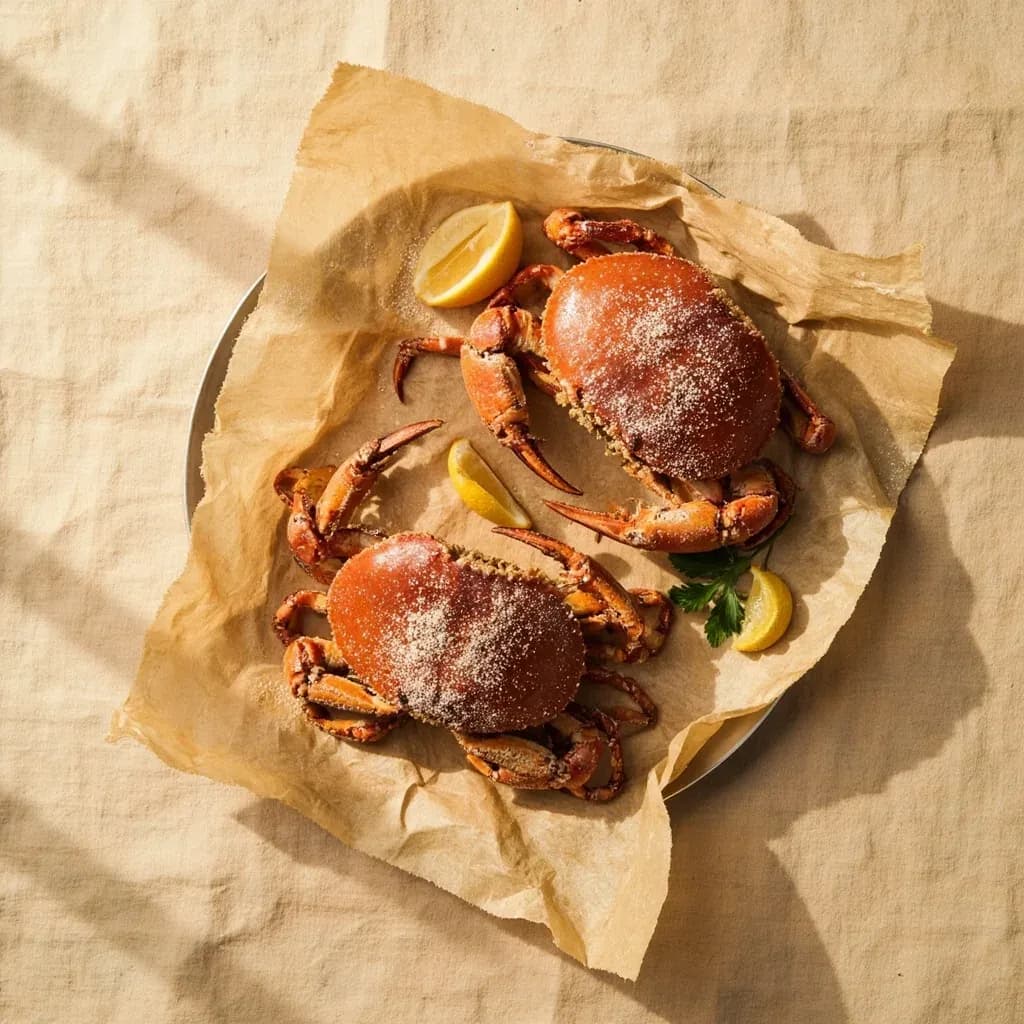
A blue crab caught just after molting, so the whole crab is eaten shell and all; dredged and fried or sauteed crisp. Delicate, briny and best very fresh.
Soft-shell crab is one of the great seasonal luxuries of American coastal cooking — and the only crab most home cooks will ever prepare whole, with shell on. The animal is a regular Atlantic blue crab (Callinectes sapidus) harvested in the brief days-long window after it has shed its old shell and before the new one hardens. In that window the entire exoskeleton is pliable and edible, which means no picking, no crackers, and no wasted meat: gills and viscera aside, what you buy is what you eat. The flavor is noticeably sweeter and more delicate than hard-shell crab meat, with a clean oceanic saltiness and tender flakes that turn snappy-crisp under a hot dredge.
What makes the ingredient special is also what makes it fleeting. Once a crab molts, the new shell begins to firm within four to ten days, so the season is short — late April through September, peaking in May, June, and July along the Chesapeake, the Gulf, and the Carolinas. Outside that window, U.S. kitchens are supplied by Asian imports, much of it from Southeast Asia, which are fine but rarely match the sweetness of a freshly molted Chesapeake or Louisiana crab. Quality falls off quickly after the molt, which is why knowledgeable cooks insist on live, locally harvested crabs dressed and cooked the same day.
In the kitchen, soft-shell crab behaves more like a quick-cooking fish than a shellfish — it wants high heat, a thin seasoned coating, and a short stay in the pan. Overcooking toughens the meat and pushes the shell beyond crisp into chewy, the most common mistake with an otherwise forgiving ingredient.
- Measured in
- g
- Storage
- Refrigerate
Allergens
Find it in
Types & varieties
Smallest grade at 3½–4½ inches; two fit neatly in a sandwich
4½–5 inches; the versatile everyday size for home cooking
5–5½ inches; the standard restaurant portion
5½+ inches; the showpiece grade, priced accordingly
An egg-bearing female; not typically sold as soft-shell and usually returned to the water by watermen
Dressing the Crab
Dressing is the one task that gives a first-time cook pause, but it takes less than a minute per crab once you have done a few. Lay the crab belly-up. With kitchen shears or a sharp paring knife, snip off the front of the face just behind the eyes and mouth — a straight cut about a quarter inch back. Lift the apron (the triangular flap on the underside) and peel it off along with the soft tissue beneath it. Pull off the gills (the feathery "dead man's fingers" on either side) and discard. At this point most Maryland and French cooks also squeeze out the hepatopancreas — the yellowish-green "mustard" — which is rich but muddy-tasting to many palates; leave it in for Cantonese preparations or if you simply want maximum crab flavor. Rinse briefly under cold water and pat thoroughly dry on paper towels. Wet crabs will not crisp.
- Cut face off just behind the eyes, not through the body
- Pull the apron and underlying tissue together
- Strip both gill clusters and discard
- Squeeze out the hepatopancreas for classic preparations; leave it for Asian recipes
- Pat completely dry before dredging
Buying and Storing
Live soft-shells are the gold standard and worth seeking out at fish markets, docks, or through a reputable fishmonger during peak season. The crabs should smell like clean seawater, never ammonia or sour. They should move when prodded; a limp crab has been out of the water too long. If you can only find them already dressed, use them within twenty-four hours and trust your nose above the seller's use-by date. Avoid any crab with a paper-bag smell, slimy gill area, or a shell that feels firm in spots — it is already hardening and will be tough to eat.
- Buy live whenever possible
- Smell is the best freshness test — briny, never fishy
- Keep refrigerated on damp paper towels or seaweed, not in standing water
- Cook the same day you buy for peak texture
- Pre-dressed crabs should be used within 24 hours
The Classic Dredge and Fry
The Chesapeake tradition — and the version most Americans recognize — is a thin seasoned dredge followed by a fast pan-fry in shallow oil. It is the technique to master before you start improvising. The dredge should be light, the oil properly hot, and the cooking time short; the shell crisps in minutes and the thin body of meat cooks through almost instantly.
- Season flour (or a 50/50 flour-cornstarch mix, or fine cornmeal) with Old Bay, salt, and pepper
- Dredge crabs thoroughly on both sides and shake off the excess
- Heat about a quarter inch of neutral oil in a heavy skillet to 350–375°F
- Lay crabs in the pan top-shell down and fry 2–3 minutes per side, undisturbed
- Drain on paper towels and salt the moment they come out of the oil
Common uses
Tips & pitfalls
- Pat the crabs bone-dry before dredging — moisture is the single biggest enemy of a crisp shell
- Use a 50/50 mix of all-purpose flour and cornstarch, or fine cornmeal, seasoned with Old Bay, kosher salt, and black pepper
- Fry in a neutral oil (peanut, canola, or grapeseed) at 350–375°F — too cool and the dredge absorbs oil; too hot and the shell scorches before the meat cooks through
- Salt immediately after frying, never before — salt draws moisture out of the dredge and prevents crisping
- Cook only 2–3 minutes per side; the meat is thin and overcooking makes it rubbery
- Don't crowd the pan — adding too many crabs drops the oil temperature and delivers greasy, pale shells
- For grilling or broiling, brush with a mix of melted butter and oil to prevent sticking and cook 3–4 minutes per side over medium-high heat
- Eat them the moment they leave the pan — fried soft-shells do not reheat well and lose their textural contrast within minutes
Nutrition
Energy
364 kJ · per 100 g
Where the calories come from
Protein
18.1g
36% DV
Carbs
0g
0% DV
Fat
1.1g
1% DV
Fiber
0g
0% DV
Sodium
293mg
13% DV
Source · USDA FoodData Central · approx. Crustaceans, crab, blue, raw
View on FDC →In the shops
Matched grocery products
No matched grocery products for Soft-Shell Crab yet.
Good to know
- Species
- Callinectes sapidus, the Atlantic blue crab, eaten in the brief post-molt window
- Peak Season
- Late April through September, with May–July peak on the U.S. East Coast and Gulf
- Soft-Shell Window
- 4–10 days between molt and hardening of the new shell
- Size Grades
- Hotel (3½–4½ in.), Medium (4½–5 in.), Large (5–5½ in.), Jumbo/Prime (5½+ in.)
- Key Regions
- Chesapeake Bay (MD/VA), Louisiana, North Carolina, Florida, Texas; Southeast Asian imports in cooler months
- Storage
- Live on damp seaweed or paper towels, refrigerated, 1–2 days max; cook same day for best quality
- Cook Time
- 2–3 minutes per side in 350–375°F oil; longer cooking toughens the meat
- Yield
- Entire crab is edible once dressed — no picking required
Substitutes
- Hard-shell blue crab meat (lump or backfin) — Approximates the sweet flavor but lacks the edible-shell crunch that defines soft-shell
- Crispy fried whole small fish (smelts, whitebait, anchovies) — Captures the eat-the-whole-thing textural appeal, though the flavor is quite different
Pairs with
Also called
softshell crab · soft shell crab · molted blue crab
