Baking
Sourdough Starter
A living flour-and-water culture of wild yeast and lactic bacteria; leavens slowly and adds tang, so it replaces commercial yeast on its own schedule.
A sourdough starter is a stable, self-perpetuating culture of wild yeast and lactic acid bacteria living in a paste of flour and water. Unlike commercial yeast, which delivers a single species with one job (gas production), a mature starter is a small ecosystem: yeasts such as Candida humilis and Saccharomyces exiguus generate CO₂ for rise, while lactobacilli — often Lactobacillus sanfranciscensis, L. plantarum, L. brevis, and L. fermentum — produce lactic and acetic acids that flavor the dough, drop its pH, and lengthen its keeping quality. That combination of leavening plus slow acidification is what separates true sourdough from anything a packet of yeast can deliver.
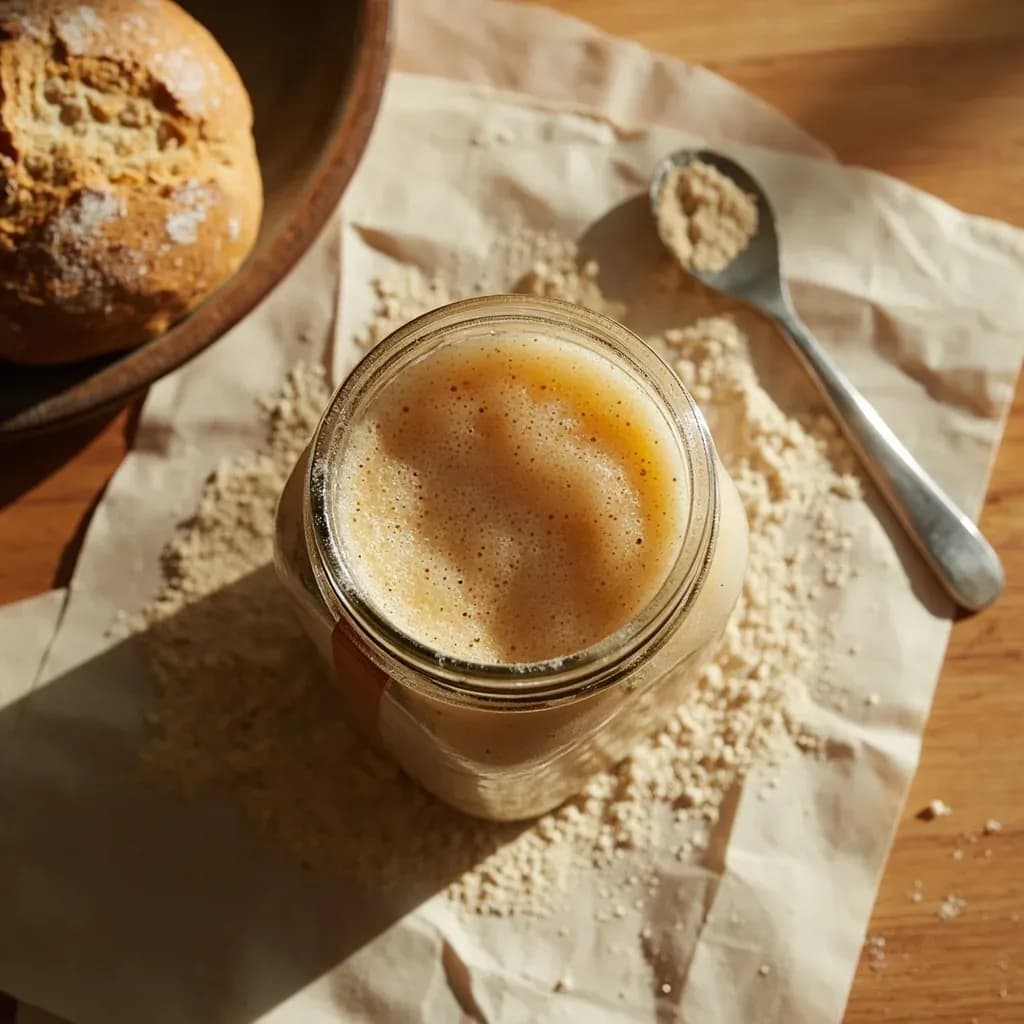
A starter behaves on its own clock. It is most active between 75–85°F (24–29°C), where yeast dominate and rise is brisk; cooler temperatures push the balance toward lactic acid (mellow, yogurt-like), warmer temperatures toward acetic acid (sharp, vinegary). At peak activity a healthy starter has dropped to roughly pH 3.5–4.2, smells pleasantly tangy — yogurt, ripe pineapple, apple cider — and will at least double in volume in 4–8 hours after feeding. The organic acids it produces also gradually strengthen gluten networks, which is why long-fermented loaves develop an open, glossy, well-supported crumb rather than a tight one.
Working with starter means working around it. Home bakers typically inoculate a dough at 15–25% of total flour weight with ripe starter, run bulk fermentation for several hours at room temperature (length depends on temperature, hydration, and inoculation rate), and then retard the shaped loaves in the refrigerator for 12–48 hours, where flavor continues to build while yeast activity slows. Salt is held out of the starter and added in the final dough at 1.8–2.2% baker's percentage, since salt suppresses the culture. The starter's real reward is patience: the older and more often it has been fed whole-grain flour, the more complex and predictable its behavior becomes.
- Measured in
- g
- Storage
- Refrigerate
Find it in
Suits
Types & varieties
100% hydration; stirred and pourable. The American home-baking default; tends slightly more acetic, rises quickly.
50–60% hydration; shaped like a dough. Italian and German tradition, often refreshed multiple times a day. Slower ferment, more lactic, prized for enriched breads such as panettone, colomba, and stollen.
Maintained with whole rye or a high proportion of rye flour. Establishes fastest, carries the heaviest microbial load, and produces pronounced tang and a dark, moist crumb in German, Polish, and Nordic breads.
Mid-toned; bran and germ supply abundant native microflora and enzymes. A good balance of activity, color, and flavor.
Built from all-purpose or bread flour. Slower to establish, milder in flavor, and produces the palest crumb — useful when you want clean, neutral flavor rather than tang.
Historically associated with Lactobacillus sanfranciscensis paired with Candida humilis; yields the famously mild-yet-complex flavor of Bay Area sourdough.
Cultures claimed to be many decades old (some 100+ years). Identities are debated, but long-maintained cultures do develop more stable, predictable behavior than young ones.
Reading your starter
Before you bake with a starter, you need to know what 'ready' looks and smells like. The culture gives clear signals; learning them prevents most sourdough failures.
- Ripe starter roughly doubles in volume and domes gently on top within 4–8 hours of feeding at room temperature.
- A small spoonful dropped into a glass of room-temperature water should float — a quick field test for adequate gas retention.
- Healthy aroma is pleasantly tangy: yogurt, apple cider, ripe pineapple, or a soft cheese rind. Sweet, fruity, and bready are all normal.
- Hooch — a dark, sometimes reddish liquid pooling on top — is alcohol and acid released by a hungry starter, not contamination. Pour it off or stir it back in before the next feed.
- A starter that smells sharply of acetone or nail polish remover is starved; refresh and wait for the next peak before baking with it.
- Pink, orange, or fuzzy growth is mold and means the entire culture should be discarded, jar and all. Skimming does not save it.
- A starter that has peaked and started to fall is still usable but produces noticeably less oven spring than one used right at peak.
Building a starter from scratch
Capturing a starter is closer to gardening than cooking: you create a hospitable environment and let the right organisms find it. The flour choice matters more than the recipe.
- Day 1: combine 50 g whole-grain rye or whole-wheat flour with 50 g non-chlorinated water in a glass jar; stir loosely and cover.
- Day 2 onward: once you see bubbles or a sour smell, discard roughly half and feed with 50 g flour and 50 g water every 12–24 hours.
- Expect sluggish, uneven activity for the first 3–5 days as bacteria establish and yeast populations shift; this is normal.
- Reliable doubling within 6–8 hours of feeding, with a clean tangy aroma, usually appears between days 5 and 14, depending on flour and room temperature.
- Once the starter is reliably active, transition gradually to the flour you actually want to bake with (white, rye blend, spelt, etc.) over two or three feeds.
Common uses
Tips & pitfalls
- Use non-chlorinated, non-softened water. Chlorine and chloramine both suppress yeast; filtered or 24-hour-rested tap water is the safe default.
- Keep starter in glass, ceramic, or food-grade plastic. Reactive metals like copper and aluminum can taint the culture over months. Use a loose lid or cheesecloth so CO₂ can escape.
- Feed by weight, not volume — a 1:1:1 ratio (starter:flour:water) by weight is the most predictable daily maintenance ratio; 1:5:5 produces a slower, more aromatic ferment.
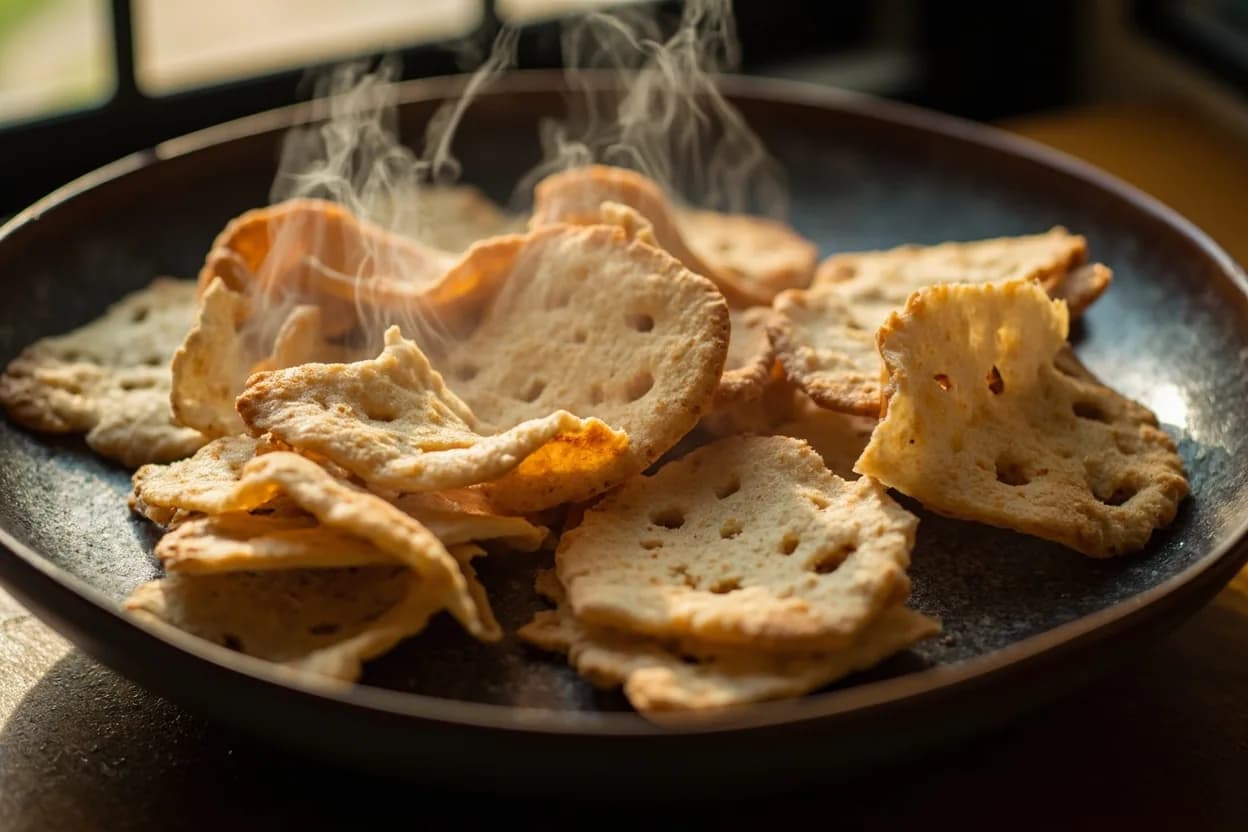
- Keep your working starter small (about 2–4 tablespoons). The 'discard' pulled off before feeding is itself an ingredient for pancakes, crackers, and flatbreads, not waste.
- For a tangier loaf, build with the starter just past peak and give the dough a long cold retard. For a milder, sweeter loaf, use at peak and bake the same day.
- Don't try to speed things up by leaving dough warm for hours and hoping the yeast will 'catch up.' Over-proofing at warm temperatures over-produces acid and the dough collapses in the oven.
- Add 5–15% whole rye or whole-wheat to an otherwise white-flour dough — the native enzymes and microflora measurably improve rise, flavor, and crumb.
- Salt goes into the dough, not the starter. Salt in the feeding water suppresses yeast activity and slows your culture noticeably.
Nutrition
Energy
1180 kJ · per 100 g
Where the calories come from
Protein
12.1g
24% DV
Carbs
7.5g
3% DV
Fat
22.3g
29% DV
Fiber
0g
0% DV
Sodium
1127mg
49% DV
Source · USDA FoodData Central · Mother's loaf, pork
View on FDC →In the shops
Matched grocery products
No matched grocery products for Sourdough Starter yet.
Good to know
- Composition
- Living symbiotic culture of wild yeast (mainly Candida humilis and Saccharomyces exiguus) and lactic acid bacteria (commonly Lactobacillus sanfranciscensis, L. plantarum, L. brevis, L. fermentum).
- Origin
- Among the oldest leavening agents known; archaeologically documented leavened breads date to roughly 3500 BCE (Twann, Switzerland), with Egyptian leavened bread well established by 2000 BCE.
- Standard hydration
- 100% (equal weight water to flour) for a pourable liquid starter; 50–60% for a stiff dough-style starter such as Lievito Madre.
- Optimal activity temperature
- 75–85°F / 24–29°C; cooler temperatures favor lactic acid, warmer temperatures favor acetic acid.
- pH at peak
- Typically 3.5–4.2; a mature starter hovers around 3.8.
- Build from scratch
- 5–14 days of daily flour-and-water feedings; whole-grain rye or whole-wheat captures wild microbes most reliably.
- Maintenance
- Countertop: feed every 8–12 hours. Refrigerator (38–40°F / 3–4°C): feed roughly once a week.
- Inoculation rate in dough
- 15–25% of total flour weight as ripe starter for most home loaves; commercial formulas often run 10–20%.
Substitutes
- Commercial yeast plus acid — Active dry or instant yeast for leavening, with buttermilk, plain yogurt, lemon juice, or a splash of vinegar to supply tang. Roughly 1:1 by volume of instant yeast for ripe starter, plus 1–2 tablespoons of acid per 500 g flour.
- Poolish or biga — Pre-fermented commercial-yeast doughs that add some depth and extensibility, but no true sourdough tang and far less keeping quality.
- Buttermilk plus baking soda — A reasonable substitute in quick breads and biscuits for leavening plus sour flavor; produces a chemically leavened crumb and lacks an open, chewy structure.
- Amish Friendship Bread starter — A yeast-and-sugar culture that yields mild sweet-sour flavors. It is not a genuine sourdough and will not replicate the depth or keeping quality.
- Yogurt or kefir — Adds tang to a yeasted dough but does not leaven on its own; best combined with a small amount of commercial yeast.
Pairs with
Also called
levain · sourdough culture · wild yeast starter · mother · chef