Heat & Safety
Charcoal
Carbon fuel that burns hot and smoky for grilling, barbecuing, and braai cooking.
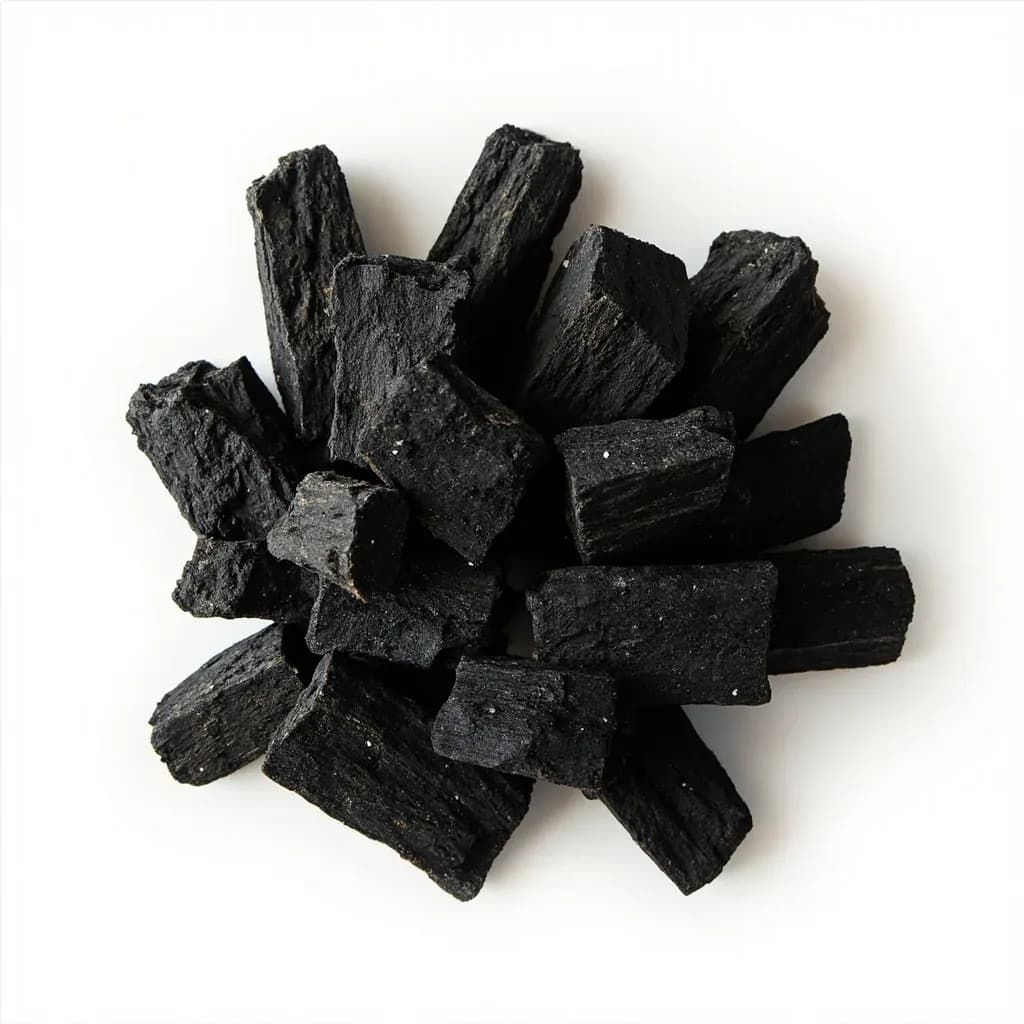
Charcoal is a carbonized fuel, sold as natural lump or pressed briquettes, that burns hot and steady for grilling, barbecuing, and braai. Lit in a chimney or with a fire starter, it provides the radiant heat and light smoke that sear and flavor meat and vegetables. Lump charcoal lights faster and burns hotter, while briquettes hold a more even temperature for longer cooks.
Charcoal is concentrated carbon produced by pyrolysis — heating wood or organic material in low-oxygen conditions to drive off moisture, resins, and volatile compounds. This process transforms raw wood into a dense, ignition-ready fuel that burns hotter and cleaner than untreated wood, with far lower moisture content. The result is a predictable, controllable heat source essential for high-temperature searing and long, steady cooks alike. Unlike wood, which produces heavy creosote-laden smoke, charcoal generates relatively clean combustion with consistent BTU output, making it the preferred fuel for precision cooking methods from weeknight burgers to competitive barbecue.
Alternatives
Types & varieties
Chunks of pure carbonized hardwood; burns hottest (up to 1,200°F), lights fastest, produces least ash. No binders or additives. Quality varies by wood species — oak and maple for neutral heat, hickory and mesquite for added flavor character.
Compressed mixture of coal fines, mineral char, starch binder (4–10%), and additives (borax, sodium nitrate, limestone). Burns more uniformly and longer than lump but produces more ash and slightly lower heat. Shape ensures predictable, even heat distribution across the cooking surface.
Japanese traditional charcoal made from dense hardwoods (typically oak), calcined at extreme temperatures then cooled in sand. Burns at 900–1,000°F+ with minimal smoke and virtually no odor. Leaves a distinctive white powdery ash. The standard fuel for yakitori and Japanese tabletop barbecue.
Produced from coconut husks; burns exceptionally hot and long with low smoke and minimal spark. Dense and compact, with higher fixed carbon content than wood-based charcoals. Popular in Asia and growing in specialty grilling circles for its clean burn characteristics.
Charcoal extruded into uniform cylindrical or pillow-shaped pieces. May contain small amounts of binder depending on manufacturer. Offers more consistent burn than irregular lump charcoal. Common in commercial applications and increasingly available in retail markets.
Why Charcoal Beats Wood for Most Grilling
Charcoal and wood serve different purposes. Wood burns with intense, aromatic smoke rich in flavor compounds like guaiacol and eugenol, making it essential for long-smoking applications where smoke penetration matters. Charcoal, however, provides concentrated, controllable heat without the moisture variability of green or seasoned wood. Its consistent BTU output per pound means predictable cooking times, and the minimal creosote production reduces flare-ups from drippings hitting open flame. For direct-heat grilling and searing, charcoal is unmatched. For smoking, use charcoal as your steady heat source and add wood chunks or chips for smoke flavor — charcoal alone delivers heat, not the complex smoke profile that defines true barbecue.
- Charcoal burns hotter than equivalent wood weight due to concentrated carbon content
- Pyrolysis removes moisture (wood averages 20–50% moisture) for cleaner ignition
- Charcoal ash is inert mineral residue; wood ash contains unburned organic compounds that affect flavor unpredictably
- For smoking: charcoal provides baseline heat (225–275°F) while wood delivers smoke compounds
Choosing the Right Charcoal for Your Cooker
Kamado-style ceramic cookers (Big Green Egg, Kamado Joe) and vertical water smokers benefit most from lump charcoal. The sealed environment depends on unimpeded airflow through the fire box; the low ash production of lump (1–3% versus 4–10% for briquettes) prevents ash buildup that restricts oxygen flow and causes uneven temperatures. For open-grill cooking where you want sustained, predictable heat across a large surface, briquettes' uniform shape and longer burn time excel. For high-heat searing and quick cooks, lump's faster lighting and higher peak temperature deliver better results. Binchotan belongs in Japanese-style tabletop grills and dedicated yakitori setups where its ultra-clean burn won't impart off-flavors to delicate proteins.
- Kamado and ceramic cookers: lump charcoal (less ash, better airflow)
- Open grills and long cooks: briquettes (uniform shape, predictable burn duration)
- Tabletop Japanese BBQ: binchotan (minimal smoke and odor)
- Smoking: lump or briquettes as heat source, add wood separately
The Instant-Light Charcoal Problem
Avoid all "instant-light" and "easy-light" charcoal products without exception. These are soaked in petroleum-based accelerants — typically lighter fluid or similar petroleum distillates — that impart chemical flavors to food and release toxic compounds when burned. This chemical taste is especially pronounced on the first foods cooked over freshly-lit instant-light charcoal. Major barbecue competitions ban these products entirely. Professional barbecuers and serious home cooks universally reject them. The modest convenience of faster ignition is not worth the degradation of food quality. Use a charcoal chimney instead; it delivers hot, ashed-over coals in 15–20 minutes without any chemical contamination.
- Instant-light charcoal contains petroleum-based accelerants that contaminate food
- The chemical taste is detectable on the first foods cooked over these products
- All serious grilling competitions prohibit instant-light products
- A chimney starter provides faster, cleaner results with no downside
Common uses
Tips & pitfalls
- Use a charcoal chimney exclusively — no lighter fluid, no exceptions. It takes 15–20 minutes and produces zero chemical flavor contamination.
- Store charcoal in airtight containers in a dry location. Humid air absorption makes charcoal difficult to light and reduces heat output.
- Build your fire to match your cook: a small pile for quick hot sears (burgers, steaks), a large mound for all-day barbecue (brisket, pork shoulder).
- Let coals ash over completely (gray and glowing, no black spots) before cooking — partially-burned charcoal produces acrid smoke that flavors food poorly.
- For smoking, add wood chunks directly to hot coals — place them on top of the coal pile so they smolder rather than flame up. For a 12-hour cook, two to four palm-sized chunks is sufficient.
- Avoid 'instant-light' charcoal products; the petroleum accelerants they contain impart chemical flavors banned in competitive barbecue and detectable by any experienced palate.
- On kamado cookers, use only lump charcoal — the low ash production prevents airflow blockage that causes temperature fluctuations in the sealed environment.
- Clean ash from the charcoal grate between cooks. Ash accumulation restricts airflow and causes uneven heating, especially in kettle and kamado grills.
Good to know
- Fuel Type
- Carbon-based solid fuel from pyrolyzed wood or organic material
- Typical Burn Temperature
- 500–1,200°F depending on type and airflow
- Primary Forms
- Lump charcoal, charcoal briquettes, extruded charcoal, coconut shell charcoal
- Lump Charcoal BTU/lb
- Approximately 12,000–14,000 BTU/lb
- Briquette BTU/lb
- Approximately 11,000–13,000 BTU/lb
- Ash Production
- Lump: 1–3% by weight; Briquettes: 4–10% due to mineral additives and binders
- Storage
- Keep dry in sealed container; charcoal absorbs atmospheric moisture, making ignition difficult
- Safety
- Never burn indoors or in enclosed spaces; produces carbon monoxide
Also called
braai-charcoal · coal-briquette · lump-charcoal · charcoal-briquettes
Related

Paper Towels
Disposable sheets for spills, drying, and patting dry

Kitchen Towels
Reusable cloths for drying, gripping, and wiping

Oven Mitts
Heatproof gloves to handle hot pans and trays safely

Disposable Gloves
Single-use gloves for safe, mess-free handling

Cleaning Cloths
Reusable cloths for wiping counters and spills

Tortilla Warmer
Insulated holder that keeps tortillas warm and soft

Trivet
Heatproof stand that shields surfaces from hot pots

Ice Bath Setup
Bowl of ice water that halts cooking and sets color