Heat & Safety
Cleaning Cloth
An absorbent wipe for cleaning surfaces, mopping spills, and drying equipment.
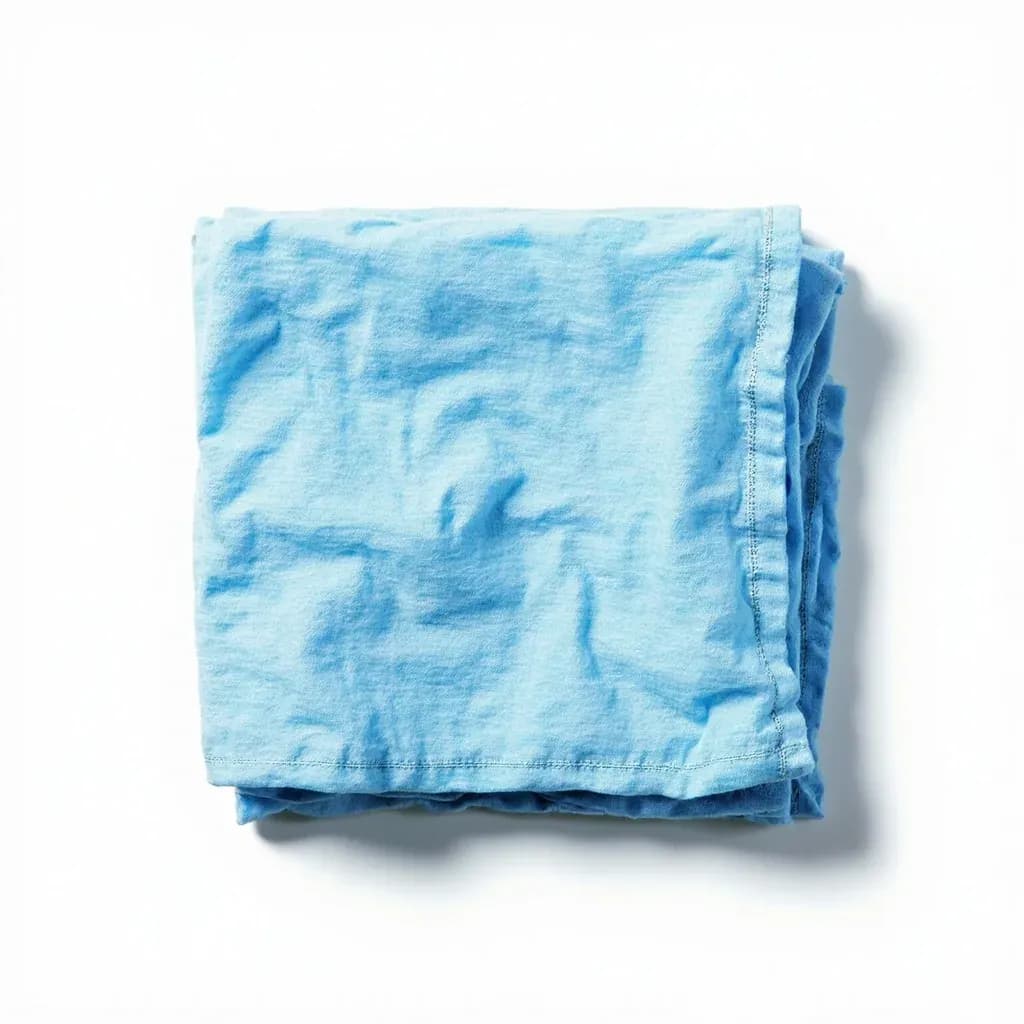
A cleaning cloth is an absorbent woven or non-woven wipe used to sanitize counters, mop spills, and dry equipment between tasks. Color-coded or disposable versions help separate raw-food zones from ready-to-eat areas to avoid cross-contamination. Many kitchens keep a damp cloth in sanitizer solution at each station.
A cleaning cloth is the single most-used supply in any working kitchen, and arguably the one most often neglected. It is a reusable absorbent wipe — typically cotton, linen, or split-fiber microfiber — used to mop spills, dry hand-washed equipment, polish glass and stainless, and keep work surfaces sanitary between tasks. Because a damp cloth is also one of the most efficient vectors for cross-contamination, the choice of cloth, the task it is assigned to, and how it is laundered matter as much as the soap and sanitizer beside it.
The fiber dictates the job. Tightly woven cotton and linen absorb water and tolerate boiling-hot laundering, which is why they dominate in restaurants. Microfiber — a polyester/polyamide split weave finer than 1/100 the diameter of a human hair — holds seven to eight times its weight in water and lifts grease mechanically through the capillary action of its split fibers, with little or no chemical needed, but it is ruined by fabric softener and by the high-heat washes that cotton thrives on. A serious kitchen keeps at least three distinct cloths (general, glass/polish, raw-protein-only) plus disposable paper for spills where reuse is unsafe.
Beyond wiping, a clean cloth pulls double duty: flour-sack and cheesecloth strain stocks and yogurt, a dry towel shields hands from a briefly hot lid, and a damp cloth laid over dough slows skin formation during bench rest. None of these is a substitute for an oven mitt or a proper strainer, but used knowingly the kitchen cloth is the most versatile supply that is not, strictly speaking, a tool at all.
Alternatives
Types & varieties
100% cotton, small looped weave, the workhorse of restaurant bars and prep lines; absorbent, cheap, and tolerant of high-heat laundering
Loosely woven flat-weave cotton; nearly lint-free once pre-washed, softens with use; doubles as straining cloth, proofing cover, and cheesecloth substitute
Traditional French kitchen cloth of flax linen; very absorbent and actually improves with repeated washing; long lifespan, often passed down
Split synthetic fibers; high absorbency, traps grease and bacteria, available in lint-free weaves for glass and polished steel
Tight cotton weave or low-pile lint-free microfiber; used dry on stemware and stainless to avoid streaks and water spots
Wood-pulp cellulose reinforced with cotton scrim; very absorbent, biodegradable, popular for bench wiping and dishwashing
Loose, open-weave cotton; primarily a straining and filtering cloth rather than a cleaning cloth, but classified with kitchen textiles
Single-use cellulose; deployed wherever reuse risks cross-contamination, especially raw-meat spills and high-risk sanitizing
Color-coding and cross-contamination
The most important professional discipline around kitchen cloths is not which fiber you choose but how you keep them apart. A bar mop that wiped a raw-chicken cutting board cannot be used to polish a wine glass without a full hot wash in between, and in a busy service that almost never happens. The solution — borrowed from commercial kitchens and now common in well-run homes — is a color code: red for raw meat, yellow for raw poultry, green for produce and sanitary areas, blue for raw fish or general service, and white for cooked foods, bar, and final polishing. Programs vary by region and operator, but the principle is universal: the color is the task.
- Assign one cloth to raw protein and never let it touch a ready-to-eat surface; retire it to a dedicated hamper immediately after use.
- Use white cloths as your default for cooked food, plating, and glass — they show soil fastest, which is the point.
- Keep floor cloths and bench cloths in separate colors; a floor mop that migrates to a prep counter is one of the most common hygiene failures in small kitchens.
- Stash a roll of paper towel for the moments when a reusable cloth is the wrong tool — raw-meat drips on the floor, broken glass, anything that would force a contaminated cloth back into the rotation.
Choosing the right cloth for the job
Cotton and linen are forgiving, absorbent, and survive the boiling wash that kills the bacteria a kitchen cloth inevitably picks up. Microfiber is in a different category: it works through split fibers that wick and trap moisture and lift grease by capillary action across an enormous surface area, so a dry or barely damp microfiber can degrease a stainless bench that would take three passes with a wet cotton rag. That same structure is why microfiber must never see fabric softener — the coating glues the splits shut and the cloth is finished. The two materials belong in the same kitchen but in different drawers: cotton for mopping, drying, and heat-of-the-moment use; microfiber for polishing, degreasing, and lint-sensitive finishes.
- Keep a dedicated dry glass/polishing cloth (lint-free cotton or low-pile microfiber) for stemware and stainless; finish with a barely damp pass followed by a dry buff to kill water spots.
- Use flour-sack or cheesecloth for straining stocks, sauces, and yogurt — pre-wash several times to shed loose lint.
- Reach for cellulose sponge cloths (Swedish cloths) for dishwashing and bench wiping; they hold far more water than a flat cotton towel and are compostable at end of life.
- Reserve terry bar mops for the rough work — line pans, mop spills, dry heavy cookware — where lint is not a problem and high-heat laundering is the priority.
Laundry discipline
A clean cloth is only as clean as its last wash. Kitchen laundry should run hotter than the household default, skip fabric softener entirely, and dry fully between uses. The single most common cause of sour, slimy cloths is bunching damp in a sink or drawer overnight; the bacteria that cause the smell are exactly the ones you do not want near food.
- Wash cotton and linen at 160 °F / 71 °C or higher with oxygen bleach; chlorine bleach is acceptable for white cloths only.
- Wash microfiber warm, separate from lint-shedding loads, with no fabric softener and no high heat in the dryer.
- Keep a dedicated hamper for kitchen cloths so you can run a hotter wash and never mix in a stray bath towel.
- Hang cloths open or run them through a hot dryer immediately; never store damp, and never reuse a cloth that smells sour or feels slimy, even after washing.
Common uses
Tips & pitfalls
- Color-code cloths by task and never move a raw-protein cloth to a ready-to-eat surface without a full hot wash in between.
- Wash cotton and linen at 160 °F / 71 °C or higher with oxygen bleach; never put microfiber in the same hot load and never use fabric softener on it — the coating kills absorbency permanently.
- Hang cloths open to dry after each shift rather than wadding them in a sink; damp bunched cloths are the fastest-growing bacterial culture in the kitchen and the source of most mystery smells.
- Retire any cloth that smells sour, feels slimy, or has lost absorbency — laundering will not reverse fiber fatigue, and a cloth that cannot do its job is a contamination risk.
- Finish stainless and stemware with a barely damp microfiber pass followed by a dry buff with a dedicated glass cloth; skipping the dry pass is what causes water spots.
- Keep a separate laundry hamper for kitchen cloths so you can run hotter, skip softener, and never accidentally mix in a contaminated personal item.
- Fold a dry cotton cloth into a thick pad for brief contact with a hot handle; a wet or damp cloth on a hot surface flashes to steam and scalds instantly.
- Pre-wash new flour-sack towels three or four times before straining or polishing; the first wash sheds enough lint to cloud a stock or streak a wine glass.
Good to know
- Primary materials
- Cotton (terry, flour-sack, lint-free weaves), linen (traditional torchon), and synthetic microfiber (typically 80% polyester / 20% polyamide)
- Common sizes
- Bar mops ~16 x 19 in (41 x 48 cm); dish towels ~15 x 25 in; flour-sack towels ~27 x 27 in or 36 x 36 in; glass cloths ~16 x 24 in
- Color-coding standard (foodservice)
- Red = raw meat; Yellow = raw poultry; Green = produce or sanitary areas; Blue = raw fish or general service; White = cooked foods, bar, or general wiping
- Microfiber absorption
- Quality microfiber holds roughly 7–8 times its weight in water; individual split fibers are finer than 1/100 the diameter of a human hair
- Wash temperature
- Cotton/linen: 140–195 °F (60–90 °C) with bleach or oxygen bleach; microfiber: warm wash only, no fabric softener, separate lint load
- Reusable lifespan
- Cotton bar mops typically cycled every 2–4 weeks in busy kitchens; microfiber 200–500 wash cycles if not heat-damaged
- Single-use option
- Paper towels (recycled kraft or virgin pulp) for high-risk cross-contamination tasks where reuse is unsafe
- Microfiber origin
- Ultra-fine synthetic fibers developed in Japan in the 1970s; widely adopted in commercial cleaning from the 1990s onward
Also called
sponge-cloth · chux-cloth · j-cloth · dish cloth · wiping cloth
Related

Paper Towels
Disposable sheets for spills, drying, and patting dry

Kitchen Towels
Reusable cloths for drying, gripping, and wiping

Oven Mitts
Heatproof gloves to handle hot pans and trays safely

Disposable Gloves
Single-use gloves for safe, mess-free handling

Cleaning Cloths
Reusable cloths for wiping counters and spills

Tortilla Warmer
Insulated holder that keeps tortillas warm and soft

Trivet
Heatproof stand that shields surfaces from hot pots

Ice Bath Setup
Bowl of ice water that halts cooking and sets color