Wraps & Liners
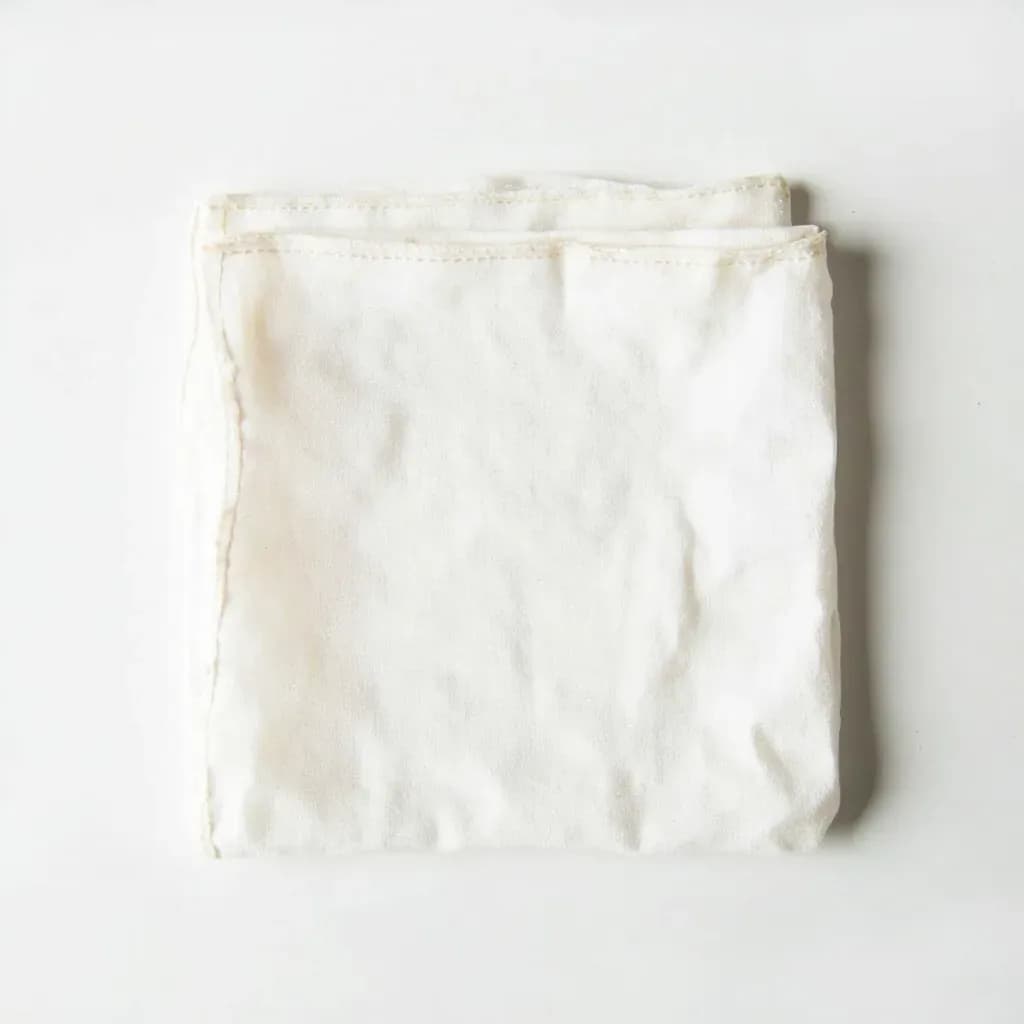
Cotton Straining Cloth
Fine cotton cloth for straining stocks, filtering liquids, and bundling herbs and spices.
A cotton straining cloth is a fine, tightly woven cotton cloth used to strain and clarify liquids, much like cheesecloth or muslin. Cooks line a sieve with it to filter stocks, broths, and infused oils, strain nut milks and yogurt, and bundle herbs or spices into a stock sachet. Being reusable, it is rinsed and laundered between uses, and a tight weave catches fine sediment.
A cotton straining cloth is the quiet workhorse of the kitchen pantry: a simple square of plain-weave cotton used to filter liquids, drain soft solids, and bundle aromatics. Unlike a metal sieve, which catches only what its mesh physically excludes, a cloth provides depth filtration — particulates are trapped not just on the surface but within the layers of yarn, which is why a folded cheesecloth can yield a clear consommé where a fine-mesh strainer leaves a haze. Its behavior is governed almost entirely by thread count: loose-weave grades pass liquid quickly but retain only coarse matter, while tight-weave grades approach the fineness of a paper filter while remaining reusable.
The same cloth performs three distinct jobs — straining, draining, and bundling — and that versatility is what keeps it on every professional station. A single bolt of unbleached muslin can clarify a chicken stock, line a chinois for a fruit consommé, drain a batch of ricotta overnight, and wrap peppercorns and bay leaves for a court bouillon. Because cotton withstands boiling, holds up to repeated laundering, and costs very little per yard, it remains one of the least specialized and most sustainable tools in the kitchen.
Cotton straining cloth is distinct from — though often used alongside — fine-mesh sieves, chinois, and paper filters. Each has a role: paper excels at absolute clarity in small volumes, a chinois handles large batches of puréed food quickly, and a cloth sits in between, offering depth filtration that is reusable and heat-tolerant.
Alternatives
Types & varieties
The US standard, graded 10–90; the general-purpose workhorse for straining, draining, and bundling
British term for a fine, soft plain-weave cotton used for soft cheese, butter wrapping, and delicate straining
Natural, unfinished cotton preferred for cheese-making, long-simmering stocks, and any task where bleach residue is a concern
Tight-weave cotton (sometimes nylon) shaped into a bag for straining plant milks; less permeable than standard cheesecloth
Bell- or cone-shaped flannel-weight cloth suspended from a hook or stand for drip-straining fruit juices and jellies overnight
Pre-sewn small cotton pouch with a drawstring for enclosing herbs, peppercorns, and other loose aromatics
Choosing the Right Weave for the Job
The numbered grade system exists because not all straining is the same task. A loose Grade 10–20 cloth strains a rustic stock in seconds but lets fine particles slip through; a Grade 60–90 cloth approaches the clarity of a paper filter and is what you want for consommé clarification or a clear nut milk. For most home cooks, a Grade 50–60 unbleached cheesecloth covers the bulk of straining and draining jobs, with extra layers substituted for fineness rather than buying a second bolt.
- Grade 10–20: bundling aromatics, lining a colander for rough vegetable draining, squeezing citrus — fast flow, coarse retention
- Grade 30–50: everyday stock and broth straining, soft cheese draining, jelly bag stand-in — the practical middle ground
- Grade 60–90: nut milks, consommé clarification, ultra-fine infusions — slow but very clear
- Butter muslin (UK): similar in feel and performance to a mid-to-fine grade cheesecloth, with a softer hand
- Layer up before buying up: two layers of Grade 50 filter nearly as well as one layer of Grade 90 and cost almost nothing
Care and Longevity
A cotton straining cloth is one of the few kitchen textiles that improves meaningfully with age — the first wash removes the factory sizing that makes new cloth hydrophobic, and subsequent washes soften the fibers. The enemies of the cloth are fabric softener, which leaves a waxy film that repels liquids and can transfer to food, and prolonged high-heat drying, which can scorch cotton over time. A dedicated kitchen cloth that is rinsed, boiled occasionally, and air-dried will outlast years of regular use.
- Rinse in cold water immediately after use to push out proteins and starches before they set
- Wash in hot water with unscented detergent; skip fabric softener and dryer sheets entirely
- Boil for 5–10 minutes periodically to sanitize and refresh the weave
- Air-dry in direct sunlight when possible; UV helps deodorize and bleaches out stains naturally
- Designate separate cloths for strongly colored or aromatic tasks (turmeric, beet, garlic) to avoid carryover
- Retire a cloth when it develops persistent staining, thin spots, or a sour smell that laundering cannot remove
Common uses
Tips & pitfalls
- Boil the cloth for 5–10 minutes before first use to strip factory sizing and surface lint; new cotton is mildly water-repellent until washed
- Layer 2–4 thicknesses of cheesecloth for fine work; a single layer is plenty for basic stock straining
- Drape the cloth into a sieve or chinois and let gravity do the work — never wring a hot stock cloth, as it forces sediment back through the weave and clouds the liquid
- Skip fabric softener and dryer sheets in the wash; residues repel liquids and can transfer to food
- Reserve a dedicated cloth for strong-flavored tasks like turmeric, beet, or garlic to prevent staining and flavor carryover
- For nut milks, squeeze from the top of the bag downward to avoid forcing fine sediment through the weave under pressure
- When herbs are too small or fragile to float loose in a pot, wrap them in a cloth square and tie with butcher's twine to make an instant bouquet garni
- Do not substitute paper coffee filters for cloth in stock straining — they clog, tear, and waste material; save paper for small-volume clarity tasks where reusability does not matter
Good to know
- Material
- 100% cotton, plain weave; available unbleached or bleached
- Grade system (US)
- Numbered 10–90 by threads per square inch; Grade 10 is the most open, Grade 90 the tightest
- Standard widths
- Typically 36 in (91 cm) or 45 in (114 cm); sold by the yard or pre-cut
- Layering
- Single, double, or quadruple layers used depending on how fine the filtration needs to be
- Reusability
- Reusable for dozens of cycles if washed in hot water without fabric softener or fragrance
- First-use prep
- Boil 5–10 minutes before first use to strip sizing and surface lint
- Food-safety note
- Unbleached cotton is preferred for cheese-making and nut milks to avoid any residue carryover
- Cost tier
- Low; among the least expensive kitchen consumables
Also called
cotton-strainer-cloth · cotton-cloth · water-filter-cloth · cloth-strainer · tea-strainer-cloth · tea-filter · cotton-stock-bag · muslin-cloth · cheesecloth
Related

Aluminum Foil
Wraps, covers, and tents food for the oven and grill

Parchment Paper
Nonstick liner for clean, even baking and easy release

Wax Paper
Moisture-resistant sheet for wrapping and counter prep

Plastic Wrap
Clings tight to cover bowls and wrap leftovers

Silicone Baking Mat
Reusable nonstick liner that replaces parchment

Cheesecloth
Loose-woven cloth for straining stock and bundling herbs

Beeswax Food Wrap
Reusable wax wrap that molds around bowls and produce

Piping Tips
Shaped nozzles that turn frosting into stars and rosettes