Heat & Safety
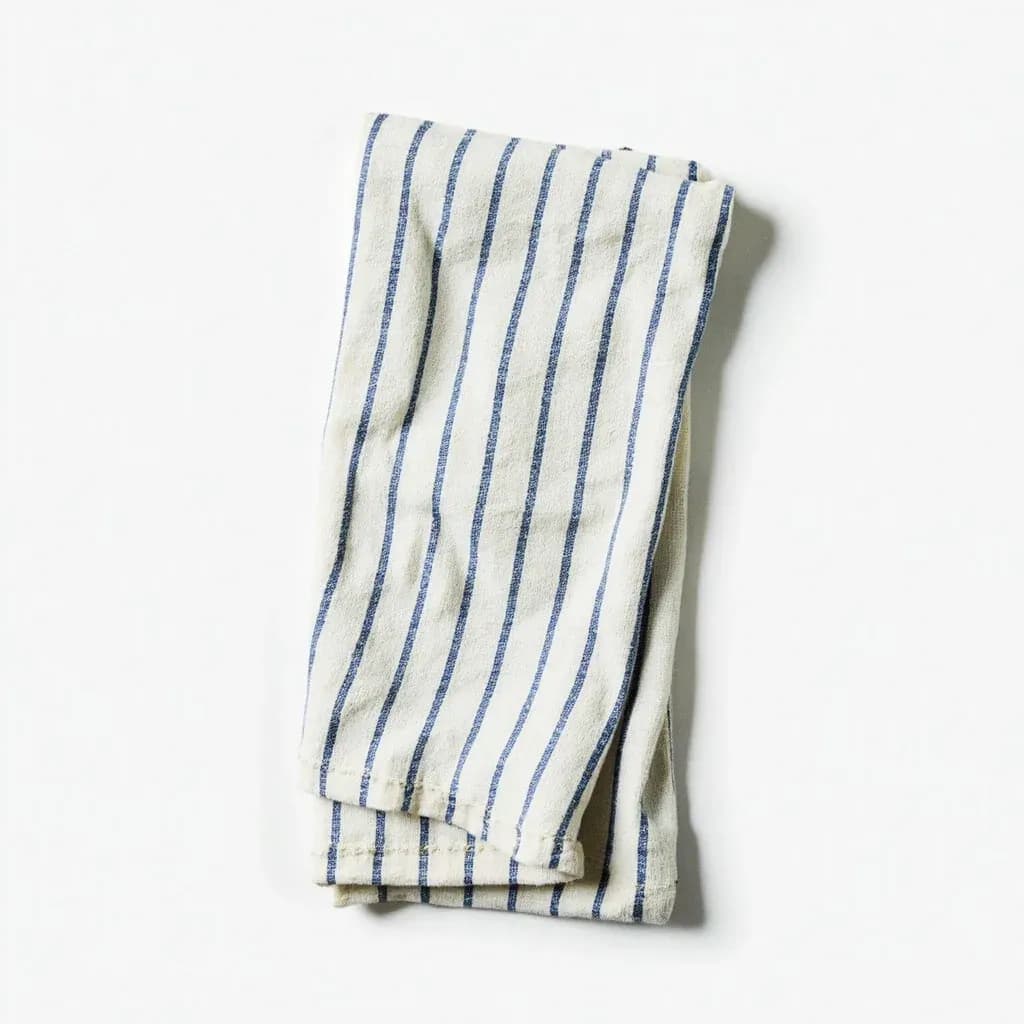
Dish Cloth / Tea Towel
Reusable cloth for drying dishes, wiping surfaces, handling hot pans, and patting produce dry.
A dish cloth or tea towel is a reusable cotton or linen cloth used to dry washed dishes, wipe down counters, and pat produce dry. Folded over, it doubles as a quick pot holder for grabbing warm handles or steadies a cutting board so it won't slip. Cooks keep several clean ones on hand and swap them often, since a damp cloth left out can spread bacteria.
The dish cloth and tea towel are foundational textile tools that live at the heart of every working kitchen, serving as the connective tissue between washing, cooking, and presenting food. While these terms are often used interchangeably—"dish cloth" tending toward heavier utility cloths for scrubbing and "tea towel" leaning toward lighter, more presentable cloths for drying and serving—the practical reality is that most home kitchens benefit from a small arsenal of different towel types, each suited to different tasks. These cloths are not passive accessories; they actively shape kitchen hygiene, food safety, and even the quality of your finished work. A worn, damp towel handling raw poultry should never be the same cloth that polishes your glassware. In professional settings, towel management is as critical as any cooking technique. The distinction matters: a quality tea towel, properly maintained and thoughtfully deployed, is a multi-purpose workhorse; a neglected one becomes a vector for cross-contamination and frustration.
Alternatives
Types & varieties
Looped pile construction; maximum absorbency; best for drying dishes and hands
Thin, smooth cotton; lint-free; traditionally used for sifting flour and covering dough; excellent for glassware and line drawers
Puckered texture; good absorbency with faster drying time than terry; leaves a polished finish on stainless steel
Loose honeycomb weave; highly absorbent and quick-drying; professional-grade quality
Smooth, lint-free weave; specifically formulated for drying glassware and crystal without streaks
Small utility towel; versatile size for grip, spills, and general wiping
More durable than cotton; improves with age; dries slower initially but becomes more absorbent over time
Synthetic blend; superior dirt-trapping; requires different care (no fabric softener); not heat resistant
Choosing the Right Towel
Material matters more than most cooks realize. Terry cloth, with its looped pile, absorbs the most water but dries slowly and can leave lint on glassware. Flour sack towels—traditionally the cloth that held flour in pre-packaged days—have become a bread-making essential precisely because their tight weave releases no lint, handles dough without sticking, and dries faster than terry. Linen outperforms cotton in durability and gains absorbency with age, making it a long-term investment. Microfiber excels at trapping dirt and dust but is purely synthetic: it cannot tolerate high heat, degrades over repeated washing, and should never contact open flame or hot cookware.
- For glassware and polished surfaces: use glass towels or flour sack towels
- For bread-making: flour sack or linen provides the lint-free, dough-friendly surface you need
- For heavy-duty drying: terry cloth absorbs more but requires more care to avoid streaks
- For heat handling: cotton and linen only; never rely on microfiber near the stove
Kitchen Hygiene and Towel Management
This is where most home kitchens fall short. A damp towel left crumpled in a drawer overnight becomes a bacteria breeding ground regardless of how clean it looked when you finished washing dishes. In food-service environments, towels used for different tasks must be separated—often by color coding—specifically to prevent raw meat handling cloths from contaminating ready-to-eat surfaces. The same principle applies at home, scaled down. One towel for dishes, one for produce, one for hot items. That is not excessive caution; it is the minimum reasonable standard. Towels that have handled raw meat, poultry, or fish should go directly into the laundry, not draped over the sink edge awaiting reuse.
- Establish a three-towel minimum: dishes, produce, hot handling
- Replace towels when persistent stains, odors, or thinning fabric signal loss of integrity
- Wash new towels before first use to remove manufacturing sizing and improve absorbency
- Never use a damp towel for heat protection—moisture conducts heat rapidly and causes burns
Common uses
Tips & pitfalls
- Designate separate towels for specific tasks: one for dishes, one for produce, one for hot items
- Fold into quarters for a ready-to-use hand towel that can be refolded to reveal a clean surface
- Store clean towels dry—moisture breeds bacteria and mildew even in freshly laundered cloth
- In professional kitchens, use color-coded towels to prevent cross-contamination between raw meat areas and prep stations
- Replace towels when they show persistent stains, odors, or worn spots that compromise cleanliness
- For handling hot pans, use a thick, dry towel folded at least twice; never use a damp towel as it conducts heat rapidly
- Wash new towels before first use to remove manufacturing residues and improve absorbency
- Avoid fabric softener on highly absorbent towels (cotton, linen) as it coats fibers and reduces performance
- Shake out damp towels before laundering to remove food particles and improve wash effectiveness
- Steam-press flour sack towels for smooth, professional-looking dough covers and proofing cloths
Good to know
- Common Materials
- Cotton, linen, terry cloth, hemp blends, microfiber (synthetic)
- Standard Sizes
- Bar mop 15–16 in.; standard kitchen towel 17–20 in.; flour sack 20–28 in.
- Maintenance
- Machine washable; sanitize regularly in hot water (140°F/60°C or higher)
- Typical Lifespan
- 2–5 years with regular use, depending on material quality and care
- Absorbency Ranking
- Terry cloth > waffle weave > flour sack cotton > smooth cotton
- Food Safety Note
- Should be laundered between each use in food-service settings; air-drying alone can harbor bacteria
- Heat Resistance
- Thin towels offer minimal protection; always use dry, doubled layers for hot pans and test before relying on them
Also called
dishcloth · dish-towel · tea-towel · kitchen-towel · kitchen-cloth · kitchen-towel-cloth · napkin-cloth · dish-cloth-fukin · clean-kitchen-towel · kitchen-roll-string-cloth · fukin
Related

Paper Towels
Disposable sheets for spills, drying, and patting dry

Kitchen Towels
Reusable cloths for drying, gripping, and wiping

Oven Mitts
Heatproof gloves to handle hot pans and trays safely

Disposable Gloves
Single-use gloves for safe, mess-free handling

Cleaning Cloths
Reusable cloths for wiping counters and spills

Tortilla Warmer
Insulated holder that keeps tortillas warm and soft

Trivet
Heatproof stand that shields surfaces from hot pots

Ice Bath Setup
Bowl of ice water that halts cooking and sets color