Bakeware & Pans
Disposable Foil Pan
Single-use aluminum tray for baking, roasting, transporting, and reheating food.
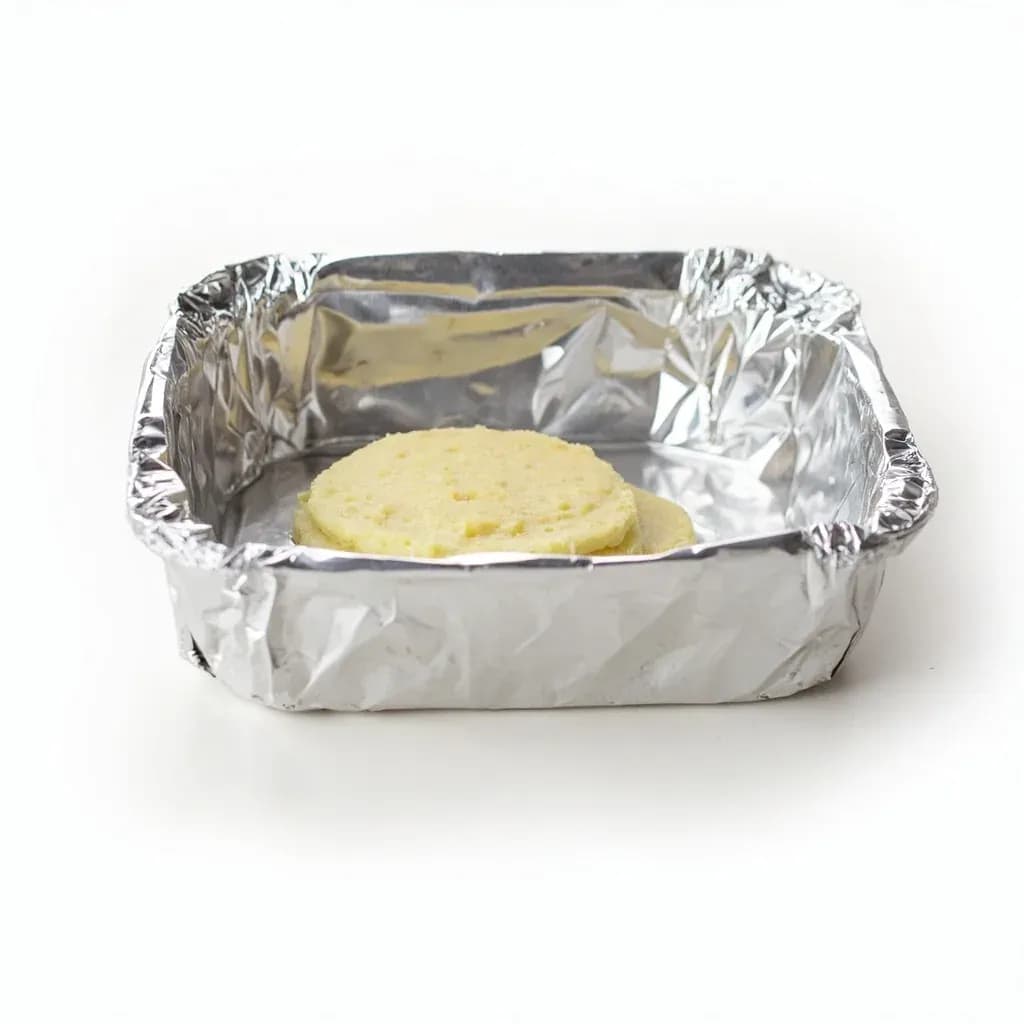
A disposable foil pan is a stamped aluminum tray sold in sizes from individual loaf and half pans to full steam-table pans. Caterers, potlucks, and home cooks use them for roasting, baking, and holding food in chafing setups, then discard them to skip cleanup. They conduct heat well and are oven-safe, and matching foil or board lids let them double as transport and storage containers.
A disposable foil pan is a single-use baking vessel formed from thin aluminum sheet, sized to drop straight into restaurant steam wells, chafing-dish frames, and home refrigerator shelves. That standardization is the entire reason it exists: it lets a cook bake, transport, reheat, and serve from the same vessel, then toss or recycle it. The trade-off is structural. The walls are too thin to resist the lateral pressure of a full lasagna, a heavy turkey, or a sloshing pot of stock, and the pan will buckle if you lift it bare-handed. The single most useful habit with a foil pan is to set it on a rigid rimmed sheet pan before filling, moving, or lifting — the sheet pan carries, the foil pan cooks. Reach for one when real bakeware is in the dishwasher, in use elsewhere, or simply too valuable to risk at a potluck, a catering job, or the kind of weeknight when the roasting pan is the wrong size and the dishwasher is already full.
Alternatives
Types & varieties
Cafeteria standard at roughly 20.8 × 12.8 × 2.5 in; drops into chafing dishes and full-size steam wells
About 12.8 × 10.4 in; fits half-size chafing-dish frames and most home oven racks
Home-kitchen workhorse for casseroles, lasagna, brownies, and sheet cakes
About 8.5 × 4.5 in; for meatloaf, quick breads, and small terrines
Available in 8, 9, or 10 in diameters; usually shallower than a traditional cake pan
Large shallow rectangle for rolls, cookies, and sheet-pan roasting
Deep oval or rectangular pan sized for whole chickens, hams, and small turkeys
Sold with flat or domed aluminum or clear plastic lids for catering and meal prep
Thicker gauge that resists bending, tolerates higher oven heat, and can be hand-washed and reused several times
Aluminum pan with a food-release coating that helps cakes and brownies slip out cleanly
Single-use aluminum loaf pan for quick breads, meatloaf, and gift bakes, going from oven to giveaway without reclaiming the dish.
The Sheet-Pan Support Habit
A bare foil pan is a liability the moment it holds more than a few cups of food. The walls are too thin to resist the side pressure of a heavy bird, a full lasagna, or a sloshing pot of macaroni, and the crimped rims are not strong enough to bear the load when you grab them with oven mitts. The fix is cheap and universal: slide the foil pan onto a rigid rimmed baking pan before you fill it, before you move it, and certainly before you lift it out of the oven. The sheet pan does the carrying; the foil pan does the cooking. This single habit prevents the most common disposable-pan disasters — folded walls, spilt gravy, and the half-cooked casserole that ends up on the oven floor.
- Pick a rimmed sheet pan that is the same size or slightly larger than the foil pan; a smaller sheet lets the foil sag through the middle.
- Slide rather than lift when moving a filled pan — even a heavy-duty pan flexes when gripped only by the crimped rim.
- For very heavy loads (whole turkey, large brisket), stack a sheet pan under the foil pan and pull the oven rack out partially before lifting.
Choosing the Right Gauge
Foil pans come in three working grades, and the difference shows up the first time you try to lift a full one. Light or standard pans are fine for cold storage, transport, and shallow bakes that will never be moved while full. Medium pans handle most casseroles and smaller roasts. Heavy-duty pans are the only sensible choice for a full turkey, a standing rib roast, a tray of moussaka, or any bake that has to leave the oven and cross a kitchen. The heavier gauge also tolerates hand-washing and reuse, which offsets its higher unit cost over the course of a holiday season.
- Light/standard: cold storage, transport, shallow bakes, drip-catcher liners.
- Medium: most casseroles, brownies, bar cookies, small roasts under about 4 lb.
- Heavy-duty: whole poultry, large roasts, anything you intend to lift while full, anything that may be reused.
Common uses
Tips & pitfalls
- Always set the pan on a rigid sheet pan before moving it — thin walls flex and can slosh, fold, or drop the contents.
- Never place a foil pan on a burner or open flame; it can melt, warp, and leave aluminum residue on the cooktop.
- Skip the microwave entirely; even brief sparking can damage both the appliance and the pan.
- Avoid long storage of highly acidic foods such as tomato sauce, citrus curds, or vinegar pickles — the acid pits the metal and adds a metallic taste.
- For heavy items like a turkey or standing rib roast, choose a heavy-duty pan and rotate it halfway through cooking for even browning.
- If a pan warps in the oven, set it on a flat sheet pan to level it before adding liquid batter.
- Hand-wash and reuse a sturdy foil pan a few times; heavy-duty versions tolerate it well.
- Label lids with a grease pencil or freezer tape before stacking meals — bare foil is almost impossible to write on with a regular pen.
- Fold the long edges inward slightly with tongs to create makeshift handles for a safer carry when no sheet pan is underneath.
Good to know
- Material
- Thin-gauge aluminum sheet, roughly 0.03–0.05 mm for economy pans and up to about 0.08 mm for heavy-duty pans
- Oven-safe to
- 400–450 °F (200–230 °C) for standard pans; heavy-duty pans rated to about 500 °F (260 °C)
- Microwave
- No — bare metal arcs in a microwave and can damage both the pan and the appliance
- Freezer
- Yes, down to any normal home-freezer temperature
- Standard sizes
- Full and half steam-table, 9 × 13 in, 8.5 × 4.5 in loaf, 8–10 in round, and full- or half-size sheet/bun pans
- Recyclable
- Yes, once rinsed free of food residue; clean foil is accepted by most curbside programs
- Acid sensitivity
- Prolonged contact with tomato, citrus, or vinegar-heavy foods can pit the metal and add a metallic taste
Also called
Disposable Foil Steam Pan · Disposable Foil Half-Pan · aluminum pan · steam table pan · foil tray
Related

Baking Sheet
Flat rimmed tray for cookies, roasts, and sheet dinners

Cooling Rack
Wire grid that lets bakes and fried food breathe

Muffin Tin
Multi-cup pan for muffins, cupcakes, and egg cups

Cake Pan
Round pan for even-baking layer cakes

Loaf Pan
Rectangular pan for bread, banana loaf, and terrines

Proofing Basket
Rattan banneton that shapes and marks rising dough
Paper Baking Cup
Pleated paper liner that holds cupcake and muffin batter for clean baking and serving.
Disposable Piping Bag
Single-use cone bag for piping icing, batter, fillings, and purees with a tip.