Bakeware & Pans
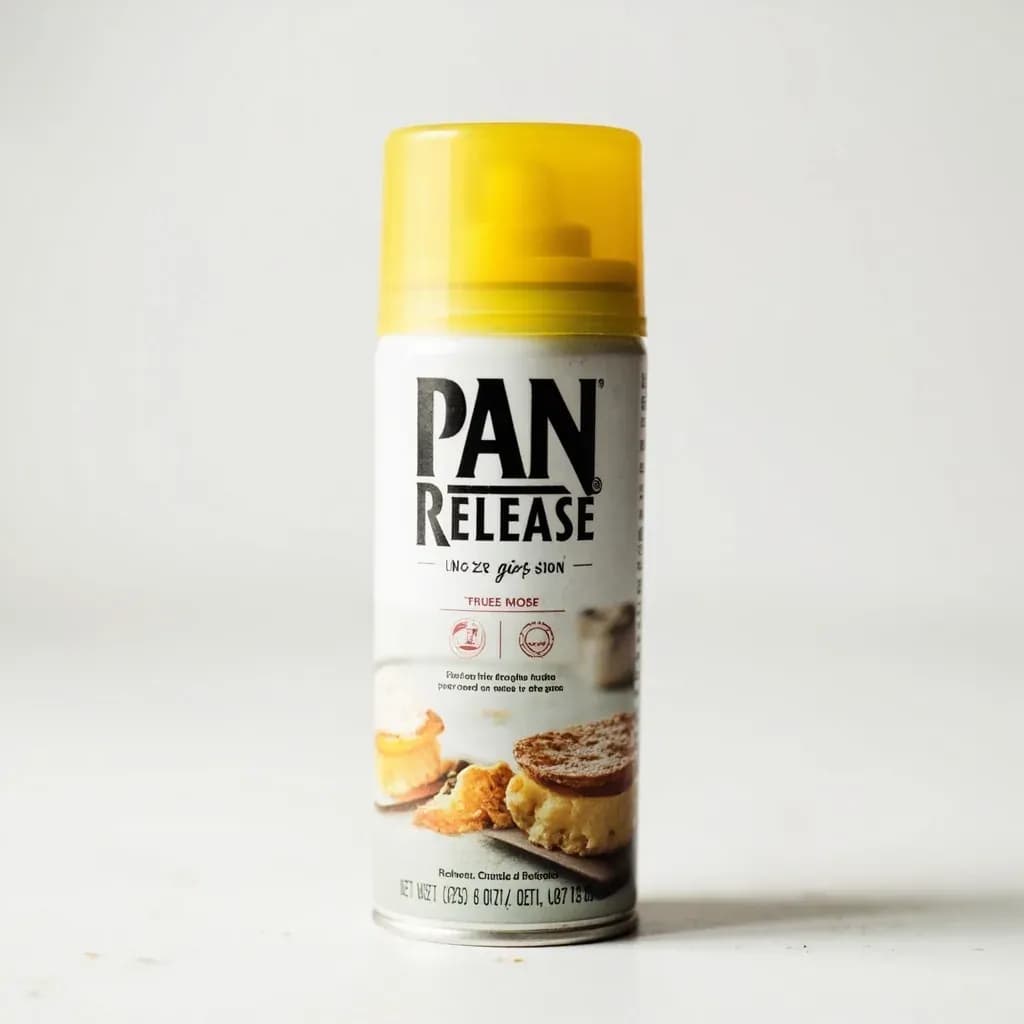
Pan Release Spray
Aerosol oil-and-flour coating sprayed into pans so baked goods release cleanly without sticking.
Pan release spray is an aerosol blend of oil, lecithin, and often flour applied to bakeware before filling it. A quick even coat keeps cakes, muffins, and breads from sticking to molds and intricate pans like bundt tins. It is faster and more uniform than greasing and flouring by hand, reaching crevices a brush would miss, and is favored in high-volume baking.
Pan release spray is an aerosolized mixture of food-grade oil, an emulsifier (typically soy lecithin), and a flammable propellant that, at the press of a button, lays down an exceptionally thin, even film of fat on a pan's surface. The product divides cleanly into two functional families: plain oil-and-lecithin sprays for general cooking, and flour-inclusive "baking sprays" engineered specifically for sweet batters, where sugar caramelization would otherwise weld a cake to the tin faster than oil alone could prevent. Bakers reach for it most often in the situations where hand-buttering is awkward or imprecise: Bundt pans with their deep flutes, multi-well muffin tins, intricate brioche molds, and large sheet pans that need uniform coverage in seconds.
The convenience is genuine, but it comes with a real trade-off. A spray's film thickness is governed by propellant pressure, can angle, distance, and ambient temperature — variables a pastry brush simply does not have. In professional and competition pastry kitchens, hand-buttering remains the gold standard for the same reason: a brush delivers a controllable, measurable coat. For home bakers and high-volume production lines, however, a baking spray eliminates the most common cause of a stuck cake, which is a missed patch of butter or a flouring step that wasn't quite thorough enough. Knowing when to trust the spray and when to fall back on the brush is the heart of using it well.
Alternatives
Types & varieties
Oil plus lecithin only; the original PAM formula. Suited to skillets, sauté pans, and standard cake pans.
Oil, lecithin, and wheat or rice flour — the workhorse for sweet batters, Bundt pans, and intricate molds.
Plain oil spray with added natural or artificial butter flavor; used mostly for finishing — popcorn, toast, and similar applications — rather than as a primary release agent.
Made with refined or extra-virgin olive oil; carries varietal flavor and is popular for Mediterranean cooking and roasting.
Smoke point around 520°F (270°C), the highest of common cooking sprays; preferred for high-heat searing and grilling.
Solidifies below about 76°F (24°C) and leaves a faint white film when cool; imparts coconut flavor.
Neutral flavor with a mid-range smoke point (~420°F / 215°C); a favorite of some pastry chefs for clean-tasting batters.
Expeller-pressed certified-organic oils, often propelled by nitrous oxide or compressed air rather than hydrocarbons.
Refined oils with smoke points above 450°F (232°C), sold in larger cans for outdoor cooking.
Oil-Only vs. Flour-Included: When to Use Which
The two families exist for a reason that is easy to miss. Sugar caramelizes at oven temperatures and, in a low-fat, high-sugar batter — a génoise, a pound cake, a sticky banana bread — the caramel can bond to the pan faster than a film of pure oil can prevent. The added flour in a baking spray gives the batter something to grip other than bare metal: the starch forms a microscopically rough release layer that lets the cake shrink away cleanly as it cools. For savory applications, or for delicate foam cakes where any starch would weigh the crumb, plain oil spray is the correct choice.
The Propellant Question
The hydrocarbons in a standard can are flammable, which is why manufacturers warn against spraying into a heated pan or near an open flame. The propellant is what makes the spray a true aerosol — a refillable pump bottle labeled "cooking spray" delivers larger droplets, lays down a thicker film, and is functionally closer to brushing on oil. Both are useful; they are not interchangeable. A pump bottle is safer for a hot skillet, while an aerosol gives the finer, more uniform mist that Bundt pans and multi-well tins need.
Common uses
Tips & pitfalls
- Shake the can vigorously for 3–5 seconds before each spray — the most common cause of patchy coverage is oil and lecithin that have separated inside the can.
- Hold the can 6–10 inches from the pan and use a 1–2 second burst; spraying too close or too long lays down a tacky film that builds up residue over time.
- Avoid spraying into a preheated pan or anywhere near an open flame — the propellant is flammable and can flash-ignite.
- For delicate foam batters (chiffon, génoise, angel food), skip the flour-containing version and use plain oil spray, or hand-grease with clarified butter for the cleanest release.
- On new or dishwasher-washed Bundt and sculpted pans, follow the spray with a light dusting of flour or cocoa — the mist rarely reaches every crevice, and a single missed groove will tear the cake on unmolding.
- Wipe the nozzle after use; if it clogs, twist it off and rinse under warm water — do not insert pins, which can damage the valve and cause the can to leak.
- Dark-colored metal pans already brown more aggressively — go light on the spray or skip it, because the extra fat accelerates over-browning on the edges.
- Do not refrigerate or freeze the can; cold temperatures thicken the oil and cause sputtering, and most manufacturers warn against storage above 120°F (49°C) or below 32°F (0°C).
- If the can sputters, releases liquid oil, or hisses without a fine mist, it is exhausted — recycle rather than continue to use.
Good to know
- Invented
- 1958 by Arthur Meyer in Chicago, originally marketed as PAM
- Original non-culinary use
- PAM's formula began as an industrial lubricant for leather and shoes before being repurposed for food
- Core components
- Vegetable oil (canola, soybean, or sunflower), soy lecithin as emulsifier, and a food-grade hydrocarbon propellant (propane/butane/isobutane)
- Baking-spray additions
- Wheat- or rice-flour versions add a fine starch to the oil base for stronger release on sugary batters
- Propellant history
- CFCs were used originally and phased out under the Montreal Protocol in the late 1970s–1990s; modern cans use food-grade hydrocarbons or, in some organic products, nitrous oxide or compressed air
- Common can sizes
- 5, 6, 8, and 11 oz retail sizes; professional food-service cans run 16–17 oz
- Shelf life
- About 2 years unopened, 1 year after first use
- Storage
- Room temperature, away from heat and flame; do not store above 120°F (49°C) or below 32°F (0°C)
- Coverage
- A 2-second burst covers roughly one 9-inch round pan or 12 muffin cups
- FDA classification
- Regulated as a food product, not a food additive; propellants must be FDA-approved
- Gluten note
- Wheat-flour baking sprays are not safe for celiac bakers; rice-flour versions are widely available
Also called
baking spray · non-stick spray · release spray
Related

Baking Sheet
Flat rimmed tray for cookies, roasts, and sheet dinners

Cooling Rack
Wire grid that lets bakes and fried food breathe

Muffin Tin
Multi-cup pan for muffins, cupcakes, and egg cups

Cake Pan
Round pan for even-baking layer cakes

Loaf Pan
Rectangular pan for bread, banana loaf, and terrines

Proofing Basket
Rattan banneton that shapes and marks rising dough
Paper Baking Cup
Pleated paper liner that holds cupcake and muffin batter for clean baking and serving.
Disposable Piping Bag
Single-use cone bag for piping icing, batter, fillings, and purees with a tip.