Appliances & Heat
Chocolate Ball Mill
A drum of steel balls that grinds chocolate ultra-smooth by tumbling it for hours.
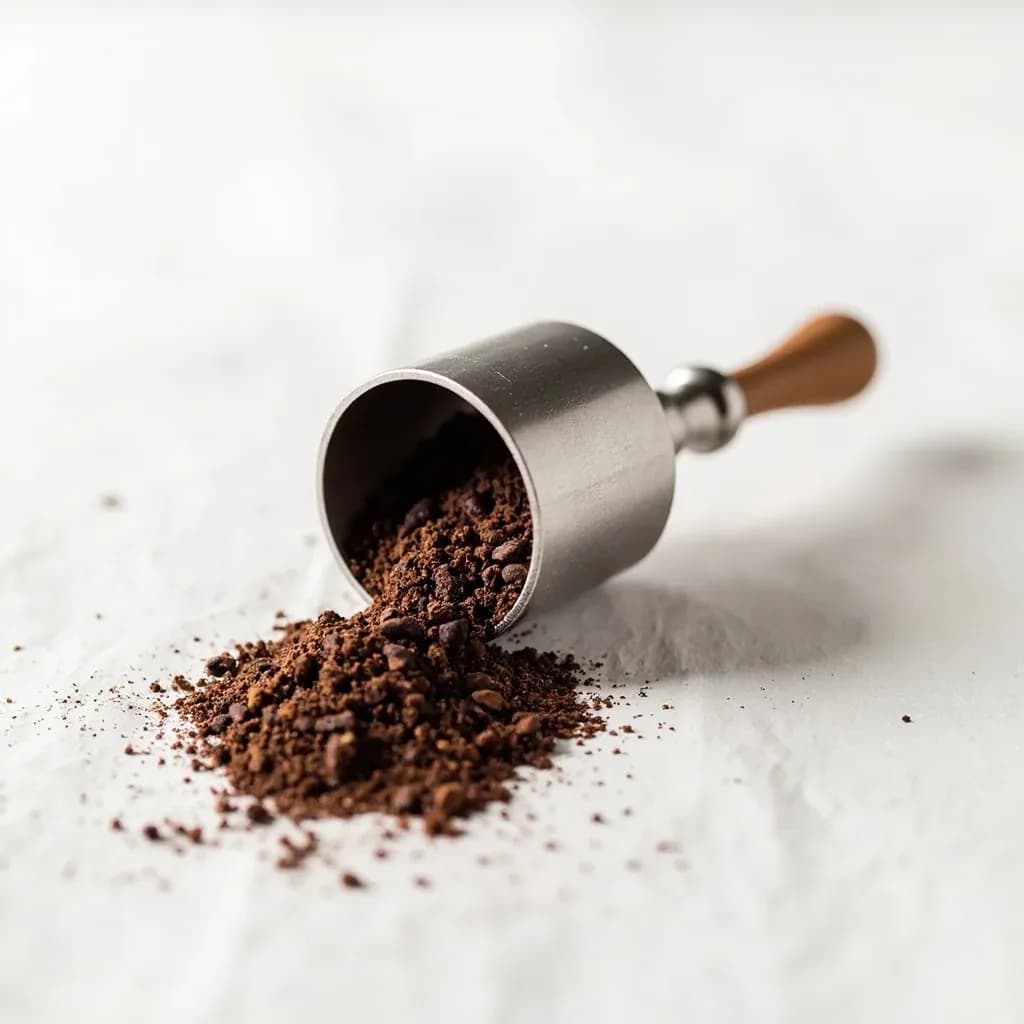
A chocolate ball mill is a rotating chamber filled with steel balls that pummel and refine cacao mass and sugar into a silky, fine-particle chocolate. Bean-to-bar makers run it for hours or days to drop particle size below what the tongue detects, replacing or speeding up traditional conching. The friction also warms the mix, helping develop flavor as it grinds.
A ball mill is the heavy-duty workhorse behind truly smooth chocolate — a jacketed, sealed vessel charged with tens of thousands (and in industrial models, millions) of small steel balls that tumbles or agitates the molten chocolate mass for hours until every cocoa and sugar particle is crushed to roughly 15–20 microns, well below the threshold the human palate reads as gritty. It is essentially the industrial descendant of the Mesoamerican metate and the granite stone melanger, swapping stone for hardened steel and patience for horsepower, and it is the reason a well-tempered professional bar melts silkily on the tongue rather than feeling sandy on the teeth. In a craft or production line the mill sits between the melter (where nibs, sugar, and cocoa butter are heated and combined) and the conche (where flavor is developed), doing the mechanical refining work that no amount of hand or planetary mixing can replicate.
The machine is forgiving in the sense that it can take a lumpy, half-mixed mass of cocoa liquor, sugar, and cocoa butter and walk it all the way to a glossy, pourable paste in a single overnight run, but it is unforgiving about temperature, fill level, and ball maintenance. Get any of those wrong and the balls either skid uselessly through over-lubricated fat or stall in a too-thick, too-cool mass, and you have burned twelve hours of electricity for little gain. Most importantly, treat the ball mill as a refining step, not a flavor step: it produces uniform particle size, but the rounded, mellow character of finished chocolate comes from a separate conching pass, sometimes running days.
Alternatives
Types & varieties
A sealed horizontal cylinder that rotates on external rollers; simple, robust, classic design with slower throughput
A stationary jacketed vessel with a rotating shaft and paddles that stir the ball bed; better heat transfer, faster cycles, and capable of continuous operation
Batch mills are standard in craft chocolate; continuous mills feed and discharge in a steady stream for production lines
Hybrid machines that grind and conch in one vessel — popular in small craft operations to save space and time
The traditional predecessor: granite stones grinding on a granite bed; still used for small craft batches but markedly slower than a ball mill
How the mill actually works
Inside the heated, sealed drum is a packed bed of small steel balls — often several hundred kilograms of them in a craft unit, several tons in industrial models — suspended in molten chocolate at around 40–50 °C. As the drum rotates or the central agitator turns, the balls cascade and collide, and it is the impact between balls (with chocolate trapped in the gaps) that does the crushing, not friction against a wall. Three variables drive the result: how long the mass tumbles, how much fat is present to keep it fluid, and how fresh and correctly sized the ball charge is. Pull a sample through the discharge port every few hours and measure with a micrometer or laser sizer; you are looking for a steady march downward toward 15–20 microns, after which running longer gains little and starts to overwork the fat.
- Drum mills crush mainly by ball-on-ball impact; agitator mills combine impact with shearing from paddles
- Aim for a final moisture below 1% and a fat content that keeps viscosity low enough for the bed to flow
- Holding 40–50 °C in the jacket is the single most important control — too cold and the mass seizes, too hot and the balls skate on liquid fat and stop grinding
Mill, melanger, and conche — what's the difference
These three machines get confused because they all stir chocolate for a long time, but each does a different job. The stone melanger grinds by pressing granite on granite and refines the mass slowly over a day or more; it is the craft default and adds a subtle stone character some makers prize. The ball mill refines faster and more uniformly by impact, with no stone contact, so it leaves no mineral signature. The conche does not refine much at all — its job is flavor development: shearing and aerating the warm mass to drive off volatile acids, mellow harsh notes, and round the body. Modern hybrid refiner-conches combine both jobs in a single vessel and work well for many craft operations; for the most nuanced flavor work, however, most makers still run a dedicated conche after milling.
Ball care and routine maintenance
Steel balls wear against each other on every run, shedding fine metal particles and slowly losing their sharp edges. Worn balls grind poorly and contaminate the chocolate with iron, which darkens color and can dull flavor. A practical routine: after every long run, discharge the mass, then sieve the balls to remove fines and chips, weigh them, and top up with fresh balls to the original charge weight. Inspect the drum liner, seals, and any agitator paddles for wear at the same time, and keep a log of ball consumption per batch — once you know your grinding rate (kg refined per kg of balls per hour) you can plan ball purchases and spot a worn charge before it ruins a batch.
Common uses
Tips & pitfalls
- Charge the mill no more than about two-thirds full of balls plus mass — the balls need room to tumble and impact, or grinding stalls
- Pre-mix cocoa liquor, sugar, and any extra cocoa butter in a melter or planetary mixer to break up lumps before charging the mill, or you will waste hours breaking down clumps
- Hold the jacket at 40–50 °C: too cold and the chocolate sets, too hot and the fat lubricates the balls so they skid instead of crush
- Aim for a final moisture below 1% and a fat content that keeps viscosity low enough for the balls to do their work — under-fatted masses grind slowly and overheat
- Track particle size with a micrometer or laser sizer and pull samples through the discharge port; 15–20 microns is the sweet spot for smooth eating chocolate
- Expect the steel balls to wear and shed fines — sieve the balls after each long run and top up the charge, or you lose grinding efficiency and contaminate the chocolate with metal
- Keep the mill sealed or under a slight inert-gas blanket during long runs; moisture pickup causes the chocolate to seize and the finished surface to bloom later
- Remember that ball milling only refines — for the rounded, mellow flavor of finished chocolate you still need a separate conching step of several hours or days
Good to know
- Function
- Refines chocolate mass by tumbling steel balls to crush cocoa and sugar particles down to 15–20 microns
- Target particle size
- 15–20 microns for smooth eating chocolate; above ~30 microns the palate detects grittiness
- Typical run time
- 12–24+ hours per batch for full refinement
- Operating temperature
- ~40–50 °C (104–122 °F); held molten through a heated, jacketed vessel
- Ball material and size
- Hardened or stainless steel balls, 1–3 mm; smaller balls give a finer grind and more contact points
- Drum speed
- Drum mills rotate around 30–50 rpm; agitator mills run higher via a central shaft
- Batch sizes
- Bench and lab models from ~1–5 kg; craft machines 5–50 kg; industrial lines 500–2,000+ kg
- Ball wear
- Steel balls erode and shed metal fines; they must be sieved and topped up periodically or grinding efficiency drops
Also called
Chocolate Refiner Ball Mill · Cocoa Ball Mill
Related

Stovetop
The everyday burners where most cooking actually happens

Oven
Enclosed dry heat for roasting, baking, and braising

Grill
Live-fire or gas grates for char, smoke, and high heat

Smoker
Low, slow heat and wood smoke for barbecue and brisket

Air Fryer
Countertop convection that crisps with little or no oil

Slow Cooker
Set-and-forget low heat for stews, beans, and braises

Pressure Cooker
Sealed steam pressure that cooks tough food in a fraction of the time

Rice Cooker
Foolproof, perfectly steamed rice every single time